Blown Head Gasket: Scrap Value vs Garage Repair Costs
12th Jun, 2026
Seeing thick, white smoke billow violently from your exhaust or from under the bonnet is a moment every driver absolutely dreads. A blown head gasket is significantly more than just a minor fluid leak. It is a catastrophic mechanical event that incredibly often marks the permanent end of a vehicle’s reliable operational life. When this single, vital seal fails, owners are instantly forced to choose between a massive, highly stressful garage bill and the absolute certainty of a scrap payout.
Think of your engine’s head gasket exactly like the heavy-duty rubber seal on an industrial high-pressure cooker. It sits buried deep inside the engine block, desperately keeping the internal rivers of lubricating oil and cooling water completely separated while simultaneously holding back the intense, explosive heat of combustion. When that delicate seal eventually pops, the highly pressurised fluids mix into a highly destructive, milky sludge that rapidly destroys the engine from the inside out.
Handling a head gasket failure requires incredibly quick, decisive action to prevent a total financial disaster. If you simply continue to drive the vehicle, the resulting extreme friction and heat will inevitably warp the heavy metal cylinder head, permanently destroying the engine’s core geometry. By thoroughly understanding the true technical cost of an engine restoration versus the immediate financial return from a licensed recycler, drivers can effectively protect themselves from a disastrous money pit scenario.
What Actually Happens When a Head Gasket Fails
To properly understand the terrifying garage quotes, you must comprehend exactly what happens inside the metal casing when the gasket blows. The head gasket sits squarely in the highest-stress boundary between the lower engine block and the upper cylinder head. Its primary, non-negotiable job is to keep the explosive combustion gases strictly inside the cylinders, while keeping the engine oil and the water-based coolant flowing smoothly in their own entirely separate internal channels.
When the material fails, high-pressure coolant instantly leaks directly into the super-heated combustion chamber. This rapidly vaporises the water, creating the thick, highly visible white clouds of steam you see pouring from the exhaust pipe. It is essentially your engine desperately trying to “breathe” through a heavily flooded lung.
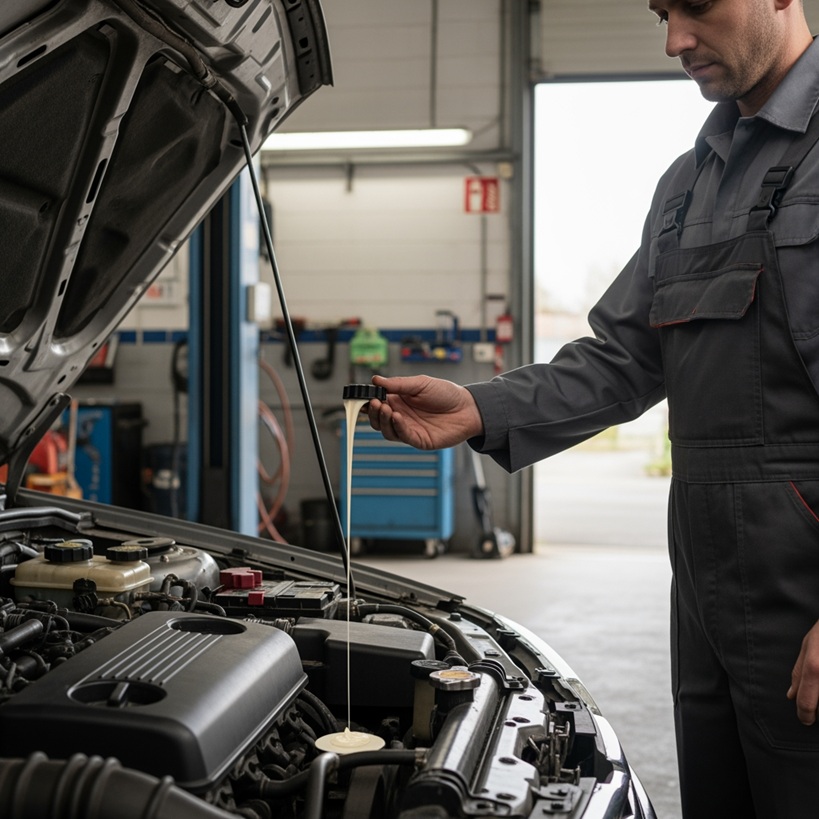
Another incredibly common, tell-tale symptom of failure is the “mayonnaise oil” effect. This occurs when the coolant breaches the oil channels, mixing rapidly with the engine oil to create a thick, creamy, beige sludge visible underneath the main oil filler cap. Once this heavy contamination happens, the oil entirely loses its vital ability to lubricate the rapidly spinning metal bearings. This specific lack of lubrication leads directly to a total, highly violent engine seizure within a matter of miles.
The Risk of Warping and Corrosion
Furthermore, if the engine overheats significantly during the failure, the upper cylinder head, which is almost universally made of relatively soft aluminium on modern cars, can physically warp out of shape or crack entirely. Once the metal twists, a new gasket can never seal properly against it. Rather than authorising a highly expensive diagnostic pressure test that will likely only confirm the engine is essentially a total write-off, checking the baseline value with verified scrap car dealers often provides a much clearer, immediate financial exit strategy.
The Real Cost of Garage Repairs
A head gasket repair is absolutely never a simple “part swap” that can be completed on a driveway in an afternoon. It is an intensely labour-heavy operation that requires a highly skilled mechanic to completely strip the entire top half of the engine bay. The raw head gasket repair cost frequently shocks vehicle owners.
For the vast majority of modern, 4-cylinder petrol engines, a mechanic will require a benchmark of between eight and twelve hours of solid shop time to properly strip, clean, and rebuild the unit. According to recent 2026 Independent Garage Association (IGA) labour rate surveys, UK independent garages average between £70 and £120 per hour. Therefore, the baseline labour charges alone can easily reach between £800 and £1,400. Complex V6 engines or tightly packed modern diesel units often reach well past £1,500 in labour simply because they require significantly more dismantling and highly specialized camshaft timing tools.
Machine Shop Fees and Ancillaries
The repair bill does not stop at the mechanic’s hourly rate. You must heavily factor in mandatory specialist machine shop fees. If the aluminium cylinder head has warped by even a fraction of a single millimetre, it absolutely must be “skimmed” or machined perfectly flat by a precision engineering specialist to ensure the brand-new gasket can seal safely. This specialist machining service typically adds another £100 to £250 to your initial quote.
Then comes the dreaded “while we’re in there” tax. When an engine is stripped down to this severe level, installing a brand-new timing belt, fitting a new water pump, and using fresh, highly specific head bolts (which naturally stretch and cannot be reused) is standard industry practice. By the time you add premium synthetic oil and fresh coolant, the final total frequently exceeds the actual functioning market value of an older vehicle.
The 50% Rule for Repair Viability
A highly reputable, honest mechanic will almost always advise looking at the car’s total market value before signing an aggressive work order. A widely respected automotive industry framework is the 50% rule. If the total, itemised repair quote heavily exceeds 50% of what the car is actually worth when running flawlessly, walking away is almost universally the smarter financial move.
For example, spending £1,400 to rebuild the engine on an aging family estate car that is only worth £2,500 on a good day is a terrible, high-risk investment. The massive repair does not magically make the car worth £3,900; it merely restores it to its £2,500 baseline, leaving the owner heavily out of pocket. Furthermore, a car with a “replaced head gasket” officially noted in its service history is often viewed with deep suspicion by future secondhand buyers, who constantly worry about the long-term quality of the garage repair.
Objective Case Study: The Sunk Cost Trap
Consider a real-world case study involving a 2006 Vauxhall Zafira. When the head gasket failed, the owner insisted on authorising a £900 repair to protect their initial investment in the family vehicle. The heavy repair was completed, but the extreme heat from the initial failure had severely weakened the surrounding components.
Exactly two weeks after the rebuilt engine was fitted, the aging water pump seized completely solid. This instantly snapped the brand-new timing belt, which drove the heavy pistons directly into the open valves, totally destroying the entire engine block beyond repair. The owner ended up permanently retiring the car anyway, ultimately losing the entire £900 initial investment for just fourteen days of driving. Emotional attachment to a rapidly depreciating asset rarely pays the household bills.
Age and Mileage Tipping Points for UK Cars
Vehicles over 12 years old with more than 100,000 miles on the clock are by far the most common victims of catastrophic head gasket failure. At this late stage of a car’s operational life, the original factory gasket has endured millions of extreme “heat cycles,” constantly expanding and contracting until the physical material simply degrades and gives up.
Even if you successfully fix the blown gasket, you are still driving a vehicle where the radiator, the internal heater matrix, and all the high-pressure rubber coolant hoses are exactly the same age and highly likely to fail next. The sheer financial logic is incredibly simple, throwing good money after bad is a dangerous game. This is particularly relevant for owners in London or other major UK cities, where older, non-ULEZ compliant diesels are already facing heavy, increasing daily driving charges. When the repair costs spiral out of control, utilizing a professional vehicle scrapper provides a highly structured, guaranteed financial exit.
The Mathematics of Scrapping Instead
If authorising a massive engine rebuild is unviable, the absolute smartest alternative is claiming the guaranteed residual value of the heavy metal. Scrapping provides a firm, reliable financial return based entirely on the physical weight of the vehicle and its core component value. The intrinsic, baseline value of the heavy steel and aluminium remains perfectly intact even when the internal engine components are completely shattered.
To determine a highly accurate blown head gasket scrap valuation, you must look closely at the global commodities market. As of early 2026, raw scrap prices in the UK generally track between £140 and £260 per tonne, depending heavily on the specific region and daily industrial demand.
A typical 1.2-tonne hatchback can therefore safely return between £170 and £310 in raw material value alone. Heavy commercial vehicles or luxury SUVs, weighing roughly 2.5 tonnes, can easily reach well over £500. Furthermore, the verified presence of an original factory catalytic converter adds a highly significant premium to the final quote, as it contains extremely valuable precious metals like platinum and palladium. When comparing a guaranteed, secure bank transfer against a massive, highly uncertain garage bill, the financial logic heavily points toward disposal.
The Hidden Value in Scrapping
Choosing to scrap a car with a blown engine is often the most logical financial move simply because the raw “metal value” is completely independent of the engine’s internal health. Recyclers actively pay for the sheer weight of the high-grade steel, the heavy aluminium engine block, and the complex copper wiring looms woven throughout the chassis.
Beyond the raw metal, there is immense hidden value in the sheer administrative simplicity of the process. Attempting to sell a heavily smoking, non-running vehicle privately involves creating complex online adverts, dealing with endless speculative phone calls, and managing highly suspicious buyers who aggressively haggle over the price. When you decide to scrap my car through an established, verified network, you completely bypass the grueling private market. You secure a guaranteed electronic payment and completely ensure the permanent legal transfer of all future vehicle liability.
Environmental and Legal Compliance
Retiring a car with severe internal engine damage is a highly responsible, ethical choice for the local environment. Keeping an incredibly old, inefficient car limping along on the road often results in significantly higher daily exhaust emissions and extremely poor fuel economy. In strict line with the UK and EU End-of-Life Vehicle (ELV) Directive, all authorised facilities must legally meet a massive 95% recovery and recycling target for every single vehicle processed.
When a dead vehicle arrives at an Authorised Treatment Facility (ATF), it enters the rigorous depollution phase. Highly trained technicians meticulously drain the thick, heavily contaminated oil-and-water sludge from the shattered engine. They safely siphon the highly corrosive brake fluid and extract the dangerous lead-acid batteries. By choosing to arrange a professional scrap car collection, you guarantee that these highly toxic chemicals never leach into the local soil or water table.
Securing the Certificate of Destruction
Once the physical vehicle is safely collected, ending your ongoing legal liability is the absolute top priority. You must carefully complete the yellow section (Section 9) of the V5C logbook to notify the DVLA of the transfer to the motor trade.
Within a few days of the car being fully processed at the licensed facility, you will be issued an official Certificate of Destruction (CoD). This highly specific, official document is your absolute final legal shield. It proves unequivocally to the UK government that the car has been permanently destroyed, completely guaranteeing that you are no longer legally responsible for any future automated traffic fines, ULEZ charges, or road tax demands.
Outstanding Finance on Engine-Damaged Vehicles
A severe, highly stressful complication arises if the head gasket blows completely on a vehicle that is still actively tied to a financial agreement, such as a PCP or a Hire Purchase contract. Legally, you absolutely cannot dispose of a vehicle that technically still belongs to a financial lender.
Unfortunately, standard Guaranteed Asset Protection (GAP) insurance strictly covers theft or total loss collisions; it almost never covers catastrophic mechanical breakdowns. If the engine dies, the registered keeper remains entirely liable for the remaining outstanding balance of the original loan.
The owner must contact the finance company immediately to discuss their options. Typically, the owner will need to completely settle the outstanding loan balance in full from personal savings before the legal title can be safely transferred to a recycling facility. Leaving a heavily financed, immobile vehicle parked on a public residential street will rapidly attract automated fines and eventually lead to severe, long-term credit score damage.
Regional Considerations and Logistics
It is highly important to note that raw metal values and collection logistics are absolutely not uniform across the entirety of the UK. In highly congested areas like central London, massive collection logistics can be incredibly tricky. Navigating narrow residential streets and complying with strict emission zone charges heavily increases the recovery dealer’s daily overhead, which can occasionally lower the net offer slightly.
Conversely, massive industrial heartlands in Northern England or the Midlands often boast a highly concentrated network of heavy metal processors. This fierce local competition frequently leads to significantly more competitive baseline rates for the customer.
Because a blown head gasket usually results in a complete non-runner, moving the vehicle requires a specialized heavy recovery truck equipped with a powerful electric winch. If the vehicle is parked on a steep incline or sunk into a muddy garden, the driver must deploy specialist recovery equipment to drag the dead weight safely onto the flatbed without damaging the surrounding property.
Making Your Decision: A Practical Framework
Deciding the ultimate fate of a car with a shattered engine requires cold, hard mathematics rather than emotional nostalgia. You need a structured, highly objective framework to arrive at the correct decision to protect your household bank balance.
First, secure a firm, fully itemised, written quote from a trusted garage. This quote must explicitly cover the total head gasket repair cost, including all mandatory ancillary parts, the machine shop skimming fees, fresh fluids, and VAT. Absolutely do not rely on vague verbal estimates, as teardown discoveries always inflate the final bill.
Next, secure a guaranteed blown head gasket scrap valuation based strictly on the vehicle’s exact current location, age, and specific weight. This provides you with two absolute, factual financial numbers to compare directly.
If you decide that the repair is a terrible investment, relying on professional car recycling networks allows you to secure a guaranteed electronic payment instantly, completely stopping the relentless financial drain of ongoing road tax and monthly insurance premiums.
Conclusion
A catastrophic head gasket failure is a massive red flag indicating that a vehicle has reached a highly significant turning point in its operational lifespan. While incredibly new cars might occasionally justify the staggering cost of a full engine top-end rebuild, the vast majority of older vehicles are significantly better off being permanently retired from the road.
Choosing to rely on a verified recycling network provides a guaranteed financial return and the absolute peace of mind that you are no longer pouring vital household funds into a heavily failing, highly unpredictable asset. The solid certainty of a secure electronic bank transfer today is almost always worth significantly more than the high anxiety of a massive garage bill that might not even fix the underlying mechanical problems permanently.
Take the time to compare your best written repair quote directly against a professional valuation. You will almost always find that cutting your losses early and claiming the immediate metal value is the most logical financial path, allowing you to confidently put your money toward a significantly more reliable replacement vehicle.
If you are finally ready to stop the white smoke and completely clear your driveway, Scrap Car Network can efficiently connect you with fully licensed local buyers to arrange a highly secure collection.
To discuss the specific winching requirements for your non-runner, please speak with us directly or call our dispatch team at 01772 665 909 to secure a competitive, transparent valuation for your vehicle.