How Soon Can You Buy a New Car After Scrapping?
26th Nov, 2026
There is no general legal waiting period in the UK that prevents you from buying another car after scrapping your old one. You can arrange a replacement purchase on the same day if you are ready and have found a suitable vehicle. However, buying a car and driving it are two different things. Before using your replacement on public roads, you must make sure it is registered correctly, insured and taxed, with any applicable MOT requirements met.
In this article, a new car means a replacement vehicle, whether you are buying a brand-new model or a used car.
Although scrapping a vehicle does not restrict when you can buy another, there are several practical matters worth sorting out during the transition. These include confirming that the DVLA has been notified, keeping the correct paperwork, dealing with any outstanding finance and arranging insurance for your next car.
Understanding these steps can help you avoid unexpected costs and make a more informed decision about when to replace your vehicle.
Is There a Legal Waiting Period After Scrapping a Car?
No. UK law does not impose a mandatory waiting period between scrapping an old vehicle and purchasing another one. Disposing of one car does not prevent you from entering into a purchase agreement for a replacement.
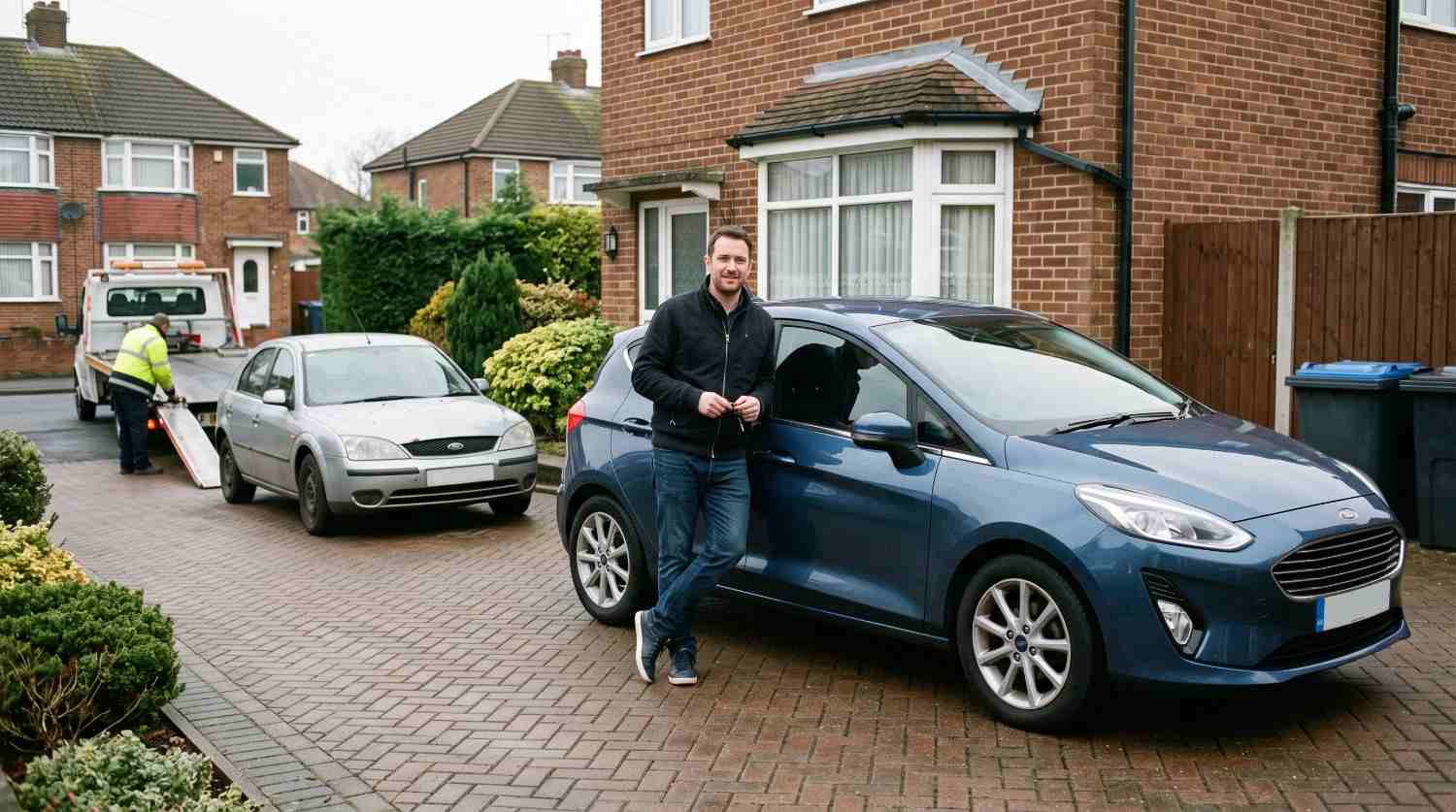
For example, you could arrange for an old vehicle to be collected on Monday and purchase another car on Tuesday. There is no requirement to wait a particular number of days simply because your previous vehicle has been scrapped.
However, the requirements for using the replacement on public roads still apply. Before driving it, check that:
- The vehicle is registered correctly with the DVLA.
- It has valid vehicle tax.
- Appropriate motor insurance is in place.
- It has a valid MOT where required.
- It meets any other applicable roadworthiness requirements.
If you are buying from a dealership, some registration and administrative arrangements may be handled as part of the transaction. If you are buying privately, you may need to organise more of these steps yourself.
Remember that vehicle tax does not transfer from the previous keeper. You must tax the replacement before driving it, unless it is legally declared off the road. You can check the requirements in the GOV.UK guide to buying a vehicle.
The important distinction is that you can purchase a replacement immediately, but you cannot drive it until the relevant legal requirements have been satisfied.
What Paperwork Should You Complete After Scrapping?
Although there is no waiting period, you should make sure the disposal of your old vehicle has been properly recorded. Leaving the paperwork unfinished can create problems involving vehicle tax, registered-keeper records and future correspondence.
Notify the DVLA That Your Car Has Been Scrapped
When a vehicle is scrapped, the DVLA must be informed so that its registered-keeper records and vehicle tax can be updated. GOV.UK provides an online notification service and a paper process using the V5C logbook.
Scrap Car Network’s website explains that the vehicle owner remains legally responsible for informing the DVLA, even though the company can arrange collection without a V5C logbook. Confirm the paperwork arrangements with the collection provider, but do not assume that collection alone completes your DVLA notification. Keep the confirmation once the DVLA has updated its records.
The V5C logbook is important during the disposal process. GOV.UK instructs vehicle owners to give the V5C to the authorised treatment facility (ATF) while keeping the yellow section titled “sell, transfer or part-exchange your vehicle to the motor trade”. You must also make sure the DVLA receives the required notification using the applicable procedure.
If you do not have the logbook, tell the collection provider before arranging disposal. Scrap Car Network states that it can arrange collection without a V5C, but this does not remove your responsibility to notify the DVLA. Follow the official alternative procedure and retain any confirmation of the notification.
You can find the official instructions in the GOV.UK guidance on how to scrap your vehicle.
Keep Your Certificate of Destruction
When an authorised treatment facility (ATF) completely scraps an eligible vehicle, it must issue a Certificate of Destruction (CoD) within seven days. This applies to cars, light vans and qualifying three-wheeled motor vehicles, but not every vehicle type.
The certificate is official proof that the eligible vehicle has been handed over for scrap. It should be kept with your other vehicle documents as a record of the disposal.
An ATF may sometimes decide to repair and sell a vehicle rather than completely scrap it. In that situation, a CoD is not issued. The certificate therefore relates to the vehicle’s disposal for destruction, not simply the fact that it has been collected.
Scrap Car Network connects customers with local scrap-car dealers and collection partners. The authorised facility responsible for processing the vehicle is the party that issues the CoD.
For more information, see GOV.UK guidance on where vehicles can be scrapped.
Check Whether You Are Entitled to a Vehicle Tax Refund
When the DVLA is notified that your vehicle has been scrapped, its vehicle tax is cancelled. You may receive a refund for any full remaining months of vehicle tax, depending on the circumstances.
The refund is calculated using the date the DVLA receives the notification, rather than simply the date the car was collected. It is therefore worth confirming that the notification has been completed and checking the refund arrangements.
Do not include an expected tax refund in your replacement-car budget until you know when it will arrive. Further information is available through the GOV.UK vehicle tax refund guidance.
Can Outstanding Finance Affect Buying Another Car?
Outstanding finance is worth checking before disposing of an old vehicle, but it does not automatically prevent you from purchasing a replacement.
The important issue is the type of agreement attached to your previous car.
With hire purchase (HP) and personal contract purchase (PCP), the finance provider generally retains ownership until the agreement’s purchase conditions have been met. Under a PCP agreement, for example, you usually have the option to buy the vehicle at the end by paying the agreed final amount. Check the terms of your agreement and contact the finance provider before arranging disposal.
The position can be different with an unsecured personal loan. If you own the vehicle outright but used a personal loan to pay for it, the outstanding loan does not automatically prevent you from disposing of the car. However, the repayment obligation remains.
If you still owe money on your old vehicle, consider the following before arranging disposal:
- Contact the finance provider to establish the outstanding settlement amount.
- Check whether the lender must approve the vehicle’s disposal.
- Confirm how any settlement will be handled.
- Avoid assuming that the scrap value will automatically clear the outstanding balance.
The debt does not disappear simply because the vehicle is no longer roadworthy or has been scrapped. You may still be responsible for the remaining amount under your agreement.
It is also important to distinguish this from financing a replacement. A lender will assess a new application according to its own eligibility and affordability criteria. Scrapping your previous vehicle does not automatically disqualify you from obtaining another car loan.
For further information, see MoneyHelper’s guide to hire purchase and its explanation of personal contract purchase.
What Happens to Your Car Insurance After Scrapping?
Your old insurance policy will not automatically transfer to a replacement vehicle. Contact your insurer to explain that the previous car has been scrapped and ask what options are available.
Depending on the policy, you may be able to change the insured vehicle without cancelling the entire policy. Alternatively, you may need to arrange a new policy.
Before making a decision, check:
- Whether your existing insurer allows a vehicle change.
- Whether the replacement will result in a higher or lower premium.
- Whether administration or cancellation fees apply.
- Whether you are entitled to a refund for any unused premium.
- When cover for the replacement vehicle will begin.
The replacement may have a different insurance group, engine size, value or repair cost, all of which can affect the premium.
Do not assume that your previous insurance remains valid simply because you have transferred the policy details or arranged a replacement. Confirm the new vehicle’s cover with your insurer before driving it.
Should You Buy a Replacement Car Immediately?
Whether you should purchase another vehicle straight after scrapping your old one depends on your transport needs, available budget and confidence in your next purchase.
There are circumstances where replacing a car quickly makes sense, but there are also situations where waiting can help you avoid an unnecessary financial commitment.
When Buying Immediately Makes Sense
An immediate purchase may be practical if you depend on a car for work, family responsibilities or regular travel.
For example, if your previous vehicle has failed its MOT and the necessary repairs are no longer economical compared with the cost of replacing it, buying another car may be a more practical option.
Buying another car promptly can also make sense if you have already researched your options, arranged suitable finance and identified a vehicle that meets your requirements.
However, urgency should not replace basic checks. Even when you need transport quickly, review the vehicle’s history, MOT records, service history and condition before committing to the purchase.
When Waiting Is the Better Option
Waiting may be more sensible if you are unsure how much you can afford or whether you need another car immediately.
Scrapping an old vehicle can create an opportunity to reconsider your transport requirements. You might discover that public transport, occasional car hire or sharing a vehicle can meet your needs temporarily.
Financial circumstances also matter. If you disposed of your previous car because repair bills and household expenses had become difficult to manage, taking on another substantial monthly payment could increase financial pressure.
A short delay can give you time to:
- Establish a realistic replacement-car budget.
- Compare running costs, insurance and vehicle tax.
- Save towards a larger deposit.
- Compare different vehicle types and models.
- Check whether temporary transport arrangements are practical.
Rather than trying to predict whether used-car prices will fall, compare the actual vehicles available and consider their total ownership costs. The purchase price is only one part of what you will spend on a replacement.
Does the Scrapping Process Differ Across the UK?
Your location can influence the practical arrangements for collecting an old vehicle, but it does not create a legal waiting period before you can buy another.
Collection availability depends on the vehicle’s postcode and the arrangements offered by the collection provider. It is sensible to confirm the available appointment options before planning the replacement purchase around a particular collection date.
The vehicle administration process is also worth understanding. The DVLA is responsible for vehicle registration and vehicle tax across Great Britain and Northern Ireland. In Northern Ireland, the Driver and Vehicle Agency (DVA) handles driver licensing and vehicle testing, while the DVLA remains responsible for vehicle registration and tax.
Owners should follow the relevant official instructions for vehicle disposal and Certificate of Destruction arrangements. For more information, see nidirect’s guidance on disposing of a vehicle at the end of its life and its vehicle tax and registration guidance.
Common Mistakes to Avoid When Replacing a Scrapped Car
The gap between disposing of an old vehicle and purchasing another can involve several financial and administrative details. Keep these points in mind:
- Assuming the paperwork is complete: Confirm that the DVLA has received the required notification and retain any confirmation or Certificate of Destruction issued.
- Overlooking outstanding finance: Scrapping a vehicle does not cancel an existing finance agreement. Confirm the lender’s requirements before disposal.
- Cancelling insurance without checking alternatives: Ask whether your existing policy can be amended and compare any associated costs.
- Relying on money that has not arrived: Confirm the scrap payment and tax refund arrangements before including them in your replacement-car budget.
- Rushing the purchase: Check the replacement vehicle’s history, MOT information and condition before committing.
Taking care of these details can help prevent avoidable costs and make the transition between vehicles easier to manage.
Arranging Your Old Car’s Collection
Once you have decided what to do about your replacement vehicle, you can arrange the disposal of your old one around your plans.
Scrap Car Network connects vehicle owners with local scrap-car dealers and collection partners. Its website advertises free collection across the UK, with arrangements based on the vehicle’s details and collection postcode.
Customers can select a collection date and a morning or afternoon slot. The company does not guarantee an exact arrival time, but its collection partner will call approximately 30 minutes before arrival. Once the vehicle has been loaded onto the collection vehicle, Scrap Car Network states that payment is made by bank transfer within one to two working days.
Scrap Car Network’s FAQ states that vehicles must have four wheels, while its collection guidance asks customers to make sure the car is accessible and can be rolled onto the collection vehicle. Missing parts may affect the amount offered. If the vehicle has significant damage or access restrictions, explain its condition when requesting a quote so the collection arrangements can be checked.
You can read more about the scrap car collection service or get an instant scrap car quote using your vehicle registration and postcode.
Making the Right Decision About Your Replacement Car
You do not have to wait a set number of days or weeks before buying another car after scrapping your old one. A replacement can be purchased immediately, provided you are ready to make the financial commitment.
The more important considerations are confirming the necessary disposal paperwork, checking any outstanding finance, arranging suitable insurance and making sure the replacement meets the requirements for road use.
If you have already found a suitable vehicle and your budget is in place, there is no general legal reason to delay the purchase simply because your previous car has been scrapped. If you are uncertain about your finances or transport needs, taking a little more time may lead to a better decision.