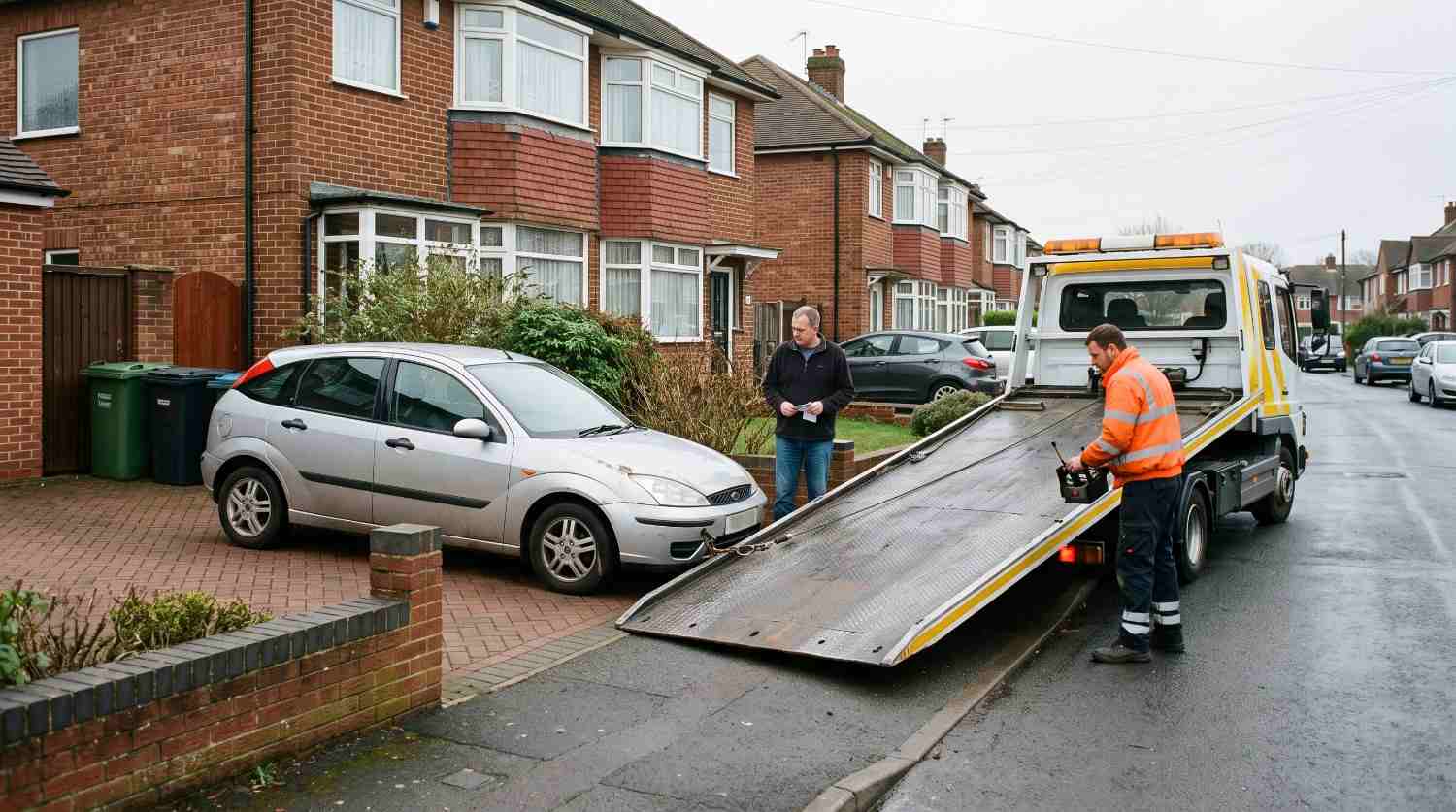
What to Do Immediately After a Car Is Collected for Scrap
20th Nov, 2026
Having your car collected for scrap is only one part of the disposal process. Once the vehicle has left your property, there are still a few administrative steps to complete. These include making sure the Driver and Vehicle Licensing Agency (DVLA) has been notified, updating your car insurance and checking whether you are due a vehicle tax refund.
The paperwork you receive depends on what happens to the vehicle after collection. A car that is completely scrapped at an Authorised Treatment Facility (ATF) follows a different process from one that is repaired and resold. Understanding the difference helps you know which documents to expect and what you need to do next.
If you have arranged collection through Scrap Car Network, its scrap car collection process explains the main stages, from getting a quotation to arranging collection. The following steps cover what to check after the vehicle has been handed over.
Check Whether You Should Receive a Certificate of Destruction
A Certificate of Destruction (CoD) is an official document issued by an Authorised Treatment Facility (ATF) when a qualifying vehicle is completely scrapped. It provides proof that the vehicle has been handed over for scrap.
Not every vehicle collected for disposal receives a CoD. When an ATF receives a vehicle, it can decide whether to completely scrap it or repair and sell it. If the vehicle is repaired and resold, a CoD is not issued.
For qualifying vehicles that are completely scrapped, the ATF must issue the CoD within seven days. The scheme covers cars, light vans and three-wheeled motor vehicles, but excludes motor tricycles. Other vehicle types do not receive a CoD under this process.
If you are expecting a certificate, check your collection paperwork and ask which ATF is handling the vehicle. If the applicable seven-day period has passed and you have not received the document, contact the collection company to check the vehicle’s processing status.
Keep the CoD with your other vehicle records if one is issued. It can help demonstrate that the vehicle was handed over for scrapping if questions arise about its disposal.
You can read the official GOV.UK guidance on where vehicles can be scrapped for further information about ATFs and Certificates of Destruction.
Make Sure DVLA Has Been Notified
After handing over your car, make sure DVLA is informed of the change. The notification process depends on whether the vehicle is completely scrapped at an ATF or transferred to a motor trader for possible repair and resale.
If the vehicle is completely scrapped at an ATF, follow the DVLA instructions for notifying it that the vehicle has been taken for scrapping. If it is transferred to a motor trader instead, use the relevant vehicle sale or transfer notification process. Do not assume that the collection itself automatically completes your responsibility.
If you have the vehicle registration certificate, commonly called the V5C or logbook, follow the instructions for the relevant type of handover. When a vehicle is scrapped at an ATF, GOV.UK instructs the keeper to give the facility the main V5C but retain the yellow section marked for selling, transferring or part-exchanging the vehicle to a motor trader.
If you do not have the V5C, this does not automatically prevent you from arranging collection through Scrap Car Network. However, you must still make sure DVLA receives the required notification. The standard online process requires information from the logbook, so check the official DVLA guidance for vehicles without a logbook for the appropriate alternative process.
Keep any DVLA confirmation or correspondence with your collection paperwork. This gives you a record that the notification has been completed.
Cancel or Update Your Car Insurance
Once the vehicle has been collected and you no longer need insurance for it, contact your insurer to cancel or amend the policy. Insurance does not automatically end simply because the car has been taken away.
Ask when the cancellation will take effect and whether you are entitled to a refund for any unused cover. The amount, if any, depends on your policy terms and the date the insurer processes the cancellation. Check whether administration or cancellation fees apply.
If you are replacing the vehicle, you may be able to transfer your existing policy instead of cancelling it. Your insurer can explain whether this is possible and whether the change affects your premium or cover.
Keep written confirmation of the cancellation or policy amendment. This gives you a record of when the insurance arrangement ended or changed.
Check Your Vehicle Tax Refund
When DVLA receives notification that you no longer have the vehicle, its vehicle tax is cancelled. You should receive a refund for any full months of vehicle tax remaining from the date DVLA receives the notification.
If you pay vehicle tax by Direct Debit, DVLA will cancel the Direct Debit automatically once the notification has been processed. Refunds are normally sent by cheque to the name and address recorded on the vehicle logbook.
The refund is calculated using the date DVLA receives the information, not necessarily the date the vehicle was collected. This means that delays in completing the notification can affect how many full months remain eligible for a refund. Certain payment surcharges and fees are not refunded.
If your refund cheque has not arrived within eight weeks, contact DVLA to check its progress. You can find the relevant instructions on the official GOV.UK vehicle tax refund page.
Update Parking Permits and Other Accounts
If your vehicle was registered for a residential parking permit, workplace parking arrangement or another vehicle-specific account, check whether you need to update or cancel it.
Some services may continue to associate your old registration number with your account until you make the change yourself. This is separate from the formal scrapping process, but dealing with it can help prevent unnecessary charges or administrative confusion.
Only update the accounts that apply to your circumstances. Requirements vary between local authorities, employers and service providers.
Confirm That Your Scrap Car Payment Has Arrived
If you accepted an offer for your vehicle, check that the agreed payment has reached your bank account. Keep the quotation, collection receipt and payment confirmation together so you have a clear record of the transaction.
Scrap Car Network makes payments by bank transfer within one to two working days after the vehicle has been loaded onto the collection vehicle. If the payment has not arrived within that period, contact the company with your vehicle registration and collection details so the transaction can be checked.
For vehicles that are scrapped in England and Wales, payment in cash is illegal. The seller must be paid by bank transfer or cheque. This restriction applies to vehicles being scrapped; it does not apply in the same way when an ATF repairs and sells a vehicle instead.
Resolve Any Outstanding Vehicle Finance
If your car was subject to a finance agreement, check its status with your finance provider before arranging or completing its disposal. Do not assume that handing over the vehicle or receiving a scrap payment automatically clears the outstanding balance.
Depending on the agreement, you may need the finance provider’s permission before selling or disposing of the vehicle. The registered keeper named on the V5C is not necessarily the vehicle’s legal owner, so make sure you have the authority to arrange its disposal.
Contact the finance company to confirm the settlement figure, any remaining balance and the steps required to close the agreement. If the vehicle has already been collected, explain the circumstances and ask what needs to happen next.
Any outstanding agreement must be addressed directly with the relevant finance provider. A scrap collection or payment does not, by itself, settle a finance agreement.
Keep Your Scrap Car Documentation Together
Once the collection and administrative steps are complete, keep the relevant records in one place. Having them available makes it easier to answer questions about the handover, payment or vehicle status later.
Useful documents include:
- Your original scrap car quotation or agreed offer
- The collection receipt or handover confirmation
- Payment confirmation or bank transaction record
- DVLA notification confirmation
- The Certificate of Destruction, if one was issued
- Insurance cancellation or policy amendment confirmation
- Any correspondence with your finance provider, if applicable
A CoD and a collection receipt serve different purposes, so retain both if you receive them. Keep the documents for as long as you may need them to resolve questions about the transaction or your former vehicle.
For more information about what happens to a vehicle after collection, see the company’s explanation of car recycling.
What Happens If You Do Not Complete the Necessary Steps?
A vehicle leaving your property does not automatically mean every part of the disposal process has been completed. If DVLA has not been notified where notification is required, its records may still associate the vehicle with you as the registered keeper.
This can lead to further correspondence and potential liability for vehicle-related matters. GOV.UK states that failing to tell DVLA when a vehicle is scrapped can result in a fine of up to £1,000.
Other unfinished tasks can cause separate problems. For example, an insurance policy may remain active until you contact the insurer, while an outstanding finance agreement may continue under its original terms.
Deal with each responsibility separately. Check the vehicle’s disposal or transfer status, make sure DVLA has been notified, update your insurance and check any remaining financial arrangements.
Your First Seven Days After a Scrap Car Collection
The first week after collection is a useful time to check that the handover and any required paperwork are progressing. You do not need to wait until the end of the week to complete your own responsibilities.
Use this sequence as a guide:
- After collection: Keep the handover receipt and check that the vehicle details recorded on it are correct.
- As soon as possible: Notify DVLA using the appropriate process for the vehicle’s disposal or transfer and retain its confirmation.
- After handover: Contact your insurer to cancel or update your policy.
- Within one to two working days after loading: Check your bank account for the payment from Scrap Car Network.
- Within seven days, where applicable: If your qualifying vehicle has been completely scrapped at an ATF, check that the facility has issued the CoD.
- After DVLA processes the notification: Check for your vehicle tax refund, which covers any full months remaining from the date DVLA receives the information.
These timings relate to different parts of the process. The seven-day CoD timeframe applies to qualifying vehicles that are completely scrapped, not every vehicle collected for disposal. The vehicle tax refund also depends on when DVLA receives the notification.
Arrange Your Scrap Car Collection with Confidence
Completing the paperwork after collection is easier when you understand what to expect before the vehicle leaves. Make sure the collection details are correct, keep a record of the handover and follow the relevant DVLA instructions.
Scrap Car Network arranges free nationwide scrap car collection through its network of local dealers and collection partners. You can request an instant quotation using your vehicle registration and postcode, with payment made by bank transfer.
If you are ready to dispose of an unwanted vehicle, you can get an instant scrap car quote and arrange your collection.