How Waiting Too Long to Scrap Costs You Money
26th Jun, 2026
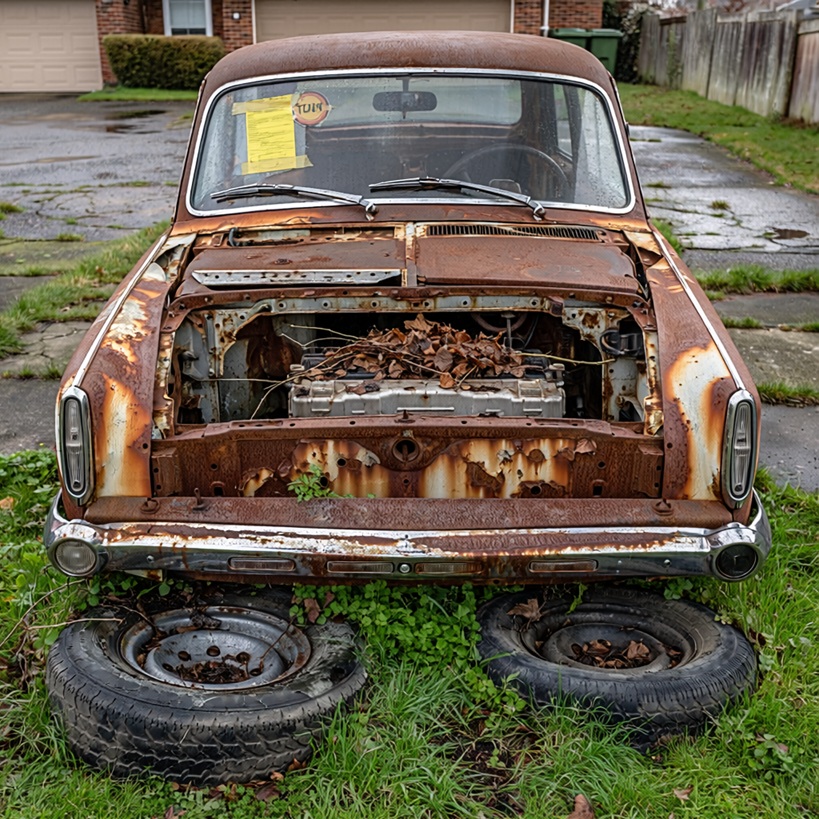
That old motor sitting on the driveway is not just a bit of an eyesore. It is quietly draining money from the household budget every single day it stays there. Most people do not realise that the moment a car stops being roadworthy, the clock starts ticking on a series of costs. These expenses only get worse as time goes on. The truth is that delayed scrapping costs mount up much faster than most owners expect. What starts as a plan to sort it out next month can quickly turn into a series of unnecessary expenses.
Workshop experience shows that these delays often lead to missed opportunities and legal headaches. A phone call made today could have prevented hundreds of pounds in losses. It is important to treat a non-running vehicle as a financial liability rather than a stationary asset. Every week of inaction erodes the potential payout and increases the risk of receiving a fine in the post. Let us look at how procrastination can turn a simple disposal task into a very expensive mistake.
The Immediate Financial Burden of an Idle Car
Even when a car is not moving, it still costs money to keep. The first expense that many people overlook is insurance. Unless a vehicle is officially declared off-road with a Statutory Off Road Notification, it legally requires cover. This is money spent protecting a car that might never turn a wheel again. These monthly premiums are clear examples of unroadworthy car expenses that serve no real purpose for the owner.
Then there is the issue of space. If a dead car is taking up a parking spot, a garage bay, or a piece of the driveway, it is preventing something useful from sitting there. This is especially critical for businesses where every square metre of yard space has a financial value. A vehicle that cannot be used is essentially dead capital. Freeing up that space often allows for a working vehicle to be parked safely or for equipment to be stored properly.
The financial decline starts almost immediately. While metal prices go up and down, the general trend for a deteriorating vehicle is always downward. A car that is worth a decent sum today might see a significant drop in its offer in six months. This is because parts corrode and fluids degrade when they are not kept in motion. Consequently, the initial quote is often the best one the owner will ever receive.
How Scrap Value Decreases Through Physical Decay
Scrap value is not just about the weight of the steel. It is also about what materials and parts can still be recovered. A car that is collected within a few weeks of a failure will have more salvageable parts than one left to rot for a year. Batteries are the first things to go. They lose their charge and begin to corrode internally very quickly. tyres also perish when they are left to sit in one position for too long.
British weather is relentless when it comes to metal. Moisture leads to rust, and once rust takes hold, it spreads through the chassis and panels. This ruins the structural integrity of the car. Even the electronics inside the dashboard can deteriorate if moisture gets into the cabin. The scrap value depreciation is a constant process that eats away at the potential payout every month the car sits in the rain.
A catalytic converter is often the most valuable single part of a scrap car. However, even these can lose value if the exhaust system becomes a solid mass of rust. A car that might have fetched four hundred pounds last year could drop to half that amount if the recycler finds that most components are no longer usable. To protect the residual worth, owners should find out how to scrap your car easily before the weather does more damage. This is why acting fast is the only way to ensure the highest possible payout.
Legal Penalties and Compliance Issues
This is where things can get expensive very fast. If a vehicle is not taxed and does not have a valid SORN, the DVLA will issue automatic fines. The penalty for not taxing a vehicle is eighty pounds, though this can be reduced if paid quickly. However, these scrap car penalties can stack up if the problem is not resolved. The system is automated, so there is no way to argue that the car was “just sitting there.”
The situation gets even worse if the car is parked on a public road without tax. Local councils have the power to remove vehicles they think are abandoned. The owner then faces massive recovery fees and daily storage charges. These costs can easily run into hundreds of pounds before the vehicle is even claimed. If the car is never claimed, the owner is still liable for the disposal costs.
Paperwork errors also lead to more scrap car penalties for the unwary. If an owner has moved house and forgotten to update the address on the V5C logbook, enforcement notices will go to the old address. By the time the owner finds out about the problem, the fines could have reached the maximum level. All of this stress and expense is avoidable if the car is moved on through vehicle disposal services that handle the de-registration process.
Storage and Space Opportunity Costs
It is helpful to think of a driveway or a garage as real estate. Every month a dead car sits there, it is occupying space that could serve a better purpose. For a homeowner, this might mean a working car has to be parked on the street. This increases the risk of theft and accidental damage to the car that actually matters. It also makes the exterior of the house look untidy.
For businesses, the calculation is even clearer. A commercial yard has a high cost per square metre. Leaving an abandoned vehicle to take up space is a direct loss of revenue. That space could be used for storing stock, customer vehicles, or new equipment. This represents a huge part of the overall vehicle disposal costs that a business must consider. Decisive action allows the company to redeploy that space and improve its cash flow.
A rusting wreck also affects the kerb appeal of a property. Estate agents often report that untidy exteriors put off potential buyers and renters. In some cases, a neglected car can even affect the property value of the entire street. Creating a clean and tidy environment has a psychological and financial value that is often much higher than the scrap price of the car itself. Acting quickly stops the scrap value depreciation from making the situation even worse.
Maintenance Costs for a Static Vehicle
It might sound strange, but a non-running car still needs maintenance if it is to keep its value. If there is any plan to sell the car privately, the owner will have to spend money on it. tyres develop flat spots that make them dangerous. Brake discs corrode and seize solid, which means the car cannot even be pushed.
Replacing a dead battery and fixing seized brakes can easily cost two or three hundred pounds. There is also no guarantee that the engine will start after sitting idle for months. These unroadworthy car expenses can quickly eat up any profit the owner hoped to make from a private sale. Most of the time, the cost of fixing the car is higher than the increase in the sale price.
Even if the plan is just to scrap it, the owner must think about fluid disposal. Old engine oil, coolant, and brake fluid cannot just be poured down a drain. Proper disposal costs money and time. If an owner tries to do it themselves and causes a spill, the environmental fines are enormous. It is far better to let a professional team handle the depollution process.
The Hidden Cost of Missed Opportunities
Every month a car sits unscrapped is a month that the cash it represents is locked away. That money could be sitting in a high-interest savings account or being used to pay off a debt. It could also be used to fund repairs on a working car or as a deposit for a new one. This is a vital part of the vehicle disposal costs that people often forget to calculate.
For someone who needs a replacement car, the delay is even more expensive. Instead of using the scrap cash for a deposit, they might have to take out a larger loan with higher interest rates. The total cost of that loan over several years could be much higher than the small amount they were waiting for in the scrap market. The faster the old car is converted back into cash, the faster that money can be used for something productive.
Fleet managers also know that every non-working vehicle is a drain on efficiency. Converting dead assets back into working capital is a basic rule of good business. Delaying the process only serves to complicate the accounts and clutter the yard. Immediate action is the hallmark of a well-run operation. When a business is ready to move forward, it is a good idea to get an instant quote to scrap any car to see the potential return.
Environmental Penalties and Landowner Liability
Abandoned vehicles are an environmental risk. They leak oil, battery acid, and coolant into the ground. If these fluids reach the groundwater or contaminate the soil on a property, the landowner is the one held responsible. The Environment Agency has the power to issue remediation notices that require a professional cleanup. This can cost thousands of pounds.
Procrastination can turn a simple task into a major financial disaster. Even without a leak, local councils can take action if they think a vehicle is hazardous to the public. The owner then faces recovery fees and disposal costs that are much higher than the price of a standard collection. Most legitimate services will collect the car for free, so there is no reason to take this risk.
Modern recycling standards are very high. A licensed recycler will ensure that ninety-five percent of the car is reused. This protects the environment and recovers valuable metals for the manufacturing industry. By acting quickly, the owner is contributing to a greener future while also avoiding any risk of a pollution fine. Choosing a reputable source for scrap car recycling is the smartest way to be a responsible owner.
Calculating the True Delay Cost
A helpful exercise is to sit down and work out the real cost of waiting. Take the current scrap quote and then list every expense since the car stopped running. Include the insurance premiums and any fines that have arrived. Also, try to value the space the car is taking up and the time spent worrying about the situation.
Subtracting these costs from the quote usually reveals a sobering number. For many people, the car has already cost them more than it is worth. If the delayed scrapping costs continue to mount, the financial hole only gets deeper. In a single year, the total loss can easily reach a thousand pounds. This represents a massive drain on personal or business wealth.
Waiting for a better metal price is usually a losing game. The physical deterioration of the car happens much faster than any small rise in the global price of steel. Decisive action is the only way to stop the bleed. Arranging a professional scrap car collection gives the owner a baseline to work from. It is the first step toward clearing the debt and the driveway.
Decisive Action and the Benefits of Scrapping Now
The most sensible move is to act the moment a car becomes a liability. Once a vehicle fails its MOT and the repair bill is too high, the decision is already made. Arranging an immediate collection removes all future liability and puts cash in the bank. Professional dealers handle all the paperwork and provide the owner with a Certificate of Destruction.
The payment might be modest, but it is immediate. The space on the drive is freed up, and the legal obligations are met. For many, the closure is the most valuable part of the deal. Having an unresolved problem sitting outside the window is a constant source of low-level stress. Clearing it away allows the owner to focus on more important things.
If an owner is worried about getting the best price, the advice is to get multiple quotes but to do it quickly. The difference between buyers is usually small, and waiting a month while shopping around will cost more in scrap value depreciation than any extra tenner found in a quote. Speed is the key to a successful transaction in the scrap world.
Regional Variations in Value and Timing
Where a person lives in the UK can change the final offer. Scrap prices vary by region based on local demand and how close the yard is to a recycling facility. Someone living in urban centres like London might get a slightly higher price than someone in a very rural area because the transport costs are lower.
However, this regional variation is another reason why waiting is a bad idea. If an owner is in an area with lower values, waiting will not improve the situation. The car will still lose its worth just as fast. The best move is to use the Scrap Car Network to find the best local rate. This connects the owner with the best local buyer and ensures the quote is as competitive as possible for that specific area.
Acting while the vehicle still has recoverable parts is the best way to ensure a high quote. Once the car becomes a pile of rust, it is only worth its weight in basic iron. The value of a complete car with a good catalytic converter and aluminium wheels is much higher. Time is the enemy of value in this industry, and scrap car penalties will not stop accumulating just because the owner is far from a city.
Summary and Final Advice
The financial case against waiting is clear and overwhelming. From the moment a car stops being roadworthy, it becomes a drain on resources. Between insurance, depreciation, and the risk of penalties, the costs compound daily. What feels like a minor delay can easily turn into a loss of hundreds of pounds.
The smartest move is to treat the situation with urgency. The first step is to scrap my vehicle through a licensed and reputable facility. This converts a rusting liability into useful cash and frees up valuable space. It also ensures that the vehicle is recycled according to the highest environmental standards. Every day of delay is simply money lost that can never be recovered.
If an owner needs help with the process or has questions about their specific car, the best thing to do is speak to the experts. Feel free to contact us or call 0300 100 0027 for friendly advice. A professional team can guide an owner through the paperwork and make the entire experience as smooth as possible. Don’t let that old car sit there and drain your bank account any longer.