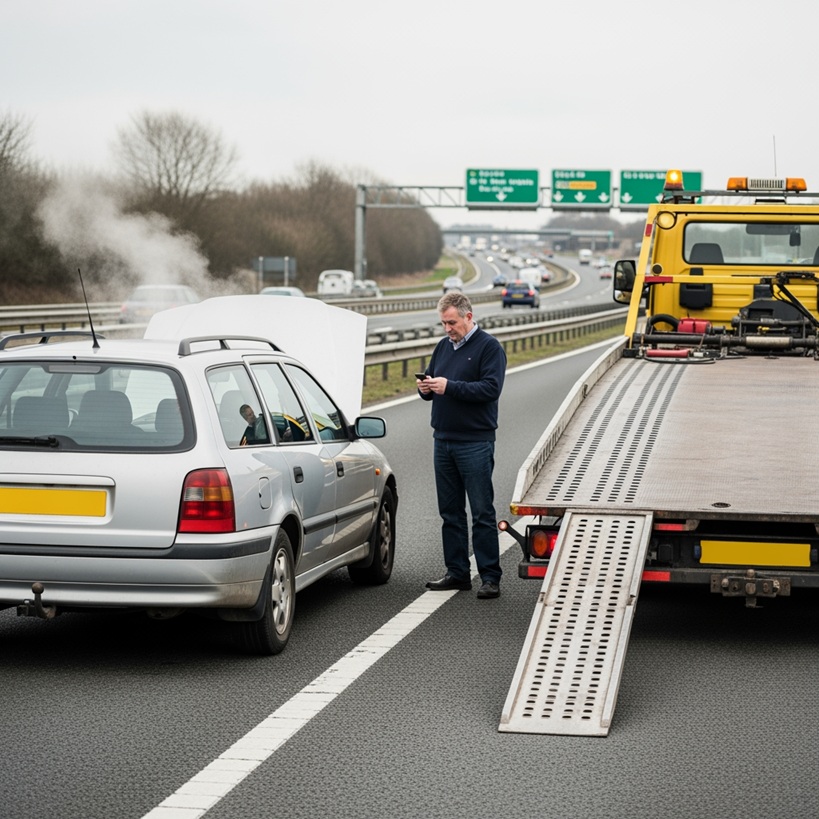
Emergency Scrap After Motorway Breakdown: Recovery vs Scrap Costs
28th May, 2026
Breaking down on a fast-moving motorway is an incredibly stressful experience. When warning lights flash, power steering fails, or smoke begins billowing from under the bonnet, the immediate focus is entirely on physical safety. However, once the vehicle is safely moved to the side and the hazard lights are on, a sobering financial reality quickly sets in. The logistics of moving a dead vehicle off a major arterial route are complex, and the associated costs can spiral into hundreds of pounds before a mechanic has even opened the bonnet to diagnose the actual fault.
For many older vehicles, the harsh truth is that a catastrophic failure at 70 miles per hour signals the end of its economical life. Arranging a motorway breakdown scrap collection directly from a service station or a local recovery yard is often the most financially logical decision a driver can make. Instead of paying exorbitant fees to tow a fundamentally broken vehicle back to a residential driveway, drivers can utilise professional disposal networks to cut their losses immediately.
Understanding the precise mechanics of motorway recovery, the hidden costs of broken-down vehicles, and the seamless logistics of emergency scrap collection allows drivers to make objective decisions under immense pressure.
What Happens During a Motorway Breakdown
Motorways present a highly unique and dangerous environment when a vehicle suffers a mechanical failure. Unlike a quiet residential street, there is no option to simply leave the car parked and walk away to consider the options. Highways England protocols dictate that disabled vehicles must be removed with extreme urgency, particularly on smart motorways where traditional hard shoulders have been entirely eliminated to create active traffic lanes.
When a vehicle breaks down in a live lane or a designated emergency refuge area, traffic officers are frequently dispatched. Their primary mandate is to maintain the flow of traffic and ensure public safety, not to repair vehicles. If a driver cannot arrange their own recovery swiftly, traffic officers have the statutory power to order the immediate removal of the vehicle by a police-contracted recovery service. This extreme urgency means drivers are afforded virtually no time to shop around for competitive towing quotes.
Standard Recovery Costs Breakdown
The financial impact of a breakdown begins the moment a recovery truck is dispatched. Drivers are frequently caught off guard by the sheer expense of emergency towing. The basic callout fee, simply to get a flatbed truck to the scene of the breakdown, typically ranges from £80 to £150. Once the vehicle is loaded, mileage charges are applied for the journey to a garage or the owner’s home, heavily impacting the overall breakdown recovery cost. These mileage fees generally average between £2 and £4 per mile.
If the breakdown occurs outside standard business hours, on a weekend, or during a bank holiday, recovery companies apply significant premium surcharges. Furthermore, if the vehicle has suffered severe damage like locked wheels or collapsed suspension, specialist winching equipment is required, adding further fees to the invoice. If the car cannot be delivered to a residential address immediately and must be stored at the recovery company’s secure compound, daily storage fees of £15 to £30 begin accumulating instantly.
When Recovery Doesn’t Make Financial Sense
Not all breakdowns are created equal. A snapped auxiliary belt or a flat tyre are simple inconveniences, but certain mechanical failures act as a definitive death sentence for older vehicles. Catastrophic engine failures, such as a snapped timing chain that destroys the internal valves, or a complete loss of oil pressure resulting in seized pistons, require thousands of pounds to rectify.
Transmission failures present a similar mathematical nightmare. Replacing a shattered automatic gearbox on a twelve-year-old estate car will almost always cost significantly more than the vehicle’s market value. These situations are further compounded if the vehicle recently scraped through its MOT with multiple advisory notices for corroded subframes or worn suspension components. When a major motorway failure occurs, adding the heavy recovery bill to an already mounting list of required repairs creates an insurmountable financial burden. If you decide it is time to scrap my car directly from the recovery yard, you prevent these storage and towing costs from escalating any further.
The Hidden Costs of Keeping a Broken-Down Car
Choosing to tow a severely damaged vehicle home rather than sending it straight to an Authorised Treatment Facility initiates a cascade of hidden expenses. The initial recovery fee is merely the first invoice. Once the car is deposited at a local garage, the mechanics will charge diagnostic fees, typically ranging from £40 to £80, simply to plug in their computers and confirm the terminal nature of the fault.
If the vehicle sits at a local garage while the owner deliberates over repair quotes, daily storage charges accumulate rapidly, forcing a rushed financial decision. Furthermore, keeping a non-running vehicle creates ongoing administrative headaches. Insurance policies must be maintained, and road tax continues to leave the owner’s bank account unless a Statutory Off Road Notification is officially filed. Meanwhile, the vehicle suffers rapid depreciation, losing value every single day it sits idle while developing the heavy stigma of a permanent non-runner.
Comparing Recovery Costs to Scrap Value
Evaluating the situation objectively requires removing all emotional attachment to the vehicle and looking strictly at the mathematics. Comparing the total projected costs of recovery and repair against the guaranteed financial yield of scrap metal makes the correct path overwhelmingly obvious.
Consider an objective scenario involving a 2008 hatchback that suffers terminal head gasket failure on a major bypass. The emergency recovery fee to tow the vehicle forty miles home is quoted at £180. The diagnostic fee is £60, and the quoted repair cost for a replacement engine block is £1,200. The car, in working condition, is only worth £1,000 on the second-hand market. Proceeding with the repair puts the owner instantly into negative equity. Conversely, choosing a motorway breakdown scrap solution yields a guaranteed payment based on the vehicle’s raw weight, whilst entirely bypassing the towing fee and the diagnostic charge.
How Emergency Scrapping Works
The logistics of scrapping a vehicle directly from an emergency situation are far simpler than most drivers assume. Professional disposal networks do not collect from active motorway lanes, as this is a severe safety violation handled only by police contractors. However, once the police or Highways England have towed the vehicle to a safe motorway service station or a secure local recovery yard, licensed operators can take over.
When you need to arrange an urgent car scrapping service, the process is initiated via a rapid online valuation based on the vehicle’s registration and postcode. Once accepted, the facility coordinates directly with the compound holding the vehicle. Because modern transactions are entirely digital, the registered keeper does not even need to be physically present with the vehicle during the collection. Keys and the V5C logbook can be left with the garage reception or securely posted, and the agreed funds are transferred directly into the owner’s bank account.
Legal Obligations After a Motorway Breakdown
Regardless of the chaos surrounding a major breakdown, the strict legal requirements governing vehicle ownership in the UK remain firmly in place. Handing a vehicle over to a recovery driver without ensuring the proper DVLA documentation is completed leaves the original owner entirely liable for the vehicle’s future.
The V5C logbook is the central document in this transaction. The registered keeper must complete Section 9, officially notifying the DVLA that the vehicle has been transferred to the motor trade for dismantling. The ultimate protection comes from the official Certificate of Destruction. This secure document, issued only by a licensed facility, proves conclusively that the vehicle has been crushed and recycled legally, permanently severing any legal connection between the chassis number and the previous owner.
Environmental Benefits of Scrapping vs Repair
Choosing to scrap a heavily damaged vehicle rather than forcing a complex repair yields significant environmental benefits. A catastrophic motorway breakdown often results in hazardous fluids, such as synthetic engine oil or toxic engine coolant, leaking into the vehicle’s undertrays. If the vehicle is towed multiple times, these fluids risk contaminating public roads and drainage systems.
When you arrange to scrap my van or car through a licensed channel, the vehicle undergoes a mandatory, rigorous depollution process. Highly trained technicians safely extract and neutralize all hazardous chemicals before they can damage the environment. Furthermore, modern shredding facilities are incredibly efficient, successfully recovering and recycling up to 95% of the vehicle’s total mass. This raw steel and aluminium is fed back into the global manufacturing supply chain.
Making the Decision at the Roadside
When the smoke clears and the yellow lights of the recovery truck approach, drivers face immense pressure to make a decision. Applying a simple, objective checklist helps cut through the panic. The first step is assessing the likely severity of the fault. A snapped cambelt or a hole in the engine block are visible, terminal issues that immediately rule out cost-effective repairs.
Drivers should actively question the attending recovery professional regarding their honest assessment of the damage. While they are not conducting a full diagnostic sweep on the hard shoulder, experienced operators can easily identify catastrophic engine failure. Utilizing a smartphone to secure a rapid online valuation provides a baseline financial figure. If the quoted scrap value offsets the immediate cost of the required towing, instructing the recovery driver to drop the vehicle at the nearest safe service station for a scrap collection is a logical move.
Regional Variations in Recovery and Scrap Costs
The financial variables involved in a breakdown shift dramatically depending on the specific geographical location. Motorway incidents in deeply remote areas, such as the Scottish Highlands or the rural expanses of the West Country, incur significantly higher recovery fees purely due to the vast distances the tow truck must travel. In these isolated regions, the breakdown recovery cost can easily double.
Conversely, breakdowns within the dense M25 corridor around Greater London or near major northern hubs benefit from intense local infrastructure. While recovery might be faster, the sheer density of licensed facilities in these urban environments means that scrap values are highly competitive. Reputable, nationwide disposal networks monitor these regional shifts, ensuring that quoted scrap values accurately reflect the true, weight-based worth of the vehicle, regardless of where the catastrophic failure occurred.
What Breakdown Cover Actually Covers
A significant source of confusion during an emergency is the exact limitations of standard breakdown insurance policies. Many drivers operate under the mistaken belief that their policy will cover all eventualities, including the final disposal of a dead vehicle. In reality, basic breakdown cover is strictly limited to roadside assistance and a heavily restricted towing distance, often a maximum of ten miles to a local, approved garage.
Crucially, breakdown cover never pays for the mechanical repairs required to fix the vehicle. It merely facilitates the transport of the broken asset. Furthermore, policies frequently contain strict exclusion clauses regarding pre-existing faults or vehicles lacking a valid MOT. If an engine seizes due to long-term neglect, the breakdown provider may refuse service entirely. Drivers must understand that insurance gets the car off the active motorway, but it will not assist in the financial burden of officially disposing of a terminal vehicle.
Alternative Options to Consider
Before committing to a scrap collection, drivers occasionally consider alternative disposal methods. Selling a severely broken vehicle online as spares or repairs is a common thought, but it requires immense patience and time. The vehicle must be safely stored for weeks while dealing with unreliable buyers, haggling over minimal cash offers, and risking the legal liability of handing the V5C over to an unverified individual.
Donating the vehicle to a registered charity is a noble alternative, as some organizations will arrange free collection of non-runners. However, this yields zero financial return to offset the trauma of the breakdown. Attempting to part-exchange a completely dead vehicle at a major dealership is practically impossible, as sales executives require rolling, functioning stock. Choosing to officially scrap my vehicle through a licensed network provides a far more reliable, guaranteed financial return that bypasses these exhausting alternatives.
How to Get the Best Scrap Price
Maximising the financial return from a terminally broken vehicle requires a pragmatic approach. The primary driver of value is the vehicle’s gross weight, which is tied to the daily fluctuations of the global scrap metal market. However, maintaining the integrity of the vehicle is crucial. When you seek the scrap value of my car, ensuring all major components, especially the heavy engine block and the original catalytic converter, remain attached guarantees the highest possible quote.
Before the vehicle is towed away from the service station, owners must thoroughly sweep the interior. Items left in the glovebox, valuable sunglasses, or expensive aftermarket stereo head units will be crushed along with the chassis. Providing highly accurate details about the vehicle’s exact location, current condition, and whether the wheels can still turn freely allows transport managers to dispatch the correct recovery equipment, preventing delays.
The Paperwork Process
Managing the administrative fallout of a breakdown is essential to avoid future fines. In emergency situations, the V5C logbook is rarely sitting conveniently in the glovebox. If the logbook is safely at home, the owner can easily complete the DVLA notification process online once the vehicle has been collected by the facility, utilizing the 11-digit reference number printed on the document.
If the logbook is entirely lost, reputable facilities can still process the vehicle, provided the owner presents adequate photographic identification and alternative proof of address to verify their identity. Once the vehicle enters the depollution bay, the facility is legally mandated to issue the official Certificate of Destruction. Owners must retain this digital document meticulously, as it serves as the ultimate, unassailable proof that the vehicle was destroyed legally.
Conclusion
A catastrophic motorway breakdown forces drivers to confront difficult financial realities under immense psychological pressure. The initial instinct is often to pay whatever is demanded to simply get the vehicle home. However, an objective analysis of spiralling towing fees, inevitable diagnostic charges, and unviable repair costs frequently reveals that cutting ties immediately is the smartest financial maneuver.
When a vehicle’s mechanical life ends abruptly on the hard shoulder, throwing good money after bad simply delays the inevitable. Utilizing professional, licensed disposal networks allows drivers to bypass exorbitant recovery fees, transforming a heavy, broken liability into a guaranteed financial return based on raw material value.
The Scrap Car Network connects you directly with heavily vetted Authorised Treatment Facilities equipped to handle complex emergency logistics from local compounds and service stations.
For expert guidance on clearing your broken vehicle safely, feel free to contact us to arrange a fast, legal resolution.