Scrap Value by Decade: 2000s vs 2010s Cars
29th Apr, 2026
Does a 2015 Ford Focus fetch notably more at the end of its life than a 2005 equivalent? When facing final disposal decisions, understanding scrap value by decade helps set realistic expectations. The manufacturing era certainly affects the final payout, but perhaps not exactly how most drivers expect.
Working in garages for decades teaches you that scrap yards look at cars very differently than used car buyers do. While 2010s vehicle prices generally slightly exceed 2000s cars, the differences are modest. You are typically looking at a gap of twenty to fifty pounds rather than hundreds.
The specific decade matters vastly less than the raw weight, physical size, component completeness, and current metal market conditions. Understanding these core factors prevents severe disappointment when your relatively modern car does not command a dramatically higher price than your neighbour’s older equivalent.
Understanding Decade-Based Scrap Differences
Manufacturing regulations evolved massively between these two eras. Euro 4 emissions standards heavily dominated the 2000s production lines. Fast forward a few years, and strict Euro 5 and 6 standards governed all 2010s vehicles.
These regulatory changes directly influenced the precious metal content hidden inside the exhaust systems. However, when looking at a direct decade comparison scrap assessment, the price difference is rarely earth-shattering. The core body shell is still just steel.
Think of it exactly like comparing smartphones from different eras. The 2020 model clearly boasts far better technology than the 2010 version. However, when looking purely at the raw material recovery process, both contain remarkably similar amounts of gold, silver, and copper. The technological advancement simply does not dramatically increase the raw material worth. Cars work identically at the weighbridge.
Weight: The Primary Value Driver
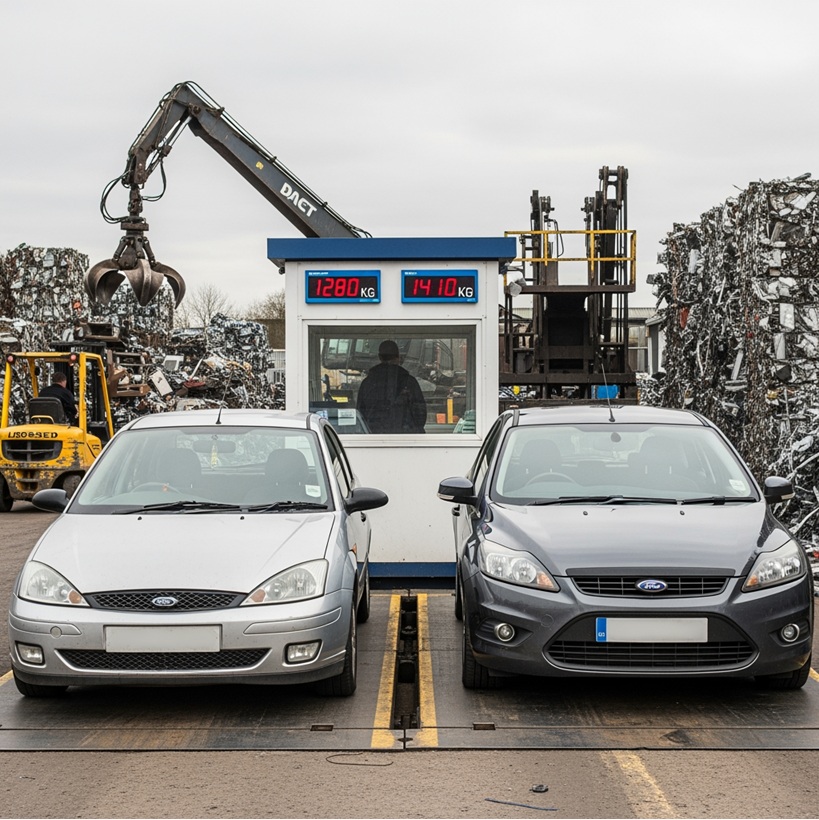
Vehicle weight determines the base payout far more significantly than the manufacturing year. Average 2000s family cars ranged between 1,200 and 1,400 kilograms depending on the exact factory specification. Comparable 2010s models typically weighed slightly more, pushing the scales closer to 1,500 kilograms.
This slight weight increase stems from several strict design shifts:
- Heavily strengthened crash structures to meet tougher safety ratings
- Additional sound insulation for a significantly quieter cabin experience
- Highly complex, bulky emissions control systems added to the exhaust
- Increased wiring looms to support advanced dashboard electronics
These subtle physical weight differences translate to roughly ten to twenty pounds of additional value for the newer models when all other factors remain perfectly equal. Ultimately, the weighbridge does not care about the registration plate; it only cares about the physical mass sitting on the scales.
Catalytic Converter Value by Decade
Diesel vs Petrol Differences
The precious metal content hidden inside the catalytic converter creates the most significant financial advantage for newer vehicles. The strict Euro 5 and Euro 6 standards required much heavier catalyst loading to successfully pass punishing environmental tests.
Diesel models show the most dramatic differences here. A highly complex 2010s diesel exhaust unit will typically command a noticeable premium over a simpler 2000s equivalent. The newer units are packed tight with expensive platinum, palladium, and rhodium.
However, these catalytic converter premiums represent the primary advantage of processing a newer vehicle. Remove this single component from the equation, and the variation between the eras diminishes to almost negligible amounts based purely on the base steel weight.
Material Composition and Size Trends
Manufacturing evolution slightly altered the specific material mixtures used on production lines across the decades. Manufacturers aggressively lightweighted engines and suspension components using expensive aluminium during the 2010s to improve fuel economy.
While aluminium commands higher market prices than steel, the total overall vehicle weight reduction often entirely offsets these potential financial gains. Furthermore, modern manufacturers increasingly substituted heavy metal interior components with advanced structural plastics and lightweight composites.
The massive proliferation of heavy SUVs and crossovers during the 2010s means more heavy vehicles exist from that specific decade. Understanding realistic expectations requires looking at the physical mass of the exact vehicle type rather than blindly trusting the manufacturing year.
I remember a customer a few years back who brought in two cars during the exact same week. He dropped off his 2006 VW Passat diesel estate and his wife’s 2016 VW Polo petrol. He confidently assumed the newer Polo would fetch significantly more because it was ten years younger. The yard offered £285 for the Passat and £175 for the Polo. He could not understand the math until it was explained that the heavy Passat was loaded with a massive 2.0 TDI engine and a hefty diesel catalyst. The Polo weighed a mere 1,100 kilograms with a tiny petrol exhaust unit. Sometimes newer simply does not mean more valuable.
Technology and Complexity Impact
Advanced technology in newer vehicles does not significantly increase the final payout despite adding massive retail costs when new. Modern navigation systems, complex parking sensors, and advanced driver assistance cameras add immense manufacturing complexity.
These highly advanced systems contribute completely negligible worth at the end of the line because auto recycling provides incredibly minimal financial returns for electronic waste. If your dashboard looks like a futuristic spaceship, it unfortunately does not mean facilities will pay a premium for the silicon chips.
Early hybrid systems present tricky cases for the recycling industry. While the large battery packs contain some valuable materials, they also incur highly specialised disposal costs. The intense manual labour required to safely dismantle these high-voltage systems often actively reduces the overall payout despite the car being significantly newer.
Condition Versus Decade
The Cost of Missing Parts
Vehicle condition matters enormously more than the exact manufacturing date printed on the logbook. A completely intact 2005 car boasting its original engine, gearbox, and exhaust system always beats an incomplete 2015 equivalent missing expensive components.
Missing parts destroy the final quotation identically regardless of the decade. A missing catalytic converter wipes substantial value off the board immediately, whether the car is five years old or twenty years old. Facilities accurately price vehicles based on exactly what materials are physically present upon collection.
Rust and severe damage also reduce values uniformly across both eras. If a vehicle requires tricky handling due to severe structural collapse, the final payout drops. Whether you arrange professional car scrapping today or next year, remember that severe deterioration destroys value vastly faster than age alone.
Making Realistic Expectations
Understanding older car values versus newer equivalents requires a brutally realistic assessment of actual market drivers. Buyers regularly expect their 2010s vehicles to fetch double the price of 2000s equivalents, which leads to massive disappointment.
The reality is typically a ten to twenty percent premium at the absolute maximum for comparable models. Size consistently matters more than age across the board. A heavy 2008 BMW 5-Series will always command more money than a featherweight 2018 Toyota Aygo because it simply contains dramatically more recoverable steel.
Engine type also affects the final mathematics significantly. An older diesel typically equals or actively exceeds a newer small petrol equivalent purely due to the heavy exhaust components. To understand exact market rates without guessing, you can quickly get an instant quote to scrap any car based precisely on your registration details.
The Legal Disposal Process
When you finally accept that the repair bills are simply too high, understanding the modern disposal process ensures you get the fairest possible price for the remaining metal.
The most important thing to grasp is that base scrap value depends almost entirely on the physical weight of the vehicle. A heavy 20-year-old diesel estate car and a petrol version of the exact same vehicle will receive practically identical quotes.
If you find yourself thinking it is finally time to recycle my car, the modern process is completely straightforward. Licensed facilities handle the heavy lifting, ensure the highly toxic fluids are drained safely, and properly notify the DVLA to officially remove your legal responsibility.
Maximising Your Final Payout
If you decide that disposing of the vehicle is the only financially logical choice, you should still aim to squeeze the maximum possible value out of the remaining asset.
Always ensure you provide completely accurate details about the vehicle’s current condition, including whether it starts, drives, or possesses its original catalytic converter. Total transparency prevents frustrating haggling when the recovery truck finally arrives to collect the shell.
By leaning on trusted professionals for your scrap car recycling, you guarantee that every single reusable ounce of metal is accurately valued and recovered according to strict environmental regulations.
Deciding the Future of Your Car
Scrap value differences by decade matter vastly less than most optimistic owners ever expect. While newer vehicles typically command tiny premiums over comparable older models, these differences pale against variations resulting from physical size, raw weight, and engine type.
Weight remains the absolute king in this specific industry. A heavy older vehicle always crushes a light newer equivalent at the weighbridge. Realistic expectations actively prevent severe disappointment when the final offer arrives.
The Scrap Car Network connects owners with trusted, fully licensed local partners to handle vehicles from absolutely any decade safely and legally.
Please do contact us today, and we will happily help you arrange a smooth, legally compliant collection while ensuring you receive a competitive price based strictly on your vehicle’s true material worth.