Why You Should Never Accept Cash for Your Scrap Car in the UK
24th Mar, 2026
You have finally decided it is time to say goodbye to that old motor sitting on your driveway. The MOT has expired, the engine is knocking loudly, and it is simply not worth fixing anymore. Then, you see a bloke on a local social media group offering physical notes right now, promising to take the car off your hands by sunset.
It sounds incredibly tempting, doesn’t it? A quick handover, a wad of notes in your pocket, and the problem is completely gone. But hold on a second before making a massive mistake.
Countless drivers fall into this exact trap over the years, assuming a quick, undocumented deal is harmless. You might be wondering, is cash for scrap cars illegal UK wide? Yes, it absolutely is. It is crucial to look closely at the strict laws surrounding vehicle disposal, the massive risks you take with rogue traders, and how to protect yourself properly.
The Law That Changed Everything
Decades spent around cars, engines, and scrap yards teach you a few things. Back in the day, physical currency transactions were the standard way of doing business in the motor trade. You would hand over your keys, get a few crisp notes, and that was the absolute end of the transaction.
However, things got completely out of hand across the country. The government had to step in and stop the absolute chaos that was unfolding in the recycling sector. They introduced the Scrap Metal Dealers Act 2013, which completely overhauled the entire industry. If you decide it is time to legally scrap your vehicle, this legislation applies directly to you.
This legislation made it a strict criminal offence for any scrap metal dealer to pay for scrap using physical money. It forced the entire industry out of the shadows and into a highly regulated, thoroughly traceable system.
By the early 2010s, the UK was facing an absolute epidemic of metal theft. Criminal gangs were stealing everything they could get their hands on, from historic church roofs to live railway cables. They were selling all this stolen material to unscrupulous scrap yards for untraceable physical currency.
Because there was no paper trail, the police simply could not track the thieves or the dodgy dealers. Legitimate mechanics and honest yards suffered terribly because they could not compete with the inflated prices offered by these illegal operations.
Why Rogue Traders Love Untraceable Deals
Despite the strict laws currently in place, you will still see handwritten signs tied to local lampposts shouting, “Cars bought today!” You will also spot endless posts on community groups offering immediate physical money for your unwanted vehicles. These are massive, glaring red flags that you must actively avoid.
If a buyer is offering you a bundle of notes, they are explicitly telling you that they operate completely outside the law. They are unlicensed, unregulated, and utterly unaccountable for their actions. Legitimate businesses simply do not risk losing their operating licences by breaking such a fundamental rule.
The Ghost Buyer Trick
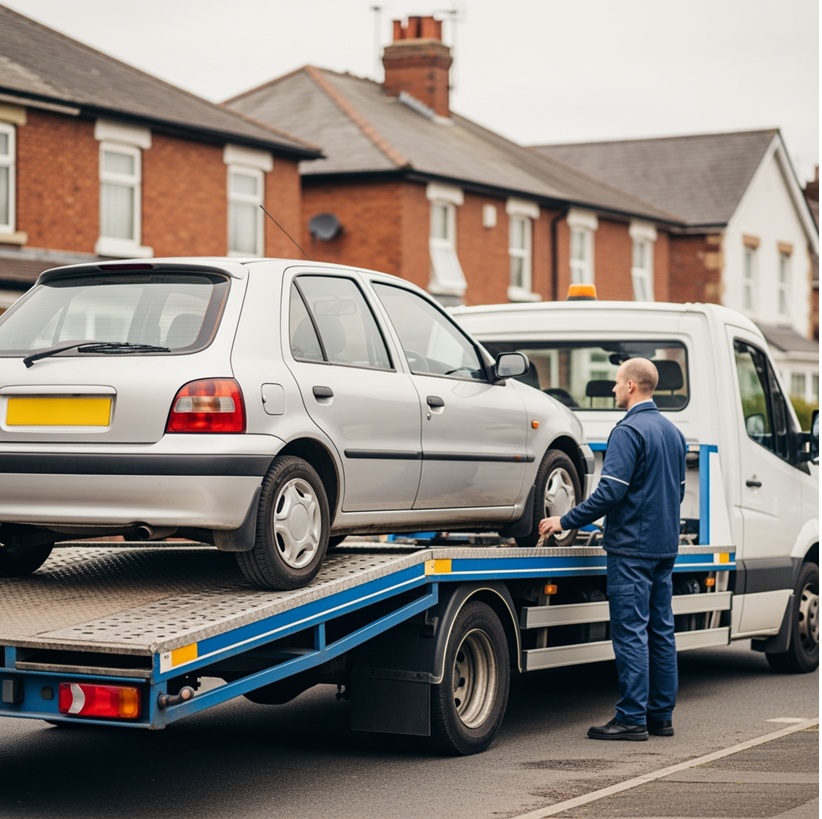
The most common tactic these illegal operators use is the ghost buyer trick. They hand you the money, load your car onto their rusty trailer for a dodgy scrap car collection, and promise faithfully to sort out the DVLA paperwork on your behalf. It sounds like excellent customer service, but it is a complete and utter lie.
They drive away and never inform the authorities that the vehicle has changed hands. They strip the valuable parts in a lock-up and then dump the heavy, worthless shell in a quiet country lane. Because they never updated the official logbook, that dumped vehicle is still legally registered to you in the government database.
The Devastating Fines You Face
Think of accepting a cash offer like handing the keys to your house to a total stranger who promises to lock the front door on their way out. You have zero control, no paper trail, and you carry absolutely all the legal liability if everything goes terribly wrong.
When a rogue trader dumps your car, the local council will eventually find it sitting in a ditch. They will run the registration plates, and your name will immediately pop up on their screen. You will then receive a very serious knock on the door from the police, demanding to know why you have been fly-tipping hazardous waste.
Take a customer, a lovely chap named Arthur, who brought a very tired Rover 75 into the garage a few years ago. The head gasket had completely blown, and the repair bill was worth drastically more than the car itself. He was advised to scrap it legally, but he mentioned a bloke from the pub had offered him £200 in notes to take it away that evening.
He was warned against it, but the lure of instant money was just too strong. Arthur took the money, handed over the keys, and gave away the entire logbook. Six months later, the Rover was used in a series of rural fuel thefts before being deliberately set on fire in a field.
Because the buyer never registered the change of ownership, the police came straight to Arthur’s front door at dawn. He spent weeks dealing with stressful police interviews trying to clear his name. He still had to pay hundreds of pounds in DVLA fines for having an uninsured vehicle because he had no written proof of the sale whatsoever.
Protecting Yourself With Proper Paperwork
Getting paid safely is only half the battle when clearing your driveway. You also need to ensure the paperwork is handled flawlessly from start to finish. When your car reaches the very end of its life, you must receive a specific, highly important piece of paperwork to protect yourself.
You need to secure a proper legal vehicle disposal document, officially known in the trade as a Certificate of Destruction. This is the ultimate, undeniable proof that your vehicle has been recycled legally and taken off the road forever.
It is the only document the DVLA truly cares about when a vehicle is crushed. A scrappy piece of handwritten paper with a messy signature simply does not cut it. A Certificate of Destruction permanently severs your legal tie to the vehicle and proves you acted responsibly.
Only an Authorised Treatment Facility with a direct, secure digital link to the central DVLA database can actually issue a genuine certificate. It is your absolute legal guarantee that you are no longer responsible for that car in any capacity.
Spotting A Genuine Scrap Yard
Protecting yourself means knowing exactly who you are dealing with before they arrive at your house. It is surprisingly easy to check if a buyer is legitimate. Every single legal yard in the UK must hold an Authorised Treatment Facility licence, which is issued directly by the Environment Agency.
If you want to guarantee you are dealing with a fully licensed and vetted facility, using a trusted service like the Scrap Car Network takes all the guesswork out of the equation entirely. Every single partner in the network holds the correct Environment Agency permits, meaning you are completely protected from rogue traders.
By choosing a reputable network when you decide to legally recycle your car, you ensure the hazardous fluids are drained safely and the metal is processed without harming the local environment. It gives you complete peace of mind. Furthermore, it is always worth understanding the advantages of choosing our service to ensure you get the best possible care for your old vehicle.
How You Should Be Paid Instead
So, if physical notes are completely off the table, how should you be paid for your old motor? The law is very specific and incredibly strict about this process. If you want to find out how to scrap your car easily and legally, legitimate facilities can only pay you using highly traceable, highly secure electronic methods.
The absolute most common and preferred method across the industry is a direct bank transfer, often referred to as a BACS payment. The money goes straight from the company’s verified business account directly into your personal bank account.
Electronic payments are not just about stopping metal thieves; they offer massive, ironclad protection for you as the seller. A bank transfer creates a permanent, undeniable digital footprint of the entire vehicle transaction. If there is ever a dispute with the DVLA about when you sold the car, you can simply pull up your bank statement on your phone as proof.
While less common these days, crossed cheques remain a perfectly legal and secure way to receive your funds. A crossed cheque has two parallel lines across it, meaning it cannot simply be cashed over the counter by anyone who finds it. It must be paid directly into a bank account matching the name written on the front.
Summary of Your Legal Obligations
Keeping yourself on the right side of the law is actually very straightforward once you know the rules. Never accept physical notes for your vehicle under any circumstances whatsoever. Ensure you are dealing with a licensed facility that uses secure electronic bank transfers exclusively.
Always make sure you tell the DVLA when you scrap your car by properly filling in the relevant section of your V5C logbook. Send that slip off to Swansea immediately, or do it online before the recovery truck even leaves your street. Finally, demand your official destruction certificate and file it away securely.
Getting rid of an old car should be a massive relief, not the start of a massive legal headache. By following the strict rules, you protect your wallet from devastating fines, you protect your community from crime, and you do your vital bit for the local environment.
If you want a completely stress-free, totally legal disposal process with guaranteed secure payments, feel free to contact us at any time. The team will point you in the right direction and make absolutely sure everything is handled properly from start to finish.