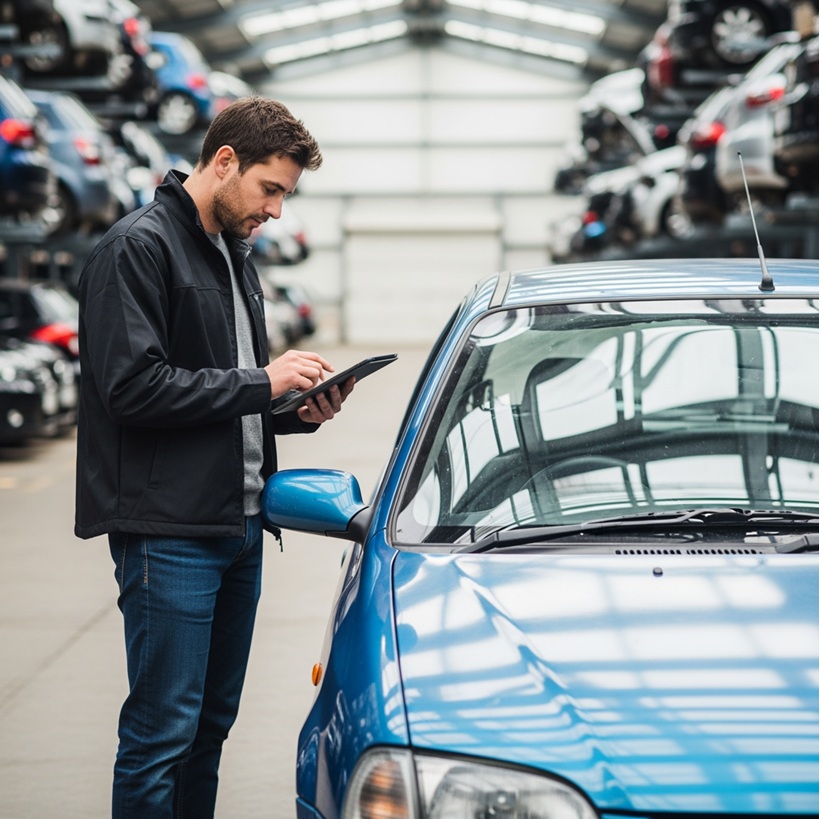
How Scrap Car Prices Are Calculated in the UK: The Factors That Affect Your Payout
24th Mar, 2026
When it is finally time to part ways with your old motor, you naturally want the best possible return. Many folks assume that an old, broken car is virtually worthless. They often expect to receive nothing more than a few notes for their trouble.
However, the modern recycling industry is highly sophisticated. A broken car is actually a valuable resource packed with raw materials and reusable components. Understanding exactly how scrap car prices are calculated helps you ensure you get a fair deal.
You do not need an economics degree to understand the valuation process. The system is built on a few very clear, logical factors. Let us look under the bonnet at the mathematics. I will explain exactly what makes your old vehicle valuable and how to secure a great payout.
The Foundation of Your Valuation
The absolute foundation of any vehicle valuation is its physical weight. In the recycling industry, heavy metal is king. When a car reaches the end of its life, buyers look primarily at the sheer volume of steel and iron it contains.
Think of the scrap metal market like the fresh fish counter at your local supermarket. The price of salmon changes every single day based on what the fishing boats catch. The metal market works exactly the same way. The daily price per tonne fluctuates based on global supply and demand.
If you drive a massive four-by-four, your baseline payout will be higher than someone driving a tiny city hatchback. There is simply more raw steel available to recycle. This is why providing your exact registration number is the crucial first step.
Understanding the Global Metal Market
The daily price of scrap metal is influenced by international events. When massive construction projects begin around the world, the demand for recycled steel skyrockets. This high demand pushes up the price you receive on your driveway.
Conversely, if global manufacturing slows down, the demand drops, and the prices follow suit. Legitimate buyers link their quoting systems directly to these global market rates. This ensures you always receive a highly accurate, current market valuation for your heavy steel.
The Value of Specific Makes and Models
Weight is only the beginning of the calculation. The badge on the front of your car plays a massive role in the final offer. If your vehicle is less than fifteen years old, it might be classified as a salvage vehicle rather than pure scrap.
If you want to arrange to scrap my car online, the system will check the popularity of your model. Very common family cars are in high demand. Local garages constantly need cheap, second-hand parts to repair similar cars on the road.
If you drive a popular model, the dismantling yard can strip and sell the doors, the mirrors, and the headlights. Because they can make a reliable profit from these reusable parts, they offer you a significantly higher initial payout.
The Age of Your Vehicle Matters
The age of your vehicle acts as a tipping point. Parts from a twenty-year-old saloon hold virtually no resale value today. Very few people are actively repairing cars from that era. Therefore, older cars are almost always valued strictly on their raw metal weight.
However, a modern five-year-old car with a suddenly snapped timing belt is a totally different story. The engine might be ruined, but the complex electronics and the interior panels are incredibly valuable. Buyers pay premium prices for these modern vehicles because the demand for replacement parts is huge.
The Role of the Catalytic Converter
There is one specific component underneath your car that drastically alters your payout. The catalytic converter is an emissions control device attached to your exhaust system. It is arguably the most financially valuable single item on the entire vehicle.
This small metal cylinder is packed with precious metals like platinum, palladium, and rhodium. These specific metals are incredibly rare and highly expensive to mine from the earth. Recycling facilities carefully remove these converters to extract the precious materials safely.
I remember a lovely customer named Richard who called me about his battered old Honda CR-V. The bodywork was terrible, and the interior was ruined. He thought it was totally worthless. However, older CR-V models feature unusually large catalytic converters. He was absolutely shocked by the generous payout we offered him. The value was hiding underneath the car all along.
Original Versus Aftermarket Converters
The value of your catalytic converter depends heavily on its origin. Factory-fitted, original units contain a high volume of precious metals. These original units command the highest possible prices in the recycling industry.
If your original converter was previously stolen and replaced with a cheap aftermarket unit, the value drops significantly. Aftermarket converters use far less precious metal to keep the retail price low. When looking for reliable scrap car dealers, be aware that the driver will visually check the converter on the driveway to confirm its quality.
Wheels, Tyres, and Alloys
The wheels attached to your vehicle also influence the final mathematics. Standard, rusty steel wheels with cheap plastic hubcaps do not add any extra value to the quote. They are simply crushed alongside the main steel body of the car.
However, a full set of original alloy wheels is a fantastic bonus. Alloy wheels are made from aluminium, which is a highly valuable non-ferrous metal. The facility will strip the tyres off and melt the aluminium down separately, increasing your overall payout.
In some rare cases, if you recently fitted a brand new set of premium tyres before the engine failed, the buyer might factor that in. Good quality, nearly-new tyres can be safely resold to the second-hand market.
The Problem with Flat Tyres
While the type of wheel matters, the condition of the tyres affects the collection logistics. If your car has four flat tyres, it cannot be easily rolled onto the back of a recovery truck.
This creates a serious logistical hurdle for the driver. They might need to use specialist winches, heavy dragging skates, or even a lifting crane to move the vehicle. These extra logistical efforts occasionally reduce your final financial offer to cover the extra labour time.
The Completeness of Your Vehicle
To secure the best possible price, your vehicle must be complete. The recycling industry has a very strict definition of an end-of-life vehicle. It must contain all of its essential, original components.
If you remove the engine, the gearbox, or the original catalytic converter before the collection, the value plummets. You have essentially removed the heaviest and most valuable parts of the car. What remains is a lightweight shell that costs more to process than it is actually worth.
Removing the original battery or the factory-fitted radio also technically makes the car incomplete. Always leave the vehicle fully intact if you want to secure the highest possible valuation from the network.
Why Missing Parts Cost You Money
The Scrap Car Network relies on a careful mathematical balance. Processing a vehicle involves expensive labour, heavy transport costs, and strict environmental depollution protocols.
If a car is completely stripped of its valuable parts, the facility still has to pay to safely process the remaining hazardous plastics and fluids. If the heavy steel is missing, they actually lose money on the collection. This is why heavily stripped shells receive very low financial offers.
Always provide an honest description of your vehicle’s condition when requesting a quote online. If parts are missing, you must declare it upfront. This ensures the quoted price is completely accurate and stops any disagreements on the driveway.
Location and Collection Logistics
The physical distance between your front door and the nearest recycling facility plays a hidden role in the pricing. Recovery trucks are incredibly heavy vehicles that consume massive amounts of diesel fuel.
If you live fifty miles away from the nearest treatment yard, the transport costs are significant. The buyer must factor in the fuel costs, the vehicle wear and tear, and the driver’s hourly wages. These logistical expenses are carefully calculated into your final offer.
By using a nationwide network, you help minimise these deductions. The system automatically connects you with the closest certified buyer in your specific postcode. This highly efficient routing keeps transport costs low and leaves more money in your pocket.
The Impact of Difficult Access
Where you park the car also matters. If the vehicle is parked neatly on a wide, open driveway, the collection is fast and simple. The driver simply rolls the car onto the flatbed truck in a matter of minutes.
However, if the car is stuck down a narrow country lane, trapped behind a locked gate, or sunk into a muddy field, things get complicated. The dispatch team might need to send a smaller, specialist recovery vehicle. Communicating these access issues clearly helps the team plan the logistics properly.
How the Instant Quoting System Works
In the old days, you had to ring five different scrap yards and haggle over the phone. Today, the process of proper car recycling is completely digital. You simply enter your registration number into the online portal.
The computer system performs a massive cross-reference in a matter of seconds. It checks the weight of your model, the current global metal prices, and the local demand for salvage parts. It then generates a highly competitive, instant financial offer.
This modern system is incredibly transparent. There are no hidden administrative charges or unexpected collection fees. The price you see on the screen is the exact amount you will receive, provided the vehicle matches your initial description.
Avoiding Driveway Haggling
You must be incredibly careful when dealing with unverified buyers you find on social media. Rogue waste carriers often use highly deceptive tactics. They will offer you an unbelievably high price over the phone to secure the booking.
When they arrive on your driveway, they will suddenly find imaginary faults with the car. They will claim the catalytic converter is a fake or the engine is too rusty. They use aggressive driveway haggling to drop the price by hundreds of pounds at the very last minute.
You should always use fully vetted, legitimate networks. Certified buyers do not operate this way. If you have accurately described the car, a professional buyer will always honour the original quoted price without any stressful arguments.
Securing the Best Possible Return
Understanding how these calculations work removes the mystery from vehicle disposal. The value of your car is based entirely on its weight, its reusable parts, and the current global markets.
Keeping the vehicle completely intact is the single best way to protect your payout. Leave the alloy wheels attached, keep the original catalytic converter in place, and ensure the engine remains under the bonnet. When you present a complete car, you secure a great valuation.
If you are ready to arrange a scrap car collection, the network is ready to assist. We connect you with trusted local buyers who offer highly competitive and transparent prices.
The advantages of choosing our service include instant digital valuations and completely free, reliable collections. If you want to know exactly what your old motor is worth right now, simply enter your details online. If you have any questions about missing parts or specific vehicle values, please feel free to contact us today for friendly, professional advice.