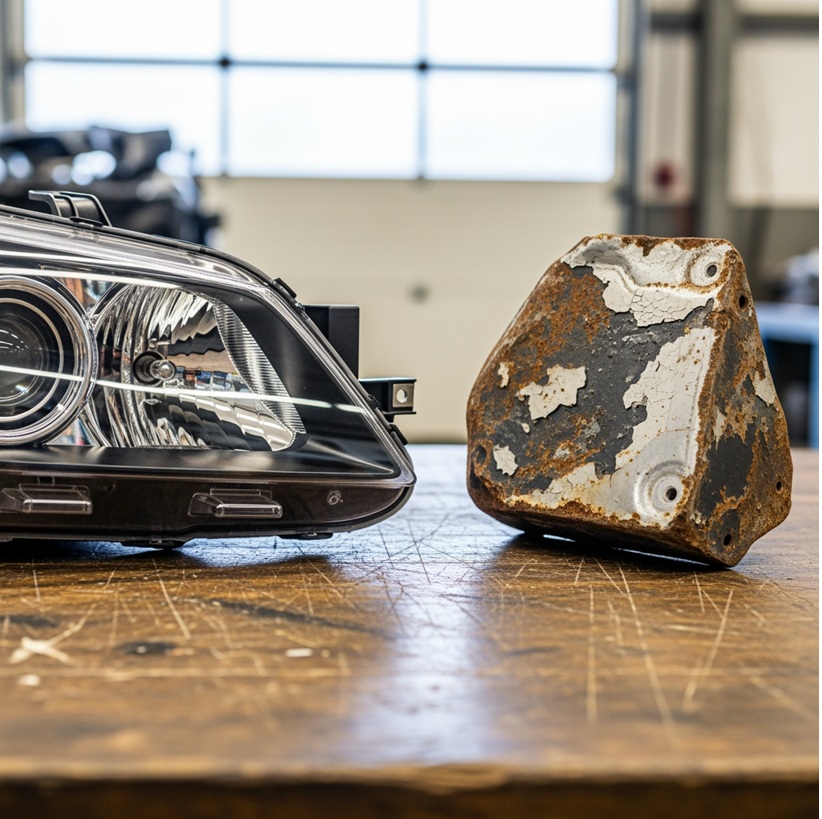
Scrap Car or Salvage Car: What’s the Difference and Which Category Does Your Vehicle Fall Into?
23rd Mar, 2026
When your old motor finally gives up the ghost, you usually just want it gone. Most people use the word “scrap” to describe any broken vehicle sitting on their driveway. However, in the automotive industry, there is a massive difference between a scrap car and a salvage car.
Understanding the scrap car vs salvage car UK rules is incredibly important. The category your vehicle falls into directly impacts the amount of money you will receive. It also determines exactly what happens to the car after the recovery truck drives away.
You do not need to be a mechanical expert to understand these differences. The industry uses very clear guidelines to separate vehicles. Let us look closely at how buyers evaluate your car and determine its final destination.
Understanding the Core Differences
The easiest way to understand the difference is to think about a broken smartphone. Imagine you drop your phone and shatter the glass screen, but the phone still turns on and works perfectly. A repair shop will happily buy that phone, replace the screen, and sell it on for a profit. That is a salvage item.
Now, imagine you drop that same smartphone into the ocean and leave it there for a week. The internal circuits are completely fried. The battery is ruined. Nobody can repair it. The only value left is the tiny bits of gold and copper inside the circuit boards, which must be melted down. That is a scrap item.
The automotive industry treats vehicles with that exact same logic. A car is evaluated based on what it can offer the buyer. It either offers repairable potential and reusable parts, or it simply offers raw steel weight.
What Exactly is a Scrap Car?
A scrap car has reached the absolute end of its useful life. These vehicles usually suffer from terminal mechanical failures or massive structural rust. The cost of repairing the vehicle vastly outweighs its actual market value.
For example, if a fifteen-year-old hatchback needs a brand new engine, a new exhaust, and extensive welding for its MOT, it is financially ruined. No sensible mechanic will spend two thousand pounds fixing a car that is only worth five hundred pounds. This car is destined for the crusher.
When buyers look at a scrap car, they do not care about the working radio or the clean interior seats. They are only looking at the kerb weight of the vehicle. They pay you based entirely on the current global price of raw steel and iron.
The Focus on Raw Materials
Vehicles in this category undergo rigorous end-of-life vehicle processing. Legitimate facilities drain all the toxic fluids and safely remove the battery. They then place the empty shell into a massive industrial shredding machine.
The machine violently rips the car into tiny pieces. Massive magnets then separate the steel from the plastics and glass. This steel is eventually melted down in industrial furnaces and repurposed into brand new products. It is a highly efficient, environmentally friendly process.
What Exactly is a Salvage Car?
A salvage car tells a completely different story. These vehicles are damaged, broken, or failed their MOT, but they still hold significant value beyond their raw metal weight. Salvage cars are essentially organ donors for the automotive industry.
I remember a lovely customer named Sarah. She clipped a lamppost in her three-year-old Honda Jazz. The insurance company wrote it off due to the cost of replacing the front bumper, headlights, and bonnet. She called me assuming it was only worth scrap metal value. I explained that her engine, gearbox, doors, and interior were in perfect condition. We offered her significantly more money because the car was prime salvage material.
Buyers actively seek out these vehicles. They buy the car, carefully strip off the working components, and sell those parts to local garages. This helps keep other similar cars safely on the road.
The Focus on Reusable Parts
Sometimes, repairable salvage vehicles are not stripped for parts at all. If the damage is purely cosmetic, professional mechanics will buy the car from the network. They use their own cheap labour to fix the dents, replace the broken panels, and return the car to the public road.
Because the buyer can sell the used parts or fix the car for a profit, they offer you much more money initially. Salvage payouts are almost always higher than standard scrap metal valuations.
Decoding Insurance Write-Off Categories
If your car was involved in an accident, your insurance company likely assigned it a specific category. The UK insurance industry uses four strict categories to classify damaged vehicles. Understanding these categories helps you know exactly where your car stands.
Category A is the most severe classification. These vehicles are completely destroyed, often by intense fire or massive structural impacts. The entire vehicle must be crushed. Not a single part can be removed and reused. This is the ultimate definition of a scrap car.
Category B is slightly less severe. The main structural shell of the car is badly damaged and must be crushed by law. However, unlike Category A, undamaged parts can be safely stripped and sold. The engine or the seats might still hold value for the dismantling yard.
Understanding Category S and Category N
The salvage market heavily relies on the remaining two groups. Category S means the vehicle has sustained structural damage, like a bent chassis leg. However, professional mechanics are legally allowed to repair this damage and put the car back on the road.
Category N is the best-case scenario for salvage buyers. The ‘N’ stands for non-structural. The car might have severe cosmetic scratches, electrical faults, or minor bumper damage. Vehicles in this specific group usually command a very high salvage auction value because they are relatively easy to repair safely.
How Age and Mileage Affect the Outcome
If your car has not been written off by an insurance company, buyers use age and mileage to decide its fate. Age is often the biggest deciding factor between the crusher and the dismantling bay.
A twenty-year-old family saloon with two hundred thousand miles on the clock is almost always scrap. Local garages simply do not need replacement parts for cars that old. The engine components are usually too worn out to safely resell to another driver anyway.
Conversely, a five-year-old car with a suddenly snapped timing belt is prime salvage. While the engine might be ruined, the doors, the complex infotainment screen, and the alloy wheels are in high demand. Other drivers constantly need these specific parts to fix their own modern vehicles.
The Role of Vehicle Popularity
The badge on the front of your car also plays a massive role. Extremely common cars, like the Ford Fiesta or the Vauxhall Corsa, make excellent salvage donors. Because there are millions of them on the road, garages constantly need cheap replacement parts to fix minor bumps and scrapes.
If you drive a very rare imported vehicle, it might end up being scrapped rather than salvaged. Even if the parts are in good condition, the buyer knows they might sit on a shelf for three years waiting for a specific customer. Buyers prefer vehicles that offer a quick turnaround.
The Professional Evaluation Process
You do not actually need to decide whether your car is scrap or salvage yourself. The professional quoting system handles this complex evaluation for you. When you enter your details online, the computer algorithms immediately assess the vehicle.
The system looks at the exact make, model, age, and typical kerb weight. It cross-references this information with current demand from local dismantling yards. If a local buyer desperately needs parts from your specific model, the system automatically elevates your financial offer.
When you arrange a scrap car collection, you must provide an honest description of the vehicle. If you state the car starts and drives, the buyer will expect exactly that on the driveway. Accurate descriptions ensure your final payment matches your initial quote.
How Buyers Calculate Your Offer
If the system determines your car is destined for the shredder, the math is simple. The buyer multiplies the weight of your car by the current daily rate for raw steel.
If the system flags your car for salvage, the calculations are much more complex. The buyer estimates the total retail value of the salvageable parts. They deduct the labour cost required to strip the vehicle. They then offer you a highly competitive price based on their potential profit margin.
Legitimate networks handle all of this automatically. They ensure you receive the best possible price without you having to haggle over individual engine parts.
The Legal Paperwork Differences
Whether your car is crushed or repaired, your legal responsibilities remain fairly similar. You must ensure the government databases are updated promptly. However, the exact paperwork generated by the facility differs based on the vehicle’s final destination.
If your car is officially scrapped and crushed, the facility logs the destruction on a secure government portal. This generates an official Certificate of Destruction. This highly important document proves the metal shell no longer exists and severs your legal liability completely.
If your car is purchased for salvage, it will not be crushed immediately. Therefore, a Certificate of Destruction cannot be issued. Instead, you simply transfer the vehicle to the motor trade using the yellow slip inside your V5C logbook.
Protecting Your Liability
In both scenarios, you must tear out the yellow slip from your logbook. You and the recovery driver must sign it on the driveway. You must then notify the government using the official digital portal or the traditional postal service.
Using the Scrap Car Network helps ensure this administrative handover is managed correctly. Updating the government promptly triggers your automated road tax refund. It also protects you from automated fines if the buyer takes several weeks to repair or dismantle the vehicle.
Making the Right Choice for Your Car
Figuring out the exact value of a broken car can feel overwhelming. You might spend hours wondering if your faulty gearbox ruins the value entirely. Thankfully, modern professional networks remove all the guesswork from the equation.
When you use proper car recycling services, the expert buyers evaluate your specific vehicle instantly. They use massive databases to determine the highest possible value, whether that lies in raw steel or reusable dashboard components.
You simply provide the registration number and a brief description of the current condition. If you want to scrap my car today, the network takes care of the complicated logistics. They ensure the recovery truck arrives on time and the money lands securely in your bank account.
Trusting the Experts
Finding reliable scrap car dealers who operate legally is the most important step. Legitimate buyers perform strict identity checks. They handle the hazardous fluids safely. Most importantly, they ensure the government paperwork is completed flawlessly.
You should always use certified auto recycling facilities for your own protection. They offer transparent pricing and reliable collection schedules. They protect your finances and ensure the vehicle is handled in the most environmentally friendly way possible.
If your car is sitting broken on the driveway, there is no need to delay the process. The network is ready to help you clear that space and secure your payment. If you have any specific questions about your vehicle category or the required logbook paperwork, please feel free to contact us today for friendly, professional advice.