Shredders and Separators: Inside the High-Tech World of Car Recycling
17th Mar, 2026
When an old motor finally gives up the ghost, many owners assume it is destined for a lonely scrapyard grave. However, the high-tech car recycling process that follows is actually more sophisticated than the technology in most modern vehicles themselves.
Years spent working in the trade reveal just how much the automotive recycling industry has transformed. It has moved from simple metal recovery to a precision operation that would make a Swiss watchmaker proud.
What happens to a vehicle after it is collected isn’t just about crushing metal anymore. It has become a fascinating dance of technology, environmental responsibility, and economic efficiency. The journey from a driveway to complete material recovery involves machinery so advanced that it can separate materials down to individual components.
Modern systems recover everything from precious metals in catalytic converters to the copper wiring in a stereo system. Modern automated material sorting systems work with extraordinary precision. They identify and separate dozens of different materials at speeds that seem almost impossible to the naked eye. When using the Scrap Car Network, owners ensure their cars enter this high-tech cycle.
Modern Depollution Technology: Surgical Precision
Before any high-tech car recycling process begins, vehicles undergo sophisticated depollution procedures. These represent the cutting edge of environmental protection in the modern industry. Today, Authorised Treatment Facilities use computer-controlled systems that can drain every drop of hazardous material with surgical precision.
By using professional vehicle disposal services, motorists ensure that nothing is left to chance during the decommissioning phase. These facilities employ vacuum systems with multiple chambers. Each one is specifically designed for fluids like engine oil, brake fluid, coolant, and power steering fluid.
These liquids are extracted separately and processed for reuse or safe disposal. This technology ensures that not a single drop of harmful substance enters the environment or the local soil. It is about being responsible before the heavy machinery even touches the car shell.
Computer-Controlled Fluid Extraction
Advanced refrigerant recovery systems handle air conditioning gases with particular care. Modern equipment can identify different refrigerant types automatically and process them accordingly. This allows the yard to adapt to the specific requirements of each vehicle’s climate control system without any guesswork.
Battery removal has become equally sophisticated, especially with the rise of hybrid and electric vehicles. Specialised handling equipment safely disconnects and removes batteries of all types. The industry has moved from traditional lead-acid units to complex lithium-ion systems that require specific temperature and humidity controls during processing.
Sophisticated Battery Removal
Experienced mechanics remember the old days when a battery was just yanked out and stacked on a wooden pallet. Nowadays, a high level of electronics knowledge is required just to look at some of these modern EV packs. If they are not handled with respect, they can give a nasty surprise to the unwary.
Professional yards invest a lot in training and safety gear because it is a necessity. If you are looking to get the best value, it is possible to scrap my car online and see how these experts handle the tricky bits. They make the difficult stuff look easy through years of practice.
The Science Behind Vehicle Shredding: Engineering Excellence
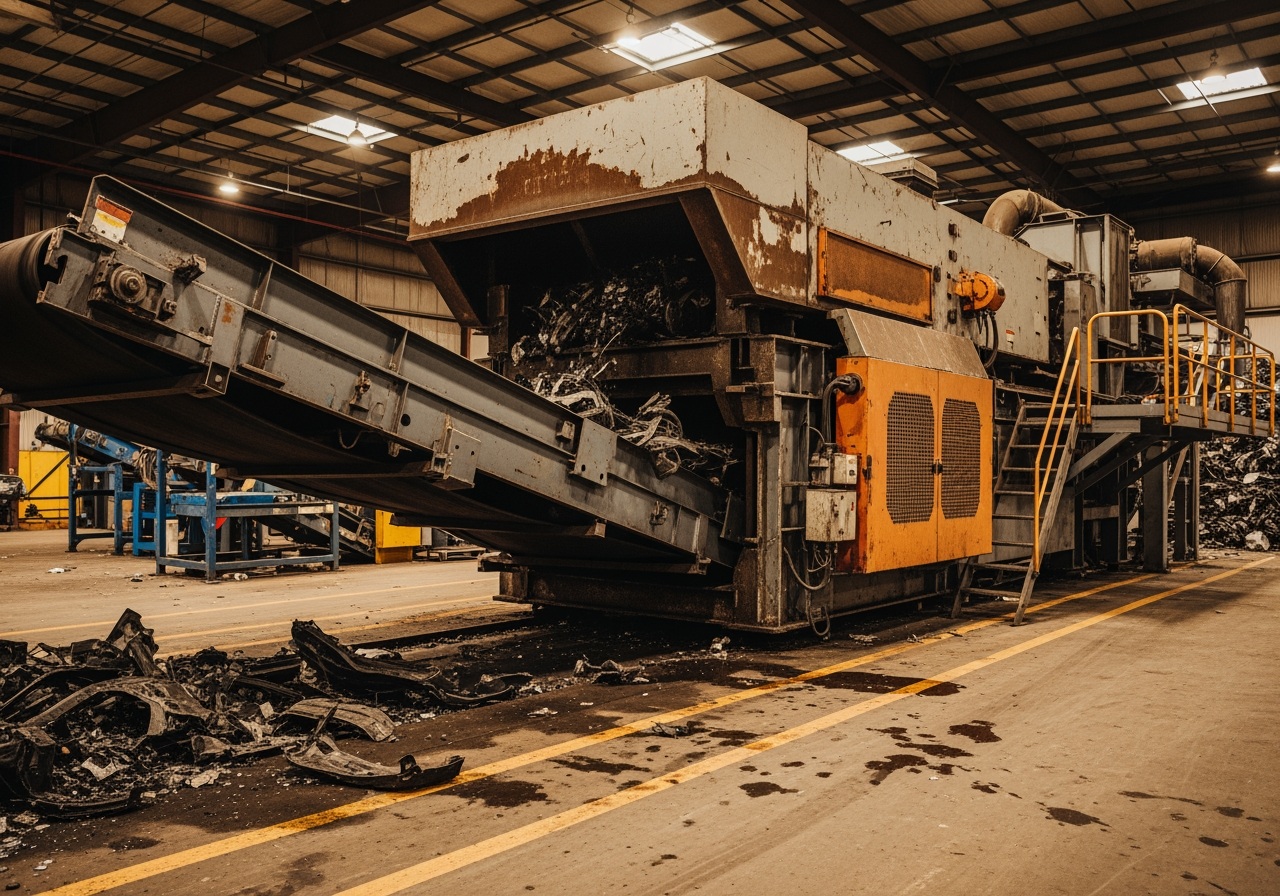
The heart of the high-tech car recycling process lies in industrial shredders. These massive machines can process an entire vehicle in minutes, reducing it to fragments about the size of a fist. This is done through a combination of heavy rotating hammers and fixed anvils.
These machines represent engineering excellence at its finest. However, these are not just giant blenders like the ones found in a typical kitchen. Modern shredders operate with computer-controlled feed rates.
The Industrial Sorting Challenge
The machinery adjusts its speed and power based on the material being processed at that exact moment. Sensors monitor everything from power consumption to vibration patterns. This ensures optimal performance while preventing any accidental damage to the heavy machinery.
The shredded material, known as auto shred residue, contains a complex mixture of metals, plastics, glass, rubber, and textiles. Think of it like sorting a massive mixed bag of sweets while blindfolded. Except the “sweets” are tiny fragments of dozens of different materials.
Facilities must sort these with 99 percent accuracy at an incredible industrial speed. That is exactly what automated material sorting accomplishes every single day in a modern facility. It is a miracle of physics that most people never get to see in person.
Magnetic Separation Systems: Electromagnetic Technology
The first stage of material recovery uses electromagnetic technology that is surprisingly elegant. Powerful electromagnets extract ferrous metals from the shredded mixture. They do this with remarkable efficiency as the fragments fly past on a fast-moving conveyor belt.
These are not typical workshop magnets used to find a dropped bolt on a garage floor. Modern separation systems use eddy current separators. These create powerful magnetic fields to repel non-ferrous metals like aluminium and copper.
Eddy Current Separators in Action
It is the same principle that makes a magnet slow down when dropped through a copper tube. When applied on an industrial scale, it looks almost like magic. The aluminium fragments just “jump” away into a separate bin while everything else keeps moving forward.
The precision is extraordinary. These systems can separate aluminium engine blocks from steel components and recover copper wiring from plastic insulation. When choosing to scrap my vehicle, owners are letting these machines do the heavy lifting for the planet.
Magnetic Density Separators
Some facilities now use magnetic density separators. These can distinguish between different grades of steel based on their magnetic properties. This means high-grade steel from engine components can be separated from lower-grade body panels.
This maximises the value of recovered materials and ensures the best possible recycling outcomes. It is about getting the most out of every gram of metal. The more material that is recovered, the less the planet has to be mined for fresh resources.
Advanced Optical Sorting Technology: Almost Supernatural
This is the point where automated material sorting gets truly impressive. Optical sorting systems use combinations of cameras, lasers, and artificial intelligence. They identify and separate materials that look identical to the naked human eye.
The speed and accuracy achieved by these systems seem almost supernatural. Near-infrared spectroscopy allows machines to identify different types of plastic. They do this by analysing how the fragments absorb light.
Artificial Intelligence in Material Recognition
Each plastic type has a unique spectral signature, much like a fingerprint. The system can recognise this signature in a few milliseconds. This level of technology is why motorists choose to recycle their car through professional channels rather than backstreet dealers.
High-speed air jets then blast identified materials into separate collection bins with pinpoint accuracy. These systems can process thousands of fragments per minute. This achieves separation rates that would be impossible through any amount of manual sorting.
Continuous Improvement through AI
The latest development involves machine learning systems. These continuously improve their material recognition capabilities over time. These AI systems learn from every vehicle processed, building vast databases of material characteristics.
It is as if the machine gets smarter every time it sees a new car part. Computer vision can now recognise door handles and mirrors even after they have been through the shredder. The technology adapts and improves with each processing cycle, making the whole system more efficient.
Plastic Recovery and Processing: Chemical Identification
Modern vehicles contain dozens of different plastic types. Each one requires specific processing methods to be useful for manufacturing again. Advanced recycling facilities now use chemical identification systems.
These can distinguish between similar-looking plastics with different molecular structures. Density separation tanks use liquid media to separate plastics based on their specific gravity. Lighter plastics float while heavier ones sink.
Molecular Recycling Techniques
This simple but effective technique processes vast quantities of material efficiently every hour. Infrared heating systems prepare recovered plastics for reprocessing. They carefully control the temperature to prevent any chemical degradation.
Some facilities now employ molecular recycling techniques. These break down complex plastics into their constituent chemicals. This allows for the creation of virgin-quality materials from waste streams. It is a huge step forward for the global industry.
Glass and Rubber Processing: Precision Operations
Vehicle glass presents unique challenges due to its laminated construction. Modern processing equipment uses controlled fracturing techniques. These separate glass layers while preserving the integrity of recovered materials.
Precision matters enormously in this delicate operation to avoid any contamination. Ultrasonic separation systems can remove plastic interlayers from laminated glass without damaging the glass itself. This produces clean glass cullet suitable for new production.
Tyre Processing Evolution
Tyre processing has evolved to use cryogenic grinding techniques. These freeze the rubber to extremely low temperatures. This makes it brittle enough to shatter into fine particles.
These particles can then be separated from steel reinforcement using magnetic systems. Nothing goes to waste in a modern facility. By using a scrap car collection service, owners ensure their old tyres might end up as part of a new playground surface or a running track.
Precious Metal Recovery: Mining-Level Techniques
Modern vehicles contain surprising amounts of valuable metals. They are found in catalytic converters and electronic systems. Recovery of these materials requires specialised processing that rivals techniques used in mining operations.
Hydrometallurgical processes use chemical reactions to dissolve precious metals from carrier materials. Platinum, palladium, and rhodium can be recovered with purities exceeding 99 percent. This makes recycled materials suitable for use in new catalytic converters.
Electronic Component Processing
Electronic components undergo circuit board processing that recovers gold, silver, and rare earth elements. These are used in sensors and control systems. These processes often achieve higher metal concentrations than natural ore processing. Recycling is actually becoming more efficient than traditional mining in some cases.
I remember a young lad in my workshop years ago who tried to rush a hybrid battery removal on an old Prius without wearing the proper insulated gloves. He got a massive shock that threw him completely flat on his back and left him violently shaking for hours. He was incredibly lucky to walk away from that mistake, but it taught us all a terrifying lesson about respecting high-voltage systems.
Bio-Leaching and Recovery
Some facilities now use bio-leaching techniques. These employ specially selected bacteria to extract metals from complex waste streams. This biological approach can recover materials that are difficult to process using conventional chemical methods. It is amazing what a few tiny bugs can do for the recycling industry.
Environmental Monitoring Systems: Real-Time Protection
The high-tech car recycling process includes sophisticated environmental monitoring. This ensures operations meet strict regulatory standards every day. Continuous emissions monitoring systems track air quality in real-time.
Water treatment systems process all facility runoff through multiple filtration stages. Advanced systems can achieve water quality standards that exceed those of municipal drinking water supplies. Environmental protection is non-negotiable for any reputable yard.
Soil and Groundwater Monitoring
Soil and groundwater monitoring uses automated sampling systems. These collect and analyse samples according to predetermined schedules. Any contamination is detected immediately.
This triggers automatic containment and remediation procedures. In the trade, prevention always beats a cure. Noise monitoring systems ensure that facility operations do not exceed permitted sound levels. Reputable yards work to be good neighbours to the surrounding communities.
Quality Control and Testing: Laboratory-Grade Standards
Modern recycling facilities employ laboratory-grade testing equipment. This verifies the quality of all recovered materials. X-ray fluorescence analysers provide immediate chemical composition analysis.
Mechanical testing systems verify the physical properties of recovered metals and plastics. Tensile strength and hardness are measured. This confirms that recycled materials will perform adequately in their new applications.
Statistical Process Control
Statistical process control systems monitor every aspect of facility operation. They identify trends that might affect material quality. This data-driven approach ensures consistent output quality.
Some facilities now use blockchain verification systems. These create permanent records of material quality and history. This helps build confidence in recycled materials among the big vehicle manufacturers. They know exactly what they are getting.
Integration With Manufacturing: Closed-Loop Systems
The most advanced recycling facilities now integrate directly with vehicle manufacturing operations. This creates closed-loop recycling systems. Materials from end-of-life vehicles become the raw materials for new vehicle production.
Just-in-time delivery systems coordinate recycled material supply with manufacturing schedules. This ensures that recycled materials arrive exactly when they are needed. It reduces costs and keeps the whole supply chain moving smoothly.
Quality Matching Systems
Quality matching systems analyse the material requirements of specific vehicle models. They match them with the most appropriate recycled materials available. This ensures optimal use of recycled content.
Some manufacturers now use design for recycling principles. They consider the end-of-life process during the initial design stage. This makes it much easier to we scrap any car when the designers have planned for it from day one.
Future Technologies on the Horizon: Limitless Possibilities
The next generation of car recycling technology promises even greater sophistication. Quantum sensing techniques may allow material identification at the atomic level. This would enable the separation of materials that are currently considered inseparable.
Robotic sorting systems with advanced manipulation capabilities could handle complex components. These currently require manual processing. These systems would combine computer vision with precise mechanical control.
Molecular Recycling and Predictive AI
Molecular recycling techniques may eventually allow the complete breakdown of complex materials. They could be reduced to their constituent atoms. This would enable perfect material recovery and eliminate waste streams entirely.
Artificial intelligence systems may predict optimal processing strategies based on vehicle age and model. The systems would automatically configure equipment for maximum efficiency. The future looks extraordinarily bright for the trade.
Why Choose Professional Recycling Services: Sophisticated Ecosystem
The transformation of car recycling from simple scrap processing to high-technology recovery is huge. It represents one of the most significant advances in automotive sustainability. Today, facilities achieve recovery rates that seemed impossible just decades ago.
When choosing to get an instant quote to scrap any car, owners are not just disposing of an old vehicle. They are contributing to a sophisticated technological ecosystem. This recovers valuable materials and protects the shared environment.
Importance of Authorised Treatment Facilities
Understanding the complexity of modern car recycling helps explain why choosing authorised treatment facilities matters. These facilities represent significant investments in technology. They ensure that a vehicle’s final journey contributes to a sustainable future.
The high-tech car recycling process continues to evolve every day. What seemed impossible years ago is now everyday reality. Seeing a computer-controlled system recover 95 percent of a vehicle’s materials with surgical precision is genuinely impressive.
Conclusion: Informed Decisions Through Understanding
Whether there is a need to scrap a car or a desire to understand what happens after collection, knowing about these advanced processes helps. The technology working behind the scenes ensures a vehicle receives the environmentally responsible treatment it deserves.
When searching for a service that can scrap my car today, choosing a provider that connects with these high-tech facilities makes all the difference. It ensures the best result for the planet.
For those with questions about how the process works, it is best to contact us for friendly advice. Support is always available to help make the right choice for an old motor. This ensures it reaches a facility equipped with the latest automated material sorting and recycling technologies.