Scrap Car Recycling as a Driver of Innovation
6th Mar, 2026
You might think a car’s story is completely finished when it finally gets towed out of your driveway. For decades, that was largely the truth. Old cars were simply stripped of a few obvious parts, crushed into a cube, and melted down. But things have changed drastically over the years.
I spent forty years working under the bonnet as a mechanic. In that time, I’ve watched the car trade’s relationship with recycling transform beyond all recognition. What used to be a dirty, straightforward waste disposal job has evolved into a highly sophisticated network. Today, scrap recycling and innovation go hand in hand, pushing the absolute limits of how we use materials sustainably.
Managing vehicles at the end of their lives has turned into a massive treasure hunt for valuable materials. Modern end-of-life vehicles management in the UK currently processes around 1.5 million cars annually. Amazingly, we now recover an astonishing 95% of their materials by weight.
This massive shift hasn’t happened by accident; it’s the direct result of brilliant engineering and strict environmental rules. By using Scrap Car Network, you are actively feeding a high-tech industry that is quietly changing the world.
Beyond Basic Metal Recovery
Traditional scrap recycling used to focus entirely on heavy steel and iron. If a part stuck to a magnet, it was valuable; if it didn’t, it usually went straight into a landfill. Modern vehicle recycling has expanded far beyond those basic principles to create entirely new technologies.
Today’s vehicles contain well over 30,000 individual parts made from hundreds of different materials. Take aluminium recovery, for example. Processing recycled aluminium now uses an amazing 95% less energy than making brand new metal from raw bauxite ore. This massive energy saving has driven car makers to use much more aluminium in new vehicles, creating a brilliant, sustainable loop.
The real genius lies in tackling the tricky stuff, like plastics. Automotive plastics make up roughly 10% of a modern vehicle’s total weight. Trying to recycle mixed, hardened automotive plastics used to be like trying to unbake a cake to get the raw eggs back. It just seemed completely impossible to separate the ingredients once they were cooked together.
However, modern chemical recycling processes can now literally break these complex plastics down into their original molecular building blocks. We can essentially unbake the cake and use those raw chemical ingredients to create virgin-quality materials all over again.
Even safety equipment gets a clever second life. Deployed airbags used to be considered hazardous waste that was difficult to handle safely. Today, the incredibly tough nylon fabric is recovered and spun into heavy-duty carpeting. Meanwhile, the complex inflator parts are carefully processed to recover valuable trace metals.
Technology Driving Change
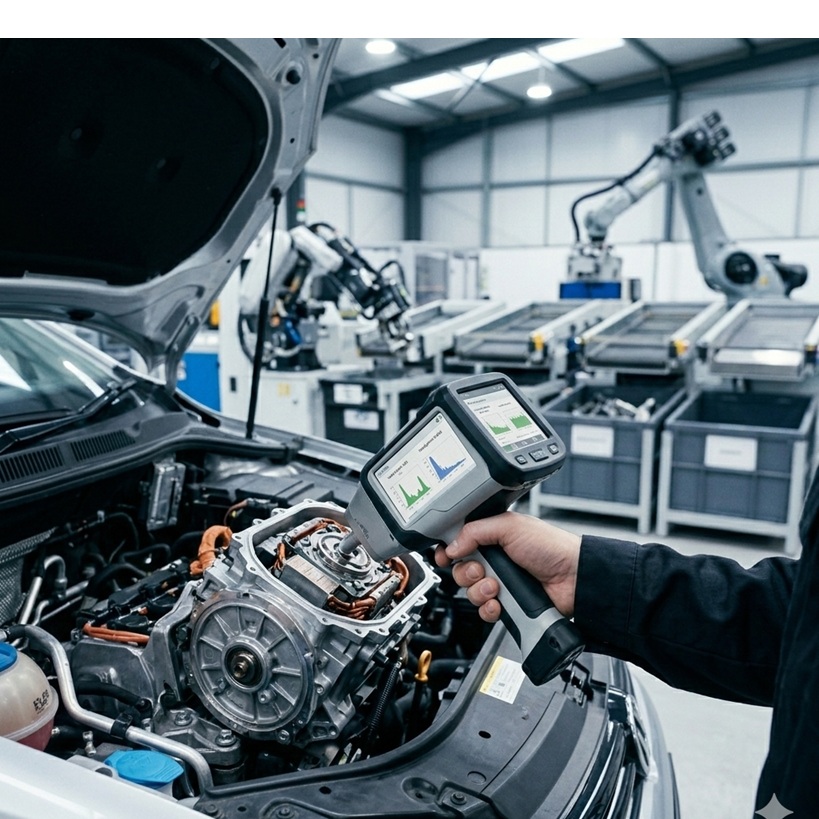
The use of advanced technology in our recycling yards has created massive ripple effects throughout the manufacturing world. Automated dismantling systems now use highly advanced computer vision and robotic arms to identify and remove specific parts. They do this with a level of speed and safety that human hands simply cannot match.
I remember a time back in the late nineties when I spent three entire days trying to manually strip a complex wiring loom out of a flooded luxury saloon. It was an absolute nightmare of tangled copper and brittle plastic clips that left my hands bleeding. Today, automated shredders and magnetic separators can isolate that exact same copper wiring in a matter of seconds. It’s truly mind-boggling to watch these machines work.
Advanced optical sorting (often called spectroscopic technology) represents another massive breakthrough in the yard. These optical systems use specific light wavelengths to identify different metal alloys and plastics on a fast-moving conveyor belt. They can sort mixed materials with 99% accuracy in real-time. This brilliant tech, born from scrapyard necessity, is now being used to sort aerospace components and medical devices.
Blockchain technology is also making waves in the recycling industry. Manufacturers now demand complete transparency about where their recycled materials actually come from. Blockchain creates a permanent, unalterable digital ledger that tracks materials from the scrapyard straight to the factory floor, proving that sustainable claims are 100% genuine.
Rare Earth Elements and Critical Materials
Modern vehicles are absolutely packed with rare earth elements. These rare materials are essential for complex electronics, catalytic converters, and the highly efficient motors found in hybrid cars. Recovering these critical materials has naturally become a massive strategic priority for the entire country.
Neodymium magnets from electric windows, precious metals from exhausts, and lithium from batteries represent incredibly high-value recovery targets. The main challenge has always been extracting these microscopic elements economically from complex, tightly sealed car parts.
To solve this, clever scientists developed incredibly innovative water-based chemical treatments (known as hydrometallurgical processes). These treatments use highly targeted chemical liquids to dissolve and separate specific rare elements while leaving the base metals completely intact. The level of chemical precision required here has pushed the absolute boundaries of modern science.
Recovering these rare earth elements locally drastically reduces our heavy reliance on destructive virgin mining operations overseas. Ultimately, it creates a much more resilient, sustainable supply chain right here in the UK.
The Battery Recycling Revolution
The rapid growth of electric vehicles has created an entirely new, highly complex recycling challenge. Lithium-ion battery recycling currently represents one of the most heavily funded and innovative areas in global materials recovery.
Old-school melting methods simply couldn’t handle the extreme chemical complexity of a modern EV battery pack. This urgent problem drove the rapid development of new high-heat melting processes (called pyrometallurgy). These new methods are specifically designed to safely handle highly volatile battery cells without causing dangerous chemical fires.
Even better, new direct recycling techniques can now carefully recover battery cathode materials in a fine powdered form. This powder can then be directly reused in brand new batteries. This delicate process actually maintains the original crystal structure of the materials, perfectly preserving their electrical properties for future use.
The innovation certainly doesn’t stop at the shredder. Brilliant second-life applications mean that a degraded car battery might have another fifteen years of life left as a stationary power bank. These old batteries are currently being used to store excess solar energy and stabilise the national power grid.
If your old petrol or diesel motor is finally failing, ensuring it enters this high-tech system is vital. When you arrange free vehicle collection with our network, you guarantee those raw materials will safely feed this incredible cycle of innovation.
Circular Economy Innovation
The concept of a circular economy has found its absolute perfect home in automotive recycling. Rather than the old, wasteful model of “make it, use it, bury it in the ground,” the car industry has fully embraced infinite material loops as a core business principle.
Designing cars specifically for recycling is now standard practice across the globe. New vehicles are literally designed with their eventual destruction in mind. Engineers deliberately use specific materials, snap-fit joints, and soluble glues that actively make it easier to take the car apart at the end of its life.
Remanufacturing has also evolved from a niche hobby into a massive, highly respected industrial process. Heavy components like engine blocks, complex gearboxes, and electronic control units are fully restored to their original factory specifications. By using advanced diagnostic equipment, the quality standards for remanufactured parts often actually exceed those of the original equipment.
This relentless drive for ultimate quality has created entirely new diagnostic testing methods. In turn, these new testing protocols heavily benefit the entire automotive repair and maintenance sector.
Material Science Breakthroughs
The immense challenges of tearing old cars apart have driven huge advances in materials science. Understanding exactly how different metals and plastics behave after fifteen years of brutal weather, constant vibration, and road salt provides invaluable data.
Studying recycled suspension parts up close has revealed brilliant new clues about metal fatigue and stress rust. This hard-won knowledge directly informs the design of stronger, lighter, and vastly more durable components for the very next generation of vehicles.
Furthermore, the urgent need for easier recycling has rapidly sped up the development of bio-based materials. Car manufacturers are increasingly using natural fibre composites and plant-based plastics for interior trim pieces. They do this because these natural materials are infinitely easier to process and break down at the end of their life.
Research into molecular recycling techniques continues to open exciting new doors for everyday products. Breaking down complex dashboard plastics into their basic chemical building blocks allows us to reassemble them into almost anything. The plastics recovered from a scrapped hatchback today might easily become highly durable food packaging tomorrow.
Digital Innovation and Data Analytics
You wouldn’t immediately associate a dusty scrapyard with big data, but modern processing operations generate absolutely massive amounts of digital information. Tracking material flows, processing speeds, and market demands has driven huge innovations in smart analytics.
Internet of Things (IoT) sensors are now mounted throughout modern recycling facilities. They constantly monitor everything from the chemical makeup of shredded plastic to the operating temperature of a massive metal crusher. This constant stream of real-time data enables a level of mechanical fine-tuning that was totally impossible just a few years ago.
Artificial intelligence algorithms are heavily involved in the yards, too. They can accurately predict when a heavy machine needs maintenance before it actually breaks down, completely eliminating costly delays. These AI innovations, tested in the brutal environment of a salvage yard, are now being adopted across the wider manufacturing industry.
This intense digital integration also provides total transparency for the everyday consumer. If you choose to safely scrap your unwanted vehicle through a modern network, the digital paper trail ensures complete accountability. It tracks your car from the moment it leaves your driveway to the moment the steel is melted down.
Economic Innovation and Business Models
The rapid evolution of this industry has created entirely new, highly profitable ways of doing business. New government rules have shifted the cost of scrapping a car. The financial burden moved away from the final owner and went straight back to the original car maker. This massive financial shift creates an incredibly strong incentive for car makers to fund recycling innovations.
We are also seeing the fascinating concept of “material banking” take hold. Instead of viewing a scrap car as a dirty liability, economists now treat it as stored value. The precious metals sitting in a fleet of old cars represent a tangible, highly valuable commodity bank that can be tapped into when global supply chains tighten up.
The development of specialised local recycling networks has drastically reduced heavy transportation costs. Instead of shipping whole cars across the country on large lorries, regional hubs dismantle them locally. By collaborating with approved vehicle dismantling partners, the industry ensures that heavy materials are processed efficiently without generating unnecessary transport emissions.
Collaborative digital platforms now regularly connect dusty yard operators with top university researchers. Combining the practical, hands-on experience of a mechanic with the theoretical knowledge of a university chemist has accelerated innovation at a staggering pace.
Environmental Innovation
Tough environmental rules for car recycling have driven huge leaps in tracking our carbon footprint. Highly advanced software tools now help engineers accurately measure the exact environmental benefits of recycling a specific car part versus manufacturing a brand new one.
The ultimate goal for the industry is a perfect closed-loop recycling system. In a closed loop, the aluminium from an old engine block is melted down specifically to cast a brand new engine block. Achieving this perfect loop requires staggering innovations in metal purification and strict quality control.
Energy management at these facilities has completely transformed, too. Many modern recycling yards are covered in solar panels and use the massive kinetic energy generated by their own crushing machinery to power their operations. Amazingly, some facilities now actually generate more electricity than they consume, feeding clean power back into the national grid.
Water treatment is another massive, hidden success story. The urgent need to safely handle toxic coolant, battery acid, and old engine oil has driven brilliant advances in chemical filtration. Ensuring your car goes to a facility that uses environmentally responsible recycling processes guarantees these harsh chemicals never reach our local waterways or soil.
Global Impact and Knowledge Transfer
The incredible innovations developed in the messy world of automotive recycling absolutely do not stay within the industry. There is a massive transfer of technology happening right now across the globe. For instance, the precision sorting machines developed to separate car plastics are currently being used to sort complex consumer electronics.
International collaboration is stronger and more vital than ever before. Scientists and engineers regularly share best practices, research findings, and technological blueprints across borders. A brilliant method for extracting copper from wiring looms developed in a UK facility might be implemented in a massive Asian manufacturing plant the very next month.
The development of strict international standards for recycled materials has created vital consistency for buyers. A manufacturer buying recycled steel needs an absolute guarantee of its structural strength, regardless of where it was processed. These tough global standards make it much easier to trade sustainable materials internationally.
Educational partnerships are also flourishing right now. Major recycling companies now regularly partner with top technical universities across the country. They have created entirely new academic programmes focused specifically on sustainable materials recovery, ensuring the next generation of engineers understands the circular economy.
Future Innovation Directions
The trajectory of innovation in this sector is accelerating at a truly dizzying pace. We are now looking at the very real possibility of using microscopic nanotechnology. In the near future, microscopic nanobots could theoretically be used to recover specific precious metal atoms from a shredded pile of mixed waste, potentially achieving a 100% material recovery rate.
Biotechnology is another incredibly exciting frontier for scrapyards. Scientists are currently cultivating specific strains of microorganisms that literally eat complex materials and excrete pure metals. These natural biological processes operate at room temperature, using vastly less energy and creating significantly less environmental impact than harsh chemical stripping.
Industrial 3D printing is also entering the chat. The ability to take recycled automotive plastics, grind them into a fine filament, and use them to 3D print brand new car parts on demand could completely revolutionise the global supply chain. It entirely eliminates the need for massive warehouses full of dusty spare parts.
Finally, quantum computing is poised to drastically accelerate materials science research. The raw computational power required to simulate complex chemical recycling processes could unlock brilliant new innovations that are currently completely beyond our reach. If you want to support this incredible technological leap, deciding to choose sustainable vehicle recycling is the absolute best place to start.
Regulatory Innovation and Workforce Skills
We also have to admit that strict government rules have acted as a massive spark for all this innovation. Complex government directives regarding end-of-life vehicles created incredibly tough, legally binding targets for material recovery. The industry simply had to innovate quickly to survive the new laws.
These strict regulations have completely eliminated the dangerous, cowboy operators of the past. The requirement for tough environmental certification ensures that only highly professional, heavily vetted businesses can operate safely in this space today.
This massive technological shift has completely changed the required workforce skills on the ground. The modern recycling yard needs software engineers, chemical analysts, and high-voltage electrical experts just as much as it needs forklift drivers. Technical education programmes have had to adapt rapidly to teach students about advanced composite materials and automated robotic systems.
Yet, despite all the robotics and AI, the human element remains absolutely vital. The ability to look at a damaged vehicle, assess its true value, and understand how to safely dismantle it requires a level of practical intuition that machines still struggle to replicate.
The future of this industry relies heavily on digital product passports. Soon, every single component in a new car will have a digital tag tracking its exact chemical makeup. When the car finally reaches the end of its life, the recycling facility will instantly download a complete schematic of exactly what valuable materials are inside and exactly how to extract them safely.
The success of these incredible circular economy solutions depends entirely on strict compliance and collaboration from the public. Making sure you accurately process official DVLA paperwork is the vital first step in legally transferring your vehicle into this high-tech system.
The transformation of scrap car recycling from a dirty disposal method into a massive driver of technological innovation is a phenomenal success story. It proves that with the right combination of strict regulation, economic incentive, and brilliant engineering, we can genuinely solve incredibly complex environmental problems.
The next time you see a battered old car being towed away on a flatbed truck, try not to see it as a piece of junk reaching the end of the line. You are actually looking at a vital bundle of highly valuable raw materials heading back into a brilliant, high-tech cycle of endless innovation. If you need help entering your old vehicle into this incredible system, don’t hesitate to contact our support team to arrange your collection or assist with the paperwork. The industry has never been more advanced, and it’s absolutely fascinating to watch it grow.