Why Exporting Scrap Cars Isn’t Always Ethical
26th Feb, 2026
When you decide to scrap your car, you probably assume it’ll be processed responsibly here in the UK. After all, we’ve got strict environmental regulations and proper recycling facilities. But here’s something that might surprise you – many scrap cars end up shipped overseas, and that’s where things get a bit murky.
The automotive industry has changed dramatically over recent decades. Local scrapyards once handled vehicle disposal, stripping useful parts and recycling the rest domestically. These days, it’s become a global business, and the ethics of exporting scrap cars is something more people need to understand, especially if you care about where your old motor ends up.
The truth is, when your car gets loaded onto a container ship bound for developing countries, all control over what happens next disappears. Environmental standards that protect UK soil and waterways suddenly don’t apply. That’s just the beginning of the story.
Where Scrap Cars Really Go
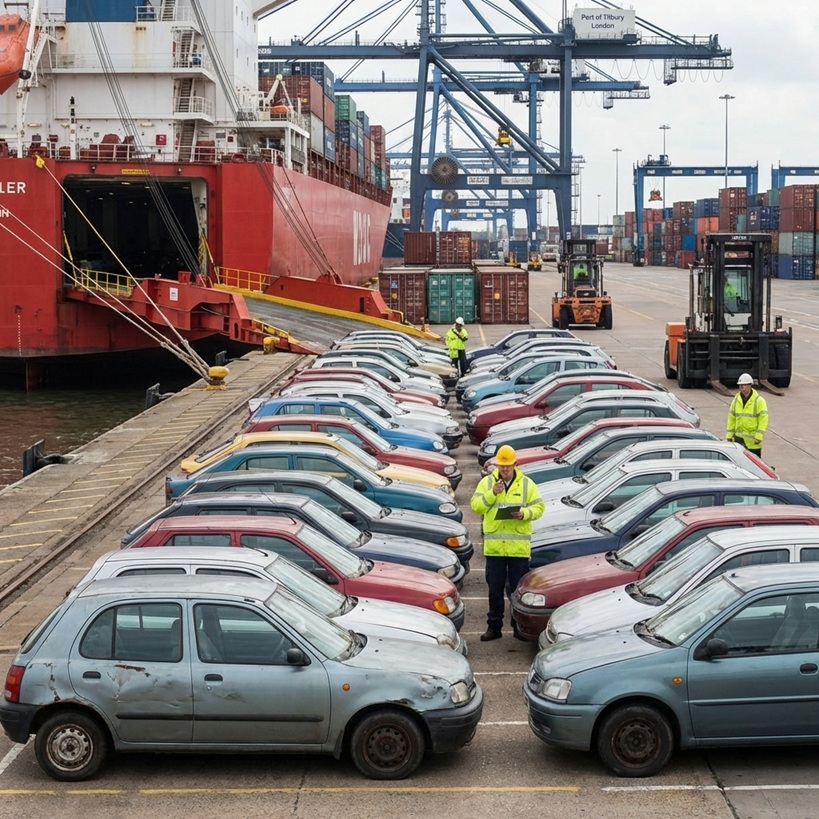
Most people think their old car stays in the UK when they scrap it. That’s not always the case. A significant portion of vehicles declared as “scrap” actually get exported to countries in Africa, Eastern Europe, and parts of Asia.
Here’s how it typically works: a dealer buys your car, declares it as scrap to get the paperwork sorted, then ships it overseas where it gets a second life. Sometimes that’s fine – the car might have years of use left in countries where older vehicles are the norm. But other times, these cars are genuinely at the end of their road.
They’re unsafe, polluting, or should have been properly recycled. Cars that have failed MOT tests multiple times, with more rust than metal, shouldn’t be driven anywhere. Yet they’re exported to become someone else’s problem.
I had a customer years back who sold his old Mondeo to a dealer promising “proper recycling.” Six months later, he spotted it in a documentary about West African roads – still wearing his old parking permit. He was furious, not just about being misled, but knowing that car was leaking oil into someone’s water supply thousands of miles away.
The issue isn’t just about individual cars either. We’re talking about thousands of vehicles leaving British shores every year, many of which bypass environmental standards entirely.
Environmental Impact Beyond Borders
This is where environmental dumping concerns become really troubling. The UK has some of the strictest vehicle recycling standards in the world. Authorised Treatment Facilities (ATFs) must remove all fluids, depollute vehicles properly, and recycle materials according to EU-derived regulations that remain in force.
When cars get exported instead of processed here, those standards often go out the window. Reports from abroad show British-registered cars still running with:
- Leaking engine oil contaminating soil
- Faulty emissions systems polluting air
- Broken cooling systems dripping antifreeze
- Cracked batteries leaking acid
Think of it like this: if you wouldn’t pour used engine oil down your drain at home, why should it be acceptable for that oil to leak into soil and waterways somewhere else?
The environmental damage doesn’t magically become less harmful just because it’s happening in another country. Brake fluid, coolant, battery acid – these hazardous materials should be handled with care regardless of geography. When exported vehicles leak these substances in countries with less stringent environmental oversight, the environmental dumping concerns multiply significantly.
The carbon footprint of shipping these vehicles is another factor that’s often overlooked. Loading hundreds of cars onto cargo ships and transporting them thousands of miles creates emissions that wouldn’t exist if they were processed locally through our environmentally responsible car recycling process.
The Paperwork Problem
Here’s where things get legally complicated. When you hand over your car to be scrapped, you expect to receive a Certificate of Destruction (CoD) from the DVLA. This document proves your car has been properly disposed of and removes your legal responsibility for it.
But some exporters are gaming this system. They’ll apply for a CoD even though the car isn’t being destroyed – it’s being shipped overseas to continue being used. This creates a paper trail that suggests responsible disposal when the reality is quite different.
Cases exist where vehicle owners receive parking fines for cars they’d scrapped months earlier. These “scrapped” cars were still being driven in other countries, and the paperwork hadn’t been handled properly. Such situations take months to resolve, and owners are fortunate when authorities prove understanding.
This isn’t just an administrative inconvenience. It undermines the entire system designed to track vehicle disposal and ensure environmental compliance. Proper notification to the DVLA is crucial, which is why understanding how to tell the DVLA when you sell or scrap your car matters so much.
Economic Arguments and Their Limits
There are legitimate arguments for why sending certain cars overseas makes economic sense. If a car still has useful life left and can provide affordable transport in countries where new vehicles are prohibitively expensive, that can be positive.
The problem comes when economics trumps everything else. Some exporters will take any car that can be moved, regardless of its condition, simply because there’s money to be made. They’re not thinking about whether the vehicle is safe or environmentally sound – they’re thinking about profit margins.
Dealers have admitted they can get more money exporting a battered old estate car than they could from legitimate scrap value. Why send it for proper recycling when export brings three times the price? The maths makes sense from a business perspective, but the ethics of exporting scrap cars tells a different story entirely.
This economic pressure creates a race to the bottom where the cheapest disposal option wins, regardless of environmental or social consequences. Understanding what factors influence scrap car prices helps explain why some dealers choose export over responsible recycling.
Safety Standards Lost in Translation
Vehicle safety standards vary dramatically around the world. A car that’s considered unroadworthy in the UK might still be legally drivable in countries with less stringent regulations. But “legally drivable” doesn’t mean “safe.”
When we export vehicles that have failed MOTs or have serious mechanical issues, we’re essentially passing on safety risks to drivers who may not have the resources or knowledge to address them properly. That’s not fair to anyone. If a car isn’t safe enough for British roads, it shouldn’t become someone else’s problem. Safety shouldn’t be a luxury that only wealthy countries can afford.
The expertise and infrastructure for proper vehicle maintenance also varies. A complex modern car with electronic systems and specialised parts might be impossible to maintain properly in areas without the right facilities. This leads to bodged repairs and increased safety risks.
Crumple zones, airbags, and ABS systems – modern safety features that require specific knowledge to maintain – often don’t get the attention they need in export markets. These aren’t just conveniences; they’re life-saving technologies designed into every modern vehicle.
What Responsible Disposal Looks Like
When vehicle disposal is done properly, it’s actually quite impressive. A legitimate ATF will:
- Drain all fluids safely
- Remove the battery and other hazardous components
- Strip reusable parts for resale
- Send the remaining shell for metal recycling
- Process all materials according to environmental standards
Nothing gets wasted, and environmental impact is minimised.
The economics can work too. Scrap metal has value, especially when processed efficiently. Reusable parts have a strong market. Even the fluids can be recycled or disposed of safely. It’s a complete system that creates jobs and protects the environment.
But this only works when facilities actually use these processes. When cars get exported instead, all these benefits disappear and problems are created elsewhere. Working with our network of Authorised Treatment Facilities ensures vehicles are processed to proper standards.
Making Better Choices
What can you do to ensure your car is disposed of ethically? The key is choosing who you work with carefully. Scrap Car Network connects vehicle owners with properly licensed ATFs that follow UK regulations and process vehicles domestically.
Ask direct questions about what happens to your car:
- Where will my car be processed?
- Can you guarantee domestic recycling?
- Will I receive a proper Certificate of Destruction?
- What percentage of vehicles do you export?
A reputable dealer should be able to explain their process clearly. If they’re vague about where your car goes or can’t guarantee domestic processing, that’s a red flag.
Don’t just go for the highest price offer either. If someone’s offering significantly more than others, question why. Sometimes it’s because they’re not planning to process the car properly. Due diligence protects both you and the environment.
Check that you’ll receive proper documentation. You should get a CoD that reflects what actually happened to your car. If you’re told the car will be destroyed but you suspect it might be exported, ask for clarity before proceeding.
The Role of Regulation
The UK government has recognised some of these issues and has been working to tighten regulations around vehicle exports. There are now stricter requirements for proving that exported vehicles are roadworthy and not just being dumped on developing countries.
But enforcement remains patchy, and the economic incentives for questionable exports are still strong. Until we see more consistent oversight and penalties for bad actors, the problem will persist. Some other European countries have taken stronger stances, requiring more rigorous proof that exported vehicles meet safety and environmental standards.
The End-of-Life Vehicles (ELV) Regulations provide a framework for responsible disposal, but gaps in enforcement allow some operators to circumvent the rules. Strengthening these regulations and ensuring compliance across the industry would address many current issues.
Industry Responsibility
The car scrapping industry itself needs to take more responsibility for these issues. While many dealers operate ethically, others are happy to turn a blind eye to where cars end up as long as the money’s good.
Professional associations could do more to set standards and police their members. There’s also scope for better transparency – if dealers had to publicly report what percentage of their cars get exported versus properly recycled, it might change behaviour.
Younger mechanics and dealers increasingly care about these issues. There’s a new generation coming through that sees environmental responsibility as part of doing business properly, not just an inconvenience. This shift in attitude offers hope for future improvements.
The Global Perspective
The ethics of exporting scrap cars isn’t just a UK problem. Vehicle exports from developed to developing countries happen worldwide, and the ethical issues are similar everywhere. Some countries have started working together to establish better standards for vehicle exports.
There are also positive examples of how this can be done better. Some exporters work with partners overseas to ensure proper maintenance facilities and safety standards. They’re proving that ethical vehicle exports are possible when done thoughtfully.
The key is moving beyond a purely transactional approach to one that considers the full lifecycle impact of decisions. Circular economy principles suggest keeping materials in use at their highest value for as long as possible, then recovering and regenerating products at the end of their service life.
Looking Forward
Awareness around vehicle export ethics is growing. More consumers are asking questions about what happens to their vehicles, and that’s putting pressure on the industry to improve standards.
Technology could help too. Better tracking systems could make it harder for cars to disappear into export channels without proper oversight. Digital certificates could make the paperwork harder to manipulate and provide a transparent record of a vehicle’s final journey.
Ultimately, though, it comes down to choices – the choices made by dealers, consumers, and regulators. When you need to scrap your car easily and legally, you can choose to work with companies that prioritise ethical disposal over maximum profit.
Taking Action
If this has changed how you think about car disposal, that’s positive progress. The next time you or someone you know needs to scrap a vehicle, remember that the cheapest or most convenient option isn’t always the most responsible one.
Do your research, ask questions, and choose dealers who can demonstrate they’re processing vehicles properly. Support businesses that prioritise environmental responsibility and worker safety over pure profit. If you need assistance, you can contact us for guidance on responsible vehicle disposal.
If you’re concerned about these issues more broadly, consider supporting organisations that campaign for better regulation of vehicle exports. Change happens when enough people decide that current practices aren’t acceptable.
The car scrapping industry can be a force for good – creating jobs, recycling materials, and protecting the environment. But only if we hold it to proper standards. Consumer choices play a vital role in making that happen. Understanding why choosing the right partner matters helps ensure your vehicle disposal aligns with your values.
Final Thoughts
The ethics of exporting scrap cars might seem like someone else’s problem, but it affects everyone. Every time responsible disposal is chosen over convenient disposal, it contributes to the solution. That’s something worth considering the next time an old car takes up space on the driveway.
Environmental dumping concerns aren’t abstract issues – they have real-world impacts on communities, ecosystems, and global climate goals. When vehicles are exported without proper oversight, hazardous materials and emissions follow them. The UK’s strong environmental standards exist for good reasons, and they shouldn’t stop at our borders.
Making informed choices about vehicle disposal ensures your old car doesn’t become part of the problem. Whether you’re scrapping a family saloon or need to scrap your van through specialised services, working with licensed facilities guarantees proper processing. It’s not just about getting rid of your car – it’s about doing it in a way you can feel good about.