Future Fuels and Their Recycling Challenges
10th Feb, 2026
The global shift towards future fuels is redefining how vehicles are powered, used, and eventually recycled. From electric batteries to hydrogen cells and biofuels, these technologies promise cleaner transport and reduced emissions. Yet, behind the environmental optimism lies a new set of future fuels recycling challenges that the automotive and scrap industry must overcome.
Cleaner fuels may reduce pollution on the roads, but their components introduce complex recycling demands at the end of a vehicle’s life. Understanding how to recover, reuse, and safely process these materials is now a critical part of building a sustainable circular economy for transport. Scrap Car Network works with certified facilities equipped to handle these advanced recycling requirements.
The Promise of Future Fuels
The decline of petrol and diesel vehicles is paving the way for alternative energy sources such as electric, hydrogen, and biofuels. Each of these fuels offers significant environmental benefits compared to traditional combustion engines.
Electric vehicles (EVs) produce zero tailpipe emissions. Hydrogen fuel cells generate only water vapour as a by-product. Biofuels, derived from crops or waste, are renewable and carbon-neutral in theory.
However, these innovations also bring new materials, new supply chains, and new end-of-life issues. The recycling EV and hybrid batteries, for instance, requires complex treatment methods to handle hazardous substances safely. Sustainable mobility cannot exist without equally sustainable recycling infrastructure.
Understanding the certified car recycling process demonstrates how proper environmental standards apply to both traditional and future-fuel vehicles.
Key Takeaways:
- Future fuels promise cleaner transport solutions
- They introduce complex recycling challenges for end-of-life vehicles
- Responsible recycling ensures long-term sustainability
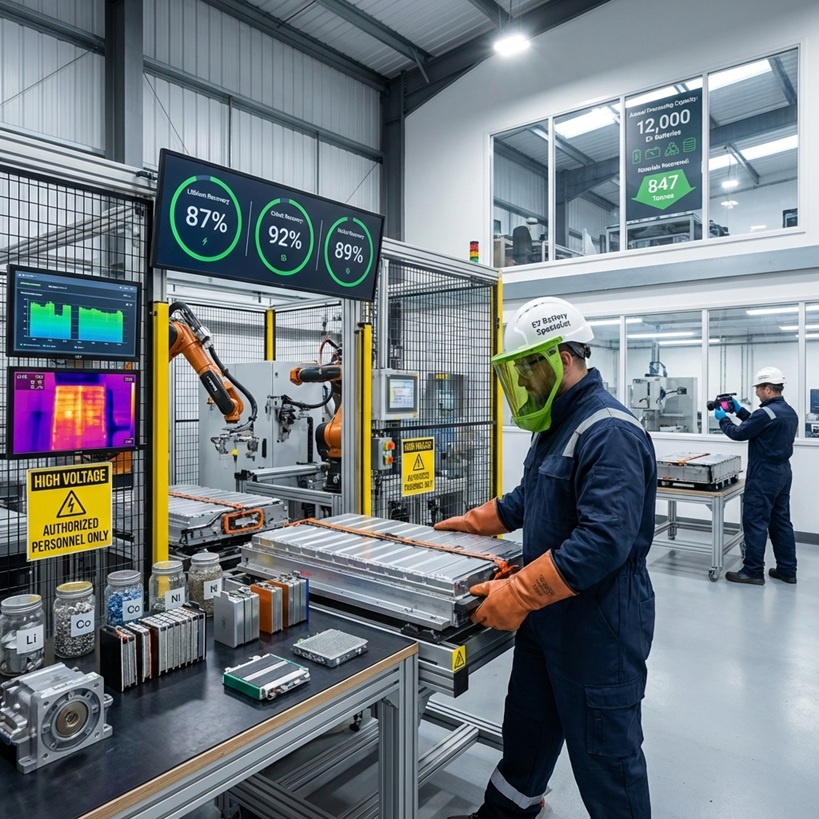
Electric Vehicle Battery Recycling: A Complex Puzzle
Electric vehicles are leading the transition to low-carbon transport, but they also highlight some of the biggest future fuels recycling challenges. Their batteries contain valuable metals that are difficult to extract and even harder to recycle.
The Materials Inside
Most EV batteries contain lithium, cobalt, nickel, and manganese. All are essential for energy storage but sourced from finite and sometimes environmentally damaging mining operations. Recovering these materials through recycling is crucial to reducing the industry’s environmental footprint.
As the number of electric and hybrid vehicles grows, the demand for recycling EV and hybrid batteries will surge. Retaining these metals in the supply chain reduces pressure on global mining and supports the development of sustainable manufacturing.
I had a conversation with an engineer at a battery recycling plant in Coventry who explained just how tricky these things are to process. He said one wrong move and you’ve got a thermal runaway situation that’s basically a small fire hazard. That’s why only specialised facilities with proper containment systems can handle them safely. It’s not something you can just chuck in a standard scrap metal crusher.
Current Recycling Methods
At present, two main techniques dominate EV battery recycling:
Pyrometallurgy: High-temperature smelting to recover metals from the battery. It is effective but energy-intensive.
Hydrometallurgy: Chemical processing that dissolves and separates components for recovery, offering more precision but requiring complex chemical management.
Whilst neither method is perfect, both represent significant progress in managing large-scale battery waste. New hybrid approaches are being developed to improve recovery rates and energy efficiency.
Challenges and Opportunities
Recycling batteries presents unique difficulties:
Complexity: Each battery contains multiple layers and materials that are difficult to separate.
Safety Risks: Damaged or old batteries can ignite if mishandled.
High Costs: Recycling remains expensive compared to raw material extraction.
Scalability: Facilities capable of processing EV batteries are still limited.
Nonetheless, the opportunities are substantial. Effective recycling helps recover scarce resources, reduces landfill waste, and minimises pollution.
Working with the network of Authorised Treatment Facilities ensures batteries are handled safely and sustainably through certified processes.
Key Takeaways:
- EV batteries contain valuable but hazardous materials
- Recycling technologies are improving but need scaling
- Safe, efficient recycling reduces environmental harm and resource dependency
Hydrogen Fuel Cell Recycling: The Platinum Challenge
Hydrogen fuel cells are another pillar of future fuels, offering clean energy with water as the only exhaust output. However, the technology introduces its own recycling issues.
Fuel cells use platinum as a catalyst to enable the chemical reaction that generates electricity. Platinum is both rare and costly, and without efficient recycling, widespread hydrogen adoption could strain global supply.
Think of platinum in fuel cells like the catalytic converter in traditional cars. Both use precious metals that are too valuable to waste. The difference is we’ve been recycling catalytic converters for decades, so we’ve got that process down. With hydrogen fuel cells, we’re still working out the best methods.
Recovering platinum from fuel cells requires precise separation techniques. Early-stage methods involve dissolving the fuel cell’s membranes and using chemical treatments to reclaim metals. Though the number of hydrogen-powered vehicles remains low, preparing now will prevent larger-scale waste problems in the future.
Those ready to dispose of their vehicle responsibly can scrap their car for cash and learn about the component separation process.
Key Takeaways:
- Hydrogen fuel cells rely on expensive platinum catalysts
- Recycling platinum is essential for sustainable hydrogen use
- Current processes are early-stage but vital for future scalability
Biofuel Recycling: Closing the Loop
Biofuels, produced from organic waste, crops, or algae, are designed to reduce carbon emissions and dependence on fossil fuels. However, even renewable energy systems generate waste that must be managed responsibly.
Recycling in biofuel production involves repurposing residual biomass, such as plant waste or by-products, into new resources. These can be used as:
Fertiliser or animal feed reintroduces nutrients into the ecosystem.
Biogas feedstock produces renewable energy through anaerobic digestion.
Industrial compost reduces agricultural waste.
This closed-loop approach ensures that energy production does not simply shift waste elsewhere. It mirrors the principles applied in car recycling, where valuable materials are recovered for reuse rather than discarded.
Key Takeaways:
- Biofuel production generates recyclable by-products
- Reusing biomass reduces waste and enhances sustainability
- Circular processes strengthen renewable energy’s environmental credentials
The Role of the Scrap Car Industry
The scrap car industry stands at the centre of this evolving energy landscape. As vehicles powered by new fuels reach their end of life, recyclers must develop new processes and equipment to handle batteries, fuel cells, and advanced components.
Authorised Treatment Facilities (ATFs) already manage thousands of end-of-life vehicles (ELVs) each year. As future fuel vehicles increase, these facilities must upgrade their technologies and safety measures to deal with high-voltage systems and specialised materials.
Whether recycling an electric car or a hybrid, certified facilities ensure compliance with environmental standards and proper processing. Vehicle owners can get an instant scrap car quote and ensure their vehicle enters the proper recycling stream.
Key Takeaways:
- The scrap car sector must adapt to handle advanced vehicle components
- ATFs will lead innovation in future fuel vehicle recycling
- Certified networks ensure safe and compliant vehicle disposal
Preparing for the Future
Meeting the future fuels recycling challenges requires industry-wide collaboration and investment. Manufacturers, recyclers, and policymakers must work together to create efficient recycling systems capable of handling advanced materials.
Priority Areas for Development:
Research & Innovation: Investment in better methods for recycling EV and hybrid batteries, fuel cells, and composite parts.
Infrastructure Expansion: Establishing more facilities equipped to process next-generation vehicles.
Regulation & Compliance: Updating recycling standards for future fuel technologies.
Consumer Awareness: Educating drivers about the importance of sustainable scrappage.
Every car, whether powered by electricity, hydrogen, or biofuel, contains recoverable resources. Choosing responsible recycling helps conserve these materials and supports a cleaner automotive future.
Learning why use certified recyclers shows how proper vehicle disposal supports both environmental protection and resource recovery.
Key Takeaways:
- Innovation and collaboration are essential for progress
- Updated regulations and infrastructure are vital
- Responsible scrappage ensures sustainability across the vehicle lifecycle
A Sustainable Road Ahead
The journey towards cleaner transport is accelerating, but the real measure of success lies in what happens at the end of the road. Sustainable recycling practices will determine whether future fuels truly deliver their environmental promise.
Through ongoing innovation, responsible disposal, and compliance with environmental standards, the scrap industry can transform the way vehicles are recycled. Services offer free collection nationwide, making sustainable disposal accessible for all vehicle types.
By supporting certified recyclers and choosing responsible disposal methods, drivers and fleet managers can help ensure that future fuels recycling challenges are turned into opportunities for progress. For guidance on proper vehicle disposal and to learn how advanced recycling processes work, contact us to speak with our team.