The Role of Scrap Cars in the Global Green Economy
10th Feb, 2026
When most people picture the “green economy,” they think of wind farms, solar panels, and electric vehicles. Yet one of the unsung heroes of sustainability is something far less glamorous: the humble scrap car. Across the UK and the wider world, end-of-life vehicles are helping drive cleaner industries, conserve resources, and power the green economy and car recycling movement.
This transformation shows how responsible disposal and recycling can support both economic growth and environmental preservation. Scrap Car Network connects drivers with facilities that turn old vehicles into valuable resources rather than waste.
Understanding the Green Economy
The green economy focuses on sustainable growth, balancing economic progress with environmental protection. It’s an approach designed to reduce waste, use resources more efficiently, and build long-term value without depleting the planet’s natural assets.
At its core, it’s about reusing, recycling, and repurposing materials instead of simply discarding them. This not only cuts emissions but also creates new industries and jobs focused on sustainability.
Think of it like maintaining a garden. You don’t just keep planting new things and throwing out the old. You compost, you mulch, you work with what you’ve got. That’s the green economy in a nutshell.
How Scrap Cars Fit into the Picture
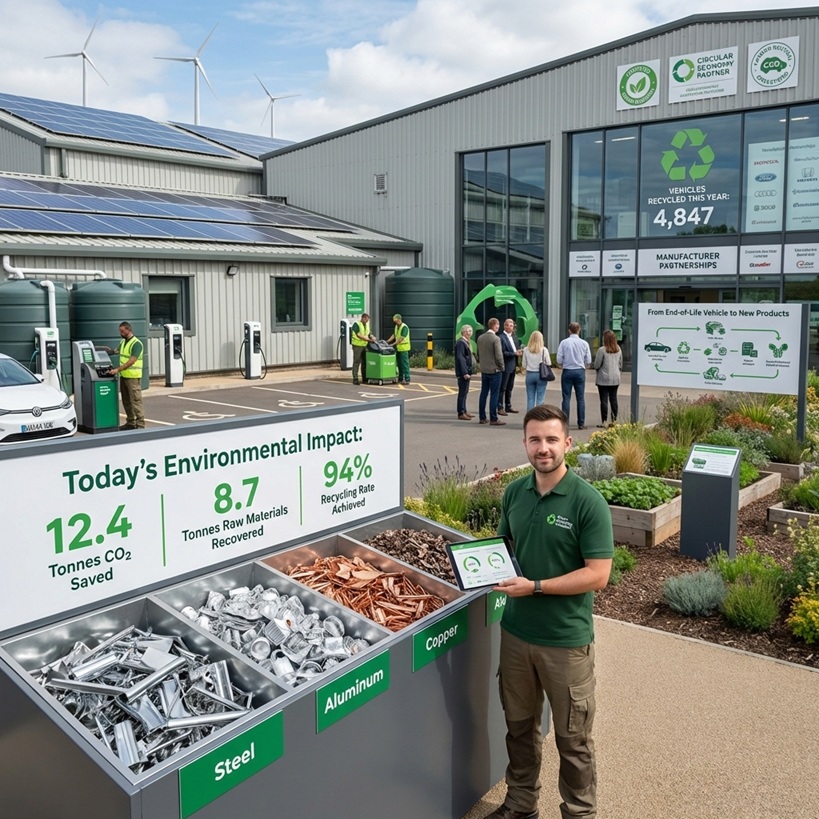
A car is essentially a mobile collection of valuable raw materials: steel, aluminium, copper, glass, and rubber. When a vehicle reaches the end of its road life, those materials don’t lose their worth. Instead, they can be recovered, recycled, and repurposed into new products.
This process keeps valuable resources in circulation, significantly reducing the need for mining and manufacturing new materials. The scrap cars in green economy frameworks prove that waste is really just a resource in the wrong place.
I remember a customer who felt guilty about scrapping his old Volvo. “Seems wasteful,” he said. I explained that his car would become part of construction steel, new vehicle components, even household appliances. Nothing gets wasted. He left feeling quite pleased he was contributing something useful rather than just getting rid of a problem.
The Car Recycling Process: Step by Step
When a car is scrapped, it undergoes a detailed, highly regulated recycling process to ensure maximum recovery and minimal waste.
Depollution
All hazardous materials such as oil, coolant, and brake fluid are drained and disposed of safely to prevent environmental contamination. This step is crucial for protecting groundwater and soil.
Parts Removal
Reusable components like engines, alternators, and body panels are carefully removed, inspected, and refurbished for resale. These parts give older vehicles a second life and reduce demand for newly manufactured components.
Crushing and Shredding
The remaining car body is compacted and shredded into smaller fragments, making it easier to sort. This mechanical process prepares materials for the next stage of separation.
Material Separation
Advanced machinery separates the shredded material into metals, plastics, and glass. Modern circular economy vehicle recycling systems use sophisticated sorting technology to achieve high purity levels.
Recycling
Each material is then transported to a recycling plant where it’s reprocessed into new products, ready to re-enter the supply chain. Steel becomes construction material. Aluminium returns to manufacturing. Copper goes into electrical components.
For full details on this process, explore how we handle vehicle recycling responsibly from start to finish.
Environmental Benefits of Recycling Scrap Cars
Recycling end-of-life vehicles benefits the planet in several ways. Every car processed responsibly contributes to environmental protection.
Reduces Landfill Waste: Prevents tonnes of waste from ending up in landfill sites, preserving valuable land for better uses.
Conserves Natural Resources: Reduces demand for new mining and material extraction, protecting ecosystems from destructive mining practices.
Saves Energy: Recycling metals consumes far less energy than producing them from raw ores. Steel recycling uses about 60% less energy than virgin production.
Cuts Pollution: Minimises emissions, water contamination, and industrial waste throughout the production chain.
When you obtain a valuation for your vehicle, you’re taking the first step towards these environmental benefits. It’s not just disposal. It’s active environmental stewardship.
Economic Advantages of the Scrap Car Industry
Sustainability isn’t just good for the planet. It’s good for business. The scrap car sector supports local economies, generates employment, and reduces manufacturing costs across industries.
Job Creation: Skilled workers are needed for dismantling, recycling, logistics, and administration. The industry employs thousands across the UK.
Revenue Generation: Recycled metals and parts contribute millions to the UK economy annually, creating wealth from what would otherwise be waste.
Support for Local Businesses: Independent recycling yards, transport firms, and parts suppliers benefit directly from the circular economy.
Reduced Manufacturing Costs: Recycled materials help manufacturers cut production expenses, making products more affordable for consumers.
The sustainable car dismantling sector demonstrates that environmental responsibility and economic prosperity aren’t competing goals. They’re complementary.
The Role of Authorised Treatment Facilities
All legitimate car recycling in the UK must take place through Authorised Treatment Facilities (ATFs), licensed centres that follow strict environmental standards.
These facilities remove hazardous materials safely, ensure compliance with waste management laws, and issue Certificates of Destruction to confirm legal scrapping.
By recycling through ATFs, vehicle owners ensure their cars are dismantled and processed responsibly. Working with our nationwide network of certified facilities guarantees your car is handled in full compliance with UK environmental legislation.
ATFs aren’t just legal requirements. They’re the backbone of responsible end-of-life vehicle processing, ensuring materials return to productive use rather than contaminating the environment.
Challenges and Opportunities in the Scrap Car Sector
Like any industry, the car recycling sector faces ongoing challenges. Fluctuating metal prices affect profitability. Complex vehicle designs make dismantling more difficult. Illegal operators pose risks to the environment and the industry’s reputation.
However, innovation is driving progress. Automation, stricter regulations, and digital platforms are improving efficiency and transparency. New sorting technologies can separate materials with unprecedented precision.
The future belongs to facilities that invest in technology and training. Those that adapt quickly will lead the market, whilst those clinging to old methods will struggle.
For those needing commercial vehicle disposal, our specialised van recycling service already incorporates advanced processing methods that maximise material recovery.
The Future of Scrap Cars in a Sustainable World
As sustainability becomes central to global economies, the role of scrap cars in green economy initiatives will continue to grow. Future vehicles may be designed with recyclability in mind, featuring modular components and easily separable materials.
Technological advances like AI-assisted sorting and automated dismantling will make recycling faster and more efficient. Meanwhile, growing consumer awareness will drive demand for services that combine convenience with environmental responsibility.
Understanding the advantages of choosing responsible recyclers helps ensure your vehicle disposal supports the circular economy rather than undermining it.
How You Can Contribute
Supporting the green economy starts with small, practical actions that anyone can take.
Scrap Responsibly: Always use a licensed ATF via a trusted service. Don’t be tempted by unlicensed operators offering slightly more money. They’re cutting corners somewhere, and it’s usually environmental compliance.
Spread Awareness: Encourage friends and family to recycle vehicles properly. Many people don’t realise the environmental impact of their disposal choices.
Support Sustainable Choices: Opt for products made with recycled or reclaimed materials when possible. Consumer demand drives industry change.
If you need quick turnaround, we arrange efficient vehicle collection anywhere in the UK, ensuring your unwanted vehicle is collected swiftly and recycled responsibly.
Conclusion: Driving the Green Economy Forward
Scrap cars might not look like champions of sustainability, but they’re vital players in the green economy and car recycling movement. Each vehicle recycled reduces waste, conserves resources, and helps build industries that value long-term environmental balance.
From job creation to pollution reduction, the impact of scrap cars in green economy systems extends far beyond the scrapyard. They’re proof that sustainability doesn’t always come from innovation alone. Sometimes it’s about rethinking what we already have.
By recycling responsibly, every driver can help power the circular economy and keep valuable materials in motion. When it’s time to say goodbye to your old car, remember: scrapping it isn’t the end of the road. It’s the start of something greener.
For those managing their vehicle disposal process, we handle every step efficiently while ensuring environmental compliance throughout.
If you need guidance on responsible disposal, feel free to contact us for personalised advice on how your vehicle can contribute to a more sustainable future.