Why Car Scrapping Is Recession-Proof
10th Feb, 2026
It might not sound glamorous, but car scrapping is one of those industries that stays steady even when the economy takes a nosedive. Whether times are tough or thriving, people still need to get rid of their old vehicles. That’s where recession-proof car scrapping proves its worth.
While many sectors experience slowdowns during financial uncertainty, the scrap car industry continues operating with remarkable consistency. This resilience lies in a simple truth: no matter the economic climate, vehicles reach the end of their lifespan and still need recycling responsibly.
Scrap Car Network connects you with facilities that understand this essential service keeps running regardless of what’s happening in the wider economy.
Why Car Scrapping Isn’t Affected by Recession
When recessions hit, spending slows and consumers become cautious. Big purchases get postponed, but essential activities like commuting, working, and family transport remain non-negotiable. Cars are indispensable, particularly in rural and suburban areas where public transport options are limited.
When an older vehicle becomes too costly to maintain, scrapping becomes the practical choice. The decision isn’t about luxury. It’s about necessity.
That’s what makes scrap industry economic stability so impressive. It’s driven by essential demand, not discretionary spending. People don’t scrap cars because they fancy a change. They scrap them because continuing to run them makes no financial sense.
Think of it like replacing a broken kettle. You’re not treating yourself. You’re solving a problem that needs solving regardless of your bank balance.
The Need for Reliable Transportation Persists
Even during financial hardship, people still need to get to work, take children to school, and carry out daily responsibilities. A reliable car is often non-negotiable, especially outside major cities.
When repairs exceed a vehicle’s value, scrapping becomes a logical next step. Rather than investing hundreds or thousands in costly repairs for a car that’s fundamentally worn out, vehicle owners can receive an instant online quote to see what their vehicle’s actually worth.
Many find that scrapping an old car provides enough to offset the cost of a replacement. It’s a welcome relief during difficult times.
I remember a customer years back who’d been nursing along an old Fiesta through the 2008 recession. Every month brought a new problem: alternator, clutch, head gasket. Eventually he totalled up what he’d spent keeping it alive and realised he could’ve bought a better car six months earlier. Scrapped it and used the payment towards something reliable. Sometimes the sensible choice is the one you’ve been putting off.
Scrapping vs. Repairing Older Vehicles
During economic downturns, vehicle owners often attempt to keep cars running longer. It makes sense on the surface. Delay the big expense of replacement by patching up what you’ve got.
However, older vehicles require frequent repairs. Replacement parts can be expensive. Labour costs add up quickly. Eventually, the repair costs outweigh the car’s value, making scrapping the more practical choice.
This cycle sustains recession-proof car scrapping by maintaining a steady flow of vehicles entering the recycling system. Instead of leaving unused vehicles to deteriorate on driveways or in garages, we arrange compliant vehicle disposal through approved facilities that ensure safe dismantling and recycling.
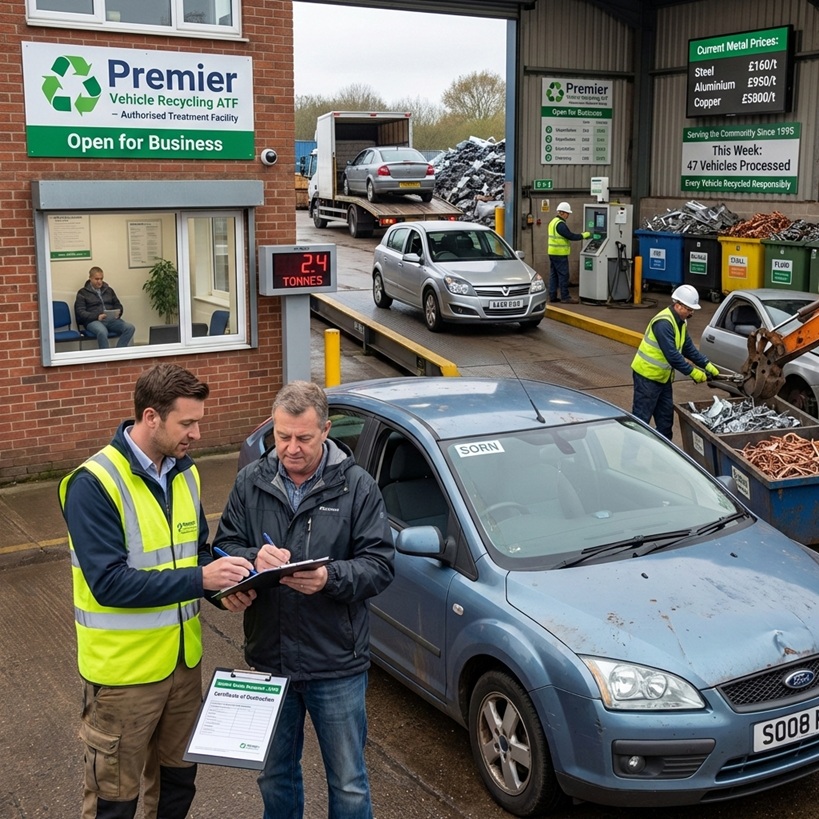
The Certificate of Destruction you receive proves your vehicle’s been processed legally and you’re no longer liable for it. That’s peace of mind you can’t put a price on.
The Metal Market’s Role in Recession-Proof Car Scrapping
The stability of the scrap car industry isn’t just about necessity. It’s also tied to the enduring value of metal. Cars are built from materials like steel, aluminium, and copper, all of which retain demand even when economies falter.
Demand for Recycled Materials
The recycling sector supplies essential materials for construction, manufacturing, and infrastructure. Recycled metals often remain in demand because they’re cheaper and more sustainable than newly mined alternatives.
Even when production slows, the appetite for cost-effective raw materials keeps scrap industry economic stability intact. Fluctuations in global metal prices can influence returns, but there’s always a baseline value for scrap cars. This ensures scrapping vehicles remains financially viable both for consumers and recyclers.
During recessions, manufacturers actually increase their use of recycled materials. Why? They’re looking to cut costs wherever possible, and recycled steel or aluminium offers significant savings compared to virgin materials.
Environmental Considerations
Recycling also aligns with growing global commitments to environmental sustainability. Every vehicle processed responsibly saves resources, reduces emissions, and prevents landfill pollution.
Through our commitment to sustainable practices, we ensure vehicles are processed with the lowest environmental impact possible. That commitment doesn’t waver based on economic conditions.
How Consumer Behaviour Supports Car Scrapping in Economic Downturns
Economic slowdowns influence how people treat their vehicles. During recessions, most car owners delay new purchases, opting to extend the life of existing cars or find affordable replacements. This behaviour naturally fuels the scrapping industry.
Delaying New Car Purchases
With household budgets under pressure, buying a new car becomes less appealing. Financing becomes harder. Confidence drops. People make do with what they’ve got for as long as possible.
As older cars become more common on the road, the number eventually reaching end-of-life increases. This sustains demand for recycling and dismantling services provided by licensed facilities throughout the UK.
Seeking Cost-Effective Solutions
Scrapping provides an affordable, transparent alternative to private selling. Vehicle owners receive guaranteed payments, avoid advertising costs, and know their car will be recycled responsibly.
During recessions, these factors become even more attractive. Selling privately means dealing with tyre-kickers, no-shows, and people trying to knock your price down. It’s hassle you don’t need when money’s tight.
Scrapping turns a potential headache into a straightforward transaction. You get a guaranteed price, free collection, and the job’s done. That certainty matters when you’re watching every penny.
The Role of Authorised Treatment Facilities
Behind every responsible scrapping process lies the expertise of Authorised Treatment Facilities (ATFs). These government-licensed facilities ensure cars are dismantled and recycled according to strict environmental and safety regulations.
Legal and Environmental Compliance
ATFs are responsible for draining fluids, removing hazardous components, and recycling reusable materials safely. They also issue Certificates of Destruction, proving vehicles have been processed in line with DVLA and environmental requirements.
Our nationwide ATF partnership network guarantees compliance, safety, and transparency at every stage. This network operates consistently regardless of economic conditions, because environmental regulations don’t take recessions off.
Supporting the Circular Economy
ATFs are integral to the UK’s circular economy, recovering valuable materials for reuse in manufacturing. This system reduces the need for raw material extraction and ensures metal, glass, and plastic continue to circulate productively.
This closed-loop process remains strong during recessions because it’s built on necessity: waste reduction, resource recovery, and sustainable production. When money’s tight, the economics of reusing existing materials become even more compelling than usual.
Why Choose Scrap Car Network
Choosing the right service makes all the difference when scrapping a car. We’re built on efficiency, transparency, and environmental responsibility. These values ensure confidence in uncertain times.
Hassle-Free Scrapping Process
The process is simple. Enter your vehicle registration and postcode to get an instant quote. Once you accept the offer, we’ll collect your vehicle at no charge anywhere in the UK.
We handle all necessary paperwork, including notifying the DVLA on your behalf. You don’t need to worry about forms or phone calls. We sort it.
Fair Prices and Guaranteed Payment
Prices are based on vehicle type, condition, and current metal values. We guarantee the quoted payment, ensuring there are no hidden fees or unexpected deductions.
What we quote is what you get. No surprise “collection charges” or “administration fees” that magically appear after you’ve accepted. Transparent pricing matters, especially when household budgets are stretched.
If you’ve got a commercial vehicle that’s reached the end of its useful life, you can also arrange van collection and recycling through the same straightforward process.
Conclusion: Stability in an Uncertain Economy
The car scrapping sector continues demonstrating impressive resilience through every economic cycle. Its success lies in its foundation: essential demand, consistent recycling value, and environmental necessity.
Whether the economy’s booming or struggling, recession-proof car scrapping remains a stable pillar of sustainability and practicality. The scrap industry economic stability shows that even in downturns, value can be found in responsible recycling.
When it’s time to retire your old vehicle, choose a service that supports both your wallet and the planet. If you need guidance or have questions about the process, feel free to contact us for personalised advice.