The Jobs Created by the Scrap Car Ecosystem
2nd Feb, 2026
The automotive recycling industry represents one of Britain’s most successful employment stories, yet most people have little idea how many jobs depend on end-of-life vehicles. From the moment someone decides their car has reached the end of its useful life, through to the final processing of recovered materials, dozens of skilled professionals are involved.
Across the UK, thousands of people earn their living through automotive recycling. These aren’t just traditional scrapyard jobs – the modern industry employs environmental scientists, logistics coordinators, advanced machinery operators, and business development professionals. It’s a sector that’s grown dramatically over the past two decades as environmental regulations have tightened and recycling technology has advanced.
The jobs created by the scrap car ecosystem span multiple industries and skill levels, providing employment opportunities from entry-level positions through to highly specialised technical roles. Understanding this employment landscape reveals an industry that’s vital not just for environmental reasons, but for supporting communities and families across Britain. When vehicle owners connect with nationwide recycling services, they’re supporting this entire employment network.
Direct Employment in Collection and Transport
The visible face of automotive recycling often starts with collection services. Professional drivers collect vehicles from homes, businesses, and roadsides across the country, requiring navigation skills, customer service abilities, and proper vehicle recovery qualifications.
Behind these drivers sits a logistics operation managing hundreds of collections weekly. Dispatchers coordinate routes, handle scheduling changes, and ensure efficient operations. Administrative staff process paperwork, manage DVLA notifications, and maintain compliance records for thousands of vehicles annually.
These collection operations employ people in every region of Britain. From rural Scotland to urban London, the network requires local knowledge and community connections. Many collection drivers have worked in their areas for years, building relationships and understanding local geography better than any GPS system.
Customer service teams handle enquiries, provide quotes, and guide people through the disposal process. These roles require patience, clear communication skills, and knowledge of recycling regulations. For vehicle owners looking to discover what their car is worth, these professionals provide essential guidance through valuation and collection processes.
Authorised Treatment Facility Operations
Modern Authorised Treatment Facilities employ far more people than traditional scrapyards ever did. A typical mid-sized ATF might employ 15-25 people directly, whilst larger operations can have 50+ staff members.
Facility managers oversee entire operations, managing staff, ensuring compliance with environmental regulations, maintaining safety standards, and developing business strategy. These are senior positions requiring business acumen alongside technical knowledge of recycling processes.
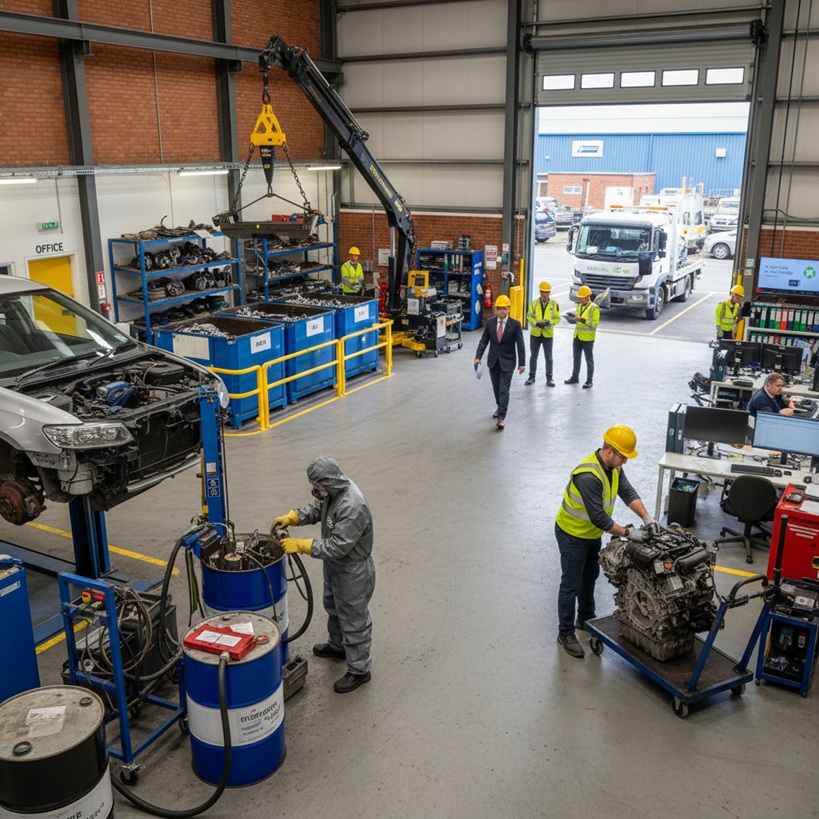
Depollution technicians perform the critical first stage of vehicle processing. They drain fluids, remove batteries, handle airbag systems, and extract refrigerants. This work requires specific training and certifications, with environmental health and safety considerations paramount. The technical nature of depollution means these positions command good wages – typically £25,000-£35,000 annually depending on experience and location.
Dismantling specialists then systematically remove valuable components. Modern vehicles contain hundreds of parts that can be recovered, remanufactured, or recycled. These workers need mechanical knowledge, attention to detail, and physical fitness. Experienced dismantlers develop expertise in identifying valuable components and efficient removal techniques.
Quality control inspectors ensure processing meets regulatory standards. They verify complete depollution, check material separation accuracy, and maintain documentation for compliance audits. Environmental compliance officers focus specifically on meeting Environment Agency requirements, conducting internal audits, and implementing best practice procedures.
Metal Processing and Sorting Specialists
Once vehicles are depolluted and dismantled, metal processing operations employ additional skilled workers. Shredder operators manage massive machines that reduce vehicle hulks to fist-sized fragments. These are highly technical positions requiring equipment operation expertise, maintenance knowledge, and constant safety awareness.
Sorting line technicians work with advanced separation equipment, using magnetic systems, eddy current separators, and density-based sorting to separate different materials. This requires understanding of metallurgy, equipment operation, and quality control. Materials handlers then prepare sorted metals for transport to steel mills and other processors.
Maintenance engineers keep complex equipment operational. Shredders, magnetic separators, conveyor systems, and sorting equipment all require regular maintenance and occasional repair. These positions demand mechanical and electrical engineering skills, with salaries reflecting the specialised nature of the work – often £35,000-£50,000+ for experienced engineers.
The technical sophistication of modern recycling facilities means ongoing training and skills development. Many employers support staff in gaining additional qualifications, creating career progression pathways from entry-level positions to senior technical roles. Those interested in the recycling process can learn more about how facilities work through educational resources and facility tours.
Technology and Innovation Roles
A growing number of professionals work in technology and innovation within the automotive recycling sector. Process engineers analyse operations, identify efficiency improvements, and implement new technologies. They might develop better sorting systems, improve material recovery rates, or streamline logistics operations.
Research scientists, often working with universities or industry bodies, develop new recycling techniques. Recent innovations in plastics recycling, rare earth metal recovery, and electric vehicle battery processing all emerged from this research.
Data analysts track material flows, monitor market prices, and optimise business operations. The recycling industry generates enormous amounts of data – vehicle weights, material compositions, pricing trends, and regulatory compliance records. Turning this data into actionable insights requires analytical expertise.
Software developers create management systems handling everything from vehicle intake through to final material sales. Modern recycling operations rely on sophisticated software tracking each vehicle’s processing journey, managing inventory, and ensuring regulatory compliance.
Supporting Industries and Services
The automotive recycling industry supports numerous adjacent businesses. Specialised transport companies move vehicles from collection points to processing facilities. These logistics operations employ drivers, dispatchers, and management staff focused specifically on automotive waste streams.
Equipment manufacturers supply shredders, balers, sorting systems, and handling equipment. These companies employ engineers, sales staff, technical support teams, and manufacturing workers producing machinery for the recycling industry.
Consultants advise facilities on compliance, efficiency, and best practices. Environmental consultancies have developed specialisms in automotive recycling, helping businesses navigate complex regulations whilst optimising operations.
Training providers have emerged offering courses in depollution, dismantling, environmental management, and equipment operation. These organisations employ instructors, curriculum developers, and administrative staff supporting workforce development across the sector.
Skills Development and Training Programmes
The industry has developed comprehensive training programmes supporting career entry and advancement. Apprenticeships combine practical experience with classroom learning, allowing people to earn whilst developing skills. These programmes typically last 2-3 years, resulting in recognised qualifications and strong employment prospects.
Environmental management qualifications prepare people for compliance and sustainability roles. Courses cover environmental legislation, waste management, pollution prevention, and sustainability principles. Many facilities support employees in gaining these qualifications through part-time study.
Technical certifications for specific equipment operation ensure safe and effective work. Shredder operation, crane handling, and forklift driving all require formal certification. Health and safety training is mandatory across the industry, with regular refresher courses maintaining standards.
During a conversation with a training provider who’d spent years developing recycling industry programmes, she explained how the sector had transformed. Twenty years ago, scrapyard work was seen as low-skilled and temporary. Today, her apprentices were learning advanced machinery operation, environmental science, and business management. Several of her former students now managed facilities or worked in research roles developing new recycling technologies. The pride in her voice was unmistakable – these weren’t dead-end jobs, they were careers with real progression and meaning.
Environmental Career Opportunities
The environmental focus of modern automotive recycling creates career opportunities for sustainability professionals. Sustainability coordinators develop and implement policies reducing environmental impact, improving resource efficiency, and enhancing circular economy practices.
Waste stream managers specialise in optimising material recovery. They analyse composition data, identify improvement opportunities, and coordinate with different processors to maximise value recovery from each vehicle. This requires understanding of materials science, market dynamics, and processing capabilities.
Environmental auditors ensure facilities meet regulatory requirements. They conduct internal audits, prepare for external inspections, and implement corrective actions when needed. This work requires detailed knowledge of environmental legislation and strong organisational skills.
Green technology specialists focus on emerging technologies like electric vehicle battery recycling, advanced plastics processing, and rare earth metal recovery. As vehicle technology evolves, these roles become increasingly important for maintaining high recovery rates.
Regional Employment Impact
Automotive recycling employment is distributed across Britain, with concentrations in industrial areas. The Midlands, with its automotive manufacturing heritage, hosts numerous large facilities. Scotland, Wales, and Northern England all have significant recycling operations supporting local employment.
These facilities often locate in former industrial areas, providing employment in regions that lost manufacturing jobs over recent decades. A large ATF might be one of the biggest employers in a small town, supporting local economies through wages, taxes, and procurement from local suppliers.
The employment impact extends beyond direct jobs. Employees spend wages locally, supporting retail and service businesses. Facilities pay business rates funding local services. Successful operations often invest in community programmes, sports sponsorships, and educational initiatives. For those seeking opportunities, finding local certified dealers reveals the geographic spread of this employment network.
The Employment Ripple Effect
Economic research shows that every direct job in recycling supports additional employment in related sectors. Transport companies need drivers, mechanics, and administrative staff. Equipment suppliers employ sales teams, engineers, and manufacturing workers. Professional services – legal, accounting, insurance – all benefit from recycling industry demand.
Studies suggest each direct recycling job supports 1.5-2 additional jobs in the broader economy. For an industry employing thousands directly, this multiplier effect creates tens of thousands of supported positions across various sectors.
Retail and service businesses near large recycling facilities benefit from employee spending. Local shops, cafes, and services all gain customers from facility workers. This economic activity generates additional tax revenue supporting public services.
The stability of recycling employment – vehicles constantly reach end-of-life regardless of economic conditions – provides economic resilience. Communities with recycling operations have more stable employment bases than those dependent on economically sensitive industries.
Future Job Growth in Automotive Recycling
Industry projections suggest significant employment growth over coming decades. Electric vehicle recycling is creating entirely new job categories. Battery dismantling, lithium recovery, and rare earth metal processing all require specialised skills not previously needed in automotive recycling.
Advanced technology deployment is increasing demand for skilled workers. Artificial intelligence systems, automated sorting, and robotics all require programming, maintenance, and optimisation. These technical roles command higher wages, improving employment quality across the sector.
Growing sustainability focus from manufacturers and government is driving investment in recycling capacity. New facilities mean construction jobs initially, then ongoing operational employment. Facility upgrades and technology improvements require engineering and installation work.
Export opportunities in recycling expertise and technology could create additional positions. British companies have developed world-leading capabilities in certain recycling technologies. International sales and consulting opportunities could support jobs in sales, engineering, and project management.
Getting Started in the Industry
Entry-level positions typically require no prior experience but do need reliability, physical fitness, and willingness to learn. Collection drivers need appropriate driving licences and good customer service skills. Yard operatives require physical stamina and basic mechanical understanding.
Career progression opportunities exist for motivated individuals. Yard operatives can advance to specialist roles, then supervisory positions, and eventually facility management. Some employees pursue additional qualifications whilst working, moving into technical or compliance roles.
Salary expectations vary by role and location. Entry-level positions typically start at £22,000-£26,000. Skilled technical roles range from £28,000-£40,000. Management positions command £40,000-£60,000+, depending on facility size and responsibilities.
Industry associations offer networking opportunities and professional development. The British Metals Recycling Association represents the sector, providing training, guidance, and advocacy. Professional membership can support career development and industry connections. Those considering career entry can explore collection services to understand operational requirements.
Economic Resilience Through Recycling Jobs
Automotive recycling provides recession-resistant employment. Even during economic downturns, vehicles continue reaching end-of-life. Whilst new car sales might plummet during recessions, scrap volumes remain relatively stable, protecting recycling employment.
The diverse skill requirements mean people from various backgrounds can find suitable roles. Physical labour positions suit those preferring hands-on work. Technical roles attract people with mechanical or engineering interests. Administrative and customer service positions provide opportunities for those with different skill sets.
Local employment reduces commute times and costs for workers. Many recycling facilities deliberately recruit locally, understanding the value of employees with community connections and reduced travel needs. This supports work-life balance and reduces environmental impact from commuting.
Long-term career stability comes from an industry that’s fundamental to modern society. As long as vehicles exist, recycling will be necessary. This permanence contrasts with industries facing automation risks or international competition. Recycling jobs stay local by necessity – you can’t outsource vehicle collection and processing.
Supporting British Manufacturing Through Employment
Every job in automotive recycling indirectly supports manufacturing employment. The steel, aluminium, and other materials recovered supply British manufacturers, reducing import dependence and supporting domestic production.
Steel mills employing thousands of workers rely partly on automotive scrap supply. Without efficient vehicle recycling, these facilities would need more expensive virgin materials or imported scrap, threatening their competitiveness and the jobs they provide.
Component remanufacturing creates additional employment. Engines, transmissions, and other parts recovered from scrapped vehicles support remanufacturing businesses employing mechanics, engineers, and administrative staff. These operations provide affordable parts to repair shops, supporting that employment sector as well.
The circular economy principles driving modern recycling policy explicitly aim to create employment whilst reducing environmental impact. Government strategies identify automotive recycling as a key sector for “green jobs” – positions that support environmental objectives whilst providing good employment. This employment network processes all vehicle types, with specialised services for motorcycles also contributing to job creation.
Understanding the employment impact helps explain why proper vehicle disposal matters beyond environmental compliance. Choosing to arrange professional collection services for any vehicle type supports this employment network, contributing to local economies and British manufacturing.
The jobs created by the scrap car ecosystem represent more than just individual employment – they’re part of a system supporting communities, protecting the environment, and enabling sustainable manufacturing. From the collection driver who arrives at someone’s home through to the research scientist developing better recycling technologies, each role contributes to an essential industry.
The diversity of positions available means opportunities for people with different interests, skills, and backgrounds. Whether someone prefers physical work, technical challenges, customer interaction, or analytical roles, the recycling industry offers career possibilities.
As the industry continues evolving with new technologies and environmental priorities, employment opportunities will likely expand. Electric vehicles, advanced materials, and circular economy principles all create demand for skilled workers. The sector offers not just jobs, but careers with progression, stability, and purpose.
For communities, automotive recycling facilities represent stable employers providing good wages and supporting local economies. The multiplier effects extend well beyond direct employment, creating economic resilience and supporting public services through tax revenue.
Next time someone disposes of a vehicle, it’s worth remembering the network of professionals making that process efficient, legal, and environmentally responsible. Their work keeps vehicles out of landfills, materials in productive use, and British manufacturing competitive. That old car or van needing disposal represents not just metal and glass, but livelihoods, community support, and environmental protection.
The automotive recycling industry demonstrates how environmental necessity and economic opportunity can align. The jobs it creates aren’t just filling quotas or meeting targets – they’re essential positions in a fundamental industry, providing careers that matter whilst protecting the world for future generations. For those ready to dispose of vehicles responsibly, getting expert assistance ensures participation in this valuable system supporting employment nationwide.