Why Scandinavian Countries Are Leaders in Scrap Car Sustainability
2nd Feb, 2026
The Nordic nations have long been recognised for their environmental consciousness, and that reputation extends well into how they manage old vehicles. When it comes to end-of-life car recycling, Scandinavian scrap car leadership stands out as a model of efficiency, innovation, and responsibility.
Norway, Sweden, Denmark, Finland, and Iceland have each built systems that focus on sustainability from design to disposal. Instead of viewing scrap cars as waste, these countries see them as valuable sources of raw materials that can be reused, repurposed, and reintegrated into the economy. Scrap Car Network follows these same principles by connecting vehicle owners with certified facilities that prioritise environmental protection and material recovery.
This is why Scandinavia leads in recycling: a combination of strict laws, advanced technologies, public cooperation, and strong government support.
Strict Environmental Regulations
A major reason behind Scandinavian scrap car leadership is the region’s uncompromising environmental legislation. These rules cover every stage of a vehicle’s life, from how it’s manufactured to how it’s finally dismantled.
Hazardous substances like lead, mercury, and cadmium are heavily restricted in car production. When a vehicle reaches the end of its life, it must be depolluted and recycled according to clearly defined environmental standards.
By ensuring manufacturers and recyclers follow strict procedures, Scandinavia keeps pollution low and material recovery rates high. For an overview of how recycling is regulated in the UK, learn about our environmentally responsible car recycling process.
Key Takeaways:
- Strong environmental laws govern the entire vehicle lifecycle
- Regulations aim to reduce hazardous materials and protect ecosystems
- Proper depollution and recycling are legally enforced
Advanced Recycling Technology
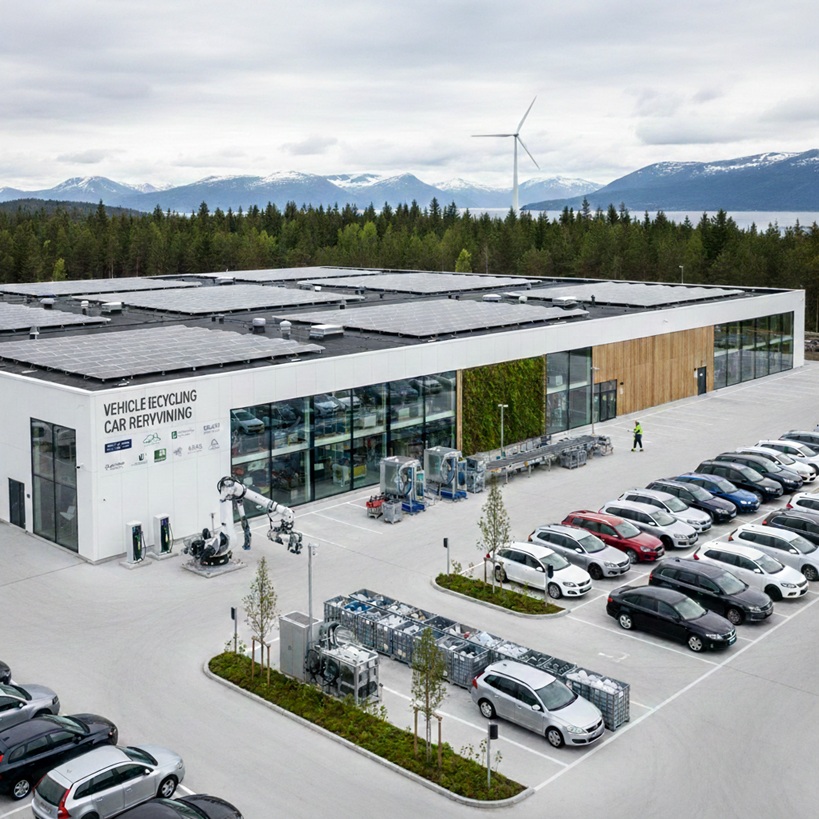
Scandinavian countries don’t rely on basic scrap methods. Instead, they’ve invested heavily in cutting-edge recycling technologies that enable higher recovery rates and cleaner processes.
These include:
- Automated dismantling systems that separate reusable parts efficiently
- High-tech shredding machines that sort metals, plastics, and composites
- Specialised recovery facilities capable of extracting rare earth elements from hybrid and electric vehicles
Such innovations ensure that nearly every material from an old vehicle can be reused, from glass and rubber to fluids and alloys.
I visited a Swedish recycling plant a few years back that had these incredible robotic arms doing the dismantling work. Watching them precisely remove components without damaging anything reusable was like seeing a mechanical ballet. What used to take workers hours with hand tools, these machines completed in minutes with far better precision.
Working with our network of Authorised Treatment Facilities shows how modern equipment and proper training create superior environmental outcomes.
Key Takeaways:
- Investment in modern recycling systems drives efficiency
- Advanced equipment allows recovery of metals, plastics, and fluids
- Technology ensures minimal waste and maximum sustainability
Extended Producer Responsibility (EPR)
A cornerstone of Scandinavian scrap car leadership is Extended Producer Responsibility (EPR). This framework requires vehicle manufacturers to take responsibility for their products even after they’ve reached the end of their road life.
Under EPR, automakers must ensure their vehicles can be collected, dismantled, and recycled safely. This encourages them to design cars that are easier to disassemble and made from materials that can be reused effectively.
The result? A continuous loop where manufacturers are incentivised to reduce waste and maximise recyclability.
Think of it like the deposit system on glass bottles. When you know you’re getting the bottle back, you design it to be reused or easily recycled. Car manufacturers under EPR face the same logic. They’re motivated to make vehicles that won’t come back to haunt them as expensive waste problems.
Key Takeaways:
- EPR laws make manufacturers accountable for recycling their vehicles
- Car design focuses on easy dismantling and reuse
- This approach supports circular economy principles
Public Awareness and Education
Rules and technology only work if people understand their importance. That’s why public engagement plays a critical role in why Scandinavia leads in recycling.
Governments across Scandinavia invest in education campaigns that highlight the benefits of recycling, encourage responsible vehicle disposal, and promote sustainable consumption. Citizens are taught to see car recycling as a civic duty rather than an afterthought.
This cultural awareness helps maintain exceptionally high compliance rates and public trust in recycling systems. For British readers, we make it easy to find out how to scrap your car easily and legally through transparent processes.
Key Takeaways:
- Public education reinforces recycling as a shared responsibility
- Awareness campaigns improve compliance and participation
- Citizens view recycling as part of everyday life
Government Incentives and Support
Another reason for Scandinavian scrap car leadership is strong government backing. Policymakers in the region view recycling as both an environmental and economic priority.
This support takes various forms, including:
- Subsidies for companies that develop sustainable recycling infrastructure
- Tax incentives for manufacturers using recycled materials
- Research grants for universities and private firms working on greener recycling methods
By aligning financial benefits with environmental goals, Scandinavian governments ensure sustainability isn’t just the right thing to do. It’s the profitable thing to do.
Those looking to understand how financial and environmental benefits work together can get an instant quote to scrap any car through services that deliver both fair value and environmental compliance.
Key Takeaways:
- Government support accelerates innovation and compliance
- Subsidies and grants encourage sustainable investment
- Recycling becomes economically viable for businesses
Collaboration and Innovation
Scandinavia’s success also lies in its spirit of collaboration and continuous innovation. Governments, recycling companies, and research institutions work together to test new ideas and share best practices.
Joint projects between public and private sectors have led to significant advancements in automated dismantling, material recovery, and zero-waste manufacturing.
This culture of cooperation ensures progress never stands still. Each breakthrough becomes a foundation for the next.
Key Takeaways:
- Collaboration between industries and governments drives progress
- Research partnerships lead to innovation in recycling methods
- Shared knowledge improves efficiency across the sector
Economic Benefits
Far from being a financial burden, sustainable recycling in Scandinavia has proven to be an economic asset.
By reusing valuable materials, countries reduce reliance on imported raw resources, cut energy costs, and create new employment opportunities in the recycling and manufacturing sectors.
This closed-loop system contributes to national economies whilst reducing waste, proving that environmental protection and financial growth can go hand in hand.
For a local example, discover the advantages of choosing responsible recycling for compliant and eco-friendly car disposal.
Key Takeaways:
- Recycling stimulates job creation and industry development
- Resource efficiency strengthens economic resilience
- Sustainability and profitability complement each other
Challenges and Future Directions
Even with their achievements, Scandinavian nations still face challenges in maintaining and improving their recycling systems.
Complex Vehicle Designs
Modern cars, especially electric and hybrid models, are more complex than ever. Safely dismantling batteries and electronics requires constant adaptation.
Traceability and Data Management
Ensuring transparent tracking of recycled materials across borders remains an ongoing focus for regulatory bodies.
Continuous Innovation
The region remains committed to refining its methods, developing new technologies to keep up with evolving materials and sustainability targets.
Key Takeaways:
- Ongoing innovation is essential to manage new car technologies
- Material traceability is a growing priority
- The pursuit of sustainability requires continuous improvement
How Scandinavian Practices Can Be Adopted Elsewhere
Other nations looking to follow why Scandinavia leads in recycling can draw from its guiding principles:
Implement Strong Environmental Regulations: Create strict laws that enforce safe manufacturing and recycling standards.
Invest in Recycling Infrastructure: Support the development of modern, efficient facilities.
Adopt Extended Producer Responsibility: Make manufacturers accountable for the full lifecycle of their vehicles.
Promote Public Awareness: Encourage citizens to participate actively in sustainability efforts.
Offer Government Incentives: Make environmentally responsible practices financially rewarding.
Encourage Collaboration: Build partnerships across industries, academia, and government bodies.
Many regions now benefit from free nationwide scrap car collection services that make sustainable disposal accessible regardless of location.
Key Takeaways:
- Strong regulation, education, and investment are the foundation of success
- Collaboration ensures progress and consistency
- A sustainability-focused framework can work in any country
Conclusion
Scandinavian scrap car leadership proves that environmental responsibility and efficiency can coexist. By combining tough legislation, technological innovation, and public cooperation, Scandinavia has built one of the most sustainable recycling ecosystems in the world.
These nations demonstrate why Scandinavia leads in recycling: because sustainability isn’t treated as an option, but as a shared responsibility.
For guidance on responsible disposal and to learn how certified facilities ensure proper vehicle recycling, contact us to speak with our team about ethical vehicle disposal.