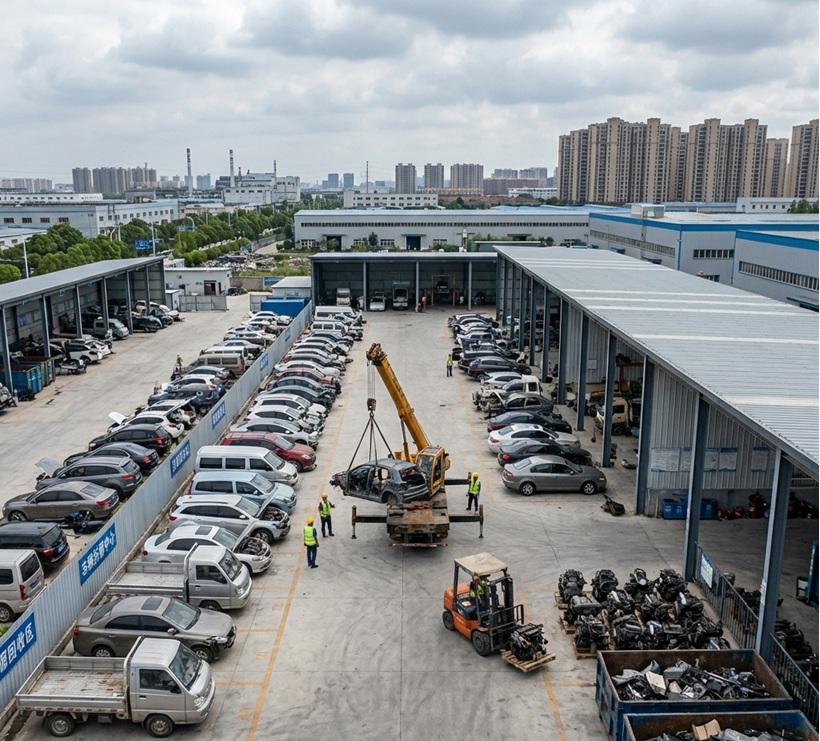
Asia’s Growing Scrap Car Market: Opportunities and Challenges
22nd Jan, 2026
The global automotive industry has undergone remarkable transformation over recent decades. Yet nothing compares to the seismic shifts currently reshaping Asia’s vehicle disposal landscape.
The numbers tell a remarkable story. Asia’s vehicle ownership has exploded from roughly 50 million cars in 1990 to over 400 million today. It’s like watching a massive wave build for decades – and now it’s starting to crash onto the recycling industry’s shores.
What makes this particularly fascinating is how different Asian countries are tackling the challenge. Some embrace cutting-edge recycling technologies, whilst others are still figuring out proper vehicle disposal basics. It’s a bit like watching different mechanics work on the same problem – each has their own approach, tools, and timeline.
Scrap Car Network monitors these global developments because understanding international best practices helps improve UK operations. The innovations emerging across Asian markets offer valuable lessons for responsible vehicle recycling everywhere.
The Scale of Asia’s Vehicle Challenge
The Asia scrap car market represents one of the world’s most complex automotive puzzles. Countries like Japan and South Korea deal with ageing fleets from their economic boom years, whilst China and India grapple with exponential growth in vehicle ownership.
Japan leads with approximately 4 million vehicles reaching end-of-life annually. That’s roughly 11,000 cars every single day needing proper disposal. China follows closely with an estimated 3.5 million vehicles, though this number climbs rapidly as their automotive market matures.
The challenge isn’t just volume – it’s variety. Asian markets feature everything from tiny kei cars weighing under 700kg to massive commercial vehicles exceeding 40 tonnes. Each requires different handling, processing methods, and regulatory approaches.
Precision and Innovation
One Japanese recycler operates facilities that process vehicles like precision assembly lines in reverse – every component catalogued, every material stream optimised. It’s automotive recycling elevated to an art form.
The sophistication level varies dramatically across the region. Japan’s meticulous systems contrast sharply with developing markets still establishing basic recycling infrastructure. This disparity creates both challenges and opportunities as knowledge transfer occurs between nations.
Economic Drivers Reshaping Markets
The economic forces behind Asia’s scrap car boom prove fascinating. Rising disposable incomes mean consumers upgrade vehicles more frequently. In South Korea, average vehicle ownership periods have dropped from 8.2 years in 2010 to just 6.8 years today.
Scrap metal prices significantly influence recycling economics across the region. When steel prices peaked in 2021, many Asian recyclers saw profit margins improve dramatically. A typical 1,200kg passenger car yielding roughly 75% recyclable steel suddenly became much more valuable.
Government Incentives Accelerating Change
Government incentives are accelerating trends considerably. China’s vehicle scrappage subsidies can reach up to 10,000 yuan (approximately £1,200) for older vehicles. Similar programmes in Thailand and Malaysia encourage consumers retiring ageing vehicles earlier than natural replacement cycles.
The rise of electric vehicles adds another economic dimension. Traditional combustion engine vehicles contain valuable metals like platinum and palladium in catalytic converters. EVs shift this value to lithium-ion batteries and rare earth elements – requiring completely different recovery processes.
Regional labour costs create interesting dynamics too. Countries with lower wages can justify more manual dismantling processes, recovering components that might not be economically viable in higher-cost markets. This variation across emerging recycling economies creates unique competitive advantages for different nations.
Technology and Innovation Trends
Asian countries are pioneering genuinely impressive recycling technologies that other regions watch closely. Japan’s Automobile Shredder Residue treatment facilities achieve recovery rates exceeding 95% – essentially turning vehicle waste into resource streams.
South Korea has developed sophisticated automated dismantling systems that can strip vehicles in under 30 minutes. Robotic arms remove fluids, airbags, and hazardous components with precision that would make any mechanic envious.
It’s like watching a perfectly choreographed dance between machine and metal. The efficiency gains over manual processes prove substantial whilst improving worker safety considerably.
Chinese Battery Recycling Innovation
China is investing heavily in hydrometallurgical processes for battery recycling. These facilities can recover over 90% of lithium, cobalt, and nickel from spent EV batteries. The technology is so advanced that recycled materials often match virgin material quality.
Several Thai facilities use artificial intelligence to sort materials. Cameras and sensors identify different plastic types, metal grades, and component materials faster than any human could manage. The AI system learns continuously, becoming more accurate over time.
Mobile recycling units are gaining traction in countries with challenging geography. These truck-mounted systems can process vehicles in remote areas, eliminating expensive transportation costs to centralised facilities. This innovation proves particularly valuable across emerging recycling economies where infrastructure remains underdeveloped. Similarly, free nationwide vehicle collection brings convenient disposal to UK vehicle owners.
Regulatory Landscape Across Asia
The regulatory environment varies dramatically across Asian markets, creating both opportunities and complications. Japan’s End-of-Life Vehicle Recycling Law sets the gold standard, requiring manufacturers to take responsibility for their vehicles’ entire lifecycles.
Every car sold in Japan includes recycling fees collected upfront. This creates dedicated funding streams for proper end-of-life processing, ensuring economic viability regardless of scrap metal price fluctuations.
China implemented its own End-of-Life Vehicle Regulation in 2019, but enforcement remains inconsistent across provinces. Some regions have embraced strict compliance, whilst others are still developing necessary infrastructure and oversight capabilities.
India’s Unique Challenges
India presents unique challenges with its massive informal recycling sector. Millions of people earn livelihoods from vehicle dismantling and parts recovery, often using methods that wouldn’t meet formal environmental standards.
Balancing economic realities with environmental protection requires careful policy consideration. India’s new vehicle scrappage policy attempts bridging this gap through certified recycling centres that can employ existing workers whilst meeting environmental requirements.
Extended Producer Responsibility laws are spreading across the region. These regulations make vehicle manufacturers financially responsible for end-of-life processing costs. It’s fundamentally changing how automakers design vehicles – suddenly, recyclability becomes a competitive advantage rather than an afterthought.
Environmental standards are tightening rapidly too. Thailand’s new regulations require 95% vehicle recyclability by weight, matching European standards. Malaysia is developing similar requirements, creating opportunities for technology transfer and investment. authorised scrap car dealers meet these rigorous UK environmental standards daily.
Regional Market Differences
Each Asian market has developed its own character and approach to vehicle recycling. It’s rather like how different mechanics develop their own workshop styles – the end goal is the same, but methods vary considerably.
Japan operates the world’s most sophisticated vehicle recycling system. Their approach treats every component as potentially valuable. Engines are remanufactured, body panels are carefully sorted by alloy type, and even seat foam gets processed for reuse.
The country processes approximately 3.2 million vehicles annually through 5,000 licensed dismantling facilities. Average processing time per vehicle is just 4.2 hours – remarkable efficiency considering the thoroughness of material recovery.
China’s Scale and Development
China’s approach emphasises massive scale and rapid infrastructure development. The country is building recycling capacity to handle an estimated 8 million end-of-life vehicles annually by 2030.
State-owned enterprises dominate the formal recycling sector, though private companies are gaining ground in specialised areas like battery recycling and precious metal recovery. The government views vehicle recycling as strategically important for resource security.
Regional variations prove significant. Coastal provinces like Guangdong have modern facilities matching international standards, whilst inland regions often rely on more basic processing methods. Get your instant quote through our UK network that maintains consistent quality standards.
India’s Innovation Through Necessity
India’s vehicle recycling sector demonstrates remarkable innovation driven by economic necessity. The country’s informal sector has developed incredibly efficient methods for component recovery and reuse.
A typical Indian vehicle might have its engine rebuilt three times, transmission twice, and body panels repaired repeatedly before final scrapping. This extends vehicle lifecycles far beyond what’s common in developed markets.
I remember reading about an Indian workshop that kept a 1995 Maruti running for over 25 years through constant rebuilding. The owner said it had three different engines, two gearboxes, and countless body repairs. That’s resourcefulness you don’t see much in wealthier markets where replacement proves easier than repeated repair.
Environmental Impact and Sustainability
The environmental implications of the Asia scrap car market are staggering. Proper vehicle recycling prevents roughly 25 million tonnes of waste from entering Asian landfills annually. That’s equivalent to removing a small mountain of material from waste streams each year.
Heavy metal contamination poses serious risks without proper handling. A single vehicle contains approximately 15kg of lead, 2kg of zinc, and smaller amounts of mercury and cadmium. Multiply this across millions of vehicles, and environmental stakes become clear.
Water and Air Quality Benefits
Water pollution represents another major concern. Improper fluid drainage can contaminate groundwater with engine oil, brake fluid, coolant, and other hazardous substances. Each vehicle contains roughly 15-20 litres of various fluids requiring careful handling.
Air quality benefits from proper recycling prove substantial. Steel production from recycled materials generates 75% fewer emissions than virgin steel production. Across Asia’s massive steel industry, this represents significant carbon savings.
The circular economy potential is enormous. Recycled automotive materials can substitute for virgin resources in manufacturing, construction, and other industries. It’s like turning waste into renewable resource streams. Commitment to compliant recycling processes mirrors these circular economy principles applied globally.
Innovation in material recovery continues advancing rapidly. Some facilities are extracting rare earth elements from catalytic converters, recovering precious metals from electronic components, and even processing rubber tyres into fuel additives.
Economic Opportunities and Challenges
The Asia scrap car market presents remarkable economic opportunities alongside significant challenges. Market analysts estimate the regional recycling industry could be worth £12 billion annually by 2030, driven by increasing vehicle volumes and rising material values.
Investment opportunities abound in technology development, facility construction, and logistics optimisation. Countries like Vietnam and Indonesia actively seek foreign investment to build modern recycling infrastructure. Understanding the advantages of professional recycling services demonstrates how proper infrastructure creates economic value whilst protecting environments.
However, the informal sector creates complex competitive dynamics. Unregulated operators can often offer higher prices for end-of-life vehicles because they avoid environmental compliance costs and worker protection requirements.
Labour and Transportation Considerations
Labour considerations prove crucial. The industry employs millions across Asia, from vehicle collectors to parts dealers to material processors. Any transition toward more automated systems must consider employment impacts across these emerging recycling economies.
Transportation costs represent major challenges in geographically dispersed markets. Moving a 1,200kg vehicle 500 kilometres can cost more than scrap value, making collection economics difficult in remote areas.
Currency fluctuations affect cross-border material flows significantly. When the Chinese yuan strengthens, it becomes more attractive to export scrap materials to China for processing. These price signals influence regional recycling patterns considerably.
Future Outlook and Predictions
Looking ahead, several trends will reshape Asia’s vehicle recycling landscape dramatically. Electric vehicle adoption is accelerating rapidly, fundamentally changing materials needing processing. By 2035, analysts predict EVs will comprise 60% of new vehicle sales across major Asian markets.
This shift creates both opportunities and challenges. EV batteries contain valuable materials like lithium, cobalt, and nickel that can be recovered and reused. However, processing requires completely different technologies and safety protocols compared to traditional vehicles.
Autonomous Vehicles and Digitalisation
Autonomous vehicles may eventually change recycling economics by extending vehicle lifecycles through more efficient utilisation. If cars spend more time in productive use rather than parked, they might accumulate more mileage before reaching the end-of-life.
Digitalisation will transform industry operations profoundly. Blockchain technology could track vehicles from manufacturing through multiple owners to final recycling, ensuring proper handling and material accountability throughout lifecycles. The professional car recycling process already incorporates full traceability and environmental compliance.
Regional cooperation is likely to increase substantially. Countries with advanced recycling technologies will export expertise to developing markets, whilst countries with lower processing costs will handle labour-intensive dismantling operations.
The industry is also developing more sophisticated material recovery techniques. Future facilities might extract rare earth elements, process carbon fibre components, and recover advanced materials that aren’t economically viable today.
Investment and Infrastructure Needs
The infrastructure requirements for handling Asia’s growing vehicle volumes are substantial. Industry experts estimate that the region needs approximately 2,000 additional modern recycling facilities by 2030 to handle projected volumes properly.
Investment needs vary significantly by country. Developed markets like Japan and South Korea require technology upgrades and capacity expansion. Developing markets need basic infrastructure development and regulatory framework establishment.
Financing and Partnerships
Financing mechanisms are evolving to support industry growth. Green bonds, sustainability-linked loans, and impact investment funds are increasingly available for recycling infrastructure projects. The Asian Development Bank has committed £1.6 billion specifically for circular economy projects, including vehicle recycling.
Private-public partnerships prove effective for large-scale facility development. These arrangements can combine government policy support with private sector efficiency and innovation. Several successful examples exist across Thailand, Malaysia, and the Philippines.
Technology transfer represents major opportunities. Countries with advanced recycling capabilities can export expertise, equipment, and operational knowledge to developing markets. This creates win-win scenarios where technology providers gain market access whilst recipient countries build capabilities.
Training and education infrastructure needs development too. The industry requires skilled technicians who understand both traditional mechanical systems and emerging technologies like EV battery handling. Technical colleges across Asia are beginning to offer specialised recycling programmes. For UK vehicle owners, learn how to scrap your car properly through facilities with trained professionals.
Learning From Global Innovation
The transformation happening across Asia’s vehicle recycling industry mirrors the early days of automotive manufacturing – lots of experimentation, rapid innovation, and occasional spectacular failures. But just like those pioneering automakers eventually figured out mass production, the recycling industry will solve these challenges too.
The ingenuity witnessed across Asian markets offers valuable lessons globally. Whether it’s Japanese precision engineering, Chinese manufacturing scale, or Indian resourceful innovation, each region brings unique strengths to this global challenge.
The key is learning from each other. The Thai facility using AI for material sorting could teach European recyclers new tricks. Japanese dismantling efficiency could improve operations in developing markets. Indian component reuse strategies could extend vehicle lifecycles globally.
Understanding global trends helps improve operations and ensure vehicles get disposed of responsibly. These international best practices inform UK operations daily.
The Story Being Written
The Asia scrap car market represents both tremendous opportunity and significant responsibility. Getting it right means turning millions of end-of-life vehicles into valuable resources rather than environmental problems. Getting it wrong could create pollution and waste issues persisting for generations.
The combination of economic incentives, technological innovation, and increasing environmental awareness creates powerful momentum toward better vehicle recycling practices. The lessons learned from Asian markets are helping improve operations globally.
For anyone interested in learning more about responsible vehicle disposal, contact our team to discover how proper recycling ensures environmental compliance whilst maximising material recovery. The future of vehicle recycling is being written across Asia right now. From any objective viewpoint, it’s a story worth following closely.