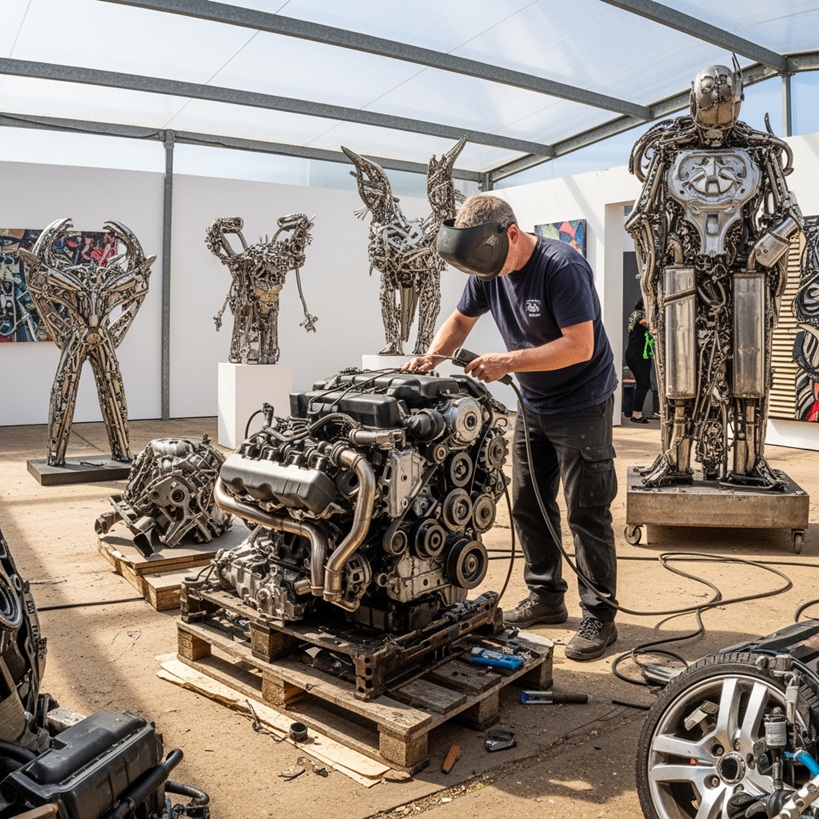
Scrap Cars as Art: Artists Who Transform Metal Into Masterpieces
17th Jan, 2026
Scrap car art has become one of the most inventive expressions of sustainability in modern culture. Across the UK and beyond, creative minds are transforming vehicles at the end of their lives into remarkable works of art. What once filled scrapyards and garages is now celebrated in galleries, gardens, and public spaces.
This growing trend blends craftsmanship with environmental consciousness. It’s not just about making something beautiful out of waste; it’s about changing the way people view discarded materials. The old car that once carried families, hauled goods, or clocked thousands of miles now finds new meaning as sculpture, furniture, or design installation.
There’s a powerful message behind this movement. Each creation proves that with vision and responsibility, even the most rusted or broken metal can have value again. That’s the foundation of scrap car art projects, combining sustainability, imagination, and respect for materials that have already served their purpose.
The Allure of Scrap Metal
There is a certain charm in art from recycled car parts. Unlike new materials, scrap metal tells a story. Its surface bears signs of time and use, a scratch from the motorway, a dent from a parking scrape, a patch of oxidised colour shaped by years of weather. These imperfections give every piece of art its individuality.
Artists recognise these textures as opportunities. A twisted exhaust pipe might become the curve of a sculpture. A bonnet could serve as the canvas for a mural. Even the bolts, nuts, and fragments that once held vehicles together are reimagined into something completely new.
Scrap metal’s strength and versatility also make it an appealing medium. It can be welded, cut, moulded, or polished to achieve different effects. The variety of metals found in vehicles, steel, aluminium, copper, and even rare alloys, allows artists to experiment with tone, texture, and contrast.
Key Takeaways:
- Scrap metal has unique physical and visual characteristics that make it ideal for creative reuse.
- Artists appreciate its strength, versatility, and inherent sense of history.
Pioneering Artists in Scrap Car Art
The rise of scrap car art projects can be traced to pioneering artists who saw beauty in industrial decay. Their vision helped transform discarded materials into respected media within the art world.
One of the earliest and most influential names is John Chamberlain, an American sculptor known for using crushed car panels in his abstract compositions. His work demonstrated how scrap metal could hold emotion, colour, and form, breaking the boundary between fine art and engineering.
In the UK, Giles Walker has gained recognition for his kinetic and animatronic sculptures made from salvaged car parts and machinery. His art often comments on social and technological themes, turning what was once waste into reflective installations that move and provoke thought.
Anthony Howe has also contributed to the global movement, creating mesmerising wind-powered sculptures from repurposed metal. His works, though intricate and delicate in motion, are constructed entirely from heavy, reclaimed components.
These artists demonstrate that art from recycled car parts is more than recycling; it’s transformation. Their projects challenge public perception, showing that creativity and sustainability can coexist seamlessly.
Key Takeaways:
- Established artists have validated scrap car art as a serious and respected medium.
- Each sculpture or installation tells a story of reinvention, blending art and environmental ethics.
Scrap Car Art Projects: Inspiration and Ideas
Creativity thrives when limits disappear, and with scrap car art projects, the possibilities are endless. Whether used for home décor, public exhibitions, or functional design, car parts can be adapted to suit any scale or purpose.
Functional and Decorative Furniture
Recycled car components have inspired an entire genre of industrial furniture.
- Engine Block Tables: Solid, weighty, and full of intricate design, engine blocks make striking table bases.
- Seat Conversions: Car seats reupholstered in sustainable fabrics can become distinctive office or gaming chairs.
- Lighting Fixtures: Headlights and exhaust pipes can be transformed into lamps or chandeliers.
Each piece becomes a conversation starter, a bridge between engineering heritage and interior design innovation.
Outdoor and Garden Art
Scrap metal lends itself beautifully to outdoor sculpture. Resistant to weather and corrosion, it ages gracefully, developing a patina that enhances its appeal.
- Animal Sculptures: Artists frequently use old panels, exhausts, and bumpers to model life-sized animals.
- Abstract Installations: Twisted metal pieces can form geometric or fluid shapes, creating focal points in gardens and parks.
- Functional Garden Features: Car bonnets can be reshaped into planters or outdoor seating.
Wall Art and Decorative Installations
Scrap car panels, number plates, and steel fragments can be welded or arranged into visually striking wall art.
- Number Plate Collages: Arranging plates by colour or region creates vibrant mosaics.
- Painted Panels: Flattened doors or bonnets serve as canvases for creative murals.
- Assemblage Art: Combining multiple car components into abstract shapes for display.
Those looking to responsibly source materials can find out how to scrap your car easily and legally through Scrap Car Network’s trusted platform.
Key Takeaways:
- Scrap vehicles provide countless creative materials for art and design.
- Furniture, garden art, and installations represent the most popular forms of scrap car creativity.
- Reuse supports sustainability while preserving automotive heritage.
The Environmental Impact of Scrap Car Art
The environmental value of art from recycled car parts cannot be overstated. Every artwork created from scrap materials represents one less piece of waste entering landfill and one more example of sustainable innovation.
Globally, millions of vehicles reach the end of their life every year. Without proper recycling, they contribute to pollution and waste. Scrap Car Network’s recycling partners ensure that every usable material is recovered safely and efficiently. When artists and recyclers collaborate, they amplify this impact by turning waste into culture.
This creative approach also promotes environmental education. Public exhibitions showcasing scrap car art projects often include sustainability messaging, helping audiences understand how everyday waste can become something extraordinary.
Those wishing to make a personal impact can get an instant quote to scrap any car or understand our environmentally responsible car recycling process.
Key Takeaways:
- Scrap car art reduces environmental impact and promotes awareness.
- Creative recycling extends the lifecycle of materials.
- Collaborations between artists and recyclers amplify sustainable messaging.
The Technical Side: Tools and Techniques in Scrap Car Art
Creating durable and safe artworks from scrap metal requires technical knowledge and the right equipment. Artists and hobbyists often rely on tools common in vehicle maintenance and fabrication.
Essential Equipment Includes:
- Angle Grinders: For cutting and shaping panels or pipes.
- Welding Machines: Used to fuse pieces securely together.
- Metal Benders: Helpful for creating curves and smooth shapes.
- Protective Gear: Helmets, gloves, goggles, and masks remain non-negotiable safety essentials.
The process usually begins with sorting materials. Artists clean, inspect, and select pieces for compatibility before cutting or reshaping them. Each metal type behaves differently under heat, requiring knowledge of temperature control and technique.
Those interested in learning more about compliant recycling facilities can connect with our network of Authorised Treatment Facilities, ensuring their materials come from legal, environmentally certified sources.
Key Takeaways:
- Scrap metal art requires proper tools, preparation, and safety practices.
- Working knowledge of metal properties ensures quality and safety.
- Responsible sourcing through authorised facilities supports sustainability.
Where to Find Scrap Cars for Art Projects
The success of any scrap car art project begins with access to the right materials. Fortunately, there are several reliable ways to find scrap components legally and affordably.
1. Scrap Yards and Authorised Treatment Facilities
Scrap yards remain the most dependable source for car parts suitable for art. Many offer access to various metals, panels, and mechanical parts. For guaranteed compliance and quality, it’s best to connect with our network of Authorised Treatment Facilities.
2. Online Marketplaces
Websites such as Gumtree, Facebook Marketplace, and eBay regularly list used or damaged car parts perfect for creative reuse. Searching for specific models or materials can help find unique shapes and finishes.
3. Local Garages and Repair Shops
Independent garages often accumulate unwanted parts and may be willing to sell them cheaply or donate them for creative projects.
Scrap Car Network also operates regionally, offering support for anyone looking to scrap your car in Preston, North London, or Scotland.
Key Takeaways:
- Scrap yards and garages are reliable sources of recyclable materials.
- Compliance and safety should always guide collection practices.
- Regional scrap collection services simplify material access.
Safety First: Working With Scrap Metal
Safety remains the cornerstone of any creative or mechanical project. Working with metal, particularly from vehicles, poses risks if handled carelessly.
Essential Safety Practices:
- Protective Clothing: Gloves, steel-capped boots, and long sleeves minimise injury.
- Eye Protection: Safety glasses or visors prevent damage from sparks or debris.
- Ventilation: Proper airflow prevents inhalation of fumes during welding or grinding.
- Tool Maintenance: Regularly inspect welding machines and grinders for wear or electrical faults.
- Workspace Organisation: Keeping areas clear of clutter reduces tripping or fire hazards.
For beginners or hobbyists, basic welding and metalworking courses are widely available and provide valuable training before undertaking large-scale projects.
Key Takeaways:
- Appropriate safety gear and preparation prevent injuries.
- Education and workspace management improve efficiency and safety.
The Role of Recycling Networks in Creative Industries
The connection between recycling services and creative industries continues to strengthen. Platforms like Scrap Car Network make it easier for artists, designers, and eco-conscious businesses to access responsibly sourced materials.
By linking with regulated recyclers, creative professionals ensure their work contributes positively to the environment. Certified networks guarantee that all reusable parts are collected, processed, and documented according to government standards.
Partnerships with recyclers also enhance transparency and traceability. Many artists include documentation of material origins in exhibitions to highlight ethical sourcing and environmental integrity.
Key Takeaways:
- Recycling networks provide legitimate access to reusable materials.
- Collaborations between artists and recyclers enhance environmental accountability.
- Traceable materials strengthen public trust and authenticity.
The Future of Scrap Car Art
The evolution of scrap car art projects shows no sign of slowing. As environmental awareness becomes central to design, more individuals and organisations are recognising the potential of creative recycling.
Galleries across Europe and the UK are showcasing recycled art as part of larger sustainability initiatives. Educational programmes now use scrap metal sculpture to teach students about resource management, creativity, and environmental responsibility.
The future may also see collaborations between recycling networks and educational institutions, inspiring a new generation of environmentally aware artists. With growing support for the circular economy, the boundary between waste management and artistic innovation continues to blur.
To participate in this sustainable vision, explore how to discover the advantages of choosing Scrap Car Network for responsible recycling.
Key Takeaways:
- Scrap car art reflects a cultural shift toward sustainability and creative reuse.
- Educational and artistic initiatives will expand the movement’s reach.
- Collaboration between recyclers and artists drives future innovation.
Key Takeaways
- Scrap car art transforms end-of-life vehicles into imaginative works of design.
- Artists and recyclers promote environmental awareness through creative reuse.
- Proper tools, safety practices, and sourcing are essential for responsible production.
- Partnerships with authorised recyclers ensure compliance and ethical material use.
- Growing public interest in sustainability ensures the art form’s lasting impact.
For anyone ready to make a positive environmental change, get in touch today. Scrap Car Network makes the process of vehicle recycling simple, legal, and sustainable, whether you’re clearing out a vehicle or sourcing materials for your next project.