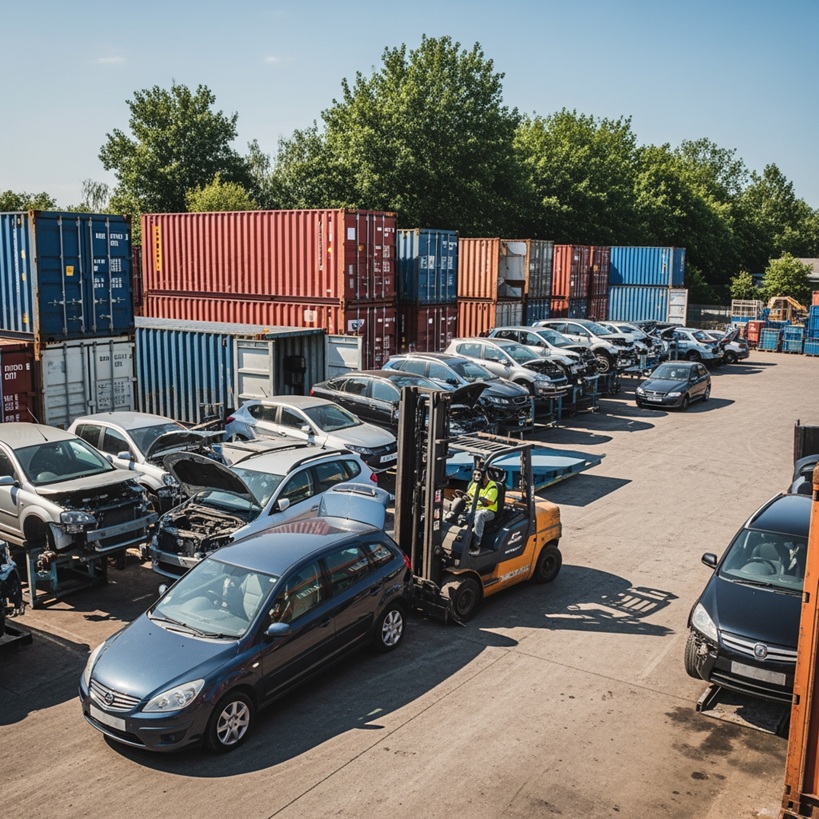
From Junk to Export: How UK Scrap Cars Find New Life Overseas
9th Jan, 2026
The UK scrap car export market is one of the most dynamic and underappreciated parts of the automotive recycling sector. While many assume that end-of-life vehicles (ELVs) are destined only for crushing or domestic recycling, the reality is far broader. Thousands of cars, vans, and parts from Britain are exported every year to countries where they continue to deliver value, either as affordable vehicles or as sources of spare parts and recyclable materials.
Understanding how this global trade operates, and the environmental and economic implications it brings, reveals how the UK has become a hub for automotive resource recovery on an international scale.
The UK Scrap Car Market: A Vital Part of the Circular Economy
Every year, hundreds of thousands of vehicles reach the end of their usable life in Britain. These cars enter a sophisticated network of recyclers, dismantlers, and exporters, all contributing to the circular economy.
The domestic scrap sector isn’t just about crushing old cars; it’s about repurposing valuable materials, supporting jobs, and reducing waste. When vehicles are deregistered, they’re processed by Authorised Treatment Facilities (ATFs) that ensure depollution, dismantling, and recycling comply with environmental regulations.
However, not all vehicles remain in the UK. Many find second lives abroad, repaired, reused, or repurposed in countries with a strong demand for affordable transport.
Key Takeaways:
- The UK’s vehicle recycling industry supports circular economy principles.
- ATFs play a key role in safe depollution and material recovery.
- Many vehicles and components are exported, extending their usable lifespan.
Why Export Scrap Cars? The Economics Behind the Trade
Exporting vehicles for reuse or recycling is often more profitable than scrapping them domestically. The UK scrap car export market thrives on three main economic drivers: demand, cost efficiency, and material value.
1. Demand for Affordable Transport
In developing regions, such as parts of Africa and Eastern Europe, there’s consistent demand for affordable, used vehicles. Cars considered uneconomical to repair in the UK can be refurbished cost-effectively overseas, where labour and parts costs are lower.
2. Strong Global Parts Market
Used engines, gearboxes, and electronic components from UK vehicles are highly sought after for their reliability. Exporters often strip vehicles and ship parts individually to meet this international demand.
3. Better Margins Than Domestic Scrap
Breaking a car purely for metal recovery can be less profitable than exporting it. Selling vehicles or parts directly to overseas buyers often provides higher returns than domestic recycling alone.
Key Takeaways:
- Exports serve markets that value affordability and reuse.
- The global demand for UK parts boosts profitability.
- Exporting can generate better returns than domestic scrapping.
Where Do UK Scrap Cars Go?
The UK vehicle scrap export trends reveal a diverse and growing list of destinations for used vehicles and components.
Africa
Countries including Nigeria, Ghana, and Kenya import significant volumes of British vehicles and spare parts. Many of these nations have limited new car manufacturing infrastructure, making refurbished imports vital for local economies.
Eastern Europe
Nations like Poland, Bulgaria, and Romania frequently import used vehicles for refurbishment and resale. Their proximity to Western Europe allows for affordable logistics and steady trade flows.
Asia and the Middle East
Markets in Pakistan, the UAE, and Sri Lanka also import used vehicles and parts. In some regions, older UK models are restored, rebranded, or even converted into new utility vehicles.
Small Island Economies
Car-dependent island nations often import used UK vehicles due to their cost-effectiveness and the availability of right-hand-drive models.
Key Takeaways:
- Major destinations include Africa, Eastern Europe, and Asia.
- Vehicles are used for refurbishment, parts, or material recovery.
- Right-hand-drive compatibility makes UK cars especially valuable.
The Export Process: Step by Step
The export of scrap or used vehicles follows a regulated procedure that ensures safety, legality, and environmental compliance.
1. Sourcing and Preparation
Vehicles are sourced from scrapyards, auctions, or direct sellers. Before export, they undergo checks to confirm ownership, history, and condition.
2. Depollution and Compliance
Before shipment, fluids such as oil, fuel, and coolant are drained in accordance with environmental laws. Licensed ATFs handle this stage to meet UK export and environmental standards.
3. Documentation
Essential paperwork includes:
- V5C Registration Certificate (to prove ownership)
- Customs declarations and export licences
- Bill of Lading (proof of shipment)
- Certificate of Destruction (if applicable)
4. Shipping and Logistics
Vehicles are typically shipped via roll-on/roll-off ferries or in shipping containers. Each container may carry several dismantled vehicles or parts for efficiency.
To make sure vehicles are handled responsibly before export, owners can get an instant quote to scrap any car and ensure processing through licensed facilities.
Key Takeaways:
- Exports must meet environmental and customs regulations.
- Depollution and documentation are mandatory.
- Containers or roll-on/roll-off vessels are used for transport.
Environmental and Ethical Considerations
While the export of scrap cars supports reuse and recycling, it also presents environmental and ethical challenges.
1. Environmental Risks
Some importing countries lack a robust recycling infrastructure. Without proper oversight, vehicles might be dismantled in unsafe conditions, leading to pollution from oil, batteries, or refrigerants.
2. Ethical Concerns
Exporting unsafe or heavily polluting vehicles can shift environmental burdens to other nations. Ethical operators ensure that only compliant, depolluted vehicles are exported.
3. Responsible Recycling
Organisations like Scrap Car Network follow strict standards and partner only with authorised facilities that adhere to an environmentally responsible car recycling process. This ensures all hazardous materials are removed before vehicles leave the country.
Key Takeaways:
- Exporting can create environmental risks without proper oversight.
- Ethical recyclers ensure vehicles are depolluted before export.
- Responsible practices prevent pollution and unsafe reuse.
Benefits and Drawbacks of Exporting Scrap Cars
The UK scrap car export market brings both opportunities and challenges.
Benefits
- Economic growth: Exports contribute to GDP and support jobs in logistics, shipping, and recycling.
- Resource efficiency: Vehicles and parts get reused, reducing global waste.
- Affordable transport: Helps developing nations meet mobility needs at lower costs.
Drawbacks
- Environmental inequality: Pollution can shift to less-regulated countries.
- Safety concerns: Older vehicles may not meet local safety standards.
- Regulatory complexity: Export compliance can be costly and time-consuming.
Key Takeaways:
- Exports offer economic and environmental benefits when managed correctly.
- Oversight is crucial to prevent unsafe or polluting practices.
- The balance between reuse and responsibility defines long-term sustainability.
The Future of Scrap Car Exports
Looking ahead, the UK vehicle scrap export trends are expected to evolve with global economic and environmental pressures.
1. Stricter Regulations
Tighter emissions standards and waste export laws are likely to limit the shipment of high-pollution vehicles, favouring recycled parts instead.
2. Shift Toward EV Components
As electric vehicles become more common, demand for batteries, motors, and specialist components will replace older scrap exports.
3. Increased Traceability
Digital tracking and reporting systems will enhance transparency across the export chain, from ATF to final buyer.
4. Sustainable Partnerships
Recyclers may collaborate internationally to share best practices, improving global recycling outcomes.
For those looking to responsibly recycle or export, see our commitment to compliant processing through our ATF partners to understand how verified networks ensure traceable, ethical recycling.
Key Takeaways:
- Global environmental policy will reshape export practices.
- Electric vehicle recycling will become increasingly important.
- Traceability and international cooperation will define future trends.
How to Scrap Your Car Responsibly
For individuals, ensuring a car is scrapped or exported legally starts with choosing the right recycling partner.
- Get a Free Quote: Use trusted platforms like Scrap Car Network to get an instant, transparent valuation.
- Work with a Licensed ATF: Verify the recycler’s authorisation before handing over your car.
- Arrange Collection: The free nationwide scrap car collection service simplifies logistics.
- Notify DVLA: Follow the legal steps to notify DVLA after selling or scrapping your car to confirm vehicle disposal.
These steps guarantee full legal compliance and environmental responsibility.
Key Takeaways:
- Always use licensed recyclers and follow DVLA requirements.
- Free collection services make the process easier.
- Responsible recycling prevents environmental harm.
Conclusion
The UK scrap car export market highlights how end-of-life vehicles can continue to create value far beyond Britain’s borders. What begins as a worn-out car in a driveway can become a source of transport, spare parts, or raw materials overseas.
However, sustainability and ethics remain central to maintaining this balance. Exporting responsibly, through licensed recyclers and compliant channels, ensures the benefits of reuse don’t come at the expense of environmental harm.
Whether scrapping locally or selling abroad, Scrap Car Network makes the process simple, legal, and environmentally sound. From car recycling to scrap car collection, the network ensures every vehicle is treated as a resource, not waste.