Why Old Cars Are Environmental Hazards (and How Scrapping Helps)
9th Dec, 2025
An old car sitting on the drive might seem harmless enough, but beneath the faded paint and creaky doors, there’s often more trouble than meets the eye. What looks like a faithful relic of the good old days can actually pose serious old-car environmental hazards. From leaking fluids to excessive emissions, ageing motors can quietly cause more harm than many realise.
Fortunately, there’s a better way to deal with them, one that protects both your wallet and the planet.
The Dirty Truth About Old Car Emissions
Older vehicles might still run, but they rarely run clean. Years of wear and outdated technology make them far less efficient than modern models. Engines that once purred along now guzzle fuel, producing a cocktail of pollutants like carbon monoxide, nitrogen oxides, and hydrocarbons, all major contributors to smog and poor air quality.
It’s a bit like comparing an old coal fire to a modern gas boiler. One fills the air with smoke, the other runs clean and efficiently. Newer cars are fitted with advanced catalytic converters and emission control systems. The older ones? Often not so lucky.
In short:
- Older engines burn more fuel, producing higher emissions.
- High emissions lead to respiratory issues and smog.
- Modern vehicles are designed to minimise this impact, but old ones lag behind.
That’s one reason why the environmental threat of old vehicles has become such a pressing issue across the UK.
Leaks and Fluids: A Toxic Cocktail Beneath the Bonnet
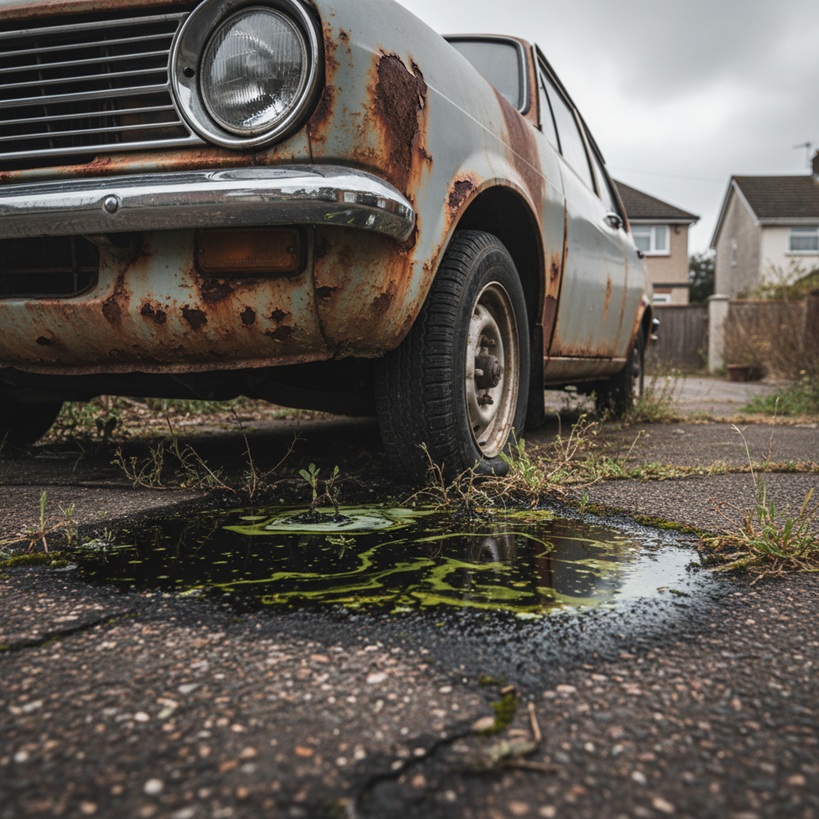
It’s not just what comes out of the exhaust that causes harm. The fluids inside an old car, oil, brake fluid, coolant, transmission fluid, often find their way out over time. These leaks don’t just stain the driveway; they seep into the ground, poisoning soil and groundwater.
Picture an old engine as a kettle with a dodgy seal. The drips don’t seem like much at first, but leave them long enough and you’ll have a mess that’s hard to clean. The same goes for leaking vehicles.
The impact of fluid leaks:
- Contaminates soil and water systems.
- Poses long-term harm to wildlife and vegetation.
- Contributes to costly clean-ups if left unmanaged.
Old cars, left unattended, can quietly turn any patch of ground into a small-scale environmental hazard.
The Problem of End-of-Life Vehicles
Every vehicle reaches its end eventually. When an old car is left abandoned or parked up indefinitely, it becomes far more than an eyesore, it becomes an environmental burden.
Tyres degrade, rust sets in, and harmful substances like battery acid, oil, and even asbestos (in some pre-2000 models) start leaching into the environment. The longer it sits, the worse it gets.
Abandoned end-of-life vehicles can:
- Leak hazardous materials into the surrounding soil and water.
- Release pollutants as components corrode.
- Create fire risks or attract fly-tipping.
It’s much like leaving a forgotten fridge in a field, only heavier, leakier, and potentially far more toxic.
How Scrapping Helps: The Recycling Revolution
Here’s the good news, scrapping your old car the right way completely changes the story. When a vehicle is recycled through a reputable service like Scrap Car Network, it’s sent to an Authorised Treatment Facility (ATF). These are specialist centres licensed to depollute, dismantle, and recycle vehicles safely.
It’s the automotive equivalent of responsible recycling at home. The car’s hazardous materials are removed, valuable metals are recovered, and usable parts are given new life.
You can connect with our network of Authorised Treatment Facilities to ensure your vehicle is handled by qualified professionals who follow strict environmental standards.
Key benefits of scrapping through an ATF:
- Safe depollution of all fluids and hazardous materials.
- Recycling of metals and components reduces raw material demand.
- Reduced landfill waste and lower carbon emissions overall.
The Scrap Car Network Process: Step by Step
Scrapping an old vehicle doesn’t have to be complicated. With Scrap Car Network, the process is as smooth as a freshly oiled gearbox.
Here’s how it works:
- Get a Quote: Simply get an instant quote to scrap any car.
- Accept the Offer: If you’re happy with the valuation, confirm the details online.
- Collection: The team will arrange free nationwide scrap car collection service at a time that suits you.
- Depollution & Dismantling: Your car is taken to a licensed ATF for safe processing.
- Recycling: Reusable materials are recovered, ensuring nothing goes to waste.
This approach removes the hassle and keeps everything above board, from paperwork to pickup.
The Environmental Benefits of Car Recycling
Recycling is one of the unsung heroes of sustainability. When you choose to recycle your vehicle through car recycling, you’re reducing landfill waste, conserving natural resources, and cutting down the demand for energy-intensive new materials.
Compared to manufacturing fresh metal from ore, recycling existing components uses significantly less energy and emits fewer greenhouse gases. It’s a practical, eco-friendly way to close the loop.
In environmental terms:
- Reduces landfill waste by repurposing old materials.
- Conserves natural resources, especially steel and aluminium.
- Prevents harmful chemicals from leaking into the ecosystem.
Scrapping isn’t just about getting rid of a car, it’s about making a conscious, responsible choice for the planet.
Legal Obligations and DVLA Notification
Once you’ve decided to scrap your car, there are a few important legal steps to follow. You must notify the DVLA after selling or scrapping the vehicle to ensure it’s officially taken off the road.
You’ll also need to fill in the V5C registration document and send the relevant sections to the DVLA. For a detailed walkthrough, see our guide that explains changing car ownership details with DVLA.
Failing to do so could result in unwanted fines or continued tax and insurance liabilities.
Legal checklist:
- Notify DVLA that your car has been scrapped.
- Complete and submit the V5C document correctly.
- Ensure you receive a Certificate of Destruction (CoD) from the ATF.
Scrap Car Network can guide you through the process to ensure everything’s done by the book.
Why Choose Scrap Car Network?
Not all scrap services are created equal. Choosing Scrap Car Network means working with a trusted name in responsible recycling.
You’ll benefit from:
- Competitive prices for your old car.
- Hassle-free service, including pickup and documentation.
- Commitment to environmentally responsible recycling.
- Partnerships with fully licensed Authorised Treatment Facilities (ATFs).
Want to know more? Discover the advantages of choosing Scrap Car Network and see how we’re helping drivers across the UK scrap responsibly and legally.
It’s like choosing a good mechanic, reliable, transparent, and genuinely invested in doing the job right.
A Personal Anecdote: Mrs Higgins’ Mini
There was a neighbour years back, Mrs Higgins, who clung to her little old Mini like it was part of the family. Lovely thing, but it had seen better days. When it started leaving oil spots all over her drive, she decided it was time.
She got in touch with Scrap Car Network, arranged collection, and watched as her car was taken away for proper recycling. A few days later, she told me she felt a strange mix of sadness and relief, sad to see it go, but proud to have done the right thing for the environment.
That’s what responsible scrapping is all about, peace of mind, without the pollution.
Doing Your Bit for the Planet
Old cars might hold sentimental value, but they often hide serious old car environmental hazards beneath the bonnet. Scrapping through a reputable network is a simple, responsible way to prevent pollution, reclaim valuable materials, and protect the environment.
If you’re ready to part ways with your old vehicle, contact us. The team will handle everything, from the quote to collection, so you can do your bit for the planet without the stress.
Because when it comes to cleaning up the environment, every car counts.