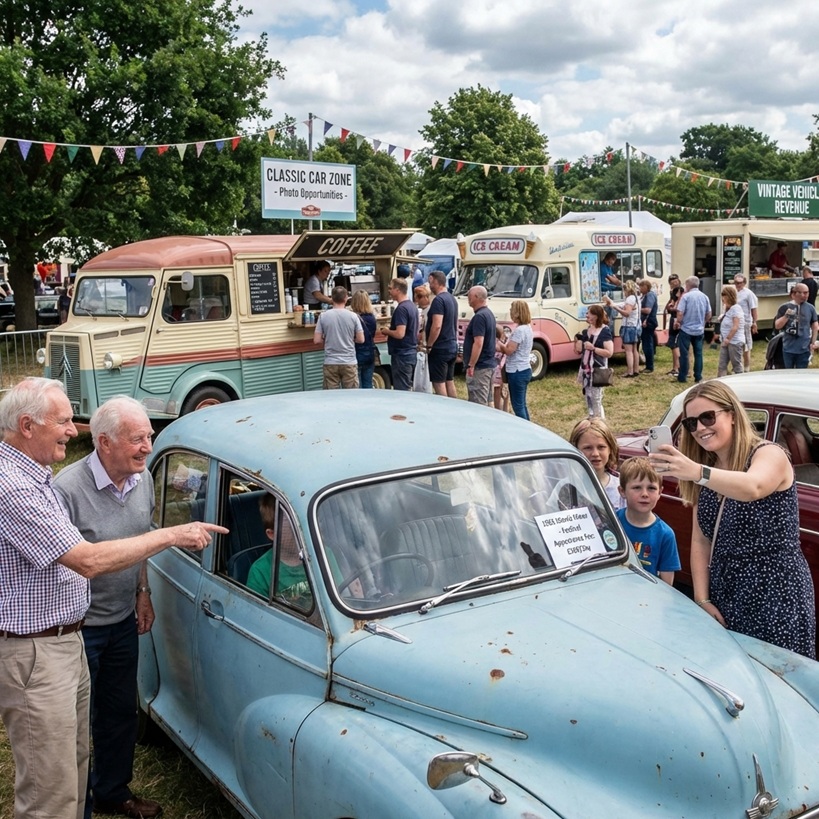
When Old Cars Become Festival Attractions
23rd Feb, 2026
There’s something magical about walking through a festival and stumbling upon a gleaming 1960s Morris Minor or a rust-patched Ford Cortina that’s seen better decades. These automotive relics have found an unexpected second life, transforming from forgotten runabouts into crowd-pulling attractions that create atmosphere and evoke powerful memories.
Festival organisers actively seek out old cars at festivals to provide that perfect backdrop for Instagram photos and create talking points that modern vehicles simply can’t match. From vintage vehicle shows to music festivals, food fairs to historical reenactments, classic motors are proving their worth long after their roadworthy days have ended. The festival circuit has become an unexpected lifeline for vehicles that might otherwise face the scrapyard, offering them renewed purpose as conversation starters and nostalgic touchstones.
Festival Cars vs Museum Pieces
Not every old car needs pristine restoration to earn its place at a festival. Vehicles with character marks and authentic patina often become absolute crowd favourites, outshining spotless replicas that look like they’ve never seen rain.
Festival organisers frequently prefer cars with stories written in their paintwork. That faded blue Morris Marina with the slightly wonky bumper carries more pulling power than a perfect restoration. Authenticity trumps perfection every single time.
Punters can spot fake restorations from fifty yards away, but they’ll queue up to peer inside a genuine 1970s Allegro with original brown velour seats and that distinctive smell of old vinyl. These imperfections tell stories that perfect paint jobs never could.
Popular Festival Vehicle Categories
Classic British Motors dominate the festival scene across the UK. Mini Coopers, Beetle Volkswagens, and anything sporting Union Jack livery draws crowds instantly. These vehicles represent an era when cars possessed personality rather than just efficiency ratings.
Vintage Commercial Vehicles have carved out their own profitable niche. Old ice cream vans, converted buses, and delivery trucks make perfect festival additions. They’re practical, serving food or drinks, whilst maintaining a nostalgic appeal that modern vehicles lack completely.
Military Vehicles create instant talking points at any gathering. Nothing stops festival-goers in their tracks quite like a genuine Land Rover Series II or an old army truck. These robust machines often arrive under their own steam, proving that proper engineering never truly dies.
Custom and Modified Cars from specific eras tell distinctly different stories. The boy racer scene of the 1990s, complete with spoilers and neon underglow, now attracts the same curious stares that hot rods received decades earlier. Fashion cycles, it seems, apply to motors too.
The Economics Behind Festival Cars
Many festival vehicles generate more revenue in their retirement than during their working lives. A converted Citroën H van serving artisan coffee can earn more in a weekend than it did delivering bread for months. The economics make perfect sense for savvy owners.
Festival organisers typically pay appearance fees for particularly attractive or rare vehicles. Some owners recover their entire restoration costs within a single festival season. It’s become a legitimate business model for the right type of enthusiast with the proper vehicle.
Insurance companies have recognised this trend. Festival vehicle policies now form a specific category, acknowledging that these cars face different risks than daily drivers or static display pieces. The coverage reflects their dual nature as both historical artefacts and working attractions.
Not every old car makes the cut, though. Festival organisers are increasingly selective, preferring vehicles that complement their event’s theme and target audience. A rusty Ford Escort might be perfect for a 1980s music festival but completely wrong for a vintage tea party.
From Roadworthy to Show-Stopping
The transformation process requires careful planning and execution. Owners often spend months preparing vehicles that haven’t run in years for their festival debut. It’s like preparing for a first date, equal parts excitement and terror.
Mechanical reliability comes first. Festival cars need to start reliably, even if they’re not driving long distances. Nothing kills atmosphere faster than a vehicle that won’t fire up for the crowd. Basic maintenance, fresh fluids, working electrics, and sound brakes, forms the essential foundation.
Cosmetic improvements follow function but don’t necessarily mean expensive paint jobs. Sometimes it’s just cleaning decades of grime to reveal original colour, or replacing missing badges and trim pieces. The goal is making the car look intentionally vintage rather than accidentally neglected.
Safety considerations can’t be ignored in festival environments. Crowds, children, and unpredictable situations require vehicles to have secure bonnets, safe electrical systems, and proper crowd barriers when necessary. Beautiful restorations get banned from events because of simple safety oversights.
The Emotional Connection
What strikes observers most about old cars at festivals is the emotional response they generate. Grown men tear up at the sight of their first car model. Children become mesmerised by vehicles that predate their grandparents’ driving years.
These cars function as time machines. A 1970s Capri doesn’t just represent automotive history, it represents Saturday night drives, first dates, family holidays, and a time when cars were extensions of personality rather than mere transport appliances. That connection runs deep.
Festival organisers understand this emotional value perfectly. They position classic vehicles strategically throughout their sites, creating natural gathering points where stories get shared and memories resurface. It’s social engineering through automotive nostalgia, and it works brilliantly.
The photography aspect can’t be understated either. In our social media age, distinctive vintage cars provide perfect backdrops for festival photos. They’re instantly recognisable, inherently photogenic, and carry enough cultural weight to make ordinary festival snaps feel special.
Regional Variations and Preferences
Different festivals favour different automotive eras and styles. Northern festivals often celebrate industrial heritage with commercial vehicles and working-class classics. Southern events might lean toward sports cars and luxury marques that reflect different economic histories.
Scottish festivals have embraced everything from Highland Games-appropriate Land Rovers to Edinburgh Festival-worthy classic Jaguars. The vehicle selection often reflects regional identity as much as automotive history. Geography matters in the classic car world.
Music festivals tend toward vehicles matching their musical era. An 80s revival festival wants Ford Escorts and Vauxhall Novas, whilst 60s events prefer Minis and Beetles. Food festivals often favour commercial vehicles that can be converted into serving stations whilst maintaining period authenticity. If you’re looking to scrap your car in Preston, some vehicles destined for recycling might have unexpected festival potential instead.
The Challenges of Festival Fame
Not every festival vehicle story has a happy ending. Increased attention can lead to theft, vandalism, or damage from overeager visitors. Owners have returned from festivals to discover mysterious scratches or missing parts on their pride and joy.
Weather exposure poses constant risks. British festivals and predictable weather don’t mix well, and vintage vehicles weren’t built to withstand modern festival environments. Rain, mud, and crowd spillages cause expensive damage quickly.
Mechanical stress from constant starting, idling, and demonstration runs can overwhelm older systems. Festival environments are harsh on vintage vehicles, especially those running original components that weren’t designed for show duty. The wear accumulates faster than many owners anticipate.
Insurance complications arise when vehicles transition between display, demonstration, and commercial use during single events. Many owners discover their coverage gaps only after incidents occur. Proper insurance planning is essential.
Environmental Considerations
Many festival vehicles are more environmentally responsible than expected. These cars are typically used sparingly, maintained carefully, and kept running far longer than modern vehicles. The sustainability argument holds weight.
The carbon footprint of keeping a 1960s Mini running for festival appearances is often lower than manufacturing a new vehicle. When factoring in reduced production demand and extended lifecycle, vintage festival cars make genuine environmental sense.
However, emissions standards at festivals are becoming stricter. Some events now require catalytic converters or impose restrictions on older engines. This pushes owners toward cleaner conversions or electric retrofits that maintain visual authenticity whilst meeting modern environmental requirements.
Scrap Car Network often encounters vehicles that could serve festival duty instead of heading for recycling. The environmental benefit of extending vehicle life through festival use represents a win-win situation for owners and the planet.
Commercial Opportunities
Smart festival vehicle owners have turned their hobby into legitimate businesses. Food service conversions, mobile bars, and promotional vehicles generate steady income throughout the festival season. The business model works when executed properly.
Rental opportunities exist for vehicle owners who prefer not to attend events personally. Film productions, advertising shoots, and private events all require period-appropriate vehicles, often paying substantial daily rates. The demand remains consistent.
Merchandise sales around festival vehicles create additional revenue streams. T-shirts, models, and branded items capitalise on the emotional connection these vehicles generate. Owners have funded entire restorations through clever merchandising strategies.
Workshop and restoration services often develop from festival connections. Owners network with other enthusiasts, leading to commercial opportunities in parts supply, restoration work, and technical expertise sharing. The community supports itself.
Insurance and Legal Considerations
Festival vehicle insurance requires specialist knowledge. Standard classic car policies often exclude commercial use, public demonstrations, and festival environments. Owners need coverage that bridges the gap between private enjoyment and public exhibition.
Public liability becomes crucial when vehicles interact with crowds. A child injured whilst exploring a festival car could result in substantial claims. Proper barriers, supervision, and insurance coverage protect both owners and organisers from potential disasters.
DVLA regulations still apply to festival vehicles. Tax, MOT, and registration requirements don’t disappear because a car becomes an attraction. Some owners discover compliance issues only when preparing for their first festival appearance. Proper documentation matters.
Health and safety responsibilities extend beyond the vehicle itself. Fuel storage, electrical systems, and crowd management all fall under increasingly strict festival regulations. Compliance protects everyone involved.
The Future of Festival Cars
Electric conversions are beginning to appear at vintage vehicle shows and festivals, maintaining visual authenticity whilst meeting modern environmental standards. These conversions often cost more than original restorations but open doors to events with strict emissions requirements.
Younger generations are discovering festival cars through social media and family events. Their enthusiasm ensures continued demand, though their preferences might differ from traditional classic car audiences. The scene is evolving naturally.
Technology integration is creeping into festival vehicles. QR codes linking to vehicle histories, audio tours, and interactive displays enhance the visitor experience without compromising authenticity. The digital age meets the analogue past.
International influence is growing as festivals become more globally connected. American muscle cars, Japanese classics, and European exotics are finding their way onto British festival circuits. The variety benefits everyone.
A Brief Tale from the Circuit
Take the story of a 1978 Austin Maxi that spent fifteen years deteriorating in a Berkshire barn. The owner’s grandson discovered it whilst clearing the property and, instead of scrapping it, invested £3,000 in basic restoration. Within six months, that Maxi was earning £500 per weekend appearance at retro festivals across the South East. The grandson quit his office job within a year. Not every story ends this way, but it shows what’s possible with the right vehicle and proper planning.
Making the Transition
Starting small makes sense for anyone considering this path. Local car shows and community events provide testing grounds without major investment or commitment. The learning curve is gentler at smaller venues.
Research target festivals thoroughly. Each event has different requirements, audiences, and commercial opportunities. What works at a vintage car show might fail completely at a music festival. Due diligence pays dividends.
Network with existing festival vehicle owners. They’ll share practical advice about insurance, logistics, and which events provide the best experiences. The festival car community is surprisingly supportive and welcoming to newcomers.
Budget realistically for the transition. Festival preparation, transport, insurance, and ongoing maintenance costs add up quickly. Many owners underestimate the total investment required. Proper financial planning prevents disappointment.
When that first child’s face lights up at the sight of a carefully prepared Morris Minor, or an elderly couple shares memories triggered by an Austin Cambridge, the appeal becomes crystal clear. Old cars at festivals have become a genuine phenomenon because they provide something irreplaceable, tangible connections to the past.
Knowing When to Let Go
Not every old car needs to become a festival attraction. If a vehicle has reached the end of its practical life, get an instant quote to scrap any car through our network of authorised treatment facilities. Sometimes the most responsible choice is proper recycling rather than expensive restoration.
The festival circuit offers a unique second life for suitable vehicles, but it’s not the right path for every old car. Consider the vehicle’s condition, available time and budget, and realistic potential for festival success before making major commitments. Honest assessment prevents costly mistakes.
Festival cars represent more than just automotive history, they’re rolling reminders of different times, different priorities, and different relationships between people and their vehicles. In our increasingly digital world, these tangible connections provide something that modern cars simply cannot replicate.
Whether an old car becomes a festival star or finds new life through our environmentally responsible car recycling process, the important thing is making the choice that’s right for both owner and vehicle. Sometimes the greatest respect shown to an old car is knowing when its story should end, and sometimes it’s giving it a completely new chapter at festivals across the country.