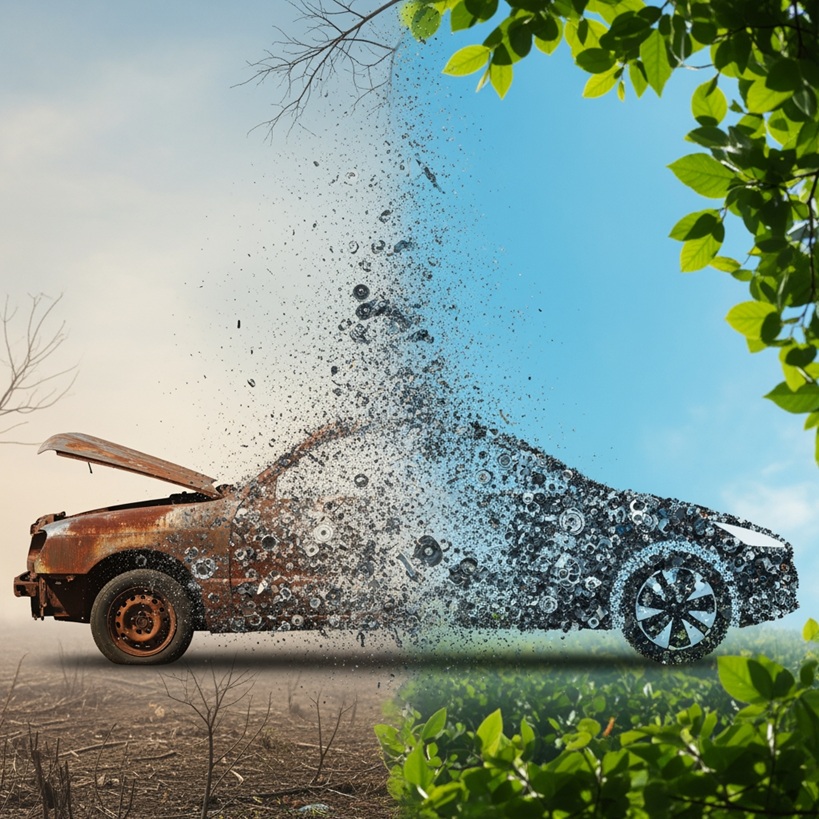
The Role of Car Scrappage in a Low-Carbon Future
15th Dec, 2025
When most people think about tackling climate change, they imagine wind farms, solar panels, and electric cars gliding silently down the road. But there’s another, often overlooked piece of the puzzle,car scrappage.
Scrapping old vehicles responsibly plays a vital role in reducing emissions, saving energy, and supporting the future of low-carbon transport. It’s not just about getting rid of old motors; it’s about paving the way for cleaner, greener roads across the UK.
So, if you’ve got an old banger sitting on your drive and you’re wondering whether it’s worth scrapping, you might be surprised at how much good that simple decision can do for the environment.
The Problem with Old Cars
Let’s be honest, old cars, for all their charm, aren’t the most eco-friendly machines on the road. Older engines burn fuel less efficiently, which means they emit more carbon dioxide (CO₂) and other pollutants.
They also lack the advanced emission-control technology built into newer models, so every mile driven means more harmful gases are released into the air. It’s like keeping an old coal fire running in a modern home, comforting, maybe, but not great for your carbon footprint.
Think of it this way: an old Ford Cortina or Rover might still look stylish, but under the bonnet, it’s guzzling fuel and pumping out emissions like that leaky old boiler in the corner of your house. Costs more to run, does more harm than good.
And it’s not just air pollution. Older cars are more prone to oil and coolant leaks, which can seep into the soil or water supply. Left unchecked, that contamination harms wildlife and can even make its way into our rivers.
Key takeaways:
- Older vehicles are less fuel-efficient and produce higher CO₂ emissions.
- Many lack modern emission-control systems.
- Fluid leaks from older cars can cause significant environmental damage.
If that sounds familiar, it might be time to look at getting an instant quote to scrap any car through Scrap Car Network.
How Car Scrappage Helps
So, how does car scrappage fit into the vision for a low-carbon future? In simple terms, it removes the worst offenders from the road and gives their materials a second life.
When an old, polluting vehicle is scrapped through a reputable network like Scrap Car Network, it’s processed through an Authorised Treatment Facility (ATF). That ensures everything from the tyres to the wiring is handled safely and recycled wherever possible.
This does two crucial things:
- Stops pollution at the source by taking high-emission cars off the road.
- Reduces the need for new materials, since the metal, glass, and plastic can all be reused to make new products or even new cars.
In short, scrapping responsibly is one of the most effective ways individuals can support the future of low-carbon transport,without buying an electric car overnight.
Key takeaways:
- Scrappage removes polluting vehicles from UK roads.
- Valuable materials are recycled and reused.
- It reduces demand for energy-intensive manufacturing.
The Car Recycling Process
Ever wondered what actually happens to your old motor after it’s towed away? It doesn’t just disappear into a metal cube; it goes through a carefully managed recycling process designed to minimise environmental impact.
Here’s how it works:
1. Depollution
First, the vehicle is safely depolluted. Technicians remove all potentially harmful fluids,oil, coolant, fuel, brake fluid, and battery acid. These substances are collected and disposed of properly, preventing leaks and contamination.
2. Part Recovery
Next, reusable components like engines, gearboxes, catalytic converters, and doors are removed. Many of these parts can be refurbished and sold, giving them a new lease of life.
3. Metal Separation and Shredding
Once the hazardous and reusable parts are out, the remaining body is crushed and shredded. Using advanced machinery, the metals are separated, steel, aluminium, and copper each go into their respective recycling streams.
4. Material Reuse
The recycled metal is then melted down and used to make new products ,from fresh car parts to construction materials.
Through this process, nearly 95% of a vehicle’s weight can be recycled or recovered. Scrap Car Network ensures this happens safely through its network of Authorised Treatment Facilities.
Key takeaways:
- Cars are depolluted before dismantling.
- Reusable components are salvaged for refurbishment.
- Metal and materials are recycled for reuse.
- All work is done by licensed ATFs for full compliance.
If you’d like a deeper look at how this process supports the environment, explore our environmentally responsible car recycling process.
Government Incentives and Scrappage Schemes
From time to time, the UK government and local authorities launch scrappage schemes to encourage drivers to trade in old, polluting vehicles for newer, cleaner alternatives.
These schemes typically offer a financial incentive, such as discounts on electric or hybrid cars, in exchange for scrapping an older model. The idea is simple: make it easier and cheaper for drivers to transition towards low-emission vehicles.
Some schemes focus on specific regions (like London’s ULEZ scrappage fund), while others operate nationwide.
Although not always active, these programmes demonstrate how car scrappage supports the future of low-carbon transport, by accelerating the shift towards greener vehicles and cleaner air.
Key takeaways:
- Government scrappage schemes reward the switch to cleaner vehicles.
- Financial incentives help make low-emission cars more affordable.
- Keep an eye out for future schemes and local initiatives.
For updates and tips, you can visit Scrap Car Network’s main hub, which often highlights sustainability trends and changes in the recycling industry.
The Growing Importance of Car Scrappage
As the UK edges closer to its net-zero targets, car scrappage will become even more vital. Older, high-emission cars must be replaced with efficient, cleaner vehicles,and scrappage ensures this happens responsibly.
But this isn’t just about petrol and diesel vehicles anymore. The car recycling industry is evolving to deal with the next big challenge: electric vehicle (EV) recycling.
EVs may produce zero tailpipe emissions, but their batteries and electronics require specialist recycling at the end of their life cycle. These high-voltage batteries contain valuable metals such as lithium, cobalt, and nickel, which must be recovered safely and reused.
The good news is that Scrap Car Network and its ATF partners are already preparing for this shift, developing systems and training teams to handle EV components with care.
In doing so, the industry continues to play a crucial part in the low-carbon transition.
Key takeaways:
- Car scrappage supports net-zero goals by phasing out high-emission vehicles.
- EV recycling is the next frontier for sustainable scrappage.
- Scrap Car Network is committed to responsible, future-ready recycling.
The Role of Car Scrappage in the Circular Economy
Scrappage doesn’t just remove cars, it keeps materials circulating through the economy instead of ending up as waste.
By reclaiming metals, plastics, and glass, the industry reduces the need to mine or manufacture new resources. This is what’s known as the circular economy, where products are reused, repaired, or recycled instead of discarded.
In fact, car recycling is one of the most advanced examples of this system. Up to 95% of materials in a modern vehicle can be recovered, which saves energy and cuts manufacturing emissions dramatically.
This keeps valuable resources like steel and aluminium in use, helping to create a more sustainable and self-sufficient UK economy.
Key takeaways:
- Car scrappage drives the circular economy by reusing materials.
- Recycling reduces demand for raw materials and lowers emissions.
- It’s a key component in achieving a sustainable industrial future.
Learn more about this process in our guide to car recycling and sustainability.
Innovation and Technology in Car Recycling
The future of low-carbon transport depends not only on cleaner cars but also on smarter recycling systems. Thankfully, the scrappage industry is keeping pace.
Here are some of the innovative developments shaping the sector:
- Advanced material separation: Modern ATFs use robotics and AI to identify, sort, and recover parts with incredible precision.
- Battery recycling breakthroughs: New technologies are making it easier to reclaim lithium and cobalt safely.
- Automated depollution systems: These improve safety and reduce the environmental risks of manual handling.
- Green energy integration: Some recycling plants now operate using renewable power to cut their own emissions footprint.
These innovations show that scrappage isn’t a dusty, outdated industry, it’s a vital part of a modern, sustainable economy.
Key takeaways:
- AI and automation improve recycling accuracy.
- Battery recovery systems are key to EV sustainability.
- Recycling facilities are adopting green energy and cleaner operations.
Making the Right Choice
Scrapping a car responsibly is one of the simplest ways to contribute to a cleaner planet. Every car recycled through Scrap Car Network helps reduce emissions, conserve energy, and promote ethical waste management.
By working exclusively with licensed ATFs, the network guarantees that every step of the process, collection, depollution, recycling, and documentation, is fully compliant and environmentally sound.
You’ll also receive a fair valuation, free collection, and a Certificate of Destruction, confirming that your car has been properly processed.
It’s quick, legal, and part of the growing movement towards a low-carbon future.
You can:
- Get an instant quote to scrap any car
- Scrap your car in Preston or nearby areas
- Contact us for advice on the scrappage process.
Key takeaways:
- Responsible scrappage helps build a low-carbon future.
- Licensed ATFs ensure ethical recycling practices.
- Drivers can easily get quotes and arrange collection online.
The Future of Low-Carbon Transport
Looking ahead, the road to a low-carbon future isn’t just about building greener cars; it’s about managing the full lifecycle of every vehicle responsibly.
As electric and hybrid vehicles become the norm, the need for effective car scrappage and battery recycling will only grow. The materials recovered today will fuel the next generation of sustainable vehicles tomorrow.
By scrapping older cars, recycling their parts, and reinvesting in cleaner technology, the UK is creating a transport system that’s more efficient, ethical, and environmentally conscious.
That’s the power of responsible car scrappage, it’s not just the end of a car’s journey; it’s the beginning of something better.
Next Steps
Thinking about saying goodbye to your old car? Here’s how to get started:
- Get a quote: Use Scrap Car Network’s online system to get an instant quote to scrap any car.
- Arrange collection: Choose a convenient time for free pickup anywhere in the UK.
- Complete DVLA notification: You’ll receive a Certificate of Destruction to prove your car’s been recycled legally.
- Support sustainability: Know that your decision directly supports the future of low-carbon transport.
And if you’re not sure where to start, just contact us for friendly, expert advice.
Conclusion
Car scrappage isn’t just about clearing space on the driveway, it’s a cornerstone of the low-carbon transition. By recycling old, polluting vehicles and reclaiming valuable materials, the industry helps reduce emissions, save energy, and keep our planet’s resources in circulation.
Every driver who scraps responsibly plays a small but vital role in building a cleaner, greener transport system.
So, whether you’re retiring an old petrol motor or making room for an electric upgrade, do it responsibly,with Scrap Car Network, where every car contributes to a sustainable, low-carbon future.