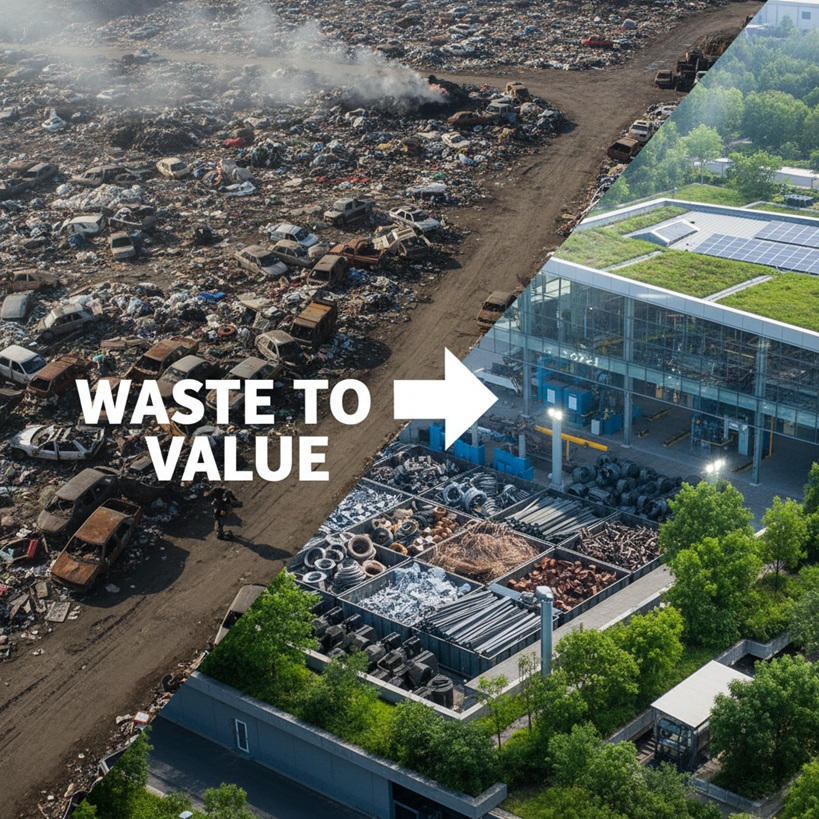
Scrapping vs. Landfilling: The Eco-Friendly Choice for End-of-Life Vehicles
9th Dec, 2025
When a vehicle reaches the end of its life, the decision about what happens next carries significant environmental consequences. Many drivers still assume that sending an old car to a landfill is an easy solution, but that approach causes lasting damage to soil, water, and air.
The alternative is far more sustainable. Proper scrapping and recycling turn unwanted cars into reusable materials, preventing pollution and conserving natural resources. In the debate of landfill versus car recycling, there’s only one truly eco-conscious choice: responsible scrapping through licensed facilities.
This guide explains why scrapping is the environmentally sound route for eco-friendly end-of-life vehicles and how it supports cleaner, greener communities across the UK.
Why Scrapping Is Better Than Landfilling
Sending a car to landfill wastes valuable materials that could easily be reused. Vehicles contain steel, aluminium, copper, plastics, and glass, all of which can be recovered through recycling. Landfilling simply buries those resources, creating long-term pollution instead of value.
By contrast, scrapping is an organised process that dismantles the vehicle, separates reusable components, and recycles metals and materials for new manufacturing. This process conserves resources, saves energy, and reduces carbon emissions.
Key takeaways:
- Scrapping is far more resource-efficient than landfilling.
- Landfilling causes pollution and locks away reusable materials.
- Recycling is an environmentally responsible choice for all vehicles.
For insight into how this process works in practice, see the environmentally responsible car recycling process used by Scrap Car Network’s Authorised Treatment Facilities.
The Environmental Impact of Landfilling Cars
Landfilling might appear straightforward, but its consequences are severe and long-lasting. When cars are buried, their chemical and material components begin to break down in uncontrolled conditions, leading to widespread contamination.
Soil and Water Contamination:
Vehicles contain fluids such as oil, coolant, brake fluid, and battery acid. When these leak underground, they can contaminate soil and groundwater, the same water used for drinking and irrigation.
Air Pollution:
As buried vehicles corrode, they release volatile compounds and gases that contribute to air pollution and climate change.
Wasted Resources:
Metals, plastics, and glass are lost permanently when vehicles are left to decompose in landfills rather than being recycled into new products.
The environmental damage from landfilling extends far beyond the immediate site, affecting entire ecosystems. Choosing recycling over landfilling prevents this harm and supports the UK’s sustainability targets.
Key takeaways:
- Landfilling vehicles contaminate soil and groundwater.
- Decomposing cars emit gases that contribute to air pollution.
- Valuable materials are wasted when not recycled.
To understand the pollution risk from abandoned or neglected vehicles, see the guide on the hidden environmental toll of abandoned cars.
How Car Scrapping Benefits the Environment
Car scrapping isn’t merely about disposal, it’s a form of environmental protection. Through structured recycling, every part of a vehicle is assessed for reuse, recovery, or safe disposal.
Resource Recovery:
Up to 95% of a vehicle’s materials can be recycled. Steel, aluminium, and glass are reused in new products, reducing the need for mining and manufacturing from raw materials.
Pollution Reduction:
Recycling uses less energy than producing new metals and plastics, meaning lower greenhouse gas emissions and cleaner air.
Hazardous Waste Management:
Professional recyclers are trained to handle dangerous substances such as oils, batteries, and refrigerants, ensuring they are disposed of safely and don’t reach natural water systems.
This approach transforms discarded vehicles into a source of sustainability rather than pollution, embodying the principles of eco-friendly end-of-life vehicles.
Key takeaways:
- Car scrapping recovers valuable materials for reuse.
- Recycling reduces manufacturing pollution and energy demand.
- Hazardous waste is managed safely to protect the environment.
For larger commercial vehicles, consider using the specialised, eco-friendly van scrapping service available through Scrap Car Network.
The Car Recycling Process Explained
Every vehicle sent for recycling follows a carefully regulated process within an Authorised Treatment Facility (ATF). These facilities operate under strict environmental laws to ensure full compliance and sustainability.
Depollution:
All hazardous fluids and materials, such as oils, coolants, and batteries, are removed and processed safely.
Dismantling:
Usable components like engines, gearboxes, and doors are removed, cleaned, and prepared for resale or refurbishment.
Shredding:
The vehicle’s remaining shell is crushed and shredded into smaller fragments for sorting.
Material Recovery:
Shredded materials are separated into metals, plastics, and glass, which are then supplied to manufacturers for reuse.
This process ensures that each vehicle’s environmental impact is minimised while maximising recovery of recyclable materials.
Key takeaways:
- Recycling involves depollution, dismantling, shredding, and sorting.
- Components are reused to extend their lifecycle.
- The process supports a sustainable, circular economy.
More information can be found in Scrap Car Network’s detailed car recycling guide.
Legal Requirements for Scrapping Your Car
Scrapping a car is a regulated activity under UK law, designed to protect both the owner and the environment.
Certificate of Destruction (CoD):
An ATF must issue a CoD once the car is officially scrapped. This document proves that the vehicle has been disposed of legally and will not return to the road.
DVLA Notification:
Owners must notify the DVLA when their car is scrapped. Failure to do so may result in a fine. Step-by-step details are available in the DVLA notification guide for scrapped cars.
V5C Logbook:
The V5C document must be completed and sent to the DVLA as part of the scrapping process.
These requirements ensure transparency and prevent illegal dumping or misuse of vehicle identities.
Key takeaways:
- Always obtain a Certificate of Destruction.
- Notify the DVLA once the car is scrapped.
- Complete the V5C document correctly.
Choosing a Reputable Scrap Car Dealer
Selecting a trusted recycling service is essential to ensure compliance and environmental responsibility.
Authorised Treatment Facility (ATF):
Choose a dealer licensed as an ATF. These facilities meet the UK’s environmental regulations and follow safe recycling procedures.
Reputation and Transparency:
Check customer reviews and ensure the dealer clearly explains their pricing and processes. Reliable services provide honest, upfront information.
Partnerships and Compliance:
Scrap Car Network connects customers with a national network of Authorised Treatment Facilities, guaranteeing compliance and transparent service.
Key takeaways:
- Always use a licensed ATF.
- Verify reputation and transparency.
- Trusted networks ensure full environmental compliance.
To understand the benefits of working with a certified recycling provider, see why use Scrap Car Network.
Maximising the Value of a Scrap Car
While the main motivation for scrapping should be environmental responsibility, owners can also secure fair financial returns by following a few best practices.
- Remove personal belongings: Scrap prices are based on vehicle weight, not personal items.
- Compare multiple quotes: Prices can vary depending on market metal values and condition.
- Provide accurate information: Honest descriptions prevent delays or reduced offers.
For up-to-date guidance, consult the Scrap Car Prices Guide to understand how metal value and location affect payments.
Key takeaways:
- Clean out the car before collection.
- Obtain multiple quotes to secure the best value.
- Accuracy helps ensure a smooth process.
To receive a reliable estimate instantly, visit get an instant quote to scrap any car.
The Future of Car Scrapping and Recycling
The automotive recycling sector is evolving rapidly to meet modern environmental challenges.
Advanced Recycling Technologies:
New systems are being developed to recover a wider range of materials, including plastics, composites, and electronic components.
Electric Vehicle (EV) Recycling:
As electric vehicles become more common, recyclers are developing safe and efficient methods for handling lithium-ion batteries and electronic systems.
Circular Economy Goals:
The long-term aim is to ensure that all vehicle components are reused or recycled, creating a sustainable, closed-loop system for eco-friendly end-of-life vehicles.
These innovations demonstrate how the industry continues to improve environmental performance year after year.
Key takeaways:
- New technologies increase recycling efficiency.
- EV recycling is an emerging area of focus.
- The goal is a fully circular automotive economy.
Learn more about industry developments through Scrap Car Network’s our partners page.
Next Steps: Recycling the Right Way
Recycling a car responsibly is one of the simplest and most impactful actions vehicle owners can take to protect the planet.
Practical steps include:
- Request a quote from a reputable network such as Scrap Car Network.
- Arrange collection using the free nationwide scrap car collection service.
- Complete the legal process by obtaining a Certificate of Destruction and notifying the DVLA.
Whether scrapping a vehicle in Preston or any other UK region, recycling ensures that every part of the car is processed safely and sustainably.
By choosing recycling over landfill, every driver plays a role in reducing pollution, conserving resources, and supporting Britain’s transition towards a more sustainable automotive industry.