Scrap Car Planning: How to Prepare for Your Car’s Final Stage
8th Dec, 2025
When It’s Time to Think Ahead
Right then, let’s talk about something none of us really look forward to, but something every car owner eventually faces: the end of the road for our trusty motors. Whether it’s been your reliable runaround for years or a slightly battered companion through thick and thin, there comes a time when every car reaches its final destination.
For many, this moment arrives unexpectedly – a sudden breakdown, a failed MOT, or a repair bill that makes your eyes water. It’s stressful, inconvenient, and often catches us completely off guard. But what if there was a better way? What if you could handle this final chapter with a bit more calm, control, and maybe even a cuppa in hand?
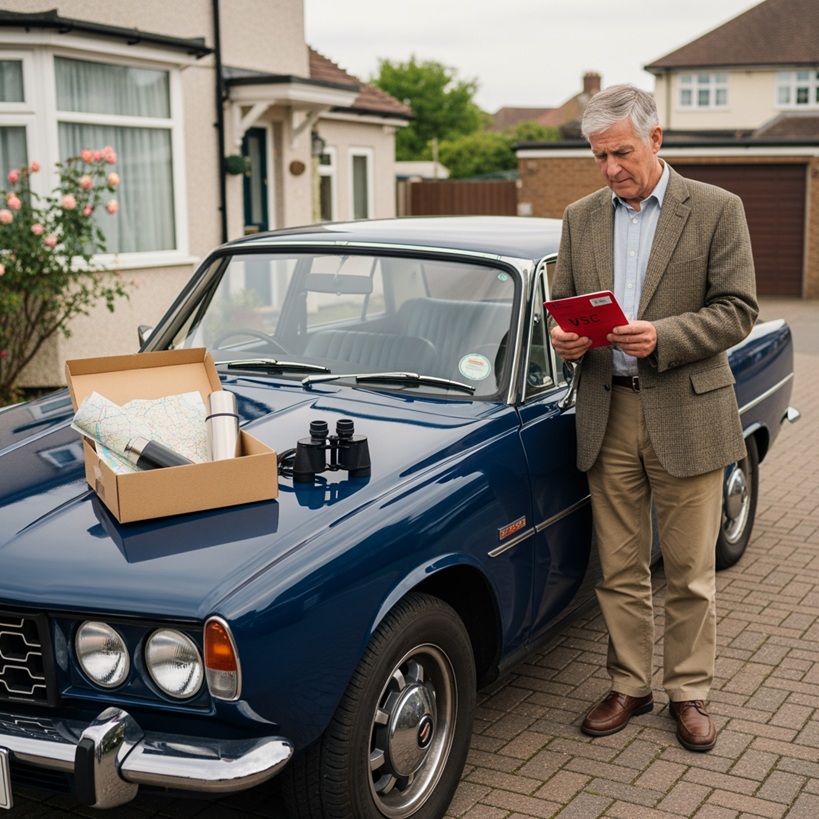
That’s where scrap car planning comes in. It sounds a bit formal, perhaps, but really it’s just about being prepared. It means recognising the signs that your car is nearing its end and taking a few simple steps before it becomes an urgent problem. Think of it as giving your car a dignified retirement plan, rather than a sudden, messy eviction from your driveway! The goal is to prepare car final stage as smoothly and hassle-free as possible.
We get attached to our cars, don’t we? They’re part of family holidays, daily commutes, late-night takeaways. Letting go isn’t always easy, even when you know it’s time. Planning ahead gives you space to deal with the practicalities without the added pressure of a crisis.
In my years around the industry, I’ve seen countless folks caught completely off-guard when their motor finally gives up the ghost. The ones who fare best are always those who’ve done a bit of forward thinking and aren’t scrambling at the last minute.
Is It Curtains for Your Motor? Spotting the Signs
So, how do you know when it’s time to start thinking about scrap car planning? Sometimes it’s obvious, but often it’s a gradual decline. Keep an eye (and ear) out for these common clues that signal you need to prepare car final stage:
The Garage Bills Are Mounting Up
We all expect occasional maintenance, but when trips to the mechanic become more frequent and the costs start resembling a mortgage payment, it’s a big red flag. Pouring hundreds, or even thousands, into a car that’s fundamentally on its last legs often isn’t financially sensible. Ask yourself: Is this repair worth more than the car itself?
Understanding scrap car prices helps you make this comparison accurately. When repair costs approach or exceed scrap value, that’s your signal for vehicle end planning.
That Failed MOT Certificate
Ah, the MOT. It’s the annual check-up we often dread. A failure isn’t always the end, but if the list of required repairs is long and expensive – think major welding, serious emissions problems, or structural issues – it might be the tipping point. Sometimes, the cost to get it roadworthy again just doesn’t add up.
You’ll need to notify the DVLA eventually when you scrap the vehicle, but first, assess whether repairs make sense as part of your car disposal preparation.
Breakdowns Becoming Your New Hobby?
Does your heart sink every time you turn the key? Are you on first-name terms with the local breakdown recovery driver? Constant unreliability isn’t just frustrating; it can be dangerous and seriously disrupt your life. If you can no longer depend on your car to get you from A to B, its main purpose is gone. That’s when finalising car retirement becomes the sensible option.
Rust Never Sleeps (And Other Bodywork Woes)
A bit of surface rust might be treatable, but once it starts eating into sills, wheel arches, or the chassis, it can become a serious structural (and MOT-failing) issue. Significant bodywork damage from accidents or general decay can also make a car uneconomical to repair.
Doing the Maths: Running Costs vs. Scrapping Value
Think about the bigger picture. Factor in not just repairs, but also tax, insurance, and fuel consumption (older cars are often less efficient). Compare these ongoing costs to the potential value you could get from scrapping it. Sometimes, cutting your losses and getting cash for scrap is the shrewdest financial decision as part of smart scrap car planning.
Look, I’ve always told people that when you’re spending more keeping the thing on the road than it’s worth sat in your driveway, it’s time for an honest conversation with yourself about the numbers.
The Smart Move: Why Scrap Car Planning Pays Off
Okay, so you’ve spotted the signs. Why rush into action now rather than waiting for the inevitable? Well, proactive scrap car planning has some real perks:
Keep Calm and Carry On: Reducing Stress
Let’s face it, arranging car disposal when it unexpectedly dies on your drive, blocking the neighbour’s access, is incredibly stressful. Planning ahead removes that panic. You choose the timing, you understand the process, and you stay in control. It transforms a potential headache into a simple task on your to-do list.
A Smoother Send-Off: Logistics Made Easy
When you plan, you can arrange collection through convenient scrap car collection services at a time that genuinely suits you, rather than desperately trying to get it moved right now. You’ll have time to clear out your belongings properly and gather the necessary paperwork without feeling rushed off your feet.
Potential for Better Timing (Avoiding Panic Decisions)
Scrap metal prices can fluctuate. Whilst we wouldn’t advise trying to ‘play the market’ obsessively, planning gives you a little breathing room. You’re not forced to accept the very first offer out of sheer desperation because the council is threatening to tow your immobile vehicle.
Making Space for What’s Next
Whether you’re replacing the old car, embracing public transport, or simply enjoying a clearer driveway or garage space, planning the scrap process helps smooth the transition. You’re clearing the way, literally and figuratively, for whatever comes next in your vehicle end planning.
Your Pre-Scrap Checklist: How to Prepare Car Final Stage
Ready to get practical? Taking these steps will help you prepare car final stage effectively and ensure everything goes smoothly on collection day as part of your car disposal preparation:
Paperwork Power: Locating Your V5C Logbook
This is the big one. The V5C (often mistakenly called the logbook) is the official registration document for your car. You’ll need this to prove ownership and, crucially, to inform the DVLA that you’re no longer the registered keeper. Find it, dust it off, and keep it safe. If you’ve genuinely lost it, don’t panic – you can still scrap your car, but it’s simpler with the V5C.
What About Remaining Road Tax or MOT?
You don’t need valid road tax or an MOT to scrap your car. In fact, many cars are scrapped precisely because they can’t pass an MOT or aren’t worth taxing. Once the car is officially declared scrapped (SORN or notified via the V5C), you can often claim back any full remaining months of road tax from the DVLA.
Operation Clear-Out: Removing Personal Belongings (Check Everywhere!)
This sounds obvious, but you’d be amazed what gets left behind! Go through your car meticulously: glove box, door pockets, under the seats, centre console, boot (including the spare wheel well), even sun visor pockets. Remove everything: CDs, charging cables, sunglasses, parking permits, cuddly toys, old sweet wrappers – the lot! Once it’s collected, it’s usually too late. Imagine finding out your favourite sunglasses went into the crusher!
Should I Remove Parts Myself?
We generally advise against this. Whilst you might think selling the battery or catalytic converter separately will net you more cash, it often complicates things. Firstly, removing parts can be tricky and even dangerous if you don’t know what you’re doing. Secondly, most Authorised Treatment Facilities (ATFs) – the official name for scrap yards – base their quote on the car being complete.
Working with authorised scrap car dealers means getting fair quotes for complete vehicles. Removing valuable parts like the catalytic converter will likely reduce your scrap quote significantly, potentially by more than you’d get selling it privately, especially once you factor in the hassle. It’s usually best to leave it all intact as part of your finalising car retirement process.
Getting a Realistic Quote: Know Before You Go
Don’t just guess its worth. Use an online service to get an instant quote. It’s free, quick, and gives you a clear idea of the value based on your car’s make, model, registration, and your location. This transparency is essential for proper scrap car planning.
The Scrapping Process Simplified (No Headaches Here!)
Worried the actual scrapping part will be complicated? With proper preparation, it really isn’t. We’ve streamlined everything to make it as easy as possible. Here’s a glimpse into the process:
Getting Your Free, No-Obligation Quote Online
Pop your car registration and postcode onto the website. You’ll get an instant price for your vehicle. This quote is guaranteed, provided the car is described accurately. No haggling, no fuss – just straightforward vehicle end planning.
Arranging Hassle-Free Collection (We Come to You!)
Accept the quote, and collection will be arranged at a convenient time. The network covers the vast majority of the UK, from bustling cities like London to the beautiful landscapes of Scotland and everywhere in between. Best of all? Collection is completely free.
Collection Day Rundown: What Happens?
The driver will arrive at the agreed time. They’ll quickly check the car matches the details provided and confirm the V5C logbook is present (if you have it). You’ll help fill in the relevant section (usually Section 4 or 9, depending on the V5C version) to transfer ownership to the scrap dealer. They’ll load the car onto their truck, and that’s pretty much it for your involvement! Payment is made securely, typically via bank transfer, as cash for scrap metal is illegal in the UK.
Sorting the DVLA Notification (Guidance Provided)
This is vital. You MUST tell the DVLA you’re no longer responsible for the vehicle as part of your car disposal preparation. The collector will help you identify the correct section of the V5C to complete and tear off. It’s then your responsibility to send this slip to the DVLA. Neglecting this step could lead to fines or penalties later on.
Tying Up Loose Ends: After the Collection
Once the car has driven off into the sunset (on the back of a truck), there are just a couple more things to tick off your list for complete finalising car retirement:
The All-Important DVLA Notification
Send off that completed section of your V5C (usually Section 4 or Section 9 – the bit that says ‘selling or transferring your vehicle to the motor trade’). Do this straight away. The DVLA should then send you written confirmation that you’re no longer the registered keeper. Keep this confirmation safe. If you don’t receive it within about four weeks, follow up with the DVLA.
Claiming Back Unused Road Tax and Insurance
Once the DVLA processes your notification, they will automatically refund any full months of remaining road tax (Vehicle Excise Duty). You’ll also need to contact your insurance company to cancel the policy for that vehicle. You may be entitled to a refund for the unused portion of your premium, depending on your policy terms.
Receiving Your Certificate of Destruction (Peace of Mind)
Within about seven days of collection, you should receive a Certificate of Destruction (CoD) either directly from the ATF or via the service you used. This is official proof that your vehicle has been disposed of correctly and legally through proper car recycling channels at an Authorised Treatment Facility. It confirms the car is off the road for good and won’t rack up any future charges in your name. Keep this document safe.
When Professional Scrappage Makes Most Sense
Whilst proper scrap car planning gives you control over timing, there are clear situations where professional scrappage is simply the most practical choice:
Major Mechanical Failures: When the engine or gearbox fails catastrophically and replacement costs thousands.
Extensive Corrosion: When structural rust makes the vehicle unsafe and uneconomical to repair.
Failed MOT with Multiple Major Issues: When the repair list is so long that fixing everything costs more than the car’s worth.
Age and Mileage: When high mileage (150,000+ miles) combines with age-related failures across multiple systems.
Safety Concerns: When continued use genuinely poses risks that shouldn’t be ignored.
These situations all benefit from the forward thinking that comes with proper vehicle end planning, rather than reactive crisis management.
Ready to Plan Your Car’s Retirement?
See? Scrap car planning isn’t daunting at all. It’s simply about taking control, understanding the process, and making sensible decisions before you’re forced to. By taking a few proactive steps, you can prepare car final stage smoothly, ensuring a stress-free farewell for your old motor.
At Scrap Car Network, the focus is on making the entire journey simple, transparent, and reliable. From instant online quotes to free nationwide collection and ensuring all the environmental and legal boxes are ticked, professional services handle everything efficiently.
So, if you suspect your car might be nearing the end of its useful life, don’t wait for the inevitable roadside drama. Start your scrap car planning today through proper car disposal preparation, giving yourself time to handle everything calmly and on your terms.
Ready to understand your options? Professional guidance makes finalising car retirement straightforward. Got questions about how to prepare car final stage? Friendly experts are available through the contact page to provide personalised advice.
Additional Support for Larger Vehicles
For those with vans or larger commercial vehicles requiring similar planning, specialist van scrapping services provide tailored guidance on commercial vehicle end planning, ensuring you get appropriate advice for larger vehicles.
These resources ensure comprehensive support for all your vehicle end planning needs, regardless of what you’re driving.
The Bottom Line
Sometimes the hardest part of scrap car planning isn’t the logistics – it’s accepting that your faithful companion has earned its rest. But there’s real dignity in making that decision on your terms, with proper preparation, rather than having it forced upon you by circumstance.
By understanding when to prepare car final stage and taking control of the process through thoughtful car disposal preparation, you transform what could be a stressful emergency into a manageable transition. That’s the power of proper planning, and that’s what separates a smart vehicle owner from one who ends up with regrets and unnecessary costs.
So take a moment to assess your situation honestly. If your motor’s showing the signs we’ve discussed, then it’s genuinely time to begin your vehicle end planning. You don’t have to act today, but knowing what’s possible tomorrow brings real peace of mind – and that’s worth more than any amount you’ll get for the scrap metal.