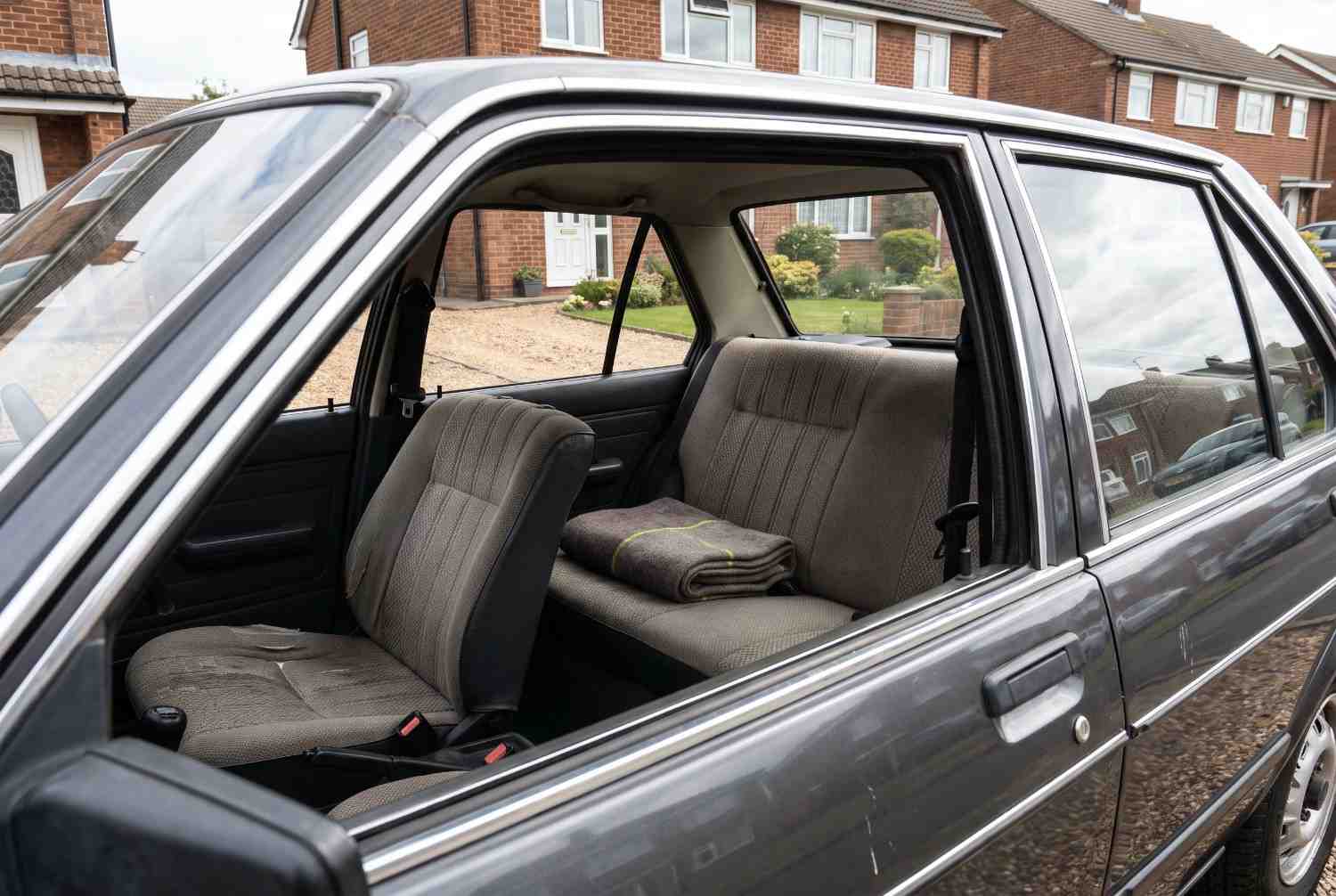
Parents’ Old Car: Should You Take It or Let Them Scrap?
13th Nov, 2026
Taking your parents’ old car can save you the cost of buying another vehicle. However, a free car is not automatically affordable or suitable for your needs. Before accepting, consider its condition, ownership, running costs and when your parent needs it removed.
You also have access to someone who knows the car’s history. Your parent can explain when problems appeared, what a garage investigated and how the vehicle has been used. These observations help alongside its paperwork, but they cannot replace an assessment of unresolved faults.
Start by comparing the removal date with the date you would first need to drive the car. If those dates do not align, consider what needs to happen in between. A vehicle awaiting repairs may not solve an immediate transport problem.
Match the Offer to Your First Need
First, establish what your parent is actually offering. Is it an outright gift, temporary use or a repair project? Do they still need the car before their replacement arrives? Are there expectations that you will return it, share it or contribute towards its upkeep?
These arrangements carry different responsibilities. Accepting a repair project makes sense only if you have the time and money to take one on. It is not the same as receiving a car ready for your regular journeys.
Ask why your parent is replacing the vehicle. A change in household needs may explain the decision without indicating a mechanical problem. If they mention a fault, ask what happened, when it started and whether a garage investigated it.
If your parent offers to pay for repairs before the transfer, agree on the specific work and its completion date. A completed repair can be checked against the vehicle’s remaining condition. A promised contribution only establishes who may pay; it does not mean the work has been carried out.
Account for the Gap Before Use
If the car will sit unused before you need it, include the costs that arise during that period. Check its tax position, insurance arrangements, servicing requirements and MOT expiry date. A payment due before your first journey still needs to fit your budget.
For regular use, estimate fuel from your own journeys rather than your parent’s routine. Their occasional local trips may differ considerably from your commute. Include parking costs based on where you will actually keep the car.
An uncertain move or job start creates another consideration. You may not know whether you will need the vehicle or have somewhere suitable to park it. Rather than leaving your parent waiting indefinitely, agree on a decision date that gives both of you a clear answer.
Read the Known Car’s History in Date Order
Use the registration number to check the official MOT history. It shows previous test results, recorded mileage and the next MOT due date. For vehicles tested in Great Britain, records date back to 2005. Northern Ireland results are available online for tests carried out since 2017, although some information differs.
Read the results alongside later invoices. Check the dates, mileage and exact work listed rather than relying on a general service stamp. An invoice mentioning tyres, for example, does not automatically prove that a particular tyre identified in an earlier MOT result was replaced.
A repair estimate is also different from a completed repair. Look for an itemised invoice or another record showing what the garage actually did. For maintenance such as a timing belt, check the requirement for the specific engine and documented work rather than assuming an interval based only on the vehicle’s age.
An MOT pass does not guarantee that a car remains roadworthy. The government’s vehicle safety guidance explains that owners must keep vehicles safe between tests. A new concern involving the brakes, steering, tyres or visibility still needs attention before the car is driven.
Distinguish Findings, Repairs and Later Symptoms
In Great Britain, MOT results distinguish dangerous and major defects from minor defects and advisories. Dangerous and major defects cause a test failure. Minor defects and advisories can appear alongside a pass. The official MOT result guidance explains what these results mean, while the MOT inspection manual provides the technical categories.
Read the actual wording rather than treating every entry as an outstanding failure. A minor defect or advisory is not the same as a dangerous or major failure, but it is still worth understanding before accepting the car. Northern Ireland has separate testing arrangements, so check the relevant DVA information for vehicles registered there.
Consider a dated MOT advisory identifying the left rear tyre, followed by an itemised invoice recording replacement of that same tyre. The matching details support the conclusion that work was carried out on the identified item. An unrelated service stamp would not provide the same evidence.
That invoice does not establish the tyre’s present condition or explain a later symptom. If your parent reports that the car has started pulling to one side or behaving differently, the new concern needs separate assessment. A previous repair is useful history, not a guarantee that the component cannot develop another problem.
Keep Your Own Costs Beside the Car’s Evidence
Get an insurance quotation for yourself and the exact vehicle before agreeing to take it. MoneyHelper’s explanation of insurance pricing identifies personal details, the vehicle, mileage and parking among the factors insurers consider.
Your parent’s premium will not establish what you will pay. Obtain a quote using accurate details about yourself, where the car will be kept and how you intend to use it. Do not assume an existing family policy can simply continue after you become the main driver.
Check the policy excess as well. MoneyHelper’s car insurance guidance explains that the excess is the amount you contribute towards a claim. Make sure you could afford it if you needed to claim.
Be accurate about who will drive the car most often. Naming your parent as the main driver when you will actually be the main user can amount to fronting and may invalidate a claim. Paying for the policy and being its main driver are not necessarily the same thing.
Then add any identified repairs, servicing and alternative transport costs. If the car needs assessment before you can use it, consider how you will travel while it is unavailable. A low purchase price does not make an unpriced repair affordable, and a parent’s offer to contribute does not establish that the vehicle is ready.
Use Your Parent’s Observations Precisely
Ask what journeys your parent has made recently and when they last noticed a problem. Starting the car each morning, completing a short shopping trip and driving a longer route are different experiences. Their recent use may help explain how the vehicle behaves, but it does not prove that it will suit your routine.
Ask when a noise or change in behaviour first appeared. Did it happen before or after the last garage visit? Was it mentioned to the mechanic? Did it return after the work was completed?
These details can help a garage investigate an unresolved concern. They cannot identify the cause on their own, so avoid treating a family description as a mechanical diagnosis.
The car may also carry years of family memories. Those memories can make the decision difficult, but they do not create an obligation to accept it. If the timing, condition or costs do not work for you, explain your reason clearly. You can still help with paperwork or collection arrangements without taking ownership.
When Accepting the Car Makes Sense
Check the finance agreement before treating the vehicle as a gift. If it is on hire purchase (HP), MoneyHelper’s hire-purchase guidance explains that the finance company owns the vehicle during the agreement. Ownership normally passes after the final payment and any required option-to-purchase fee have been paid.
Personal Contract Hire (PCH) is different. It is a leasing arrangement that normally does not include an option to buy. The vehicle is usually returned to the dealer at the end of the agreement. Check the actual contract to confirm the ownership position and return requirements. Your parent cannot give you a car they are required to return.
Before accepting, establish that your parent has the right to transfer the vehicle and that any finance or lease restrictions have been resolved. The replacement delivery date does not determine when ownership can pass.
The offer is more likely to make sense when:
- The transfer date and any necessary work fit your transport needs.
- The MOT history, repair records and current condition have been considered together.
- Your own insurance quotation and expected running costs fit your budget.
- Completed repairs have supporting records, and remaining concerns are understood.
- Your parent has the right to transfer ownership and both of you agree on the terms.
A used family car does not need to be perfect to be useful. What matters is knowing what you are accepting, what needs attention and whether you can manage the costs. Keep its service records and repair invoices together so you can refer to them when arranging future maintenance.
Give an Answer Before the Removal Deadline
If a garage assessment is the last missing piece, check whether it can happen before your parent needs the vehicle removed. An appointment booked after that date does not solve the immediate problem.
You may need to decline even when a later assessment could show that the car is worth keeping. That is a decision about your circumstances and timing, not a judgement that the vehicle has no value.
Explain your decision using what you know. Separate completed work from outstanding repairs and anything that remains uncertain. If you decline, your parent can decide whether to keep, repair, sell or scrap the car. You do not have to fund repairs to justify saying no.
If your parent chooses disposal, get a quotation based on the vehicle’s actual condition. Describe any faults, missing parts and access restrictions accurately. If they would prefer the car to remain in use, distinguish a route that allows repair or resale from one involving complete destruction.
Collection Does Not Always Mean Destruction
Scrap Car Network obtains vehicle details and coordinates collection through its partners. Depending on the car’s condition and the receiving business’s decision, it may be resold, have usable parts recovered or be sent for treatment at an Authorised Treatment Facility (ATF). Collection by itself does not confirm that a vehicle has been destroyed.
An ATF is authorised to handle end-of-life vehicles. Treatment includes removing hazardous fluids and components, such as engine oil and batteries, before further processing. Steel and aluminium may be recovered for reuse, although this does not mean every material from the vehicle will be recycled.
The government’s end-of-life vehicle guidance explains the regulated treatment process. Northern Ireland also requires end-of-life vehicles to go through an authorised facility. See the relevant nidirect guidance.
For a collection quotation, have the vehicle registration and postcode ready. Collections are arranged in morning or afternoon windows rather than exact appointment times. The driver calls around 30 minutes before arrival.
Someone must attend the collection and provide valid identification. Scrap Car Network accepts a current photocard driving licence. If this is unavailable, another accepted form of photographic identification and separate proof of address are required. Check the company’s identification guidance before collection so the documents are ready.
In England and Wales, the Scrap Metal Dealers Act 2013 requires scrap-metal dealers to verify the supplier’s full name and address.
Once the vehicle has been loaded, payment is made by bank transfer within one to two working days.
Keep the Accepted Handover Clear
Before accepting the car, establish that your parent owns it and has the right to give it away. The V5C registration certificate identifies the registered keeper; it is not proof of legal ownership. Check ownership separately, particularly if the car has been financed, leased or shared with someone else.
Your parent should notify the Driver and Vehicle Licensing Agency (DVLA) when the vehicle is transferred. The official registration guidance explains the process and the green new keeper slip you should receive. Keep a dated record of the agreed transfer as well.
Existing vehicle tax does not transfer to a new keeper. You must arrange your own tax before using the car on public roads. Check the official guidance for buying or selling a vehicle and make sure appropriate insurance and a valid MOT are in place where required. The vehicle must also be roadworthy.
A SORN, or Statutory Off Road Notification, declares that a vehicle is kept off public roads. If you receive the car and keep it off the road without taxing it, you must make your own SORN. Your parent’s declaration does not transfer to you. Otherwise, keep the vehicle taxed and insured, even when it is parked on private property. Check the official SORN guidance before changing its road status.
In Great Britain, a vehicle must generally be insured unless it has a valid SORN. Northern Ireland has different insurance arrangements, so check the relevant rules before changing cover or keeping the vehicle off the road.
If your parent chooses complete scrapping, use an ATF and notify the DVLA of the disposal. For eligible vehicles completely scrapped in Great Britain, the ATF issues a Certificate of Destruction within seven days. A vehicle that is repaired and resold does not receive one. Northern Ireland has its own disposal guidance and ATF arrangements, so follow the relevant process for the vehicle’s location.
Keep the transfer or disposal confirmation, relevant paperwork and any Certificate of Destruction with the vehicle records. This helps establish what happened after the car left your parent’s possession.
Conclusion
Take your parent’s old car when its condition, ownership, costs and transfer date make sense for your circumstances. If important information is missing, seek it while there is still time. Otherwise, decline clearly and let your parent decide what happens next.
If they choose disposal, we can arrange scrap car collection through our partners. For questions about a quotation, identification or collection paperwork, contact us or call 01772 665 909.