Interior Condition Impact on Scrap Prices: Does It Actually Matter?
18th May, 2026
When it is time to scrap a car, most people wonder whether they should bother cleaning out the crisp packets, hoovering the seats, or scrubbing away years of accumulated grime. The short answer is no. But there is more to understand about how scrap car dealers actually value vehicles and why the interior condition rarely shifts the needle on what you will receive.
The reality is that scrap car prices are determined primarily by weight and metal content, not whether the upholstery looks pristine or the dashboard is free of dust. Scrapyards operate on a fundamentally different valuation system compared to traditional used car dealers. They are not preparing vehicles for resale to drivers; they are processing them for recycling.
What Actually Determines Scrap Car Value
Scrap car valuation operates on straightforward principles that have little to do with aesthetics. The primary factors that influence what you will be offered are tangible, measurable elements rather than subjective assessments of condition.
Metal weight sits at the top of the list. A typical family car contains roughly 1,000 to 1,500 kilograms of metal, predominantly steel and aluminium. When you scrap any car, the facility weighs this metal content against current commodity prices. These prices fluctuate daily, which is why quotes can vary week to week.
The make and model matters, but not for reasons you might expect. Certain vehicles contain more valuable materials or components that can be salvaged before the crusher does its work. A luxury German saloon might fetch slightly more than a budget hatchback, but this relates to recyclable parts rather than how comfortable the seats feel.
Current scrap metal market rates directly impact offers. When global steel demand increases, scrap prices rise accordingly. Conversely, during economic downturns, metal prices drop. This external factor affects all vehicles equally, regardless of whether they have leather seats or cloth.
Why Interior Condition Doesn’t Move the Dial
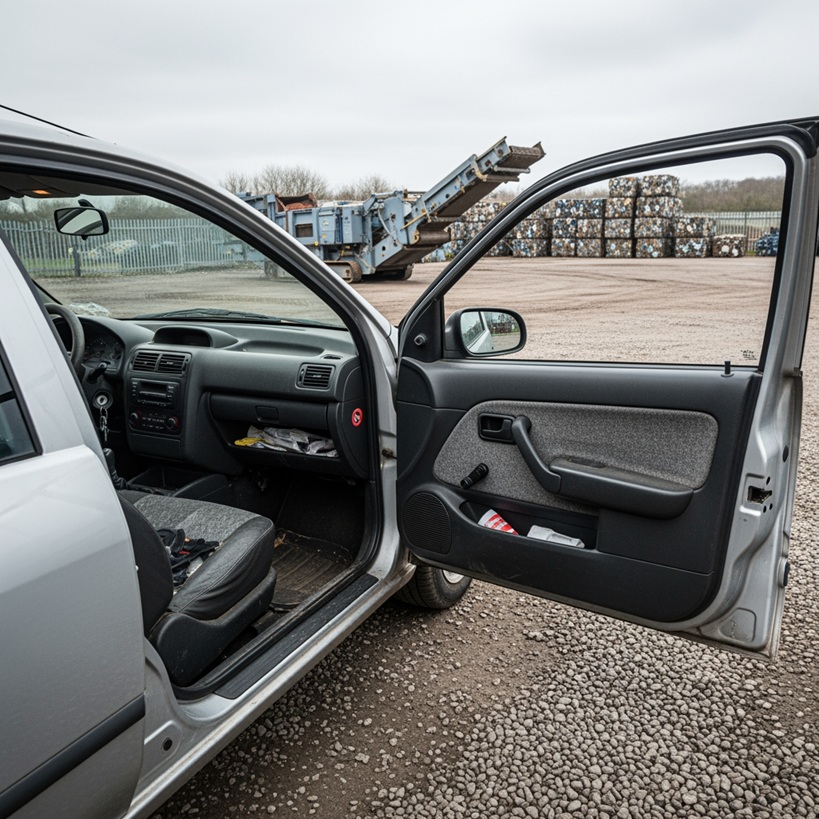
Here is where expectations and reality diverge. The scrap car interior condition holds virtually no value to an Authorised Treatment Facility (ATF). These facilities process vehicles for material recovery, and fabric, plastic trim, and carpeting are not valuable recyclables in this context.
Think of it like weighing fruit at a market. The grocer doesn’t care if the apple is polished to a shine or has a bit of dirt on it; they are measuring weight. Similarly, ATFs assess the total recyclable material, and interior components contribute negligible weight compared to the metal shell, engine block, and chassis.
The seats, dashboard, door cards, and carpets typically end up in the non-metallic residue stream. This material gets separated during the depollution process and often goes to landfill or specialist recycling facilities. It does not generate revenue for the scrapyard, so it does not factor into their offer.
When Interior Condition Might Matter (The Rare Exceptions)
There are limited scenarios where interior condition could potentially influence value, though these situations are the exception rather than the rule.
If a vehicle is borderline scrappable, meaning it is in that grey area where it could feasibly be sold for parts or repaired, then interior condition might tip the scales. A car with low mileage, a working engine, and pristine interior might be redirected to a breaker’s yard rather than the crusher. However, this is not technically “scrapping” anymore.
Salvageable parts represent another exception. If your car contains sought-after interior components, perhaps rare trim pieces or a premium sound system, these might be removed and sold separately. But this happens at the ATF’s discretion, not as part of your initial quote.
What You Should Actually Do Before Scrapping
Rather than worrying about hoovering the footwells, focus on these practical steps that genuinely matter when preparing to scrap a vehicle.
Remove all personal belongings thoroughly. Check the glove box, door pockets, under seats, and in the boot. People regularly lose cash, important documents, and sentimental items this way. Once the car is collected, retrieving forgotten items becomes difficult or impossible.
Check for valuable removable items that aren’t part of the car’s structure. Aftermarket stereos, sat-navs, and dash cams can be removed and used elsewhere. These have actual resale value on their own, unlike the interior trim.
Locate your V5C logbook and any other relevant documentation. You will need to notify the DVLA when you scrap the vehicle, and having the registration certificate makes this process straightforward. For detailed guidance, see how to notify the DVLA about the transfer.
I recall a young lad who scrapped his first car, a battered Corsa. He spent three hours valeting the inside, polishing the dashboard, and shampooing the mats. When the recovery driver arrived, he didn’t even open the door. He just checked the VIN, loaded it up, and drove off. The lad was gutted his hard work went unnoticed, but to the crusher, clean plastic is just plastic.
The Real Factors That Boost Scrap Value
If you are looking to maximise what you receive for a scrap car, focus your attention on factors that actually influence the price.
Complete vehicles fetch more than incomplete ones. If you have already removed the engine, transmission, or wheels, expect a significantly lower offer. ATFs value complete cars because they can efficiently process all components through their established systems.
Vehicle size and weight directly correlate with value. A large SUV or van contains more metal than a small city car, so it commands a higher price. If you are deciding between scrapping multiple vehicles, prioritise the larger one. For commercial vehicles, specialised services like scrap my commercial van understand the specific value these vehicles hold.
Understanding the ATF Process and Priorities
Authorised Treatment Facilities operate under strict environmental regulations that dictate how they process vehicles. Understanding this ATF process reveals why interior condition does not factor into their calculations.
The first stage involves depollution, which means removing hazardous fluids and materials. This includes engine oil, brake fluid, coolant, and air conditioning refrigerant. Batteries, tyres, and catalytic converters get removed and processed separately. Interior components do not feature in this valuable stage.
Next comes dismantling for reusable parts. Engines, transmissions, and body panels that can be sold to repair shops or individuals get carefully removed. While some interior parts like seats might occasionally be salvaged, this depends entirely on demand and condition.
The final stage involves crushing and shredding the remaining shell. This is where the bulk of scrap car value comes from. The metal gets separated by type (ferrous and non-ferrous), then sold to metal recyclers. Your car’s interior has long been separated out by this point.
Common Misconceptions About Scrap Car Valuation
Several persistent myths about scrap car valuation lead people to waste time and effort on factors that do not matter.
“A clean car gets a better price” is a myth. This might apply when selling privately or trading in at a dealership, but scrapyards are not preparing vehicles for showrooms. The car will be dismantled regardless of whether it is spotless or filthy.
“I should repair minor damage first” is also incorrect. Investing money in repairs before scrapping makes no financial sense. That dent in the door or cracked wing mirror does not reduce the metal weight or recyclable material content.
Making the Most of Your Scrap Car Transaction
Rather than focusing on interior condition, direct your energy toward ensuring a smooth, legitimate transaction that protects your interests.
Get multiple quotes from different scrap car services. Prices can vary based on current capacity, metal stockpiles, and regional market differences. The Scrap Car Network connects you with vetted ATFs across the UK, making comparison straightforward.
Verify ATF authorisation before handing over your vehicle. Legitimate facilities hold an Environmental Permit. This ensures proper processing and provides you with a Certificate of Destruction.
The Environmental Perspective on Car Scrapping
While interior condition does not affect your payout, understanding the environmental impact of car recycling provides useful context for why the process works as it does.
Modern vehicles are approximately 95% recyclable by weight. The vast majority of this comes from metal components, steel, aluminium, and copper wiring, which can be infinitely recycled without quality degradation.
Interior materials present more challenges. Plastics come in numerous varieties that require different recycling processes. Mixed materials like foam-backed fabrics cannot be easily separated. This is why ATFs focus their economic model on metal recovery. You can support this cycle by choosing a responsible recycling partner.
Regional Considerations and Local Markets
Scrap car values can vary slightly by region due to transport costs and local metal market dynamics, but interior condition remains irrelevant across all areas.
Urban areas with multiple ATFs might see slightly more competitive pricing due to market forces. If you are looking for local car breakers in major cities, services covering areas like London, Newcastle, or Scotland can quickly connect you with local facilities.
Rural locations might face marginally lower offers if collection costs are factored in, though reputable networks absorb these costs rather than passing them to customers. The interior condition still does not enter the equation; distance from the ATF matters more than upholstery quality.
Final Considerations Before You Scrap
Before arranging a collection, take a final walk around and through the vehicle to ensure you have genuinely prepared everything that matters.
Double-check all storage areas one more time. Boot compartments often have hidden storage under the floor. Side pockets in doors can hide old parking permits or coins. The space under seats accumulates surprising items over years of ownership.
Cancel insurance and road tax after the car is collected and you have notified the DVLA. You will receive automatic refunds for any unused full months of tax.
Conclusion
The interior condition of a scrap car has virtually no impact on the price you will receive. Scrap valuation operates on metal weight and recyclable components, not aesthetics or comfort features. ATFs process vehicles for material recovery, and interior elements contribute negligible value to that equation.
Rather than wasting time cleaning or worrying about stained seats and worn carpets, focus on practical preparation like removing personal belongings, locating your V5C, and choosing a legitimate, authorised facility. These steps protect your interests and ensure a smooth transaction far more effectively than any amount of interior cleaning.
When you are ready to scrap your vehicle, contact us to connect with authorised facilities. They will provide transparent quotes based on actual value factors without wasting your time on irrelevant cosmetic concerns.
For immediate assistance or to clarify any details about your vehicle’s condition, call our team on 01772 665 909.