How Vehicle Recycling Differs Around the World
19th Dec, 2025
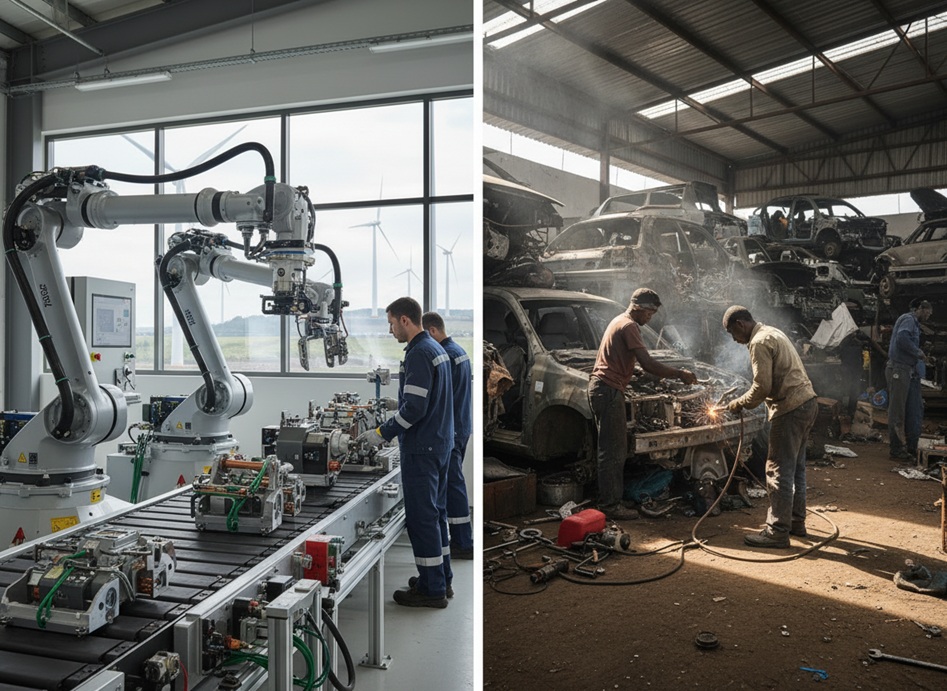
Vehicle recycling is a truly global industry, but the way it’s carried out varies enormously from country to country. From the highly regulated systems in Europe to the informal scrapyards of Africa, each region has its own approach to managing end-of-life vehicles (ELVs). Understanding vehicle recycling around the world reveals how different cultures, economies, and regulations shape environmental practices, and how international cooperation could create a cleaner, more circular future for the automotive sector.
The Basics of Vehicle Recycling
Before comparing international vehicle recycling laws and methods, it’s important to understand the fundamentals. Vehicle recycling involves dismantling cars at the end of their life, safely removing hazardous materials, and recovering valuable components such as steel, aluminium, glass, and plastics for reuse.
The primary aim is to reduce waste, conserve resources, and minimise environmental harm. When carried out responsibly, vehicle recycling prevents materials from entering landfill and ensures that metals and components are returned to manufacturing loops for new products, supporting a circular economy.
Key takeaways:
- Vehicle recycling focuses on dismantling and reusing valuable materials.
- The process reduces landfill waste and conserves resources.
- Recovered materials support sustainable manufacturing.
Learn more about Scrap Car Network’s car recycling process and how it supports sustainable automotive practices.
European Standards: A Green Benchmark
Europe has established some of the most advanced and regulated systems for vehicle recycling globally. The End-of-Life Vehicles (ELV) Directive, introduced by the European Union, sets legally binding targets for the reuse, recovery, and recycling of vehicles.
Under this directive, at least 95% of a car’s weight must be reused or recovered, ensuring minimal waste. Member states such as Germany, the Netherlands, and Sweden have invested heavily in high-tech dismantling and separation facilities. These nations emphasise environmental compliance, material recovery, and continuous innovation in recycling technologies.
Key takeaways:
- The EU’s ELV Directive enforces strict recycling and recovery targets.
- Countries like Germany and Sweden lead in technological efficiency.
- European systems aim to maximise resource recovery and minimise waste.
Find out how Scrap Car Network works with Authorised Treatment Facilities (ATFs) to maintain similar high standards across the UK.
North American Approaches: A Mix of Methods
In North America, vehicle recycling practices vary widely due to differing state and provincial regulations. The United States and Canada both have recycling frameworks, but unlike Europe’s unified policy, North America’s approach is more decentralised.
Some regions, such as California and British Columbia, have introduced stringent environmental standards for dismantling and depollution. In others, the process remains driven primarily by market demand for scrap metals like steel and aluminium.
Economic incentives often dictate the success of recycling operations, with profitability influencing participation rates. Nevertheless, the continent’s strong industrial base and growing focus on green manufacturing are driving steady improvements.
Key takeaways:
- Vehicle recycling laws differ across states and provinces.
- Economic viability plays a major role in recycling operations.
- Regions with stricter environmental standards achieve higher recovery rates.
Asia: Emerging Markets and Expanding Challenges
Asia presents one of the most diverse pictures of vehicle recycling around the world. Developed economies like Japan and South Korea operate sophisticated, technology-driven systems, while many developing nations still rely on informal dismantling networks.
Japan’s system is widely recognised as one of the most efficient. Its Automobile Recycling Law mandates manufacturers to take responsibility for vehicle disposal and sets national recycling targets. South Korea’s approach is similarly advanced, integrating automation and electronic tracking for transparency.
However, in countries such as India, Indonesia, and the Philippines, informal recycling remains common. Cars are often dismantled in small workshops without adequate environmental protections, leading to pollution risks. Rapid vehicle ownership growth across Asia adds further strain to recycling infrastructure.
Key takeaways:
- Japan and South Korea lead in structured, high-tech recycling systems.
- Developing countries face infrastructure and regulatory challenges.
- Rapid motorisation increases the volume of end-of-life vehicles.
Learn how the UK’s vehicle recycling network compares to these emerging systems.
South America: Adapting to Local Needs
South American nations are gradually strengthening their recycling infrastructure, balancing resource limitations with innovative local solutions. Brazil, Argentina, and Chile have taken steps toward formalising recycling frameworks, but many areas still depend heavily on informal dismantling sectors.
Small, family-run operations dominate much of the industry. These workshops dismantle vehicles manually, salvaging parts for resale and metal for scrap. Although often lacking modern equipment, these initiatives reduce waste and provide employment opportunities.
Progress is being made through public-private partnerships and pilot programmes that aim to formalise informal recycling, improve safety standards, and introduce regulations modelled on international vehicle recycling laws.
Key takeaways:
- South America’s recycling infrastructure is still developing.
- Informal sectors play a crucial social and economic role.
- Governments are gradually introducing formal regulations.
Africa: Informal Recycling as a Lifeline
Across Africa, vehicle recycling largely depends on informal operations. With limited access to modern recycling infrastructure, mechanics and entrepreneurs dismantle vehicles manually, often in open-air scrapyards.
While these activities provide vital income and keep reusable materials in circulation, they can pose serious health and environmental risks. The lack of pollution control and waste management can lead to soil and water contamination.
The next step for many African nations is to formalise this sector, providing training, protective equipment, and access to regulated markets. International organisations and NGOs are increasingly supporting these efforts, helping to integrate informal recyclers into safer, more sustainable frameworks.
Key takeaways:
- Informal recycling dominates in many African countries.
- Safety and environmental challenges are common.
- Formalising informal sectors is key to sustainable progress.
For insights into how formal recycling systems work, see Scrap Car Network’s guide to ATFs and compliance.
The Future of Global Vehicle Recycling
The future of vehicle recycling around the world lies in collaboration, technology, and standardisation. Nations are beginning to recognise that sustainable recycling is not just an environmental responsibility but also an economic opportunity.
Innovation in Recycling Technology
Research is advancing in areas such as plastic recycling, rare metal recovery, and electric vehicle (EV) battery processing. New mechanical and chemical recycling techniques are enabling the recovery of previously unrecyclable materials.
Global Collaboration
Cross-border cooperation will play a vital role in creating consistency across recycling standards. Shared research, training, and international vehicle recycling laws could help establish universal benchmarks for sustainability and safety.
Circular Economy Integration
The integration of recycling into manufacturing processes ensures that end-of-life vehicles feed directly into new production cycles. This circular approach reduces waste, conserves resources, and supports the transition to a low-carbon global economy.
Key takeaways:
- Technological innovation is improving material recovery.
- Global cooperation is crucial for unified recycling standards.
- Circular economy principles underpin the industry’s future.
Conclusion: A World of Difference
Vehicle recycling may take many forms, but the objective remains universal, to reduce waste, recover materials, and protect the environment. Whether it’s the precision of Japanese recycling facilities, the formalised systems of Europe, or the grassroots ingenuity of Africa, every effort contributes to a more sustainable planet.
As technology advances and nations align on international vehicle recycling laws, the global recycling landscape is moving steadily towards greater efficiency and environmental responsibility.
In the UK, Scrap Car Network connects vehicle owners with licensed Authorised Treatment Facilities, ensuring that every car is recycled safely, legally, and sustainably. Through this network, drivers can contribute to a worldwide movement that values materials, reduces waste, and supports the circular economy.
Key takeaways:
- Vehicle recycling practices differ across continents but share common goals.
- Innovation and collaboration are shaping a sustainable global future.
Responsible recycling ensures cars contribute to environmental progress.