How to Verify Scrap Yard Credentials Through Comparison Platforms
15th Apr, 2026
Comparison platforms make getting multiple scrap car quotes simple, but how do you know the operators providing those quotes are actually legitimate? Not all platforms vet operators properly, and some include unlicensed yards alongside legitimate facilities.
Scrap Car Network pre-screens every operator in our network, verifying Authorised Treatment Facility licensing and credentials before they ever provide quotes. But whether you’re using our service or another platform, knowing how to verify credentials yourself protects you completely.
Let’s walk through exactly how to check scrap yard credentials through comparison platforms and why this verification matters so much.
Why Credential Verification Matters
Using unlicensed scrap car operators creates legal and financial problems you definitely don’t want.
Legal Risks of Unlicensed Operators
Without a licensed ATF, you can’t get a Certificate of Destruction. This means you remain the registered keeper even after handing over your car. If that vehicle gets abandoned somewhere or used illegally, you’re legally responsible.
Penalty charges, DVLA complications, and potential legal liability all follow from this. The few extra pounds an unlicensed operator might offer aren’t worth these risks.
Think of it like selling prescription medication to someone without checking they’re a licensed pharmacy. You might get paid, but you’re legally exposed if anything goes wrong. Same principle applies to vehicle disposal.
Financial Consequences
Unlicensed operators often reduce quotes dramatically on collection day or disappear without paying at all. With no legitimate business registration or regulatory oversight, recovering your money is nearly impossible.
You’ve lost time arranging collection, possibly turned down legitimate quotes, and now you’re dealing with someone who won’t honour their offer. Legitimate operators can’t operate this way because they’d lose their licences.
I remember a customer from Birmingham who used a comparison platform that didn’t vet operators properly. Got quoted £320, which seemed reasonable. Collection day arrives, and suddenly it’s £120 because of “market changes overnight.” He refused, tried contacting the platform for help, and discovered they had no complaint procedure and couldn’t even confirm if the operator was licensed. Wasted his entire Saturday and ended up using a verified service anyway.
Understanding ATF Licensing Requirements
Before you can verify credentials, you need to understand what legitimate operators must hold.
What ATF Licenses Authorize
An Authorised Treatment Facility licence gives legal authority to accept end-of-life vehicles, depollute them (safely remove hazardous fluids), dismantle them, and issue Certificates of Destruction.
Without this licence, accepting and processing scrap cars is illegal. The licensing system ensures vehicles get handled according to environmental regulations and that proper records get maintained.
Licences aren’t just paperwork – they represent compliance with strict standards for facility design, operational procedures, and environmental protection.
Environment Agency Licensing for England and Wales
The Environment Agency regulates ATFs in England and Wales. They issue permits requiring facilities to meet specific standards for pollution control, waste management, and environmental protection.
These permits are public record. Anyone can check whether a facility holds valid licensing and see their compliance history. The Environment Agency doesn’t hide this information – transparency is part of the regulatory system.
SEPA Licensing for Scotland
The Scottish Environmental Protection Agency (SEPA) performs the same regulatory role in Scotland. The standards are identical to England and Wales – different regulator, same requirements.
Scottish operators appear on SEPA’s public register just like English and Welsh operators appear on the Environment Agency register. The verification process is parallel.
How Comparison Platforms Should Vet Operators
Quality comparison platforms implement proper vetting before including operators in their networks. Here’s what that should look like.
Minimum Vetting Requirements
Legitimate platforms verify:
ATF licensing: Checking Environment Agency or SEPA registers to confirm valid permits.
Company registration: Verifying business registration with Companies House, confirming directors and trading status.
Insurance validation: Ensuring appropriate public liability and goods-in-transit coverage.
Physical premises: Confirming actual facilities exist at claimed addresses, not just virtual offices.
These aren’t optional extras – they’re basic due diligence protecting platform users from unlicensed or fraudulent operators.
Ongoing Monitoring Systems
Verification isn’t one-time. Quality platforms monitor operators continuously:
Periodic license renewal checking ensures permits remain current. Licences expire and need renewal – operators who let them lapse should be removed immediately.
Complaint tracking identifies operators causing problems. Multiple complaints about quote reductions, missing documentation, or poor service indicate issues requiring investigation.
Performance metrics like documentation delivery timeframes, quote accuracy, and customer satisfaction affect network inclusion. Consistently underperforming operators get removed.
Quality Assurance Processes
Review monitoring across multiple platforms reveals operator reputations. If an operator’s getting consistent complaints elsewhere, quality platforms investigate and potentially remove them.
Customer feedback integration means platforms actively seek user experiences. They don’t just wait for complaints – they proactively assess operator performance.
Our network of Authorised Treatment Facilities undergoes all these verification steps before inclusion and continuous monitoring afterwards.
Step-by-Step Verification Process
Here’s how to verify operator credentials yourself, even when using comparison platforms.
Obtaining ATF License Number
Request the operator’s ATF licence number. Quality platforms display this information in operator profiles. If it’s not visible, ask the platform or operator directly.
Legitimate operators provide licence numbers immediately. They’re proud of being properly licensed. Evasion or refusal is a massive red flag.
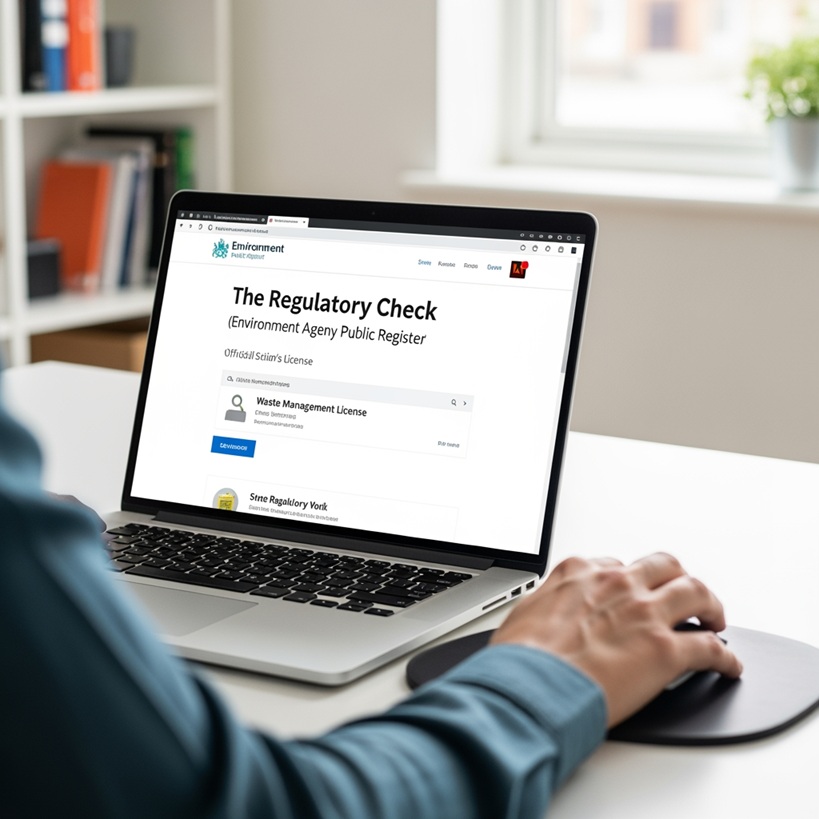
Checking Environment Agency Register
For England and Wales operators:
- Visit the Environment Agency’s public register at environment.data.gov.uk
- Search by company name or permit number
- Review permit status (active/expired), facility address, and permit conditions
- Check compliance history for any enforcement actions
The register shows everything. Active permits, facility locations, and any regulatory problems. If an operator claims to be licensed but doesn’t appear, they’re lying.
Checking SEPA Register for Scottish Operators
For Scottish operators:
- Access SEPA’s public register at sepa.org.uk
- Search using business name or permit reference
- Verify current permit status and facility details
- Review any compliance issues or conditions
The process mirrors Environment Agency checking. Different website, same verification approach.
Company Registration Verification
Check Companies House at companieshouse.gov.uk:
- Search by company name or registration number
- Review company status (active/dissolved)
- Check director information and appointment dates
- View financial filings and trading history
This reveals whether businesses are properly registered, who’s running them, and how long they’ve been trading. Recently registered companies claiming years of experience are suspicious.
Additional Verification Methods
Online reviews: Check Google, Trustpilot, and Facebook for operator reviews. Look for patterns rather than individual complaints.
Address verification: Use Google Maps to confirm claimed business addresses show actual facilities, not residential properties or virtual offices.
Direct contact: Ring the operator with specific questions about their licence, processes, and documentation. Legitimate businesses answer confidently and professionally.
What Legitimate Comparison Platforms Provide
Quality platforms make verification easy by providing complete operator information.
Transparent Operator Information
Reputable platforms display:
- Full company name and registration details
- ATF licence number
- Physical facility address
- Contact information (landline and email, not just mobile)
- Years in operation
- Customer ratings and review summaries
This transparency lets users verify credentials before accepting quotes. If platforms hide this information, they’re either poorly run or deliberately obscuring operator legitimacy.
Verification Support Services
Good platforms help users verify credentials. They explain how to check registers, provide direct links to verification resources, and answer questions about operator licensing.
If you’re uncertain about an operator’s credentials, quality platform support teams assist with verification or provide additional documentation confirming legitimacy.
Customer Protection Features
Complaint resolution procedures handle problems professionally. Mediation between customers and operators resolves disputes fairly.
Some platforms offer compensation or guarantees if operators fail to provide proper documentation or behave fraudulently. These protections indicate serious quality standards.
Red Flags in Platform Operator Vetting
Certain warning signs indicate platforms don’t vet operators properly.
Platform Refuses to Provide License Numbers
If platforms won’t provide operator ATF licence numbers or claim this information is “confidential,” that’s suspicious. Licence numbers are public information – there’s no legitimate reason to withhold them.
This usually means platforms haven’t actually verified licensing and don’t want users discovering unlicensed operators in their networks.
Vague About Verification Standards
Quality platforms explain exactly how they vet operators: “We verify ATF licensing through Environment Agency registers, confirm company registration with Companies House, and check compliance history.”
Vague claims like “we ensure all our operators are legitimate” or “we only work with trusted partners” without specifics indicate no real verification process exists.
No Removal Process for Problem Operators
Ask platforms what happens if operators consistently cause problems. Quality platforms remove problematic operators after investigating complaints.
Platforms without clear removal criteria or claiming they can’t remove operators because “they’re independent businesses” aren’t maintaining quality standards.
Inconsistent Operator Quality
Some dodgy platforms mix licensed ATFs with unlicensed yards, letting users unknowingly choose between legitimate and illegitimate options.
Quality platforms ensure ALL operators meet identical licensing standards. There shouldn’t be variation – every operator should hold proper ATF licensing.
Verifying Individual Operators After Platform Selection
Even with quality platforms, personal verification provides peace of mind.
When to Verify Individually
Personal verification makes sense when:
- Using a platform for the first time
- Dealing with unfamiliar operators
- Receiving unusually high or low quotes
- Wanting additional confidence before proceeding
This isn’t about distrusting platforms – it’s reasonable due diligence taking ten minutes.
Quick Verification Checklist
- Get ATF licence number from platform or operator
- Check Environment Agency or SEPA register
- Verify company registration on Companies House
- Scan recent reviews on Google and Trustpilot
- Confirm physical address via Google Maps
Ten minutes of checking prevents potential disasters. If verification fails at any stage, don’t proceed with that operator.
What to Do If Verification Fails
If an operator can’t be verified:
Reject their quote regardless of price. Unverified operators aren’t worth any amount of money.
Report concerns to the platform. Quality platforms investigate and remove unverified operators.
Request alternative operators. Ask the platform for quotes from verified operators instead.
Don’t let a good price tempt you into using unverifiable operators. The risks far outweigh any financial benefit.
Understanding Verification Documentation
Knowing what documentation legitimate operators provide helps you verify throughout the process.
Certificate of Destruction Requirements
The Certificate of Destruction must arrive within seven days of collection. It should include:
- Your vehicle registration number
- Collection date
- ATF details including licence number
- Confirmation vehicle has been depolluted and destroyed
Without this, you remain the registered keeper. Chase operators immediately if Certificates don’t arrive within the timeframe.
DVLA Notification Confirmation
Legitimate operators handle DVLA notification using V5C section 9. You should receive DVLA confirmation that you’re no longer the registered keeper within a few weeks.
You can also tell the DVLA your car’s been scrapped online yourself for additional peace of mind.
Collection Day Paperwork
Collection drivers should provide:
- Written confirmation of collection
- Receipt for vehicle handover
- Contact details for documentation queries
Professional operators don’t rush paperwork or provide inadequate documentation. If drivers can’t produce proper forms, reconsider whether to proceed.
Questions to Ask Comparison Platforms
Before using any comparison platform, ask these questions to assess their verification standards.
About Operator Vetting Process
“How do you verify operator licensing?” – Quality platforms explain their Environment Agency/SEPA register checking procedures.
“Do you verify all operators or only some?” – The answer should be all operators, without exception.
“How often do you recheck operator credentials?” – Ongoing monitoring indicates serious quality standards.
About Operator Removal Criteria
“What happens if operators consistently cause problems?” – Clear removal procedures indicate quality control.
“Have you ever removed operators? Why?” – Platforms that have never removed anyone probably aren’t monitoring properly.
“How do you handle complaints about operators?” – Professional investigation and resolution processes protect users.
About Ongoing Monitoring
“Do you check license renewals?” – Proactive monitoring catches expired permits before users encounter problems.
“How do you track operator performance?” – Metrics and monitoring systems ensure consistent quality.
“What triggers operator removal from your network?” – Clear criteria indicate serious standards.
Common Verification Mistakes to Avoid
People make predictable errors when verifying credentials. Avoid these to protect yourself properly.
Assuming Platform Verification Sufficient
Even quality platforms deserve personal verification occasionally. Ten minutes checking registers provides complete confidence.
This isn’t about distrusting platforms – it’s smart practice giving you direct confirmation of legitimacy.
Accepting Verbal Assurances Without Checking
“Trust us, they’re licensed” means nothing without verification. Actually check registers rather than accepting assurances.
Verbal claims cost nothing and prove nothing. Register entries are evidence.
Skipping Verification Due to Time Pressure
Resist urgency tactics. “This quote expires in an hour so decide now” shouldn’t prevent verification.
Ten minutes checking credentials prevents problems worth far more than any quote difference or time pressure.
Not Documenting Verification Results
Keep records of ATF licence numbers, verification dates, and register checks. If disputes arise, this documentation protects your interests.
Screenshot register entries showing valid permits. Save company registration confirmations. Document everything.
Platform Reputation and Track Record
Research comparison platforms themselves before using their services.
Platform Review Analysis
Check platforms across Google, Trustpilot, and industry forums. Look for patterns:
- Consistent praise for operator quality and verification
- Few complaints about unlicensed operators
- Professional complaint resolution when issues arise
Patterns matter more than individual reviews. Everyone gets occasional unreasonable customers, but systematic problems indicate real issues.
Industry Recognition and Affiliations
Professional association memberships suggest legitimate operations. Trade body affiliations indicate industry respect and standards compliance.
Awards and recognition from consumer groups or industry publications suggest quality service and proper standards.
Trading History and Longevity
Check platform company registration dates. Established platforms with years of trading history generally maintain better standards than brand new operations.
This isn’t absolute – new platforms can be quality operations – but longevity correlates with reliability.
What Good Verification Looks Like
Here’s a complete verification example showing the process done properly.
Complete Verification Example
- Receive quote from “ABC Auto Recycling” through comparison platform
- Platform profile shows ATF licence number EA/123456
- Check Environment Agency register – licence active, facility address matches, no compliance issues
- Verify company registration – active company, trading ten years, directors appointed long-term
- Check reviews – consistently positive with specific praise for documentation and fair dealing
- Confirm facility address on Google Maps – shows actual industrial premises
- Proceed with confidence, documenting all verification steps
This thoroughness takes ten minutes and provides complete peace of mind.
Verification Red Flags Resolved
Sometimes initial concerns have legitimate explanations:
Recent company name change – Verify ATF licence transferred properly and company registration shows name change history.
Mixed reviews – Analyse whether complaints address systematic issues or isolated incidents.
New platform listing – Verify operator has long ATF licensing history even if platform presence is new.
Legitimate explanations exist for unusual circumstances. The key is actually investigating rather than ignoring concerns.
How Scrap Car Network Verifies Operators
Our verification process ensures every operator meets strict standards before joining our network.
We verify ATF licensing through Environment Agency and SEPA registers, checking permits are current and facilities have no significant compliance issues.
Company registration verification confirms businesses are properly registered, directors are legitimate, and trading history exists.
Ongoing monitoring means we periodically recheck licences, track customer feedback, and remove operators failing to maintain standards.
This vetting protects our users from the problems associated with unlicensed or dodgy operators.
Conclusion
Verifying scrap yard credentials through comparison platforms isn’t complicated, but it’s essential. Quality platforms pre-screen operators, checking ATF licensing, company registration, and compliance history before including them.
Even with verified platforms, personal checking provides complete confidence. Access public registers, verify company registration, check reviews, and confirm facility addresses. This takes ten minutes and prevents serious problems.
Don’t skip verification due to time pressure or assume platform checking is sufficient. Your legal and financial protection depends on dealing with properly licensed operators.
Quality comparison platforms make verification easy by providing transparent operator information, supporting credential checking, and maintaining high vetting standards throughout their networks.
If you’re ready to get quotes from verified, licensed operators without worrying about credential checking, contact us to get started. We handle the vetting so you can compare quotes with confidence.