How to Notify the DVLA When You Scrap Your Car: The Yellow Slip, Online Portal, and What to Expect
19th Mar, 2026
If you are finally getting rid of that old motor sitting on the driveway, you need to pay close attention. Finding a buyer and handing over the keys is only half the job. If you want to notify DVLA scrap car rules demand that you follow a very specific legal process.
The government needs to know exactly what has happened to that vehicle. They do not magically know you have sold it for scrap. It is entirely your responsibility to update the national database.
It might sound like a load of boring administrative work. However, skipping this crucial step can lead to massive fines and endless headaches. Let us walk through exactly how to handle the paperwork, whether you prefer using the traditional postal service or the modern online portal.
Why You Must Tell the Government Your Car is Gone
When you buy a car, your name and address are securely logged in a massive database in Swansea. The government holds you personally responsible for everything that vehicle does. This is known as continuous liability.
Think of it like cancelling a gym membership. If you just stop turning up, the manager does not magically know you have quit. They will keep charging your account until you explicitly cancel the contract. The vehicle database works in the exact same way.
Handing your keys to a recovery driver does not end your legal contract. Until you officially tell the government the car is no longer yours, you are still on the hook. You remain responsible for vehicle tax, MOT requirements, and any parking fines the car might somehow acquire.
The Financial Risks of Ignoring the Rules
The government does not mess around with inaccurate vehicle records. If you fail to update them, their computers will automatically generate an £80 fine. This fine drops through your letterbox without warning.
It gets worse from there. Because the system still thinks you own the car, they will continue to demand vehicle tax. If you ignore those demands, the fines escalate rapidly and can easily reach £1,000.
I remember a customer from a few years back named Arthur. He sold his rusty old Ford Fiesta to a local yard but completely forgot to send off his paperwork. He moved house a month later and thought nothing of it. Two years down the line, a debt collection agency tracked him down at his new address. He owed over a thousand pounds in unpaid vehicle tax and automatic fines, all because he skipped a five-minute admin task. Do not make Arthur’s mistake.
Understanding Your Registration Document
Your main tool for updating the government is your logbook. This large, multi-page document proves you are the registered keeper. It contains various sections designed for different types of vehicle transfers.
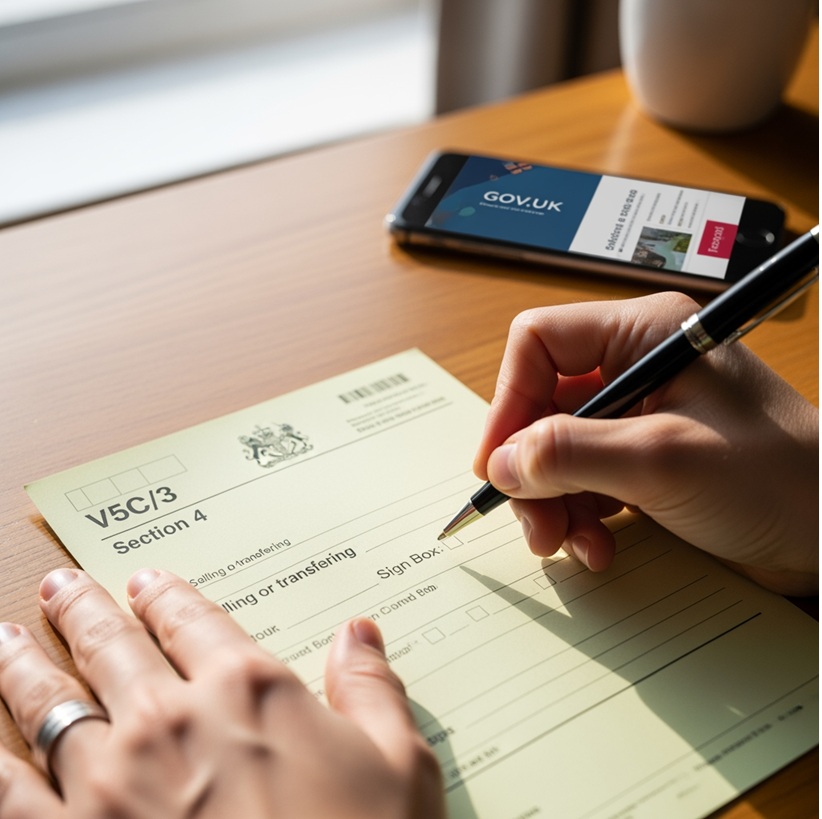
When you are sending a car to be dismantled, you only need to worry about one specific part. You need to locate the V5C/3 yellow section of the document. This specific slip is titled ‘Selling or transferring your vehicle to the motor trade, insurer or dismantler’.
You must never hand your entire logbook to the recovery driver. Some rogue operators might ask for the whole document to make their lives easier. You must firmly refuse, as you need that yellow slip to protect yourself legally.
The Postal Method Explained
The traditional way to update the database is through the post. You simply tear the V5C/3 yellow section out of the logbook. You must fill in the exact name and address of the business buying your vehicle.
You also need to fill in the exact date the transfer took place. Once the slip is completed, both you and the recovery driver need to sign it. You then place it in an envelope and post it directly to the main office in Swansea.
Always take a clear photograph of the completed slip before you put it in the post box. Mail occasionally gets lost in transit. Having a photographic record on your phone proves you filled out the paperwork correctly on the day of the collection.
The Modern Online Portal Method
While the postal method works, it is quite slow. The absolute best way to handle this is by using the official government website. It is incredibly fast, completely secure, and provides instant peace of mind.
To use the online system, you need the vehicle logbook reference number. This is the long, eleven-digit number printed clearly on the front page of your document. You simply type this number into the digital form along with your registration plate details.
The online portal operates twenty-four hours a day. You can literally complete the process on your smartphone while the recovery truck is driving away from your house. It is the most efficient way to ensure your name is instantly removed from the register.
Navigating the Digital Form
When you log into the system, it will ask for the details of the business taking your car. The recovery driver should provide you with their official company name and postcode. You simply type these details into the digital boxes provided.
The system will then ask you to confirm the exact date of the sale. Once you click the final submit button, the national database updates instantly. You will not have to wonder if a letter made it through the sorting office.
The system will immediately ask for your email address. They will send you an electronic receipt confirming the transaction was successful. You should save this email carefully, as it proves you fulfilled your legal obligations perfectly.
What to Do If You Have Lost Your Logbook
Missing paperwork is an incredibly common problem. Logbooks frequently get lost during house moves or accidentally thrown out with old utility bills. If you cannot find yours, do not panic completely.
You can still use the Scrap Car Network to arrange a completely legal collection. However, you cannot use the online portal without that eleven-digit vehicle logbook reference number. You will have to use a slightly different postal method instead.
You need to write a formal, signed letter to the main office in Swansea. You must clearly state your name, your address, and the registration number of the vehicle. You must also include the exact date of the sale and the full name of the company that took the car.
Temporary Solutions for Untaxed Vehicles
Sometimes people lose their paperwork while their car is sitting untaxed on a driveway. If you cannot arrange an immediate collection, you must protect yourself from automatic fines. You need to declare the vehicle is off the road.
This process is known as making a statutory off road notification. It legally informs the government that the car is parked on private land and will not touch a public highway. It stops the automated computers from chasing you for vehicle tax.
You can easily submit a statutory off road notification online if you have a recent tax reminder letter. This gives you vital breathing room to order a replacement logbook or arrange a legal collection without worrying about sudden financial penalties dropping through your letterbox.
Securing Your Financial Refunds
There is a brilliant financial upside to getting this paperwork right. When you successfully notify the government that the car is gone, their computers trigger an automated process. They will immediately calculate any vehicle tax you have overpaid.
If you pay your tax annually or six-monthly, you are entitled to a refund for any full months remaining. For example, if you scrap the car in the first week of October, you will be refunded for November onwards. The system calculates this automatically without you needing to fill out any extra claim forms.
The government will print a physical cheque and post it to you. This is exactly why the address on your logbook must be completely up to date. The cheque is always posted to the registered keeper’s address held on the official database.
Cancelling Your Motor Insurance Policy
Updating the government only handles your vehicle tax. You still need to deal with your private motor insurance policy. The moment the recovery truck leaves with your car, you need to ring your insurance broker.
You must explicitly tell them the vehicle has been dismantled by the motor trade. Never simply cancel your monthly direct debit at the bank. If you cancel a direct debit without telling the broker, they will mark your file as a missed payment, which severely damages your credit score.
If you paid for your insurance policy upfront for the whole year, you can usually claim a partial refund. The broker will calculate the unused months and return the funds to your account. They will likely charge a small administration fee for cancelling the contract early, but you still get a decent chunk of money back.
Dealing with Private Registration Plates
Many drivers have private, personalised registration plates. If you simply scrap the car with those plates attached, you lose the rights to that custom number forever. You must take action before the recovery truck ever arrives.
You need to apply to put the registration number on a government retention document. This process costs a flat fee of eighty pounds. You can easily do this through the official government website.
Once the retention is approved, the government will assign a standard, age-related registration plate back to your old car. You must wait for the replacement logbook showing this new standard registration before you arrange the final collection.
The Physical Plate Removal
Once your retention is fully approved, you need to grab a screwdriver. You must physically remove your custom acrylic plates from the front and rear bumpers. The old screws are usually incredibly rusty, so a quick spray of penetrating oil helps massively.
If the car is parked on a public road, you must legally attach the new standard plates immediately. If it is parked on your private driveway waiting for the collection truck, you can simply leave the bumpers bare. When you arrange to scrap my car online, the driver will verify the chassis number matches the new paperwork anyway.
The facility will eventually crush the vehicle shell. Any acrylic plates left attached are simply shattered and recycled alongside the dashboard plastics. Keep your custom plates safe in your garage until you buy your next vehicle.
Recognising Genuine Treatment Facilities
The entire notification process relies on you handing the vehicle to a legitimate business. You cannot just fill out the V5C/3 yellow section with the name of a random bloke from social media. The government expects the vehicle to go to an Authorised Treatment Facility.
These are highly regulated, environmentally secure dismantling yards. If you hand your car to an unlicensed waste carrier, they will likely strip the engine and dump the empty shell. When the local council finds that dumped shell, they will check the chassis number and come straight to your front door.
When it comes to getting rid of cars, using trusted, fully vetted partners guarantees your car goes to a legal facility. These legitimate businesses have direct digital links to the national database. They follow the strict environmental rules for draining toxic fluids and recycling heavy metals.
Receiving Your Legal Proof
When a certified facility finishes dismantling your car, they generate a final, highly specific document. This is known as a Certificate of Destruction. Only heavily regulated facilities have the authority to generate this paperwork.
You should expect to receive an official confirmation letter or email containing this certificate within seven days. This document is the ultimate proof that the vehicle has been crushed and recycled. It completely protects you if the old registration plates are ever cloned and used illegally.
Keep this official confirmation letter safe in your files alongside your digital receipt from the online portal. Together, these documents prove beyond any doubt that you followed every single legal requirement perfectly.
Final Checklist Before the Truck Arrives
The day of the collection can feel a bit rushed, so being prepared is essential. Before the driver pulls up, you need to clear the car out completely. Check the glovebox, the door bins, and the boot for any personal items.
Once the car is loaded onto the truck, it is gone for good. Remove your house keys from the car keyring. Take out your sunglasses, your emergency jump leads, and any loose change hiding in the centre console.
Finally, have your paperwork ready by the front door. Tear out the appropriate yellow slip, but do not sign it until the driver arrives and provides their official company details. Having everything organised makes the whole driveway handover incredibly smooth and stress-free.
Ready to Book Your Legal Disposal
Updating the national database is incredibly simple when you know the exact steps to follow. You simply grab your paperwork, log onto the official website, type in your reference numbers, and watch the tax refund roll in.
It is a completely straightforward process that protects you from automatic fines and legal headaches. If you are tired of looking at that old motor, it is time to take action. The advantages of choosing our service include completely transparent quotes and guaranteed legal processing.
We connect you with trusted local buyers who will help you sort the paperwork right there on the driveway. If you are finally ready to recycle my car the right way, the network is ready to help. If you have any further questions about the paperwork or the collection process, feel free to contact us today for friendly, professional advice.