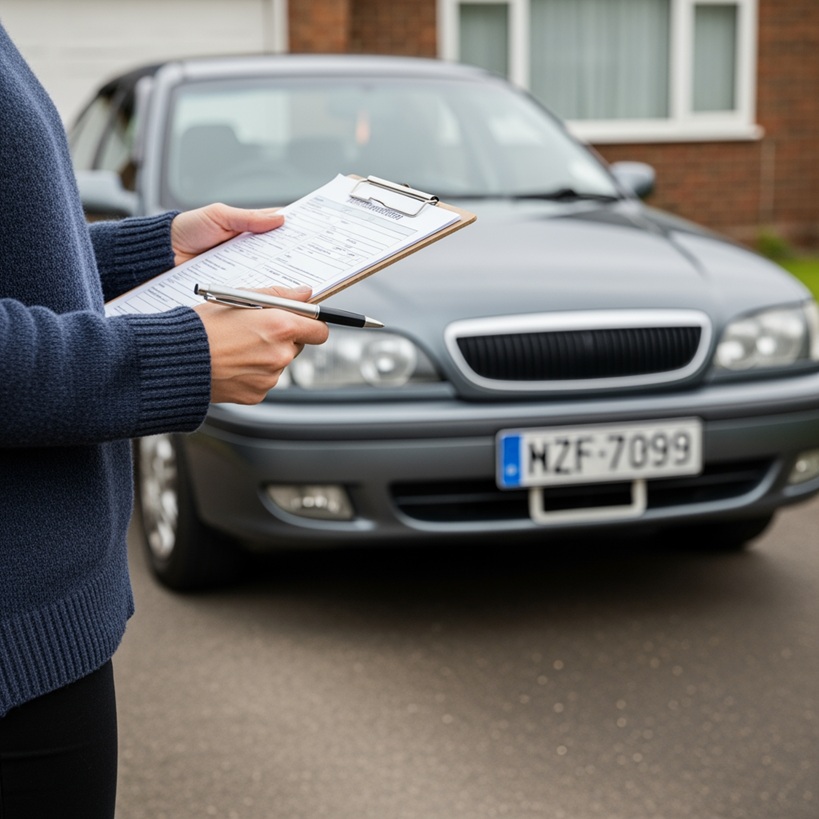
How to Keep Your Private Number Plate When Scrapping Your Car
7th Apr, 2026
A personalised number plate can be genuinely valuable, both financially and sentimentally. Scrapping the vehicle it’s currently assigned to doesn’t have to mean losing the plate permanently, but the process to keep a private number plate before scrapping must be completed in the correct sequence. Get the timing wrong, and the plate disappears with the vehicle record when the ATF notifies the DVLA.
Here’s exactly how the DVLA retention certificate number plate system works, what the V317 form number plate retention process involves, what the number plate assignment fee DVLA structure looks like, and how to complete the whole thing without losing a plate that may have taken years to track down.
Why the Timing of Retention Matters
The most important thing to understand before doing anything else is that the retention process must be completed and confirmed before the vehicle is handed to the ATF for scrapping. This is not a step that can be done retrospectively.
What Happens to a Number Plate When a Car Is Scrapped
When a vehicle is scrapped at a licensed ATF, the facility notifies the DVLA that the vehicle has been processed. This notification formally closes the vehicle record, and the registration mark associated with it is withdrawn from circulation. Once this happens, a private plate that was still assigned to the vehicle at the time of scrapping is gone. The DVLA has no mechanism for recovering a registration mark after a vehicle has been formally deregistered through the scrap process.
The window that matters is the period between completing the V317 form number plate retention application and the point at which the ATF submits its DVLA notification. Everything must be confirmed on the retention side before the scrap side begins.
The Two Routes Available to Private Plate Owners
There are two ways to protect a private plate before scrapping. The first is applying for a DVLA retention certificate number plate, which instructs the DVLA to hold the registration mark on behalf of the keeper for up to ten years, during which it can be assigned to any eligible vehicle. The second is direct assignment, which transfers the plate straight to another vehicle without going through the certificate route.
Scrap Car Network handles collections that follow the retention process regularly and can work around confirmed retention timelines when scheduling a collection.
Understanding the DVLA Retention Process
The retention route is the more flexible of the two options and suits owners who haven’t yet decided which vehicle to assign the plate to next.
DVLA Retention Certificate Number Plate: What It Is
A DVLA retention certificate number plate document is the formal record that the DVLA holds a specific registration mark on the keeper’s behalf. It grants the holder the right to assign that mark to an eligible vehicle within a ten-year window from the date of issue.
The DVLA retention certificate number plate is a transferable document. This means it can be sold alongside the plate itself, which is relevant for owners who may want to pass the plate on to someone else rather than assign it to their own vehicle. The document effectively separates the plate from any physical vehicle, allowing it to exist independently within the DVLA’s system.
What the Retention Process Suspends
While the plate is held under a DVLA retention certificate number plate, it cannot be displayed on any vehicle. The plate is in legal limbo: it exists in the DVLA system but is not currently assigned to any registered vehicle. Displaying a plate that is held on retention is an offence under vehicle registration regulations.
Owners in London and across the UK arranging collections after retention should also be aware that the donor vehicle will receive an age-related replacement registration from the DVLA while the private plate is held in the system.
Personalised Number Plate Transfer UK: Assigning Directly to Another Vehicle
The direct assignment route removes the need for a retention certificate and is worth considering for owners who already know exactly which vehicle the plate is going to next.
When Direct Assignment Makes More Sense
Personalised number plate transfer UK via direct assignment makes the most sense when the recipient vehicle is already owned, already taxed, and already in the keeper’s name. The process assigns the plate directly to the recipient vehicle in a single transaction, avoiding the intermediate step of a retention certificate and the associated waiting period.
Personalised number plate transfer UK via direct assignment also avoids the retention fee, which applies whenever a plate is moved onto a retention certificate. Owners with a clear recipient vehicle ready to go may find this route simpler and more cost-effective.
Age-Related Restrictions in Personalised Number Plate Transfer UK
Personalised number plate transfer UK applications are subject to an important age restriction rule. A registration mark cannot be assigned to a vehicle if doing so would make the vehicle appear newer than it actually is. A current-style plate from 2020, for example, cannot be assigned to a vehicle first registered in 2010, because this would misrepresent the vehicle’s age.
The DVLA applies this eligibility check automatically during the personalised number plate transfer UK application process. Plates can generally be assigned from newer to older vehicles but not the other way around, and this rule applies regardless of which application route is used.
How to Complete the V317 Form Number Plate Retention Application
The V317 form number plate retention application is the document that initiates the retention process with the DVLA. It can be submitted online or by post, and the processing time differs meaningfully between the two routes. Owners in Scotland and across the UK use the same DVLA process regardless of where the vehicle is registered.
V317 Form Number Plate Retention: Step by Step
The V317 form number plate retention application requires the following information: the registration mark to be retained, the V5C reference number of the donor vehicle, the keeper’s personal details, and the payment details for the retention fee. The V5C itself must be submitted alongside the form for postal applications.
For the online route, the V317 form number plate retention process is completed through the GOV.UK vehicle management service using the V5C reference number and the registration mark. Online applications are processed faster and confirmation is typically received within a few working days.
What Happens After Submission
Once the V317 form number plate retention application is processed, the DVLA issues a retention certificate to the keeper and a replacement V5C for the donor vehicle showing its new age-related registration. The donor vehicle must not be scrapped until confirmation of this process is received. The replacement V5C is the document the ATF will need when processing the vehicle for scrap.
Number Plate Assignment Fee DVLA: What to Budget For
The number plate assignment fee DVLA charges apply at different stages of the retention and assignment process. Understanding the fee structure before starting prevents unexpected costs.
The Current Fee Structure
The number plate assignment fee DVLA for moving a plate to a retention certificate is currently £80. Assigning a retained plate to a new vehicle attracts a further £80 number plate assignment fee DVLA at the point of assignment. For a direct transfer without a retention certificate, the single assignment fee of £80 covers the entire transaction.
These fees are subject to change, and confirming the current number plate assignment fee DVLA on the GOV.UK website before submitting any application is advisable. The DVLA website provides a real-time fee schedule alongside the application forms.
Tax Refunds and Timing Considerations
When the donor vehicle is eventually scrapped, any unused road tax is automatically refunded by the DVLA for all complete calendar months remaining at the time of scrapping. This refund is issued to the registered keeper without any action being required. Owners who are considering when to renew road tax before scrapping should factor this into the timing of both the retention application and the collection booking.
Common Mistakes That Result in Losing the Plate
The retention process is straightforward, but the consequences of getting the sequence wrong are permanent. The most avoidable mistakes come down to timing and incomplete paperwork.
Scrapping Before the Retention Is Confirmed
This is the single most common cause of permanent private plate loss and the mistake that cannot be undone once it has occurred. If the vehicle is collected for scrap before the DVLA has confirmed the retention application and issued the replacement V5C, the ATF notifies the DVLA under the original registration mark. That mark is then closed with the vehicle record, and the plate is lost.
An owner who arranged a scrap collection while a V317 form number plate retention application was still being processed by the DVLA discovered this the hard way. The collection went ahead, the vehicle record was closed, and the retention application was subsequently rejected because the registration no longer existed. Waiting for written confirmation before booking the collection would have prevented the entire situation.
Other Errors That Delay or Invalidate Retention
A missing V5C is the second most common complication in the retention process. Without the logbook, a DVLA retention certificate number plate application cannot be submitted in the normal way. A replacement V5C must be obtained from the DVLA before the retention process can begin, which adds time to the overall timeline. Owners in North London and elsewhere should address missing documentation before booking anything.
Completing the Scrap After Retention Is Confirmed
Once the DVLA has confirmed the retention and the replacement V5C for the donor vehicle has been received, the scrap collection can proceed as normal. Owners in Newcastle and across the UK can proceed to book collection as soon as written confirmation is in hand.
Booking the Collection After Plate Retention
With the retention confirmed and the replacement V5C received, the scrap collection is booked and completed in exactly the same way as any other vehicle. The collection team works from the replacement age-related registration shown on the replacement V5C, not the original private plate. The private plate at this point is held safely in the DVLA system, entirely separate from the donor vehicle’s fate.
Owners in Preston and across the UK can arrange their post-retention scrap collection with confidence once all DVLA paperwork is confirmed and in hand.
What the ATF Needs to Know
The ATF processes the donor vehicle under its replacement age-related registration and issues the Certificate of Destruction accordingly. The Certificate of Destruction formally ends the keeper’s legal responsibility for the donor vehicle. The retained private plate continues to exist separately, ready to be assigned to an eligible vehicle whenever the keeper is ready to proceed.
Conclusion
The process to keep a private number plate before scrapping is entirely manageable when completed in the correct sequence. Apply for the DVLA retention certificate number plate or initiate the personalised number plate transfer UK process first, wait for written confirmation and the replacement V5C, factor in the number plate assignment fee DVLA costs, and only then arrange the scrap collection. Getting the V317 form number plate retention application submitted and confirmed before the ATF is involved is the one step that cannot be skipped.
For guidance on arranging a collection that works around a confirmed retention timeline, contact us and we’ll make sure the timing works correctly.