How Scrap Car Exports Affect the UK Economy
6th Mar, 2026
Scrapping a car might seem like a simple transaction to clear space on the driveway. Yet those end-of-life vehicles form part of a massive global trade that’s quietly shaping Britain’s economic landscape.
The automotive scrap industry has transformed from small-scale local operations into a multi-billion pound sector. What began as scrapyards selling occasional metal loads has evolved into a sophisticated network affecting everything from regional employment to the British trade balance.
The numbers reveal significant impact. Britain exports hundreds of thousands of tonnes of automotive scrap annually, generating substantial revenue and supporting thousands of jobs nationwide. When vehicle owners hand over their keys to Scrap Car Network, they’re contributing to an economic engine that reaches far beyond our shores.
The Scale of Britain’s Scrap Metal Trade
The UK’s scrap metal exports were worth over £3.5 billion in 2022 according to HM Revenue and Customs data. Automotive materials form a substantial chunk of this figure. That’s serious money flowing directly into the British economy.
Scrap car exports specifically contribute hundreds of millions to this total. Every crushed vehicle, every salvaged engine block, every tonne of steel leaving our ports represents value extracted from what many consider worthless junk.
The automotive recycling sector processes roughly 1.5 million vehicles annually in the UK. While not all this material heads overseas, a significant portion finds its way to international markets where demand for recycled metals remains strong.
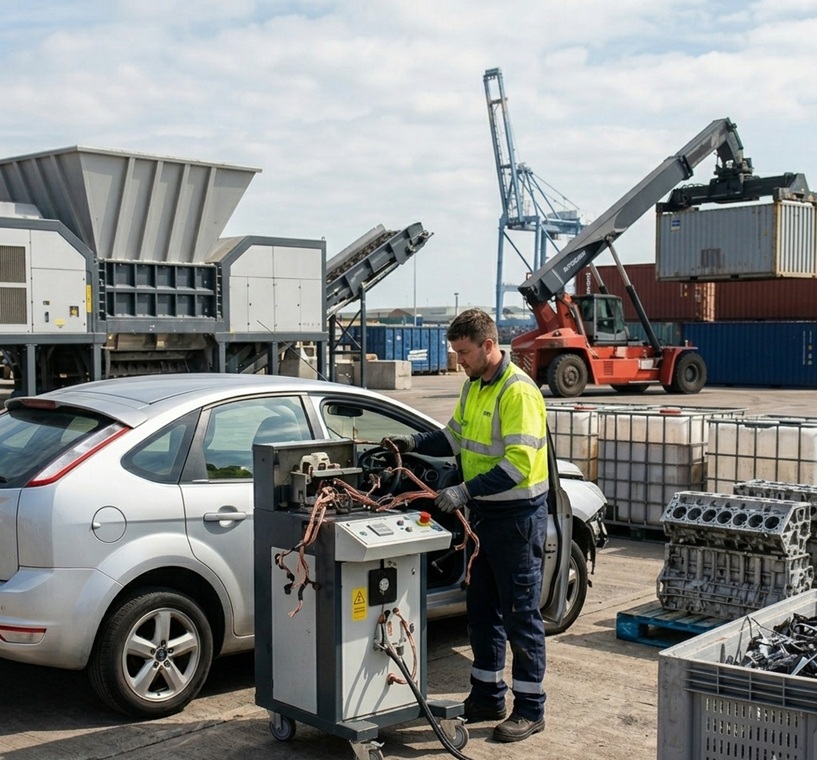
Your old Ford Focus doesn’t simply disappear at end of life. It gets broken down into constituent parts – steel, aluminium, copper, plastics – and these materials often embark on international journeys spanning thousands of miles.
Where Britain’s Automotive Scrap Goes
The destination map for UK automotive scrap exports reads like a geography lesson. Turkey has historically been one of Britain’s biggest customers, with their steel mills requiring the high-quality ferrous metals that British vehicles provide. They need raw materials for their growing manufacturing sector, and the UK has plenty to offer.
European neighbours also feature prominently as export destinations. Countries like Belgium, Netherlands, and Germany process significant quantities of British automotive scrap through their advanced recycling facilities. It’s a neat arrangement keeping materials circulating within relatively short supply chains.
Asian markets, particularly India and Pakistan, have emerged as major destinations for certain types of automotive scrap. The shipping costs might seem prohibitive, but demand is strong enough to make economic sense.
A local ATF dealer recently sent a container load of engine blocks to Bangladesh. Thirty years ago, those blocks would’ve been melted down in Sheffield. Now it’s more profitable sending them halfway round the world.
Employment and Regional Economic Impact
The ripple effects of scrap car exports UK economy dynamics extend well beyond the ports where containers get loaded. Across Britain, thousands of people owe their livelihoods to this trade, often in areas where traditional industries have declined.
Authorised Treatment Facilities employ skilled workers who specialise in vehicle dismantling and material separation. These aren’t minimum-wage positions either. Experienced dismantlers who understand how to maximise value from each vehicle command decent salaries.
Transport companies benefit enormously from the export trade. Consider these roles:
- Lorry drivers moving materials from collection points to processing facilities
- Crane operators loading containers at ports
- Logistics coordinators managing complex supply chains
- Warehouse staff sorting and grading materials
The port cities themselves see substantial economic benefits. Liverpool, Felixstowe, Southampton – these hubs process millions of tonnes of scrap metal annually. They generate employment for dock workers, customs officials, and countless support services.
Regional economic development agencies have recognised this potential. Areas like the West Midlands, with their automotive heritage, have actively supported scrap metal processing facilities as part of their industrial strategy. It maintains relevance in the global automotive supply chain, even as traditional manufacturing has shifted elsewhere.
Currency and Trade Balance Effects
Every tonne of automotive material Britain exports helps the British trade balance. In an economy importing far more manufactured goods than it exports, these raw material sales provide valuable counterbalance.
The scrap car exports UK economy relationship contributes to what economists call “invisible earnings” – income that doesn’t involve finished products but still brings foreign currency into the UK. When Turkish steel mills pay for British automotive scrap, those euros or dollars eventually make their way into the UK banking system.
Currency fluctuations can have dramatic effects on the industry’s profitability. A weak pound makes British scrap more attractive to overseas buyers, potentially driving up domestic scrap values. Conversely, a strong pound can price UK materials out of competitive international markets.
This dynamic plays out in real-time across the sector. During periods when sterling weakens, scrap dealers compete intensely for end-of-life vehicles. When the pound strengthens, some operators struggle to maintain margins as international demand softens.
Think of it like a seesaw – when the pound drops, British scrap becomes the bargain bin special that overseas buyers can’t resist. When it rises, suddenly our materials are the premium option they can buy elsewhere for less.
Technology and Value-Added Processing
The sophistication of modern automotive recycling has transformed the economic equation around exports. Gone are the days when vehicles were simply crushed and shipped as mixed metal. Today’s operations extract maximum value through careful separation and processing.
Advanced shredding facilities can separate different metal grades with remarkable precision:
- Aluminium from engine blocks commands premium prices compared to basic steel bodywork
- Copper from wiring harnesses is worth significantly more per kilogram
- High-grade steel from structural components fetches better rates than body panels
- Catalytic converters contain precious metals worth extracting separately
Some UK facilities have invested in technology producing “shredded automotive scrap” – a consistent, high-quality product meeting international specifications. This value-added processing means higher export prices and better margins for British operators.
The plastic recovery side has also evolved dramatically. Modern vehicles contain substantial amounts of valuable polymers that can be recycled into new products. While much processing happens domestically, some specialist plastic grades find their way into export markets.
But what actually happens to your car after collection? The journey from driveway to overseas steel mill involves multiple stages of processing, each adding economic value along the way.
Environmental Regulations and Competitive Advantage
Britain’s strict environmental standards have created an unexpected competitive advantage in global scrap markets. The End of Life Vehicles Directive requires proper treatment of hazardous materials and high recovery rates for recyclable components.
While these regulations add costs for domestic operators, they ensure that British automotive scrap meets quality standards demanded by environmentally conscious overseas buyers. European steel mills, particularly, prefer materials properly processed according to EU standards.
The certification systems that UK facilities must maintain provide assurance to international buyers about material quality and environmental compliance. This reputation for reliability commands premium prices in export markets.
Climate change policies are also reshaping export economics. Carbon pricing mechanisms make recycled materials increasingly attractive compared to virgin metal production, which is highly energy-intensive. Steel produced from scrap uses roughly 75% less energy than steel made from iron ore.
Market Volatility and Economic Cycles
Global metal prices can swing dramatically based on everything from Chinese infrastructure spending to geopolitical tensions in major producing regions. The scrap car exports market reflects these broader commodity cycles, but with interesting twists.
During economic downturns, people tend to keep older vehicles longer, reducing the supply of end-of-life cars. Simultaneously, demand from steel mills might soften as construction and manufacturing activity declines. It’s like trying to sell umbrellas during a drought – low supply meeting even lower demand.
Conversely, economic booms can create perfect storm conditions. Scrap supplies increase as people buy new cars, just as industrial demand peaks. These periods can be highly profitable for everyone in the supply chain.
Brexit has added another layer of complexity to these market dynamics. Changes in trading relationships and customs procedures have affected the ease and cost of exporting to EU markets, forcing some operators to explore new destination countries.
Innovation in Collection and Processing
The digitalisation of the automotive recycling industry has created new economic opportunities within the scrap car exports UK economy framework. Online platforms now connect vehicle owners directly with collection services, reducing transaction costs and improving efficiency.
GPS tracking and route optimisation help collection vehicles maximise efficiency, reducing fuel costs and enabling more competitive pricing. These operational improvements ultimately benefit the entire export supply chain by reducing base material costs.
Artificial intelligence is beginning to play a role in material sorting and quality assessment. Some advanced facilities use machine learning algorithms to optimise separation of different metal grades, maximising value extracted from each vehicle.
The rise of electric vehicles presents both challenges and opportunities for the export market. EV batteries contain valuable materials like lithium and cobalt, but they require specialist handling. Forward-thinking recyclers are investing in technology and expertise needed to process these components safely and profitably.
Regional Specialisation and Clusters
Different parts of the UK have developed specialisations within the automotive recycling sector, creating regional economic clusters that benefit from shared expertise and infrastructure. The West Midlands, with its automotive manufacturing heritage, hosts numerous sophisticated processing facilities.
South Wales has become a hub for metal processing and export logistics, taking advantage of its port facilities and transport links. The region’s industrial heritage provided a skilled workforce that adapted well to the evolving scrap metal industry.
Scotland’s recycling sector has developed particular expertise in handling commercial vehicles and agricultural machinery, reflecting the region’s economic mix. This specialisation has created export opportunities in niche markets where Scottish processors have competitive advantages.
These regional clusters create what economists call “agglomeration effects” – benefits arising when related businesses locate near each other. Shared suppliers, specialised labour pools, and knowledge spillovers all contribute to increased competitiveness in global markets.
Future Economic Prospects
Several trends are likely to reshape how scrap car exports affect Britain’s economic landscape. The transition to electric vehicles will fundamentally alter the composition of end-of-life automotive materials, potentially creating new high-value export opportunities.
Government policies around net-zero emissions are increasing emphasis on circular economy principles, potentially boosting demand for recycled materials both domestically and internationally. This policy environment could enhance long-term prospects for the UK’s automotive recycling sector.
Trade relationships will continue to evolve, potentially opening new markets while creating challenges in traditional destinations. The industry’s ability to adapt to these changing patterns will significantly influence its economic contribution.
Technological advancement in recycling processes may enable the UK to move further up the value chain, exporting processed materials rather than basic scrap. This value-added approach could significantly enhance the sector’s economic contribution to the British trade balance.
The growing global focus on supply chain sustainability creates opportunities for recyclers who can demonstrate environmental compliance and social responsibility. Britain’s regulatory framework positions the country well to capitalise on these trends.
The Bigger Economic Picture
When examining the complete picture, scrap car exports represent a fascinating example of how globalisation creates value from what might otherwise be waste. Every end-of-life vehicle becomes a contributor to Britain’s economic performance.
The industry demonstrates how environmental regulation and economic opportunity can align. Proper vehicle recycling not only protects the environment but creates jobs, generates export revenue, and supports supply chains across multiple sectors.
For vehicle owners, understanding these broader economic connections provides context for why scrap car values fluctuate and why proper disposal through authorised channels matters. When choosing to get in touch for collection, they’re participating in a global economic system extending far beyond their local area.
The automotive recycling sector’s contribution to the UK economy goes well beyond direct financial figures. It supports industrial capabilities, maintains employment in post-industrial regions, and helps Britain maintain relevance in global commodity markets.
As the automotive landscape continues to evolve, the economic significance of proper vehicle recycling will likely increase rather than diminish. The materials in today’s vehicles – from rare earth elements in electric motors to advanced high-strength steels in safety structures – are too valuable to waste.
Understanding these economic dynamics helps explain why professional automotive recycling services have become increasingly sophisticated and why the industry continues to attract investment despite its sometimes unglamorous image. Behind every scrapped car lies a complex web of economic relationships spanning continents and supporting thousands of livelihoods.
The next time a car transporter loaded with end-of-life vehicles passes by heading towards a processing facility, remember it’s witnessing a small part of a much larger economic story. One where Britain’s automotive past continues contributing to its economic future through the global trade in recycled materials.