How Hydrogen Vehicles Could Complicate Scrap Recycling
11th Mar, 2026
Hydrogen cars are rolling off production lines with increasing frequency, and the scrap industry faces a complex challenge. These vehicles aren’t just different from conventional cars. They’re a complete game-changer for end-of-life processing.
Scrap Car Network and other industry players are preparing for this shift, but understanding what makes hydrogen vehicles so challenging to scrap requires looking beyond the surface. The technology inside demands entirely new approaches to dismantling, safety, and materials recovery.
What Makes Hydrogen Cars Different
Hydrogen fuel cell vehicles operate on principles that bear little resemblance to conventional cars. Instead of burning petrol or storing electricity in massive battery packs, these vehicles use hydrogen gas to create electricity through a chemical reaction with oxygen. It’s chemistry on wheels.
The heart of the system is the fuel cell stack—a sophisticated assembly of precious metals, polymers, and ceramic materials. This isn’t a typical engine block that can be melted down and repurposed. Components contain platinum, palladium, and other materials worth more per gram than gold.
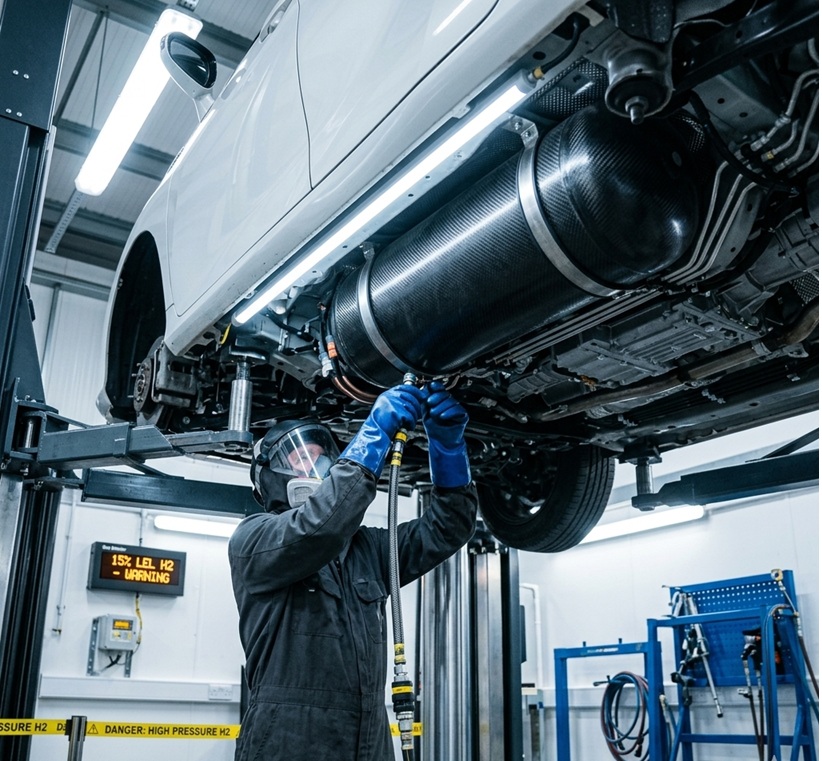
The hydrogen storage tanks are built like miniature space shuttles, designed to withstand pressures that would make a standard petrol tank look inadequate. These carbon fibre-wrapped vessels can handle 700 times atmospheric pressure. That’s serious engineering creating serious recycling headaches.
The Precious Metal Challenge
Hydrogen fuel cells make catalytic converters look like pocket change. A typical fuel cell stack contains between 10 to 100 grams of platinum group metals. A conventional car’s catalytic converter holds maybe 3-7 grams.
The platinum loading represents a significant portion of the vehicle’s value, even at end-of-life. But here’s the catch: extracting these metals safely and economically requires specialised techniques that most facilities don’t possess.
The fuel cell membranes are delicate. Precious metals are distributed throughout complex assemblies requiring careful dismantling. Recovery rates for these materials currently sit around 95% in laboratory conditions, but real-world hydrogen vehicle scrap recycling operations achieve closer to 80-85%. That gap represents both lost value and environmental impact.
Think of it like trying to recover honey from a sponge cake. The honey’s there and it’s valuable, but getting it out without destroying everything else? That’s the tricky bit.
High-Pressure Storage Systems
Those hydrogen storage tanks present a challenge that keeps facility operators vigilant. Even when a vehicle arrives for scrapping, these tanks may still contain residual hydrogen gas under significant pressure. You can’t treat them like conventional fuel tanks.
Standard depressurisation procedures simply don’t apply. Hydrogen is the smallest molecule in the universe—it leaks through materials that would contain other gases perfectly. This means specialised venting equipment and safety protocols that most current facilities lack.
The tanks themselves can’t be processed using traditional metal recycling methods. Made from carbon fibre composite materials wrapped around aluminium or polymer liners, they require entirely different handling. Current industry estimates suggest that properly processing a single hydrogen storage system adds approximately £150-200 to the cost of vehicle dismantling.
Safety Protocols That Change Everything
Hydrogen vehicles demand safety considerations that go far beyond conventional automotive recycling. Hydrogen gas is odourless, colourless, and has a much wider flammability range than petrol vapours. Miss the warning signs? There aren’t any.
Traditional scrap yards rely on cutting torches, plasma cutters, and other heat-based tools for dismantling. With hydrogen vehicles, any residual gas creates explosion risks that standard safety equipment can’t address. This means specialised training for workers and investment in hydrogen detection systems that constantly monitor for leaks.
The electrical systems in these vehicles remain energised even when the vehicle is “off.” High-voltage components can deliver lethal shocks hours after shutdown, requiring specific lockout procedures that go far beyond removing a battery terminal.
Hydrogen embrittlement presents another concern—a process where hydrogen atoms actually weaken metal structures over time. Tools and equipment used in processing may have shorter lifespans than expected, adding hidden costs to operations.
Current Infrastructure Gaps
Walk into most UK scrap yards today, and facilities are designed for conventional vehicles. The infrastructure investment required for proper fuel cell disposal is substantial—complete facility modifications, not simple equipment upgrades.
Authorised Treatment Facilities currently handling traditional vehicles face significant challenges adapting to hydrogen technology. The specialised equipment alone can cost £50,000-100,000 per facility. That’s a serious commitment for uncertain returns.
Storage requirements change dramatically too. Hydrogen vehicles awaiting processing can’t be stacked or stored using conventional methods due to ongoing safety considerations. This reduces facility capacity and increases operational costs.
Most concerning is the skills gap. Current estimates suggest fewer than 5% of automotive recycling technicians have received hydrogen safety training. Manufacturers project significant increases in hydrogen vehicle production. This represents a critical bottleneck.
The Economics Problem
A conventional car might yield £200-400 in scrap value, with processing costs of £50-100. The margins work because the process is standardised and efficient. Hydrogen vehicles flip this equation entirely.
While the precious metal content potentially increases scrap value to £800-1,200 per vehicle, processing costs jump to £300-500. The specialised handling requirements, extended processing times, and safety protocols dramatically impact profitability. It’s a bigger pie, but everyone needs a larger slice.
Insurance costs represent another hidden expense. Facilities handling hydrogen vehicles face premium increases of 20-40% due to the elevated risk profile. This cost ultimately filters through the recycling chain.
There’s also the volume question. Current hydrogen vehicle numbers remain low, making it difficult to achieve economies of scale. Facilities investing in hydrogen processing capabilities may wait years before seeing sufficient volume to justify the investment.
Environmental Benefits vs Complexity
Despite the challenges, hydrogen vehicles offer genuine environmental advantages that make solving these recycling puzzles worthwhile. The materials recovery potential is significantly higher than conventional vehicles—not just in value, but in environmental impact reduction.
Platinum group metals recovered from fuel cells can be reprocessed into new fuel cells with minimal quality degradation. This creates a genuine circular economy opportunity that doesn’t exist with most automotive components. The metals come out clean enough to go straight back in.
The carbon fibre from storage tanks, while challenging to process, can be recycled into high-value applications including aerospace and sporting goods manufacturing. Current research suggests these materials could command premium prices in secondary markets.
However, realising these environmental benefits requires coordinated industry investment in processing capabilities. Without proper infrastructure, hydrogen vehicles risk becoming an environmental liability rather than an asset. Good intentions don’t equal good outcomes without the right tools.
Regional Processing Challenges
The geographic distribution of hydrogen vehicle adoption creates additional complications. Early adoption is concentrated in urban areas with hydrogen refuelling infrastructure, but many recycling facilities are located in industrial areas outside city centres. The cars are in one place, the expertise in another.
Transportation of end-of-life hydrogen vehicles requires specialised carriers with hydrogen safety equipment. Standard car transporters used for scrap car collection may not meet safety requirements for hydrogen vehicles.
This geographic mismatch could lead to regional processing centres rather than the distributed network that serves conventional vehicles effectively. The economics of centralised processing versus local handling remain unclear, creating planning challenges for the industry.
Regulatory Framework Development
Current UK regulations for automotive recycling were developed for conventional vehicles and don’t adequately address hydrogen-specific challenges. The regulatory framework is playing catch-up with technology development. Always has, probably always will.
DVLA notification procedures for scrapped vehicles remain unchanged for hydrogen vehicles. However, the underlying processing requirements are fundamentally different. The paperwork’s the same, but everything else? Completely new territory.
Health and Safety Executive guidelines for hydrogen handling in industrial settings exist, but their application to automotive recycling creates grey areas that individual facilities must navigate independently. It’s like following a map for a different country.
The European Union is developing specific regulations for hydrogen vehicle end-of-life processing, but UK post-Brexit regulations remain in development. This regulatory uncertainty complicates investment decisions for recycling facilities.
Technology Solutions on the Horizon
Innovation in hydrogen vehicle scrap recycling is accelerating as industry players recognise the challenges ahead. Automated dismantling systems designed specifically for fuel cell vehicles are in development, promising to reduce both safety risks and processing costs.
New separation technologies for recovering precious metals from fuel cell stacks show promise for improving recovery rates while reducing environmental impact. Some processes claim to achieve 98% recovery rates in controlled conditions. Lab results don’t always translate to real-world operations, but they’re encouraging.
Mobile processing units represent another interesting development. Rather than transporting hydrogen vehicles to centralised facilities, specialised equipment could travel to vehicle locations for initial safe processing before standard recycling procedures. Bring the solution to the problem.
Training and Workforce Development
The skills gap in fuel cell disposal represents both a challenge and an opportunity. Specialised training programmes are emerging, but they require significant time and investment commitments that many workers can’t easily accommodate.
Current certification programmes for hydrogen safety take 40-80 hours to complete, compared to 8-16 hours for conventional automotive safety training. This extended training requirement impacts workforce availability and costs. It’s not a weekend course.
However, technicians with hydrogen processing skills command premium wages, making the investment worthwhile for individuals willing to develop these capabilities. Early adopters in the workforce are positioning themselves for long-term career advantages in a growing field.
Industry Collaboration Initiatives
Recognition of these challenges has sparked unprecedented collaboration within the automotive recycling industry. Manufacturers, recyclers, and technology companies are working together on solutions that seemed impossible just five years ago. Competition takes a back seat when everyone faces the same problem.
Joint research projects are developing standardised procedures for hydrogen vehicle processing, sharing costs and risks across multiple industry players. These collaborations are essential for developing economically viable solutions that individual companies couldn’t afford alone.
Some manufacturers are exploring take-back programmes for their hydrogen vehicles, maintaining responsibility for end-of-life processing. This approach could bypass many current infrastructure limitations while ensuring proper handling. It keeps control where the expertise lives.
The Role of Advanced Technology
Advanced sorting and identification systems using artificial intelligence are being developed specifically for hydrogen vehicle components. These systems identify valuable materials and optimal processing sequences more efficiently than human operators working from manuals.
Predictive maintenance algorithms help facilities optimise their hydrogen processing equipment, reducing downtime and improving safety margins. The high-value nature of hydrogen vehicle components makes these technological investments economically justified. When there’s gold in them hills, investing in better pickaxes makes sense.
Machine learning systems are also being applied to improve precious metal recovery rates, analysing processing parameters to optimise extraction efficiency continuously. The technology learns what works and gets better with each vehicle processed.
Consumer Awareness and Expectations
As hydrogen vehicles become more common, consumers need education about end-of-life considerations. Many buyers focus on environmental benefits during use but remain unaware of recycling complexities. What happens at the end matters as much as what happens in the middle.
Clear communication about proper disposal procedures becomes crucial as these vehicles age. Unlike conventional cars where any scrap dealer can handle processing, hydrogen vehicles require specialised facilities. Not every yard can take them.
Consumer expectations about scrap car prices may also need adjustment. The higher processing costs for hydrogen vehicles could impact the economics of scrapping, potentially affecting what owners receive for their end-of-life vehicles.
Looking Forward: Industry Transformation
The hydrogen vehicle revolution is forcing the entire automotive recycling industry to evolve rapidly. Facilities that adapt successfully will find themselves at the forefront of a high-value recycling sector. The early bird catches the worm, as they say.
Investment in hydrogen processing capabilities represents a significant commitment, but early movers may capture disproportionate market share as vehicle volumes increase. The question isn’t whether hydrogen vehicles will impact recycling. It’s how quickly the industry can adapt.
For services like those offered through our car recycling process, hydrogen vehicles represent both challenge and opportunity. The complexity is real, but so is the potential for creating more sustainable, valuable recycling operations.
The transformation won’t happen overnight, but it’s already begun. Facilities investing in training, equipment, and partnerships today are positioning themselves for success in tomorrow’s hydrogen economy. Those waiting for perfect solutions may find themselves left behind by an industry that’s learned to embrace complexity as the price of progress.
But what actually happens when the first wave of hydrogen vehicles reaches end-of-life in significant numbers? The industry’s about to find out. Ready or not, change is coming down the production line. The facilities that prepare now will thrive. The ones that wait? They’ll be playing catch-up for years.
The road ahead isn’t simple, but then again, the best innovations never are. Hydrogen vehicles are reshaping how we think about automotive recycling. That’s ultimately a good thing for both the industry and the environment.