How Hydrogen Vehicles Could Complicate Scrap Recycling
12th Feb, 2026
Hydrogen-powered cars are often hailed as one of the cleanest and most innovative steps towards sustainable transport. They emit only water vapour, use renewable energy, and promise to reduce reliance on fossil fuels. But while they sound ideal on the road, the end-of-life stage tells a more complex story.
As the automotive world moves towards low-emission technologies, hydrogen vehicle scrap recycling is emerging as one of the most challenging aspects of this transition. Understanding how to handle these vehicles safely and sustainably will be key to preparing the scrap and recycling industries for the future.
What Are Hydrogen Vehicles?
Hydrogen vehicles use a fuel cell to generate electricity. The system mixes hydrogen with oxygen from the air to create power, with water as the only emission. It’s a major step forward in clean energy, reducing greenhouse gases and promoting a sustainable transport system.
However, these vehicles rely on components and materials that differ significantly from those in traditional petrol and diesel models. Fuel cells, high-pressure tanks, and advanced electronic systems all require unique dismantling and disposal processes.
Key Takeaways:
- Hydrogen vehicles convert hydrogen and oxygen into electricity, emitting only water.
- They represent a cleaner alternative to fossil-fuel cars.
- Their advanced technology requires specialised handling at the end of their life.
The Challenges of Recycling Hydrogen Cars
The challenges of recycling hydrogen cars arise from their complex structure and advanced components. Unlike conventional vehicles that are mainly composed of steel, hydrogen cars use a mix of lightweight alloys, precious metals, and high-pressure containment systems.
1. Fuel Cells Containing Precious Metals
Hydrogen fuel cells contain valuable metals such as platinum and palladium, which act as catalysts. Recovering these safely requires chemical extraction and precise separation methods to avoid contamination or waste.
2. High-Pressure Hydrogen Tanks
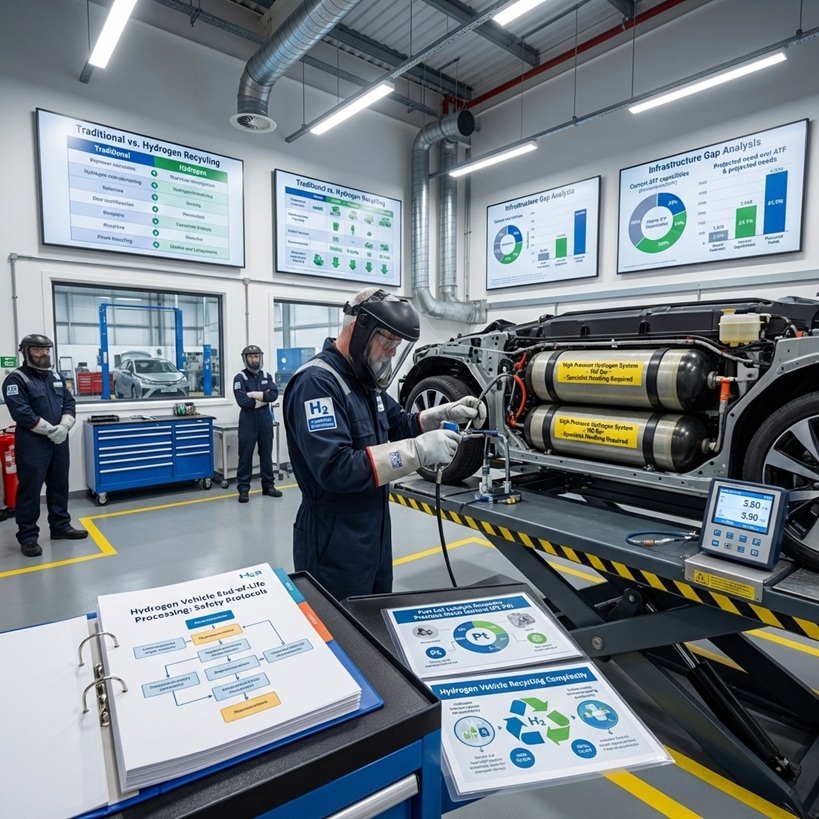
Hydrogen is stored in composite tanks designed to withstand pressures exceeding 700 bar. These tanks must be depressurised by trained technicians using specialised equipment. Incorrect handling could result in severe safety hazards, including explosions or leaks.
3. Complex Electrical Systems
Hydrogen cars share similarities with electric vehicles in their use of high-voltage systems, sensors, and control electronics. Each of these components demands careful disassembly to prevent damage or risk to workers.
Key Takeaways:
- Hydrogen fuel cells contain precious metals requiring specialist recovery.
- High-pressure tanks pose safety risks during disposal.
- Complex electronics add another layer of recycling difficulty.
Current Recycling Processes
Traditional scrap car recycling relies on well-established processes: depollution, dismantling, shredding, and metal recovery. For decades, this system has worked effectively for petrol and diesel vehicles.
However, these processes are not fully equipped for hydrogen-powered vehicles. Understanding the challenges of recycling hydrogen cars is crucial, as they involve additional steps including depressurising tanks, removing hazardous components, and isolating materials like carbon fibre composites used in storage systems.
At present, most recycling facilities lack the necessary infrastructure, training, or technology to handle these vehicles safely and efficiently. According to government guidance, Authorised Treatment Facilities (ATFs) must comply with strict environmental and safety regulations, which will need updating as hydrogen vehicles become more common.
Key Takeaways:
- Traditional recycling processes suit conventional vehicles, not hydrogen models.
- Hydrogen components require modified procedures and specialist handling.
- Upgrading ATF standards is essential for future recycling safety.
Adapting Recycling Infrastructure
Preparing for the next generation of vehicles requires strategic investment across the recycling industry. Addressing the challenges of recycling hydrogen cars early will help facilities adapt before these vehicles reach end-of-life in significant numbers.
1. Training and Certification
Staff at recycling facilities will need specialist training in hydrogen safety, including depressurisation, leak management, and safe fuel-cell dismantling. Establishing certification standards can ensure consistency and reduce risk.
2. Investment in Equipment
New machinery capable of safely draining and deconstructing high-pressure systems will become essential. Facilities may also need dedicated containment areas for hydrogen tanks and catalysts.
3. Updated Recycling Processes
Processes must evolve to recover valuable metals efficiently, while ensuring environmental safety. This includes capturing and recycling hydrogen where possible and repurposing fuel-cell materials for new uses.
Networks like Scrap Car Network already collaborate with facilities where you can connect with certified ATF partners focused on sustainable recycling practices and safety compliance.
Key Takeaways:
- Investment in training, technology, and infrastructure is critical.
- New standards will ensure hydrogen vehicles are recycled safely.
- Collaboration with certified ATFs supports compliance and efficiency.
The Future of Hydrogen Vehicle Scrap Recycling
As hydrogen adoption grows, the number of end-of-life vehicles will increase, putting pressure on recyclers to adapt. Efficient hydrogen vehicle scrap recycling will require coordinated action between manufacturers, recyclers, and government bodies.
Innovation and Research
Ongoing research aims to create more efficient methods of recovering platinum and other metals from fuel cells. Chemical and thermal recycling processes could one day reclaim these materials without reducing their purity.
Collaboration with Manufacturers
Car manufacturers can design vehicles for easier dismantling by using modular components, standardised materials, and accessible fuel-cell systems. Design-for-recycling principles are essential to improving recyclability from the start.
Policy and Regulation
Governments can support this transition through grants, tax incentives, and updated safety regulations. Incentivising early infrastructure development will prevent bottlenecks when large-scale hydrogen vehicle scrappage begins.
Drivers, too, have a part to play. When disposing of a car, they should always choose licensed recyclers. You can get your instant scrap car quote or scrap your van for top prices responsibly through the Scrap Car Network.
Key Takeaways:
- Future recycling success depends on research, design, and policy support.
- Manufacturers must prioritise recyclability in hydrogen car design.
- Incentives and collaboration will shape the next era of vehicle disposal.
Actionable Next Steps
For Recycling Businesses
- Invest early in equipment and staff training for hydrogen dismantling.
- Form partnerships with fuel-cell manufacturers to share technical knowledge.
- Work with facilities where you can find licensed scrap dealers near you.
For Policymakers
- Update national vehicle recycling regulations to cover hydrogen technology.
- Provide funding or grants to support hydrogen-specific recycling infrastructure.
- Enforce stricter safety and environmental standards for handling fuel cells.
For Consumers
- Always use licensed ATFs for scrapping hydrogen or hybrid vehicles.
- Learn our eco-friendly recycling process for advanced vehicles.
- Stay informed about sustainable disposal options via Scrap Car Network.
Key Takeaways:
- Businesses and policymakers must act proactively to prepare for hydrogen scrappage.
- Certified recyclers are essential for safe, compliant processing.
- Public awareness will drive responsible recycling choices.
Looking Ahead
The transition to hydrogen-powered transport marks an important step towards decarbonisation, but it also presents a new layer of complexity for recyclers. As these vehicles reach end-of-life, the industry must rise to the challenge of recycling hydrogen cars safely, efficiently, and sustainably.
By investing in innovation, adapting recycling systems, and collaborating across sectors, the UK can lead the way in responsible hydrogen vehicle scrap recycling. With partners like Scrap Car Network, the process of recycling tomorrow’s technology can be as clean as the vehicles themselves.
Key Takeaways:
- Hydrogen vehicle recycling presents unique safety and technical challenges.
- Investment, innovation, and collaboration will shape future readiness.
- Responsible scrappage supports a cleaner, circular automotive economy.