Cross-Border Car Recycling in Europe
26th Feb, 2026
The movement of end-of-life vehicles across European borders has become increasingly complex since Brexit, creating new challenges for both consumers and recycling facilities. What was once a straightforward process now involves additional paperwork, compliance checks, and regulatory hurdles that can catch vehicle owners off guard.
The European Union’s approach to vehicle recycling has always been thorough, but the addition of cross-border complications has made the system both more robust and more bewildering for the average car owner. Understanding these changes is essential for anyone considering vehicle disposal across international boundaries.
How European Car Recycling Works
The End-of-Life Vehicles Directive forms the backbone of cross-border car recycling Europe regulations, establishing minimum standards that all EU member states must follow. This directive requires that 95% of a vehicle’s weight must be reused or recovered, with at least 85% being reused or recycled.
Each country maintains its own network of Authorised Treatment Facilities (ATFs), but these facilities must meet EU-wide standards for:
- Environmental protection protocols
- Material recovery quotas
- Hazardous waste handling procedures
- Record-keeping and reporting requirements
When a vehicle crosses borders for recycling, it must comply with both the origin country’s export requirements and the destination country’s import and processing standards.
The paperwork trail becomes crucial here. A Certificate of Destruction issued in Germany carries the same legal weight as one issued in France, but getting that certificate recognised by the home country’s vehicle registration authority isn’t always straightforward. It’s a bit like getting a repair receipt validated – the work’s done properly, but the admin can still trip you up. Our environmentally responsible car recycling process follows these same cross-border compliance standards.
Brexit’s Impact on UK-EU Vehicle Movement
Since leaving the European Union, the UK has maintained many of the same environmental standards for vehicle recycling, but the administrative processes have become significantly more complex. British-registered vehicles can still be recycled at EU facilities, but the documentation requirements have multiplied considerably.
UK vehicles entering EU recycling facilities now require:
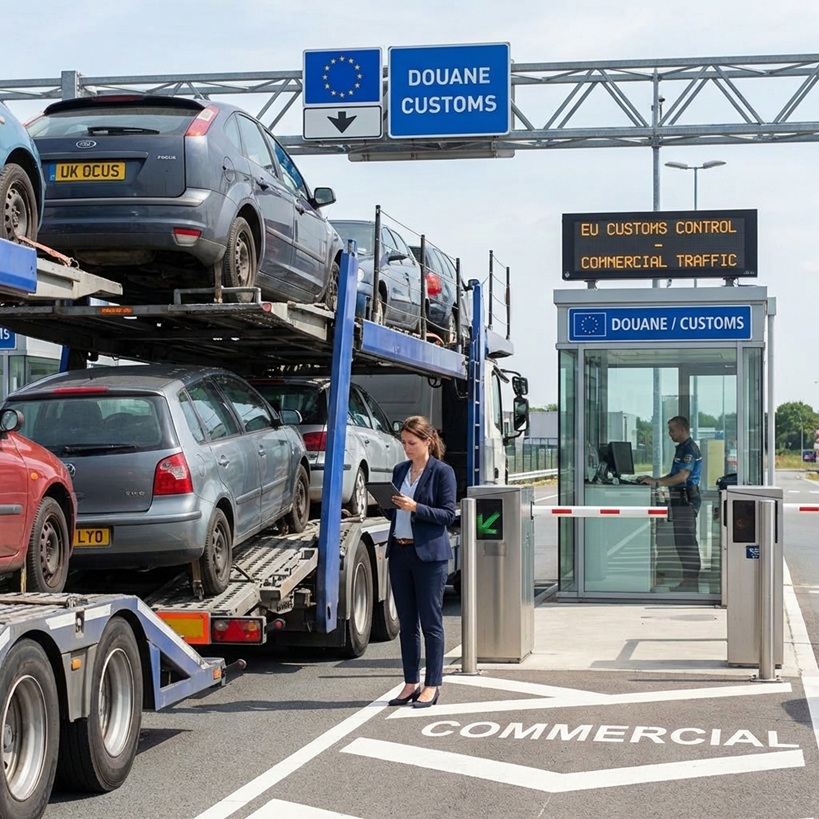
- Customs declarations for cross-border movement
- Waste shipment regulations compliance
- Third-country waste permits at receiving facilities
- Additional environmental certifications
The receiving facility must have specific permits to handle waste from third countries, which not all European ATFs possess. This creates a smaller pool of viable options.
I had a customer a few years back whose car broke down during a holiday in France. Rather than pay to ship it home for scrapping, he arranged recycling locally. Simple enough in theory. Three months later, he was still chasing paperwork between French recyclers and the DVLA. Pre-Brexit, it would’ve been sorted in a fortnight. Brexit hasn’t made it impossible, just considerably more tedious.
The reverse situation – EU vehicles being recycled in the UK – faces similar bureaucratic hurdles. Scrap Car Network has adapted to these changes by ensuring all partner facilities maintain the necessary permits and documentation systems to handle cross-border operations smoothly.
The recycling process itself remains largely unchanged, regardless of which side of the Channel handles the vehicle. Depollution, dismantling, and material recovery follow the same environmental principles that have been refined over decades.
Documentation Requirements Across Borders
Moving a vehicle for recycling between European countries requires a comprehensive paper trail that begins before the car even leaves its origin location. The V5C registration document (or equivalent national registration) must accompany the vehicle, along with:
- Proof of ownership documentation
- Detailed manifest describing vehicle condition
- Advance notification to environmental agencies (10-30 days depending on country)
- Waste transfer notes for cross-border movement
- Insurance certificates for transportation
Many countries require advance notification to their environmental agencies when receiving end-of-life vehicles from abroad. This notification period can range from 10 to 30 days, depending on the destination country’s specific requirements. Planning ahead isn’t optional – it’s mandatory.
The European Waste Catalogue code 16 01 04* applies to end-of-life vehicles containing hazardous substances, which covers virtually all modern cars due to their fluids, batteries, and electronic components. This classification triggers additional documentation requirements and handling procedures that can’t be shortcuts.
Proper documentation prevents costly delays and ensures the vehicle’s journey is tracked from collection to final processing. Missing even one form can result in the vehicle being held at borders or rejected by facilities entirely.
Environmental Standards and Compliance
EU recycling directives for vehicle recycling have become increasingly stringent, with particular focus on hazardous material handling and resource recovery rates. These standards apply regardless of where within Europe the recycling takes place, creating a unified approach to environmental protection across member states.
Depollution procedures must remove all fluids, including:
- Engine oil and transmission fluid
- Brake fluid and hydraulic systems
- Coolant and antifreeze
- Air conditioning refrigerants
Battery removal and safe disposal follows strict protocols, particularly for hybrid and electric vehicles with high-voltage systems that require specialist handling.
The WEEE Directive governs electronic component disposal, requiring separate handling of items like navigation systems, entertainment units, and engine management computers. These components often contain precious metals that can be recovered and reused in new products, turning waste into valuable resources.
Facilities must maintain detailed records of material recovery rates and provide regular reporting to environmental authorities. This transparency ensures that the ambitious EU recycling directives aren’t just numbers on paper but reflect actual environmental benefits that can be measured and verified. Our network of Authorised Treatment Facilities follows these same stringent compliance standards.
Economic Factors in Cross-Border Recycling
The economics of cross-border car recycling Europe operations depend heavily on:
- Scrap metal prices in different markets
- Transportation costs across borders
- Local processing capabilities and technology
- Labour costs in different regions
- Currency exchange rates
Some countries have developed more sophisticated recycling infrastructure, making them attractive destinations for vehicles from neighbouring nations despite additional logistics costs.
Germany and Belgium have invested heavily in advanced shredding and separation technologies, allowing them to extract more value from each vehicle. This technological advantage often justifies the additional costs of cross-border transportation and documentation when dealing with high-value vehicles. When you get an instant quote to scrap any car, these economic factors influence the valuation.
Currency fluctuations can significantly impact the economics of international vehicle recycling. A strengthening euro might make EU recycling facilities more expensive for UK vehicle owners, while a weakening pound could have the opposite effect. These shifts can happen quickly.
Regional variations in labour costs, environmental regulations, and energy prices create opportunities that experienced recycling networks can leverage. However, these economic advantages must be weighed against the administrative burden of cross-border operations and potential delays at borders.
Regional Variations in Processing
Different European regions have developed distinct approaches to vehicle recycling based on their industrial heritage and available infrastructure:
Germany and France (Automotive Heartlands):
- Sophisticated networks of specialist dismantlers
- Parts dealers evolved over generations
- Advanced technology and equipment
- High-volume processing capabilities
Scandinavian Countries:
- Advanced material separation techniques
- Pioneering plastic component recycling
- Cold climate storage advantages
- Long-term parts inventory management
Southern European Facilities:
- Warm climate vehicle specialisation
- Different corrosion pattern expertise
- Air conditioning system specialists
- Mediterranean environment adaptations
Eastern European Facilities:
- Labour-intensive dismantling operations
- Careful component removal focus
- Strong parts demand markets
- Cost-effective processing
Legal Framework Differences
While EU recycling directives provide overarching standards, individual member states have implemented these requirements through their own national legislation, creating subtle but important differences in legal frameworks. These variations become particularly relevant in cross-border recycling scenarios where two jurisdictions overlap.
Liability transfer points vary between countries – some transfer responsibility to the recycling facility upon vehicle arrival, while others maintain original owner liability until a Certificate of Destruction is issued. This difference can create legal gaps in cross-border situations that leave owners exposed.
Consumer protection laws also differ, affecting remedies available when cross-border recycling arrangements go wrong. Some countries provide stronger protection for vehicle owners, while others favour the recycling industry’s operational flexibility. Knowing which applies matters.
Court jurisdiction for disputes involving cross-border recycling can become complex, particularly when contracts don’t clearly specify which country’s laws apply. Professional recycling networks ensure our commitment to compliant processing through standardised international agreements that protect all parties.
Technology and Data Management
Modern vehicle recycling relies heavily on sophisticated data management systems that track vehicles, components, and materials throughout the recycling process. Cross-border operations require these systems to communicate across different national databases and regulatory frameworks that weren’t designed to work together seamlessly.
Vehicle identification systems must recognise and process registration formats from multiple countries, each with their own:
- Numbering schemes
- Check-digit algorithms
- Database structures
- Verification processes
Integration challenges can create delays when systems don’t communicate effectively, leaving vehicles stranded in administrative limbo.
Blockchain technology is beginning to emerge in vehicle recycling, providing immutable records of a vehicle’s journey from registration through final disposal. This technology shows particular promise for cross-border operations where trust and verification are paramount between parties in different jurisdictions.
Electronic component recycling requires specialised data destruction services to protect previous owners’ personal information. GDPR compliance adds another layer of complexity when personal data crosses European borders during the recycling process, with significant penalties for breaches.
Transportation and Logistics
Moving end-of-life vehicles across European borders requires careful coordination of transportation resources, border procedures, and facility scheduling. Professional vehicle recovery services like our free nationwide scrap car collection service have developed sophisticated logistics networks to handle these challenges efficiently without vehicles sitting idle at borders.
Multi-modal transport options include:
- Road transport – Shortest distances, most flexible
- Rail transport – Bulk movements, environmental benefits
- Shipping – Island nations and longer routes
- Combined methods – Optimised for cost and speed
Each mode has different documentation requirements and handling procedures that must be followed precisely.
Border crossing procedures vary depending on the countries involved and the specific crossing points used. Some borders have dedicated commercial vehicle facilities that expedite waste shipment processing, while others require standard customs procedures that can add hours or days to journey times.
Load securing and vehicle preparation for transport must meet international road transport regulations, particularly when carrying vehicles with residual fluids or damaged fuel systems. Safety considerations often override economic efficiency in transport planning. It’s simple – safe transport costs less than accidents.
Future Developments and Trends
The European vehicle recycling industry continues to evolve, driven by advancing technology, changing vehicle designs, and increasingly ambitious environmental targets. Electric vehicle recycling presents new challenges that will reshape cross-border car recycling Europe networks in the coming decade.
Battery recycling infrastructure is developing rapidly, with specialist facilities emerging to handle the complex chemistry of automotive lithium-ion batteries. These facilities often serve multiple countries, making cross-border battery movement increasingly common and requiring new regulatory frameworks.
Circular economy principles are driving demand for higher-quality recycled materials, requiring more sophisticated processing techniques and quality control systems. This trend favours larger, more technologically advanced facilities that can serve multiple national markets with consistent quality standards.
Digital vehicle passports are being developed to track materials and components throughout their lifecycle, potentially simplifying cross-border recycling documentation while improving material traceability. When fully implemented, these could revolutionise international vehicle movements.
Choosing Cross-Border Recycling Services
When considering cross-border recycling options, vehicle owners should prioritise facilities with proven experience in international operations and comprehensive insurance coverage. The cheapest option isn’t always the most reliable when dealing with cross-border complexities that can escalate quickly. Understanding the advantages of choosing our service helps ensure proper vehicle processing.
Verify that any proposed recycling facility holds the necessary permits for handling vehicles from the country of registration. This verification can prevent costly delays and ensure legal compliance throughout the process. Don’t assume all facilities can handle all vehicles.
Communication capabilities matter significantly in cross-border operations. Choose services that can provide clear updates in the preferred language and understand the specific requirements of the home country’s vehicle registration system. Misunderstandings cost time and money.
For those looking to understand cross-border recycling complexities, professional networks can navigate these challenges while ensuring full legal compliance and environmental responsibility. The investment in proper documentation and facility selection pays dividends.
Navigating DVLA Requirements
UK vehicle owners using European recycling facilities must still satisfy DVLA notification requirements to properly deregister their vehicles. The Certificate of Destruction from an EU facility must be submitted alongside the appropriate sections of the V5C registration document.
Processing times for cross-border certificates can be longer than domestic ones, as the DVLA may need to verify the legitimacy of foreign recycling facilities. Building in extra time for this verification prevents issues with tax and insurance liability that can arise from incomplete deregistration.
Understanding how to tell the DVLA when you scrap your car becomes even more critical in cross-border scenarios where multiple jurisdictions are involved. Missing this step can result in continued liability for a vehicle that’s already been processed.
The paperwork might seem excessive, but it protects vehicle owners from future complications and ensures proper environmental handling throughout Europe. Think of it as the final service you’re giving your old car – seeing it off properly.
The Bottom Line
The landscape of cross-border car recycling in Europe continues to evolve, balancing environmental protection with practical operational needs. Success in this environment requires understanding both the technical recycling processes and the administrative frameworks that govern international waste movements.
Brexit has undoubtedly complicated matters, but the fundamental commitment to environmental responsibility remains strong on both sides. Professional recycling networks have adapted to the new reality, developing systems and partnerships that maintain high standards whilst navigating increased bureaucracy.
Whether dealing with a breakdown abroad or simply exploring the most environmentally responsible disposal option, working with experienced professionals who understand both the opportunities and pitfalls makes all the difference. The proper handling of documentation and careful facility selection ensures vehicles complete their final journey whilst contributing positively to European environmental goals.
If you need guidance on cross-border vehicle recycling, feel free to contact us for expert advice tailored to your specific situation.