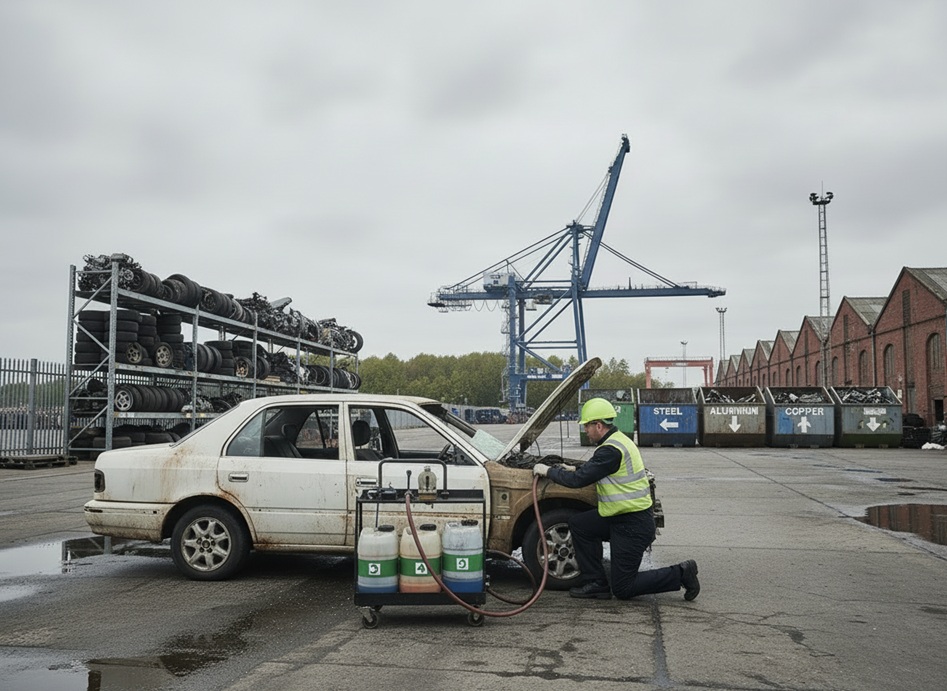
Building a Sustainable Auto Industry through Vehicle Recycling
19th Dec, 2025
The modern automotive is transforming rapidly, with sustainability becoming a defining priority. The focus has shifted from mass production towards sustainable auto industry recycling, ensuring vehicles are designed, used, and disposed of in ways that minimise environmental impact.
Vehicle recycling has become a cornerstone in building a green auto industry, where every part of a car is viewed as a resource rather than waste. Through responsible dismantling, materials recovery, and innovative reuse, the sector is reducing its carbon footprint while supporting economic and social progress.
The Urgent Need for a Sustainable Auto Industry
The automotive sector has long relied on resource-intensive production methods that generate emissions and waste. However, with global environmental concerns increasing, the need for a sustainable approach is undeniable.
A sustainable auto industry aims to reduce resource consumption, improve energy efficiency, and promote recycling and reuse at every stage of a vehicle’s life. This approach ensures that mobility can remain accessible without compromising environmental integrity.
Key takeaways:
- Traditional manufacturing creates significant environmental impacts.
- A sustainable approach reduces pollution and conserves resources.
- The goal is long-term environmental protection and energy efficiency.
To learn how the vehicle recycling process supports this mission, visit the Scrap Car Network car recycling guide.
How Vehicle Recycling Works: Step-by-Step
Modern vehicle recycling is a structured, regulated process designed to recover as much material as possible from end-of-life vehicles (ELVs). It’s not simply about crushing cars; it’s about reclaiming value.
1. Depollution
All fluids and hazardous materials, such as oil, brake fluid, and coolant, are safely removed to prevent contamination.
2. Parts Removal
Reusable components like engines, gearboxes, lights, and seats are carefully extracted and prepared for resale or refurbishment.
3. Crushing and Shredding
Once the reusable parts are removed, the car body is compacted and shredded into small fragments, ready for further processing.
4. Material Separation
Advanced magnetic and air separation systems sort the shredded materials into metal, plastic, and glass. These can then be recycled to produce new products.
This process enables over 95% of a car’s material content to be reused or recycled, making it a key contributor to sustainable auto industry recycling.
Key takeaways:
- The recycling process involves depollution, dismantling, and material separation.
- Reusable components are salvaged to extend their lifespan.
- Recovered materials are recycled to produce new products.
For a quick and simple experience, obtain an instant quote to scrap any car and contribute directly to sustainable recycling.
Environmental Benefits of Car Recycling
Car recycling offers substantial environmental advantages and plays a vital role in building a green auto industry.
Reduced Resource Extraction
Recycling reduces the need for new raw materials. This lessens mining and extraction, helping to preserve ecosystems and reduce industrial pollution.
Energy Conservation
Recycled materials require significantly less energy to process than raw materials. Producing new aluminium, for example, consumes up to 95% more energy than recycling it.
Pollution Reduction
By reusing components and materials, vehicle recycling helps cut emissions associated with manufacturing and logistics.
Waste Minimisation
Proper recycling prevents hazardous waste from entering landfills, reducing soil and water contamination.
Key takeaways:
- Recycling conserves natural resources and energy.
- The process lowers carbon emissions and reduces pollution.
- It prevents landfill waste and protects ecosystems.
Explore how Scrap Car Network’s environmentally responsible recycling process supports these environmental goals.
Economic Advantages of Scrapping a Vehicle
The benefits of vehicle recycling extend beyond environmental gains; they also support economic growth.
Financial Return
End-of-life vehicles still contain valuable materials, including steel, aluminium, and copper. Recycling these materials generates income for owners and supports the economy.
Job Creation
The recycling industry employs thousands of skilled workers across dismantling, sorting, logistics, and material processing.
Economic Sustainability
The recovery and resale of materials reduce reliance on imported resources, keeping more value within the domestic economy.
Key takeaways:
- Vehicle recycling provides a financial return to car owners.
- It supports skilled employment in the recycling sector.
- The industry stimulates economic activity and sustainability.
For more insight, read why choosing Scrap Car Network offers both financial and environmental benefits.
The Role of Government and Regulations
Strong environmental policies and regulations ensure that sustainable auto industry recycling is carried out safely and effectively.
The UK government enforces strict laws governing end-of-life vehicles under the End-of-Life Vehicles (ELV) Directive, requiring that all recycling is performed by licensed Authorised Treatment Facilities (ATFs).
ATFs are responsible for depollution, dismantling, and recycling, and are regularly inspected to maintain environmental compliance.
Key takeaways:
- Regulations ensure vehicles are recycled responsibly.
- ATFs operate under government oversight for environmental protection.
- Compliance maintains public and environmental safety.
For compliant disposal, use Scrap Car Network’s network of licensed ATFs to scrap vehicles responsibly.
Innovations in Vehicle Recycling Technologies
Innovation continues to reshape the recycling industry, helping to make processes more efficient and sustainable.
Advanced Shredding
Modern shredding systems can process materials faster and separate metals, plastics, and composites with greater precision.
Plastic Recovery
New chemical recycling techniques allow previously non-recyclable automotive plastics to be broken down and reused in manufacturing.
Battery Recycling
With the rise of electric vehicles (EVs), advanced methods for recovering lithium, cobalt, and nickel from batteries are critical for building a green auto industry.
Automation and AI
AI-driven sorting systems are now being deployed in recycling plants to improve accuracy and reduce waste.
Key takeaways:
- Technology is increasing recycling efficiency and material recovery.
- Plastic and battery recycling innovations are crucial for EV sustainability.
- Automation supports accuracy and long-term scalability.
Consumer Choices and the Circular Economy
Consumers play a vital role in creating a circular and sustainable auto industry. Every purchasing and disposal decision impacts the entire lifecycle of vehicles and materials.
When choosing a new car, opting for models made with recyclable or eco-friendly materials supports manufacturers committed to sustainability. Equally, scrapping old cars through certified services ensures materials are reused responsibly.
Responsible consumer behaviour supports the transition from a linear economy (produce–use–discard) to a circular economy, where every product is part of a continuous reuse cycle.
Key takeaways:
- Consumer choices influence the sustainability of the auto sector.
- Choosing recyclable vehicles promotes a circular economy.
- Responsible scrapping ensures materials are reused ethically.
Learn more about how to scrap your car easily and legally to contribute to this circular system.
Future Trends in Sustainable Automotive Practices
The global shift towards sustainability is reshaping how vehicles are designed, built, and recycled.
Electric Vehicle Growth
As EV adoption increases, efficient battery recycling is becoming essential to prevent waste and recover valuable metals.
Renewable Materials
Manufacturers are incorporating renewable and recycled materials, including bio-based plastics and lightweight recycled alloys, to reduce production emissions.
Modular Design
New cars are being developed with components that are easier to dismantle and recycle, improving end-of-life recoverability.
Digital Traceability
Blockchain and digital labelling are being introduced to track materials throughout a vehicle’s lifecycle, supporting transparency and recycling efficiency.
Key takeaways:
- EV battery recycling and renewable materials are key future trends.
- Modular design simplifies disassembly and reuse.
- Digital innovations improve traceability and accountability.
How Scrap Car Network Contributes to Sustainability
Scrap Car Network supports the development of a sustainable auto industry through ethical, transparent, and environmentally focused vehicle recycling.
Working exclusively with licensed Authorised Treatment Facilities (ATFs), the organisation ensures that all vehicles are depolluted, dismantled, and recycled according to UK environmental standards.
The service also provides nationwide free scrap car collection, making responsible recycling easy and accessible for everyone.
Key takeaways:
- Scrap Car Network partners with ATFs to ensure full compliance.
- The service promotes environmental protection and resource recovery.
- Convenient nationwide collection supports consumer participation.
Actionable Steps for a Greener Automotive Future
Every individual and organisation can take practical steps to support building a green auto industry:
- Choose Sustainable Vehicles: Select cars made from recyclable or renewable materials.
- Maintain and Repair: Extend the lifespan of vehicles through regular maintenance and repair.
- Recycle Responsibly: Use licensed ATFs when scrapping end-of-life vehicles.
- Support Green Policies: Encourage businesses and policymakers to prioritise sustainable manufacturing.
- Educate and Advocate: Promote awareness of sustainable automotive practices in local communities.
Key takeaways:
- Sustainable purchasing and maintenance reduce environmental impact.
- Responsible recycling closes the automotive material loop.
- Public awareness drives long-term sustainability progress.
For local recycling options, explore Scrap Car Network’s Preston service area.
Conclusion
The journey towards a sustainable auto industry is well underway, powered by innovation, regulation, and consumer responsibility. Through vehicle recycling, the industry is reducing waste, conserving resources, and cutting emissions, proving that sustainability and progress can coexist.
By embracing circular economy principles and supporting services like Scrap Car Network, individuals and businesses contribute to building a green auto industry that benefits both people and the planet.
Responsible car recycling is not just an environmental necessity; it’s a crucial step towards a cleaner, more efficient future for transportation.
Next Steps
- Get an instant quote to scrap any car
- Learn about environmentally responsible vehicle recycling
- Contact Scrap Car Network for assistance or enquiries.