Automotive Upcycling in Fashion and Design
23rd Feb, 2026
The fashion industry has discovered something car enthusiasts have known for decades. There’s genuine beauty in automotive parts that goes far beyond their original purpose. What was once destined for the scrap heap is now appearing on catwalks and in high-end boutiques worldwide.
Automotive upcycling in fashion has transformed from a niche curiosity into a legitimate design movement. It proves that one person’s scrap is truly another’s treasure. Designers are breathing new life into automotive components in ways that celebrate both craftsmanship and environmental responsibility.
The practice isn’t entirely new, but what’s changed is remarkable. The scale and sophistication of these transformations have reached new heights. Luxury handbags made from airbags command premium prices now. Jewellery crafted from gear components sells in exclusive boutiques. Furniture celebrating industrial automotive beauty graces modern homes.
Creative minds are intercepting components before they reach traditional recycling stages. These materials possess untapped aesthetic potential that standard recycling would simply process into raw materials. The transformation creates something genuinely valuable from what would otherwise disappear into industrial processes.
From Scrapyard to Runway
The automotive industry produces millions of tonnes of waste every year. When vehicles reach the end of their road-worthy life, they typically head to authorised treatment facilities. There, useful materials get systematically extracted and recycled through established processes.
But creative designers are identifying components that possess special qualities. These materials offer characteristics that conventional fashion materials simply cannot match. The difference is remarkable when you see it firsthand.
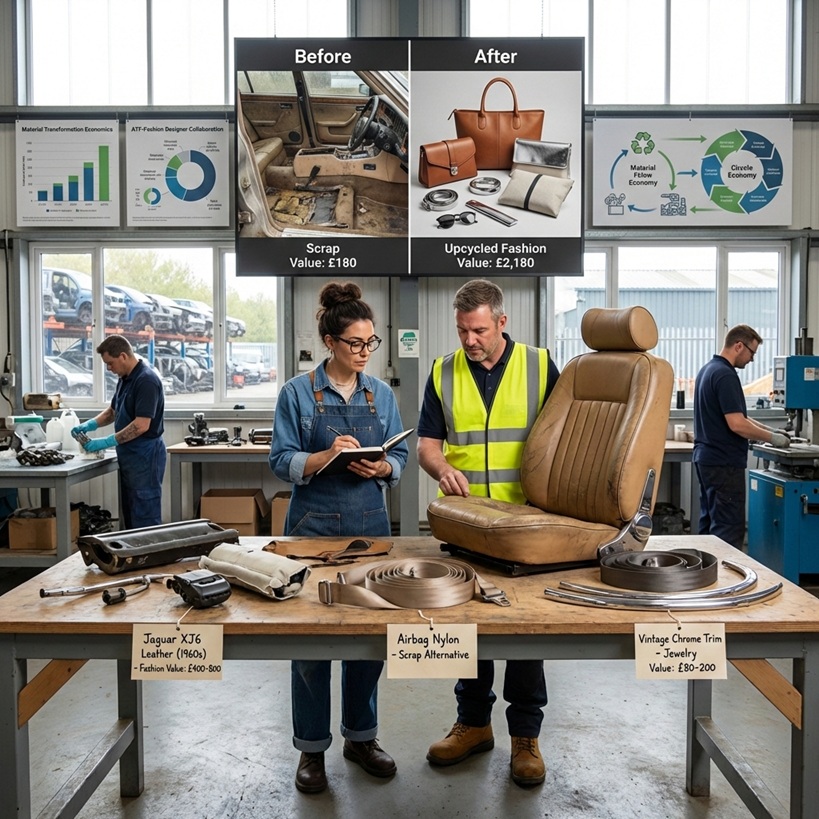
Leather car seats develop a unique patina after years of faithful service. This natural aging process is something luxury goods manufacturers spend fortunes trying to replicate artificially. These seats, with their distinctive wear patterns and quality materials, become premium leather goods. They tell stories no factory-fresh product ever could.
The car itself might be beyond economical repair completely. But those sumptuous leather seats can transform into limited-edition collections. Some sell for more than the vehicle was worth in its prime. That’s genuine value creation from automotive upcycling in fashion.
This transformation creates value from what traditional recycling would simply process. Sustainable fashion materials sourced from end-of-life vehicles offer designers something special. They get a canvas that’s already proven its durability through years of real-world use. The quality speaks for itself immediately.
Think of it like finding a perfectly aged wine barrel. You wouldn’t pulp it for generic wood chips when the aging process has created something unique. These automotive materials have developed character through use that designers recognise and value.
Materials That Make the Cut
Not every car part makes suitable fashion material, obviously. Certain automotive components possess specific qualities that fashion designers find genuinely irresistible. Others belong firmly in the recycling stream where they should stay.
Seat Belts Lead the Way
Seat belts have become particularly popular in sustainable fashion circles recently. Their exceptional durability and distinctive weaving make them perfect for multiple applications. Bags, belts, and even clothing items benefit from these properties.
The safety-focused engineering that makes them reliable in crashes translates beautifully. These materials create long-lasting fashion accessories that withstand daily wear for decades. The same strength that protects passengers protects your belongings.
Airbags Offer Unique Potential
Airbags represent another goldmine for creative designers working with automotive materials. Made from high-grade nylon, these components are built to withstand extreme forces. Once deployed and the car scrapped, these materials offer designers something special.
They get robust and surprisingly workable fabric with unique textural qualities. The material feels different from anything manufactured specifically for fashion. That distinctiveness appeals to designers seeking authentic sustainable fashion materials.
Chrome Components Shine Again
Chrome bumpers and trim pieces from vintage vehicles find remarkable new life. They become statement jewellery and accessories that command attention. The quality of chrome plating from decades past often surpasses modern alternatives significantly.
These pieces become genuinely precious materials in skilled artisans’ hands. Workers who understand how to manipulate metal components create stunning pieces. The automotive heritage adds value rather than detracting from it.
Tyres Get Second Chances
Tyres deserve mention in automotive upcycling in fashion discussions. High-end tyre rubber, particularly from performance vehicles, possesses remarkable qualities. These properties make it suitable for shoe soles, belts, and protective gear.
Something designed to grip tarmac effectively grips designers’ imaginations equally well. The durability engineered into tyres translates perfectly to fashion applications. These items last substantially longer than conventional alternatives.
Dashboard Components Provide Character
Dashboard components and instrument panels provide materials with unique characteristics. Their textures and colours reflect specific automotive eras distinctively. These pieces often feature styling that cannot be replicated through conventional manufacturing processes.
The patina and wear patterns add genuine character. This authenticity appeals strongly to consumers seeking sustainable fashion materials with real provenance. Each piece tells a visual story about its origins.
I remember working on a classic Jaguar interior years back. The walnut veneer dashboard had developed this incredible depth over decades. A furniture maker would have paid handsomely for that wood. That’s when I first understood what these designers see in automotive materials.
The Environmental Equation
The environmental benefits of automotive upcycling in fashion extend well beyond simple waste reduction. Traditional fashion manufacturing involves significant resource consumption at every stage. Chemical processing requirements add further environmental burden.
When designers work with existing automotive materials, they bypass much of this cost entirely. The impact reduction is substantial and measurable.
Traditional vs. Upcycled Production
Consider the journey of a typical leather handbag through traditional manufacturing. Production involves raising livestock specifically for leather. Hides get processed with harsh chemicals. Hardware gets manufactured from raw materials mined and refined. Transport and energy costs accumulate at every stage.
When the same bag uses leather from car seats, the equation changes dramatically. These seats were already destined for responsible vehicle disposal anyway. The automotive industry has already absorbed the environmental cost of producing these materials completely.
By diverting them into fashion applications, designers extract maximum value. They get use from resources that have already been committed. This approach creates additional use cycles before materials eventually return to recycling streams.
Circular Economy in Action
This model aligns perfectly with circular economy principles that experts champion. Instead of the traditional linear model of make-use-dispose, sustainable fashion materials from automotive sources create something better. They establish additional value cycles that benefit everyone.
The materials serve their original automotive purpose for years typically. Then they gain entirely new life as fashion items. Finally, they return to recycling streams when those items eventually wear out. Each stage extracts maximum value from the original resources.
The carbon footprint comparison proves genuinely compelling. Manufacturing new fashion materials from raw resources requires significant energy input. Repurposing existing automotive materials reduces this burden substantially. Each piece becomes a genuine contribution to environmental sustainability.
Water usage drops dramatically when designers work with existing materials. They avoid processing new fabrics or leather from scratch. The fashion industry’s water consumption remains a significant environmental concern worldwide. Any reduction in this area carries real weight and importance.
Design Challenges and Creative Solutions
Working with automotive materials presents unique challenges that traditional fashion materials don’t create. These components weren’t designed with fashion applications in mind originally. Designers must approach them creatively and thoughtfully to succeed.
Weight Considerations
Weight often poses the first significant hurdle designers face. Car parts are typically much heavier than conventional fashion materials. A handbag made entirely from car door panels would prove completely impractical for daily use.
Successful designers learn to select specific components carefully. They modify materials to achieve practical weight distributions. The goal is creating pieces that consumers can actually carry comfortably. This requires understanding both material properties and practical applications.
Flexibility Requirements
Flexibility represents another important consideration for sustainable fashion materials. Automotive materials are often engineered specifically for rigidity and durability. They’re designed for structural support, not drape and movement.
Designers must understand how to work with these inherent characteristics. Fighting against the material’s nature leads to poor results. Celebrating the material’s properties creates distinctive pieces that stand out. The rigidity becomes a design feature rather than a limitation.
Safety Concerns
Safety concerns require serious attention when working with automotive components. Some materials contain treatments that aren’t suitable for close skin contact. Responsible designers ensure proper cleaning and treatment before incorporating anything into wearable items.
This process requires expertise in both automotive and fashion safety standards. The knowledge isn’t optional for professional work. Cutting corners here creates genuine liability risks and potential health hazards.
Celebrating Origins
The most successful pieces celebrate rather than disguise their automotive origins completely. A bag that clearly shows its heritage tells a story. That narrative resonates powerfully with environmentally conscious consumers today.
They appreciate both the craftsmanship involved and the sustainability that automotive upcycling in fashion represents. Authenticity matters more than ever in modern markets. Trying to hide the materials’ origins defeats much of the purpose.
Notable Designers Leading the Movement
Several designers have built substantial reputations specifically around transforming automotive components. Their work demonstrates the commercial viability of this approach convincingly. They also push creative boundaries that inspire others to experiment.
Pioneering Brands
Swiss brand Freitag pioneered using truck tarps for bags decades ago. They proved that industrial materials could find mainstream fashion acceptance successfully. Their breakthrough paved the way for designers working specifically with passenger vehicle components.
The brand’s distinctive aesthetic made repurposed materials genuinely desirable. They weren’t just acceptable alternatives anymore. They became sought-after products in their own right. That shift changed everything for sustainable fashion materials.
Elvis & Kresse transformed fire hoses into luxury goods brilliantly. They demonstrated that industrial materials could command premium prices when properly executed. Their approach to material sourcing and design execution set standards. Other designers now follow those established best practices closely.
The brand proves conclusively that sustainability and luxury aren’t mutually exclusive. Done properly, they enhance each other significantly. This lesson applies directly to automotive upcycling in fashion.
Boutique Artisans
Smaller artisans and boutique designers often specialise in one-off pieces. They showcase particular vehicles or automotive eras through their work. These designers frequently work directly with scrap dealers and Authorised Treatment Facilities.
This direct sourcing ensures access to quality components before standard recycling processes begin. Building these relationships takes time but proves invaluable. The connections provide steady material supplies that maintain consistent quality.
Keys to Success
The key to success lies in understanding both worlds completely. Designers need expertise in automotive materials and fashion requirements simultaneously. Simply attaching straps to a car part doesn’t create a viable bag.
Successful pieces require genuine design thinking throughout. They must respect both the material’s origins and its new purpose. This balance separates professional work from amateur attempts clearly. Quality shows in the finished products immediately.
Market Response and Consumer Appeal
Consumer response to sustainable fashion materials from automotive sources has surprised many industry observers. The reception has been remarkably positive, particularly among specific demographics. These groups value sustainability and unique design highly.
Premium Pricing Acceptance
These pieces often command premium prices without resistance. The pricing reflects both limited availability and required craftsmanship. Transforming industrial materials into fashion items demands real skill. Consumers understand and accept this value proposition.
The storytelling aspect cannot be understated in modern marketing. When someone carries a bag made from a classic car’s interior, they carry history. They own a genuine piece of automotive heritage. This narrative element adds value that purely functional considerations cannot match.
Collector Markets
Collectors particularly appreciate pieces traceable to specific vehicles or automotive eras. A jacket made from seats of a particular model year becomes collectible. These items can appreciate in value substantially over time. The intersection of automotive and fashion collecting creates a unique market segment.
Durability Appeal
The durability factor appeals strongly to consumers tired of disposable fashion. Automotive materials are engineered for longevity under genuinely harsh conditions. Fashion pieces made from them often outlast conventional alternatives by years. This longevity justifies premium pricing whilst reducing long-term environmental impact simultaneously.
Younger consumers especially value the sustainability credentials these pieces carry. They understand that automotive upcycling in fashion represents genuine solutions. It’s not mere greenwashing or empty marketing claims. The authenticity resonates powerfully with buyers who scrutinise brands’ environmental statements carefully.
Technical Transformation Considerations
Successfully transforming automotive components into fashion requires specialised knowledge. Designers need understanding of both materials science and traditional craftsmanship techniques. Different automotive materials respond to different treatments and modification approaches.
Leather Preparation
Leather preparation involves removing automotive-specific treatments and conditioners carefully. The process must preserve the material’s desirable character simultaneously. This requires expertise in both automotive and fashion leather working techniques specifically.
The material must become supple enough for fashion applications. Yet it must retain the durability that made it valuable originally. Achieving this balance requires skill and experience working with sustainable fashion materials.
Metal Component Finishing
Metal components need careful consideration regarding finishing and safety. Sharp edges must be addressed properly before use. Surface treatments may require modification for safe skin contact. Polishing, coating, and edge treatment all play crucial roles. These steps make metal automotive parts wearable and safe.
Synthetic Material Challenges
Synthetic materials from automotive applications often possess different properties. They vary from fashion industry synthetics in important ways. Understanding these differences helps designers work effectively. They can work with material characteristics rather than fighting against them.
Temperature sensitivity, UV resistance, and chemical composition all vary. These factors differ from conventional fashion fabrics significantly. Designers must learn these properties through experience and testing.
Essential Cleaning Steps
Cleaning and sanitisation represent absolutely crucial steps. Components from end-of-life vehicles require thorough treatment. This ensures safety and hygiene standards get met consistently. The process cannot be rushed or skipped without compromising product safety. Professional standards demand proper attention to these fundamentals.
Economic Impact on Recycling
The growing sustainable fashion materials movement creates new revenue streams. These opportunities benefit the car scrapping industry in unexpected ways. Components that previously held only scrap metal value now command premiums. Their aesthetic and design potential creates additional value.
This shift changes how facilities approach vehicle processing fundamentally. There’s new incentive to handle certain components more carefully. When interior parts might have fashion applications, careful removal makes economic sense. The additional labour investment pays dividends at fashion industry prices.
Some forward-thinking operators have begun partnerships with designers and artists. They create dedicated streams for materials with upcycling potential specifically. This approach maximises value extraction from end-of-life vehicles. It supports creative industries simultaneously whilst benefiting everyone involved.
The economic benefits extend well beyond immediate material sales. Automotive upcycling creates employment in design, craftsmanship, and retail sectors. It reduces waste management costs for the broader automotive industry. Local opportunities emerge for designers and recycling facilities to collaborate productively.
Those interested in vehicle disposal can explore end-of-life options to understand how materials from recycled vehicles contribute to circular economy initiatives.
Future Trends and Innovations
The automotive upcycling movement shows no signs of slowing down currently. Increasing environmental awareness continues growing globally. Appreciation for genuine craftsmanship expands steadily. What started as experimental design work is becoming an established industry segment.
Technology Integration
Technology integration represents one genuinely exciting emerging trend. Designers are beginning to incorporate automotive electronic components into fashion pieces. These creations blend traditional craftsmanship with modern functionality remarkably. Imagine bags with integrated lighting systems using repurposed automotive LEDs. Consider jackets featuring heating elements from heated car seats.
Collaborative Design
Collaborative design between automotive manufacturers and fashion designers may become more common. Some manufacturers are already considering end-of-life design principles proactively. They’re making components more suitable for upcycling applications from the start. This forward-thinking approach benefits both industries substantially.
Scale Expansion
Scale expansion seems likely as techniques become more refined. Consumer acceptance grows steadily year by year. What began as artisanal one-off pieces may evolve into larger production runs. The challenge will be maintaining quality and uniqueness whilst increasing volume significantly.
Education and training programmes are emerging to teach proper techniques. These courses help designers work safely and effectively with automotive materials. They ensure quality and safety standards get maintained consistently. Universities and design schools are beginning to offer specialised courses now.
Vehicle owners considering recycling can arrange vehicle collection knowing their vehicles’ materials may contribute to sustainable fashion initiatives.
Getting Started Practically
For those interested in exploring sustainable fashion materials from automotive sources, practical considerations guide initial steps. Understanding the process helps set realistic expectations from the beginning.
Material Sourcing Relationships
Material sourcing requires building relationships with local operators and automotive recyclers. Many facilities welcome working with designers genuinely. This collaboration adds value to materials that would otherwise be processed as scrap. These relationships take time to develop but prove invaluable long-term.
Safety First Always
Safety equipment and knowledge are absolutely essential when working with automotive materials. Proper ventilation protects respiratory health. Protective equipment prevents injuries and exposure. Understanding material safety data sheets ensures safe working conditions. Don’t skip this step ever. Automotive components may contain substances requiring special handling procedures.
Skill Development
Skill development benefits from combining traditional training with automotive knowledge. Understanding how different car components are constructed informs design decisions. It guides modification approaches effectively. Consider courses in both fashion design and basic automotive mechanics.
Market Understanding
Market research helps identify consumer preferences and realistic price points. Understanding target markets guides material selection and design decisions strategically. What works in one market segment might not appeal to another. This knowledge prevents wasted effort and resources.
Drivers interested in responsible disposal can connect with certified facilities that handle materials properly and support circular economy practices.
Legal and Regulatory Aspects
Working with automotive materials for fashion applications involves certain legal considerations. Designers must understand and address these requirements properly. Ignorance can lead to serious problems down the line.
Material Safety Regulations
Material safety regulations apply to fashion items just as they do to automotive components. Some automotive materials may contain substances requiring special handling. They might be unsuitable for close skin contact entirely. Testing and certification may be necessary depending on materials and intended use.
Intellectual Property Considerations
Intellectual property considerations can arise when working with branded components. Using recognisable logos or trademarks may require explicit permission. Some brands protect their intellectual property very vigorously. Others welcome creative reuse more openly.
Product Liability Concerns
Product liability concerns apply to fashion items made from automotive materials. Designers must ensure their products meet safety standards for intended use. This applies even when made from components originally designed differently. Insurance considerations should not be overlooked or dismissed.
Documentation Requirements
Documentation and traceability help establish provenance and ensure compliance. Maintaining records of material sources and treatments supports quality control. It aids regulatory compliance significantly. This documentation can add value by proving authenticity to consumers too.
Understanding compliance requirements helps ensure materials from end-of-life vehicles get handled according to legal and environmental standards.
The Broader Circular Economy
Automotive upcycling in fashion represents just one aspect of circular economy thinking. The principles apply across multiple industries and applications. Each additional use cycle for materials reduces environmental impact measurably.
The fashion industry’s embrace of sustainable fashion materials shows growing awareness. Consumers demand better environmental performance from brands they support. Automotive materials provide one genuine solution that delivers real results.
The transformation from scrap to style demonstrates possibilities that exist everywhere. Looking at materials differently reveals hidden value and potential. What seems destined for disposal might have another life waiting.
Those exploring these possibilities can review recycling processes to understand how proper vehicle disposal supports material recovery and reuse initiatives.
Understanding Material Value
The journey from car seat to handbag illustrates fundamental principles clearly. Value exists in unexpected places when we look carefully. Materials that served one purpose can excel at another. The key is recognising potential and executing transformation skillfully.
Environmental benefits combine with economic opportunities in automotive upcycling in fashion. This combination drives continued growth and innovation. More designers discover automotive materials annually. More consumers appreciate the results they produce.
Drivers can understand vehicle values to see how proper recycling creates opportunities for material recovery and creative reuse.
Industry Evolution Continues
The relationship between automotive and fashion industries continues evolving. What seemed unusual a decade ago appears increasingly mainstream now. Sustainable fashion materials from vehicles gain acceptance steadily.
This evolution benefits everyone involved genuinely. Designers get unique materials with proven durability. Consumers get products with authentic stories and environmental credentials. The automotive industry finds new value in end-of-life vehicles.
Those ready to contribute can learn about proper disposal to ensure their vehicles enter official recycling channels supporting legitimate material recovery.
Conclusion: From Road to Runway
Automotive upcycling in fashion represents a genuine revolution in how we think about materials and waste. The movement proves that sustainability and style can coexist beautifully. Creative thinking transforms what was once scrap into desirable products.
The environmental benefits extend well beyond waste reduction alone. Every piece created reduces demand for virgin materials. Each transformation demonstrates circular economy principles practically. The impact accumulates with every designer who embraces these sustainable fashion materials.
Consumer response validates this approach completely. People value authenticity, craftsmanship, and environmental responsibility increasingly. Automotive upcycling delivers all three simultaneously. The stories these pieces tell resonate powerfully with modern buyers.
The future looks bright for this movement. Technology advances enable new possibilities. Designer skills improve through experience and education. Consumer awareness grows steadily. What started as niche experimentation is becoming established practice.
Scrap Car Network connects vehicle owners with proper recycling channels that handle materials responsibly. When vehicles reach end-of-life, proper disposal ensures materials can find new purposes. Whether through traditional recycling or creative upcycling, every component has potential value.
Ready to ensure your vehicle’s materials get handled properly? Contact us to arrange responsible recycling that supports the circular economy and sustainable material use.