Do You Get Better Prices Scrapping 2+ Cars Together? Price Analysis
2nd Jun, 2026
Clearing out a driveway, a commercial yard, or a business premises often involves dealing with more than just a single broken-down motor. Whether you are handling a difficult estate clearance, retiring a small business fleet, or simply giving up on a collection of project cars that never quite made it back onto the road, the question of bulk pricing is bound to pop up. Most folks naturally assume that if you scrap two cars together, the sheer volume should command a much better premium.
The reality of multi-vehicle pricing is rooted heavily in logistics rather than simple multiplication. While bundling vehicles for disposal often yields a slightly better overall financial return, it is absolutely not an automatic guarantee. The value usually comes from operational efficiency on the road.
Understanding exactly how collection facilities calculate these operational costs is vital. Once you grasp the mechanics behind the quote, you can organise your vehicles effectively and secure a genuinely fair deal for your entire fleet.
The Realities of Multi-Vehicle Disposals
It helps to step back and look at what actually gives an end-of-life vehicle its monetary value. The pricing structure is never pulled out of thin air. It relies on very specific, measurable factors that change on a daily basis across the UK.
Raw metal weight remains the foundational driver of any scrap valuation. The heavy steel chassis, the aluminium engine block, and the copper wiring all have global market values. A massive diesel transit van simply contains more useable metal than a tiny petrol hatchback, so it commands a higher baseline price.
Crucially, those global metal markets do not care how many cars you have parked on your driveway. The price of steel per tonne remains exactly the same whether you are crushing one vehicle or twenty. The financial flexibility in a multi-car deal almost always comes from the transport side of the operation.
The Logistics of Volume: Why Dealers Prefer Bulk
Think of a commercial recovery truck like a taxi running on a busy Friday night. The meter is running and costing the operator money whether there is one passenger in the back or four. Filling the empty seats makes the entire journey significantly more efficient for the driver.
Running a heavy transporter involves massive overheads. Diesel is expensive, driver wages add up by the hour, and the wear and tear on winch cables and hydraulics is constant. Every time a truck leaves the yard to pick up a single car, those running costs eat directly into the profit margin of that specific vehicle.
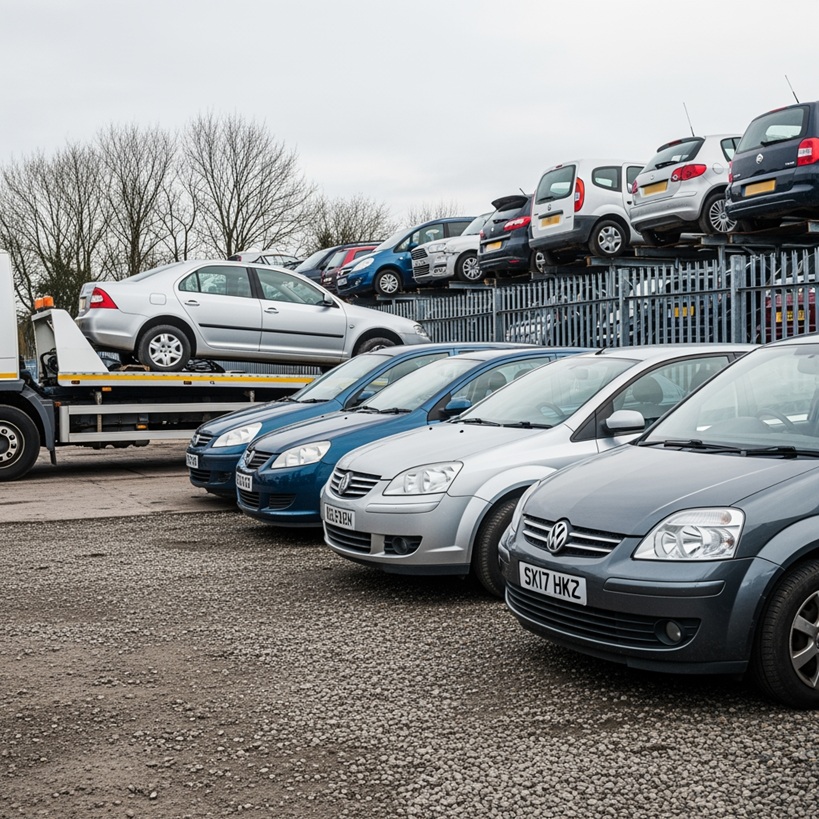
When you arrange to dispose of multiple vehicles from one single postcode, you completely alter that financial equation. A standard recovery truck can easily take two cars in one trip by putting one on the flatbed and towing another on the rear spec-lift. Larger commercial transporters can shift four or five vehicles simultaneously.
How Single-Trip Collections Reduce Overhead
By collecting multiple units in just one trip, the recovery firm drastically reduces the cost of driving back and forth to the yard. They save hours of driving time and gallons of expensive fuel by making a single, efficient journey.
These logistical savings can occasionally be passed back to the customer. This is what creates the “bulk premium” that sellers are constantly looking for. It is not that the rusty metal on your driveway suddenly became more valuable. It simply costs the buyer far less in operational overhead to come and physically retrieve it.
The Multi-Car Math: What to Expect
To get the best result, you need to view your valuation as a base metal rate minus a collection deduction. Most facilities factor in a standard transport fee when they offer you a final price.
For example, if a facility usually deducts a hidden £50 to cover the diesel and time for collecting a single car, taking two vehicles together might drop that specific deduction down to £25 per car. This slight adjustment results in a higher net payment landing in your bank account.
However, you must be incredibly wary of simplistic “flat rate” offers. If a buyer offers a round number to take “the whole lot,” they are usually protecting their own margins.
Why Flat Rate Offers Can Be Risky
A flat rate almost always undervalues the heavier or more desirable vehicles hidden within your group. If you have a heavy diesel estate car mixed with a tiny city runaround, a flat average price means the estate car is essentially subsidising the cheaper vehicle.
Always ask for a fully itemised breakdown. You need to ensure you are getting the true multi-car scrap value for every specific chassis parked on the property.
Strategic Scrapping: When to Bundle vs Split
Bundling everything together into one quick deal is not always the smartest financial move. Your strategy should depend entirely on the specific mix of vehicles you are trying to dispose of.
If you have a collection of identical, low-value, end-of-life shells that have been stripped of useful parts, bundling them is brilliant. The logistical savings of a single collection will easily outweigh any minor differences in their scrap weight.
However, you should split the deal if you are dealing with a wildly mixed batch. Imagine you have a 2018 saloon with severe front-end crash damage sitting next to two rusted 2005 hatchbacks. A bulk buyer might heavily undervalue that newer saloon just to make the overall package price look highly attractive.
Identifying High-Value Parts Donors
Consider a real-world scenario involving a driveway clearance with an old Ford Orion and a surprisingly clean Volkswagen Golf that had failed its MOT on emissions. A local yard offered a flat rate to drag them both away.
However, the Golf had a pristine set of original alloy wheels and an intact, factory-fitted catalytic converter. By pricing the cars individually, the owner secured significantly more money just by treating the Golf as a premium parts donor rather than generic scrap metal.
Commercial Fleets and Business Disposal
Businesses face a completely different set of pressures when clearing out vehicles. For busy fleet managers, the sheer administrative headache of scrapping multiple vans often outweighs the actual raw metal value.
In the commercial sector, the real benefit of volume deals usually comes in the form of a highly streamlined service. Disposing of commercial vans typically yields excellent financial returns simply due to their massive weight.
When you are looking to arrange a salvage my van disposal for a company fleet, you must ensure the quote accurately reflects the heavy tonnage of those commercial vehicles. Do not let a buyer offer standard passenger car rates for a three-tonne delivery vehicle.
Handling Abandoned Tenant Vehicles
Landlords frequently find themselves dealing with multiple abandoned cars left behind by problematic tenants. This creates a massive legal and logistical nightmare that needs handling very carefully.
You cannot simply tow a tenant’s car away without following strict legal procedures. You must make demonstrable efforts to contact the owner and serve the correct legal notices. Once the legal waiting period expires, you can finally arrange for disposal.
Because these vehicles have often sat idle for months, the tyres are usually flat, the batteries are dead, and the keys are long gone. You must explain these exact conditions to the recovery firm so they send a truck with the correct winching equipment.
Preparing Multiple Vehicles for Collection
Once you have agreed on a price, properly preparing the fleet prevents nasty delays on your scrap car same day collection day. The recovery driver is on a tight schedule, and any holdups can result in unexpected waiting fees.
Start by going through every single vehicle and completely clearing out all personal rubbish. Check the gloveboxes, under the seats, and deep in the boot. For commercial vehicles, ensure no sensitive business paperwork or company tools have been left behind.
Locate as many ignition keys as physically possible. While cars can easily be winched without keys, a locked steering column makes loading a vehicle onto a narrow flatbed significantly more difficult and time-consuming for the driver.
The Impact of Missing Parts on Bulk Deals
You must be completely honest about the condition of the vehicles when requesting a price. If you agree on a multi-car deal based on complete vehicles, but the driver arrives to find missing wheels, missing batteries, or missing catalytic converters, the initial quote will be rendered invalid.
Facilities base their pricing structures on retrieving those specific parts and their metal weight. If a car is already heavily stripped, it becomes significantly less valuable to the recycling yard.
The Legal Side: Volume Doesn’t Reduce Paperwork
While the physical act of towing the cars away is streamlined by volume, your strict legal obligations are not. The DVLA demands proper, individual notification for every single vehicle that changes hands.
You absolutely cannot “bulk notify” the DVLA. The yellow section (Section 9) of every individual V5C logbook must be filled out and retained by the registered keeper. The driver will take the rest of the logbook back to the facility.
If the logbooks have been lost over the years, you must inform the recovery firm well in advance. They can usually work around a missing V5C, but they need to know before they arrive to ensure the correct identity checks are performed.
Individual Certificates of Destruction
Legitimate facilities will always generate an official Certificate of Destruction for each specific vehicle processed. This document is your absolute legal proof that the car has been crushed and properly removed from the DVLA database.
There is no such thing as a bulk Certificate of Destruction. If a dealer offers to write you “one receipt for the lot,” you should walk away immediately. You need specific, individual proof that every single registration mark has been legally destroyed to protect yourself from future liabilities.
Environmental Considerations at Scale
Scrapping multiple cars simultaneously raises very serious environmental responsibilities. When a fleet arrives at a facility, the volume of hazardous waste increases dramatically.
Every single vehicle must go through a rigorous, legally mandated depollution process. This involves carefully draining the engine oil, siphoning the brake fluid, safely removing the coolant, and extracting the lead-acid battery. They also have to safely detonate the airbags.
Handling this process safely is why choosing professional scrapping your car services is so vital. Reputable facilities do not cut corners just because four cars arrived on the same truck. Never hand a fleet over to an unlicensed operator just to save a few pounds on collection.
Regional Variables and Route Planning
Geography plays a massive, often overlooked role in multi-vehicle pricing. Metal demand and transport costs vary wildly depending on your exact UK postcode.
In densely populated urban centres like London or Manchester, there are dozens of competing recycling yards. A driver can easily divert a truck a few miles to pick up two cars, keeping transport costs incredibly low and pushing the price offered to you higher.
In remote rural areas, the logistics are entirely different. Sending a transporter fifty miles across the Scottish Highlands is a significant expense. If you live in a remote location, you absolutely need to consult a wide auto recycling network to find a facility willing to make the long journey viable.
What Happens on Collection Day
When the time comes to scrap my vehicle, knowing what to expect takes the stress out of the operation. The driver will usually call an hour before arriving to confirm access to the property.
Upon arrival, the driver’s first job is paperwork. They will check the chassis number (VIN) of every single vehicle against the V5C logbooks you provide. This ensures they are legally taking the correct cars.
Once the identities are verified, the physical loading begins. Non-runners will be dragged onto the flatbed using a heavy-duty electric winch. Once all the vehicles are strapped down securely, the payment process is initiated. In the UK, it is illegal to pay cash for scrap metal, so the funds are transferred directly into your nominated bank account.
Negotiating Your Multi-Vehicle Deal
When you are finally ready to secure a price, you need to approach the quotes strategically. Start by getting a baseline scrap my car quote for each individual vehicle to see exactly what they are worth alone.
Once you have that baseline, you can contact facilities and ask what they would offer to take the entire lot in one single trip. Highlight how easy you have made the job for them. Emphasise that all the vehicles are parked together, the keys are available, and the driveway has completely clear access.
Ensure you use a service that guarantees the final price based on your honest description before the truck arrives. You want to avoid any operator who turns up and immediately starts trying to chip the agreed amount down over minor scratches on a car destined for the crusher.
Making the Final Decision
Choosing how to dispose of multiple vehicles requires balancing your desire for maximum profit against your tolerance for administrative work.
If you want to extract every penny from a mixed group of cars, splitting them up and selling them individually is usually the way to go. However, if you simply need the property cleared quickly and legally, accepting a slight reduction for a single-trip bulk collection is a highly sensible trade-off.
If you have a driveway full of vehicles to clear, using an established network like Scrap Car Network takes the heavy lifting out of the logistics. They handle the complex route planning and ensure every single vehicle is processed legally through an Authorised Treatment Facility.
Conclusion
At the end of the day, scrapping multiple vehicles provides an opportunity to potentially increase your return, but only by reducing the collector’s transport overheads. It is not a magic multiplier, but the logistical savings on a large collection are real and should be factored into the final offer.
The key to success is treating the fleet transaction with the exact same care as a single sale. Verify the facility’s credentials, insist on receiving individual DVLA paperwork for every single vehicle, and ensure the price accurately reflects the weight of every car in the bundle.
If you are dealing with a complex estate clearance or retiring a commercial fleet, do not struggle with the logistics alone. Please Get in touch with our friendly team through our portal or call our team on 01772 665 909 directly for expert advice on structuring a collection that correctly values your vehicles while minimising your administrative stress.