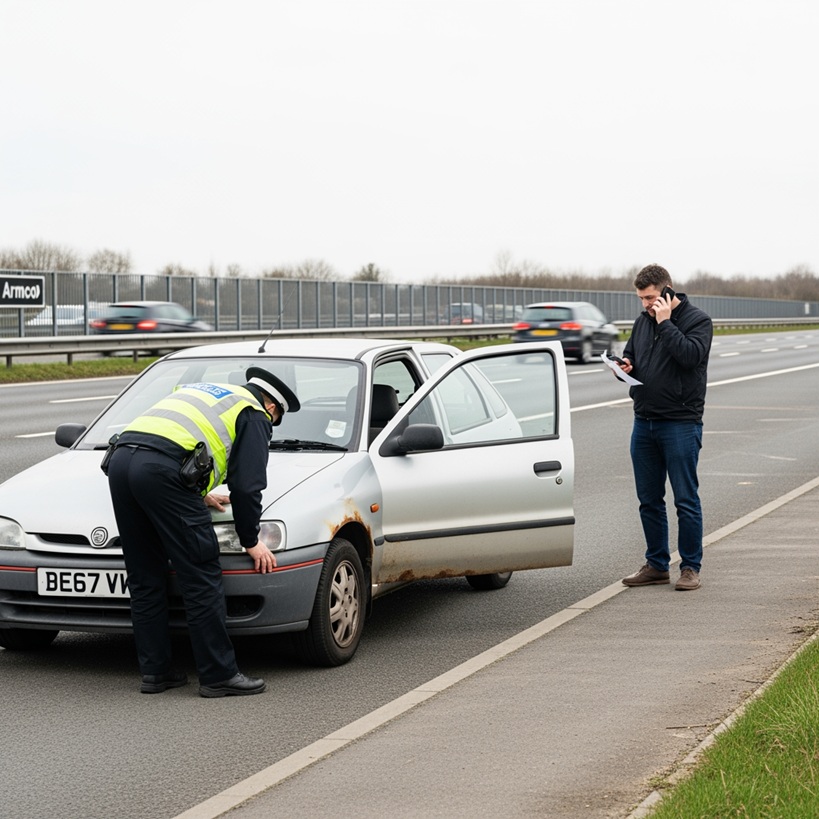
Roadside Check Failure: Your Options for Immediate Vehicle Disposal
28th May, 2026
Getting pulled over by the police or the Driver and Vehicle Standards Agency (DVSA) is a highly stressful experience for any motorist. Routine traffic stops usually involve a quick check of documents or a breathalyser test. However, facing a roadside check failure escalates the situation from a minor inconvenience to a severe logistical and financial problem. When authorities deem a vehicle completely unsafe for public roads, the consequences are immediate and uncompromising.
Drivers are frequently caught off guard when an officer issues an immediate prohibition notice. Suddenly, the vehicle relied upon for daily commuting or business operations is legally banned from moving another inch under its own power. Owners are left stranded on a hard shoulder or in a layby, facing mounting recovery fees, potential legal fines, and a difficult decision regarding the vehicle’s future.
For many older vehicles, failing a strict roadside inspection marks the definitive end of its economical life. Throwing thousands of pounds at a car to reverse a police prohibition is rarely a wise investment. Professional vehicle disposal networks provide a legal, highly efficient way to process vehicles that have reached the end of the road, transforming a stressful roadside nightmare into a clean, legally compliant resolution.
What Constitutes a Roadside Check Failure
Roadside vehicle safety checks are rigorously conducted under the strict parameters of the Road Traffic Act 1988. Police officers and DVSA examiners possess the legal authority to stop any vehicle, commercial or private, to assess its roadworthiness. They are specifically trained to identify mechanical defects that pose an immediate, severe risk to the driver and the general public.
When a critical fault is discovered, the examiner will issue a vehicle prohibition notice, commonly known in the industry as a PG9 form. This official document carries immense legal weight. Unlike a minor advisory notice given during an MOT, an immediate prohibition means the vehicle is completely immobilised by law. The officer determines that driving the car, even at low speeds to a nearby local garage, presents an unacceptable danger to public safety.
Common Mechanical Defects Leading to Prohibition
Authorities do not issue immediate prohibition notices for minor cosmetic damage or a single broken interior light. The defects must be substantial. Severely worn or bald tyres that fall well below the legal minimum tread depth of 1.6mm are a primary cause for instant failure. Without adequate tread, a vehicle cannot safely disperse water, creating an immense risk of high-speed aquaplaning.
Defective braking systems result in identical strict enforcement. If brake pads are worn down to the metal backing plates, or if hydraulic brake lines show signs of active fluid leakage, the vehicle is instantly banned from the road. Furthermore, extreme structural corrosion heavily influences these checks. If the main chassis rails, subframes, or suspension mounting points are heavily compromised by deep, penetrating rust, the structural integrity of the entire vehicle is lost.
The Immediate Aftermath of a Failed Check
The logistical reality of receiving an immediate prohibition is jarring. Once the paperwork is handed over, the officer instructs the driver to remove the keys from the ignition. The vehicle cannot be driven home, nor can it be legally towed using a simple rope. The vehicle must be completely lifted off the road surface by a professional recovery truck.
The police will not arrange free towing simply because a driver is stranded. If the vehicle is causing an obstruction in a live lane, they dispatch a police-contracted recovery service to move it to a secure compound, which incurs massive statutory fees. If the vehicle is safely in a layby, the burden of arranging and paying for a flatbed recovery truck falls entirely on the owner’s shoulders. Emergency towing fees typically range from £100 to £300, depending heavily on the distance and the time of day.
Assessing Whether Repair Makes Financial Sense
Not every failed roadside check means a car is permanently destined for the crusher. Replacing four bald tyres on a relatively new vehicle is an expensive but straightforward fix. However, the financial mathematics change dramatically when a much older vehicle receives a prohibition for complex structural or mechanical failures.
Consider structural rust as an analogy for termite damage in a house foundation. If an officer spots enough severe corrosion to issue an immediate ban, it is almost guaranteed that the hidden areas of the chassis are equally devastated. Paying for emergency towing, followed by massive welding and fabrication bills, frequently exceeds the total market value of the car. When a roadside failure uncovers a cascade of systemic faults, stopping the financial bleeding becomes the primary objective.
Understanding Your Legal Obligations
Even if repairing the vehicle is a financial impossibility, it cannot simply be left sitting in the layby or abandoned at a local service station. Abandoning a vehicle is a severe criminal offence under UK law. The registered keeper retains total liability for that car until the proper disposal procedures are completed.
The prohibition notice remains actively linked to the vehicle’s registration number on the national police database until the specific defects are repaired and the vehicle passes a rigorous new MOT test. If the owner chooses to dispose of the vehicle, the DVLA must be formally notified that the car has been transferred to the motor trade for dismantling. Failure to follow these strict administrative steps results in automatic fines and continued demands for vehicle tax.
Why Immediate Disposal Often Makes Sense
When a heavily depreciated car fails a safety check with severe defects, immediate disposal offers the most logical escape route. Time is critical in these scenarios. Every single day that a prohibited vehicle sits in a private recovery yard or police compound, mandatory storage fees accumulate. These daily charges generally range from £20 to £30, quickly turning a minor setback into a massive financial penalty.
Furthermore, maintaining insurance on an unroadworthy vehicle presents significant complications. Many insurance policies contain strict clauses requiring the vehicle to maintain a valid MOT and be kept in a roadworthy condition. If you decide that the best path forward is to scrap my car online, you instantly halt the accumulation of these compound fees. Converting a broken mechanical liability into a guaranteed payment based on raw material weight is a sound financial strategy.
How Scrap Car Collection Works After a Prohibition
Scrapping a prohibited vehicle is highly streamlined when utilising a professional network. Licensed facilities regularly deal with vehicles that are legally banned from the public highway. Because the car cannot be driven, the facility dispatches a heavy-duty flatbed recovery truck directly to the vehicle’s location, whether it is sitting outside a residential address or waiting in a secure police compound.
The process begins by securing a rapid online valuation based on the vehicle’s registration and weight. When arranging the collection, it is vital to inform the transport dispatcher that the vehicle is subject to a PG9 prohibition. This ensures the driver arrives fully prepared with the correct winching equipment. Most professional collections for immobile vehicles are efficiently executed within 24 to 48 hours.
Case Study: Commercial Vehicle Prohibition
Consider a practical scenario involving an older commercial transit van pulled over by the DVSA during a routine commercial weight check. While checking the payload, the inspector discovers severe, jagged rust holes along the primary load-bearing chassis rails. The inspector immediately issues a vehicle prohibition notice, correctly identifying that the van could collapse under heavy braking.
The driver is stranded with a full cargo of expensive tools and building materials. The logistical challenge is immense. The cost of hiring a flatbed to tow the van back to a workshop, combined with thousands of pounds of specialist structural welding, massively exceeds the van’s worth. By choosing to immediately salvage my van through an authorised network, the driver arranges a recovery truck to collect the shell directly from the checkpoint. The tools are safely transferred, the immediate towing costs are bypassed, and the scrap payment serves as a deposit for a newer, road-legal lease vehicle.
The Documentation You Will Need
Navigating the disposal of a prohibited vehicle requires careful attention to paperwork. Legitimate facilities operate under strict government oversight and require specific documentation to prevent vehicle crime. The V5C logbook is the most critical document, proving legal registration and the authority to order the vehicle’s destruction.
The PG9 prohibition notice must also be presented to the collection agent, along with a valid form of photographic identification. If a logbook is lost or trapped at home while the vehicle is impounded, reputable facilities can still process the collection. They accept alternative, verified proof of identity and address, ensuring that the legal disposal process is not delayed by missing administrative paperwork.
Choosing Between ATFs and Scrap Dealers
The vehicle disposal industry is heavily regulated to protect both the environment and the consumer. When dealing with a prohibited vehicle, it is a strict legal requirement to utilise an Authorised Treatment Facility (ATF). These highly monitored industrial sites are licensed by the Environment Agency and are the only entities legally permitted to completely destroy a vehicle.
Vehicle owners must be highly cautious of unlicensed, cash-in-hand operators found on social media. These rogue traders frequently operate illegally. If you hand a prohibited vehicle to an unlicensed operator offering vehicle disposal services, they will likely strip the valuable components and illegally dump the remaining shell. Because the official DVLA paperwork was never filed, the police trace the dumped, prohibited chassis straight back to the original owner, resulting in severe criminal prosecution.
Regional Considerations for Vehicle Collection
The speed and logistics of clearing a prohibited vehicle depend heavily on its geographical location. Drivers facing a roadside failure within dense urban environments, such as the major arterial routes around Greater London, Birmingham, or Manchester, benefit from massive local industrial infrastructure. In these regions, a licensed recovery truck is rarely more than a few miles away, making rapid dispatch highly achievable.
Conversely, a roadside check failure on a remote Highland route in Scotland or a rural road in North Wales presents distinct logistical challenges. Recovery trucks must cover vast distances, which requires careful route scheduling. Despite these varying distances, reputable national networks ensure that the core scrap value of the vehicle remains completely consistent and fair, based entirely on global metal markets rather than the vehicle’s isolated location.
What Happens to Your Car After Collection
Once the flatbed truck safely removes the vehicle from the roadside or compound, it is transported directly to a licensed ATF. The vehicle immediately enters a highly rigorous, legally mandated depollution phase. Modern cars contain dozens of highly toxic substances that pose severe risks to local water tables and soil integrity if mishandled.
Following strict scrap car recycling protocols, highly trained technicians meticulously drain the engine oil, transmission fluid, and corrosive brake fluids into sealed containment vats. The heavy lead-acid battery is extracted, and explosive airbag charges are safely neutralised. The facility harvests high-value components, including the precious metals housed inside the catalytic converter. The remaining bare metal shell is then crushed and fed into an industrial shredder, separating the raw steel for global manufacturing reuse.
Financial Considerations Beyond Scrap Value
Scrapping a severely defective vehicle provides financial benefits that extend well beyond the initial payment for raw scrap metal. By taking decisive action, owners unlock several avenues for immediate financial reimbursement. Once the DVLA is officially notified of the vehicle’s destruction, the registered keeper is automatically entitled to a refund for any complete, unused months of vehicle road tax.
Furthermore, insurance providers must be contacted immediately following the vehicle’s removal. Cancelling the policy on a destroyed vehicle typically results in a pro-rata refund for the remainder of the annual premium. These combined refunds, paired with the complete elimination of massive future maintenance bills and impending MOT failure costs, make disposal a highly logical financial move.
Making the Decision Under Pressure
Receiving an immediate prohibition notice creates intense psychological pressure. Drivers are stranded, potentially facing fines, and dealing with aggressive police timelines for vehicle removal. The most critical advice is to step back and evaluate the situation objectively. Avoid making panic-driven financial commitments to the first recovery driver who arrives on the scene offering expensive repair solutions.
Take ten minutes to research the realistic market value of the vehicle in its current, defective state. Compare that figure against the immediate towing fees and the vague estimates for complex structural repairs. If the mathematics show negative equity, choosing to efficiently recycle my car through a licensed network provides total closure. It guarantees physical safety, ensures environmental compliance, and permanently resolves the legal headache.
The Environmental Angle
Removing prohibited, mechanically failing vehicles from public roads is not just a safety imperative; it is a massive environmental benefit. Vehicles that fail checks for severe corrosion, leaking brake callipers, or blown exhaust systems are actively polluting the local environment. Leaking fluids contaminate public drainage systems, while compromised exhausts release dangerous levels of toxic particulates into the atmosphere.
By sending the vehicle to a licensed facility, these hazards are professionally neutralised. The modern automotive recycling industry is incredibly efficient, successfully recovering and repurposing up to 95% of a vehicle’s total mass. By feeding raw shredded steel and aluminium back into the manufacturing supply chain, the industry drastically reduces the massive carbon footprint associated with mining new iron ore.
Conclusion
A sudden roadside safety failure forces drivers to confront difficult realities under intense pressure. When police or DVSA officers issue an immediate prohibition notice, the vehicle is legally grounded. Attempting to navigate exorbitant emergency towing fees, accumulating daily storage charges, and the unviable costs of severe structural repair is a stressful and frequently illogical battle.
For many aging vehicles, cutting ties immediately is the smartest protective measure. Utilising professional, licensed disposal networks allows drivers to bypass the logistical nightmare of moving a prohibited asset. It ensures the vehicle is depolluted safely, recycled legally, and permanently removed from official DVLA channels.
The Scrap Car Network connects motorists directly with heavily vetted Authorised Treatment Facilities equipped to handle complex emergency collections from roadsides and compounds across the country. If you require expert guidance on clearing your prohibited vehicle quickly and safely, don’t hesitate to contact us to arrange a fast, fully compliant resolution.