Scrap My Car in Glasgow: What You Need to Know
10th Apr, 2026
Glasgow’s car scrapping industry processes thousands of vehicles every year, yet many owners still wonder if they’re getting fair value when their old motor reaches the end of its road. You’ve got options, and they’re more straightforward than you might think.
The city’s unique geography and industrial heritage create specific challenges and opportunities that directly impact what you’ll receive for your scrap vehicle. Understanding the current market means knowing that Glasgow’s position as Scotland’s largest city gives you access to multiple authorised treatment facilities competing for your business.
Scrap Car Network connects you with Scotland’s most reputable facilities, ensuring you get competitive rates without the usual headaches. This competition typically translates to better prices than you’d find in more remote Scottish locations.
Glasgow’s Scrap Car Market: Current Rates and Factors
Scrap metal prices fluctuate like petrol costs, but Glasgow consistently offers competitive rates due to its proximity to major recycling facilities. Current scrap values range from £100 to £300 for small cars, while larger vehicles can fetch £400 or more.
Several factors determine your car’s worth. Weight matters most because heavier vehicles contain more recyclable metal that ATFs can process and sell on.
Catalytic converters add significant value, typically £50-£200 depending on your model. Working parts increase offers if they’re salvageable. Current metal market prices affect daily rates, so timing can make a real difference.
Think of it like selling gold jewellery. The base weight sets the minimum value, but condition and special components boost the final price. A 2005 Ford Focus might fetch £150 on weight alone, but intact alloy wheels and a good catalytic converter could push that to £250.
I remember a customer in Maryhill who brought in what looked like a total write-off, a 2008 Mondeo that’d been sitting in his drive for two years. Barely ran, rust everywhere, looked like scrap metal on wheels. Turned out the catalytic converter was pristine because he’d barely driven it the last year before parking it up. That single part added £180 to what would’ve been a £120 offer. Sometimes the stuff you can’t see is worth more than what you can.
Glasgow’s established network across Scotland means you’re never far from a legitimate facility that’ll give you a proper valuation.
Legal Requirements for Scrapping in Glasgow
Scotland follows the same DVLA regulations as the rest of the UK, but Glasgow City Council adds local considerations. You must use an Authorised Treatment Facility (ATF), and anything else risks hefty fines and environmental damage.
The paperwork sounds complicated but breaks down simply. You’ll need your V5C logbook to send Section 9 to the DVLA. The ATF provides your Certificate of Destruction, which is absolutely crucial.
Notify your insurance company immediately when you scrap. Keep all documentation for five years minimum because questions can arise years later.
Missing any step creates problems. One Glasgow resident discovered this when DVLA continued charging road tax six months after scrapping because the ATF hadn’t properly notified them. Always get written confirmation, and don’t assume anything’s been handled unless you’ve seen proof.
Our guide on notifying the DVLA when scrapping your car walks you through the exact process step-by-step.
Finding Authorised Treatment Facilities in Glasgow
Glasgow hosts several legitimate ATFs, from small family operations in Maryhill to larger facilities near the M8. Location affects convenience but shouldn’t compromise legality. Always verify their Environment Agency licence number before handing over your vehicle.
Our network of Authorised Treatment Facilities ensures compliance while maximising your return. Each facility undergoes regular audits and maintains proper environmental standards, so you’re not gambling with dodgy operators.
Key areas with established ATFs include the East End near Celtic Park and Parkhead, the South Side around Pollokshields and Govan, North Glasgow including Springburn and Bishopbriggs, and the West End, though these are less common but available near Clydebank.
Don’t just pick the closest facility. Compare quotes from multiple ATFs because prices can vary by £50-100 for the same vehicle.
The Collection Process: What Actually Happens
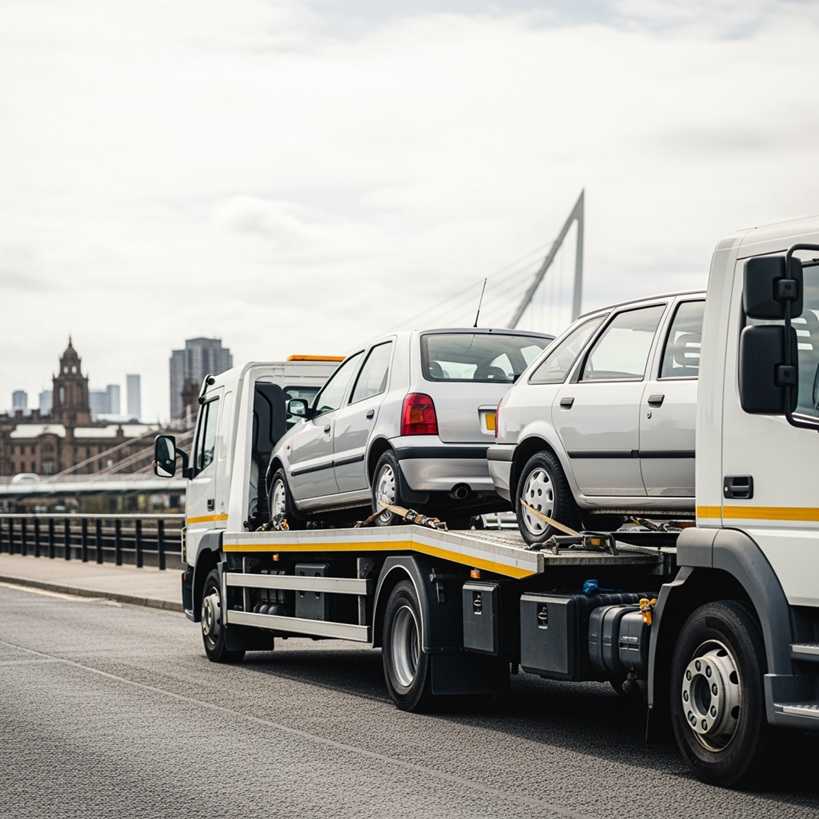
Here’s where Glasgow’s traffic and geography create unique challenges. Free collection sounds simple until you factor in Glasgow’s notorious one-way systems and restricted parking zones.
Professional collectors know these streets. They arrive with proper equipment, not just a rope and optimism.
The process typically follows this pattern. Day one, you call for a quote, providing your registration and basic details. Day two, collection gets arranged at your convenience. Same day, the vehicle’s loaded, paperwork’s completed, and payment’s processed.
Weather affects timing. Glasgow’s frequent rain means collectors work around conditions to prevent accidents during loading. Winter collections might take longer due to safety considerations on icy residential streets where tow trucks can’t always get proper grip.
Learn about our free nationwide scrap car collection service, which covers all Glasgow postcodes from G1 to G84 without hidden charges or last-minute deductions.
Environmental Considerations Specific to Glasgow
Glasgow’s commitment to reaching net-zero emissions by 2030 makes proper vehicle recycling crucial. Your old car becomes tomorrow’s raw materials, but only through legitimate channels that follow environmental protocols.
The city’s ATFs must meet strict Scottish Environmental Protection Agency standards. This includes fluid drainage before processing, covering oil, coolant, and brake fluid. Battery removal and separate recycling is mandatory.
Tyre disposal must go through approved routes. A 95% recycling rate for vehicle materials is the legal requirement, and facilities that don’t meet this face serious consequences.
Dodgy operators dumping cars in the Clyde or fly-tipping in Pollok Country Park face serious consequences. One illegal scrapper received a £15,000 fine last year after dumping drained fluids near a children’s playground in the Southside. That’s not just illegal, it’s dangerous to the community.
Proper disposal protects Glasgow’s waterways and green spaces. It’s not just about following rules; it’s about protecting the environment for everyone who lives here.
Common Pitfalls When Scrapping Cars in Glasgow
Experience shows Glasgow residents encounter specific problems when scrapping vehicles. The biggest mistake? Accepting cash offers from random door-knockers who promise quick money but deliver headaches.
These cowboys typically offer £50-100 below market rate. They fail to provide proper documentation, which leaves you liable for future fines. Many dump vehicles illegally, creating problems you’ll face months later.
Real-world example from Shawlands: a resident accepted £200 cash for their Vauxhall Corsa from a door-knocker. Six months later, parking fines started arriving because the car was abandoned in Edinburgh. The owner remained legally responsible without a Certificate of Destruction.
That £200 quick payment cost them over £800 in parking fines and legal fees trying to prove they’d sold the vehicle. Don’t let this happen to you.
Another common mistake is not removing personal belongings before collection. Check the boot, glove box, under seats, and door pockets. People lose insurance documents, valuable tools, even forgotten cash this way.
Getting the Best Price for Your Scrap Car
Maximising value requires minimal effort but strategic thinking. Timing matters because scrap prices typically peak in summer when construction demand increases steel consumption.
Simple steps boost your offer without much work. Remove personal items but leave valuable components like alloy wheels and working electronics. Drain fuel if it’s easily accessible because that’s worth £20-40 you can use elsewhere.
Keep your service history because it proves catalytic converter authenticity. Some dodgy buyers claim cats are fake to reduce their offer. Documentation prevents this scam.
Compare multiple quotes from legitimate sources. Don’t just accept the first offer you receive, especially if it seems low.
Get details on current scrap car prices across the UK to understand what fair value looks like for your specific vehicle type and condition.
But what actually happens to your car after it’s towed away? Understanding this helps explain pricing variations you’ll encounter.
The Journey After Collection
Once collected, your vehicle travels to the ATF for systematic dismantling. Glasgow’s facilities operate like reverse production lines, carefully extracting value while protecting the environment.
The process resembles stripping a house before demolition. Everything useful gets removed before the structure comes down.
Stage one involves hazardous materials removal, including fluids, batteries, and airbags. This protects workers and prevents environmental contamination. Stage two focuses on valuable parts extraction, particularly catalytic converters, alloys, and electronics that can be resold.
Stage three handles metal separation, sorting steel, aluminium, and copper into different streams for recycling. Stage four involves crushing and shredding what remains for final recycling into raw materials.
This systematic approach explains price differences between vehicles. A rust-bucket might only offer scrap metal value, while a newer vehicle with salvageable parts commands premium prices because the ATF can sell those components separately.
Special Considerations for Different Vehicle Types
Glasgow’s diverse vehicle population means different scrapping approaches work better for different motors. Commercial vehicles follow similar processes but often yield better returns due to size and robust components that withstand wear longer.
Vans particularly benefit from Glasgow’s construction industry demand for spare parts. Transit vans and Sprinters often fetch £100-200 more than equivalent-aged cars because their parts have active resale markets.
Electric and hybrid vehicles require specialist handling due to battery systems. Only certain Glasgow ATFs possess proper equipment and training for these. Never attempt DIY disposal of hybrid or electric vehicles because the batteries pose serious safety risks.
Classic cars present emotional challenges. That rusty Ford Capri might hold memories, but sentiment doesn’t prevent MOT failure or structural corrosion. Consider specialist classic car breakers who preserve parts for restoration projects rather than sending everything to the crusher.
Sometimes it’s worth more in pieces than as scrap metal.
Documentation and Tax Implications
HMRC and DVLA don’t synchronise automatically, which catches people out regularly. You remain responsible for notifying both organisations when scrapping your vehicle, even though it seems like they should talk to each other.
Essential notifications include the DVLA via V5C Section 9 or online notification. Contact your insurance company immediately for cancellation and potential refunds on unused coverage.
If you’ve got outstanding payments, notify the finance company before scrapping. Failing to do this creates serious legal problems you don’t want.
Glasgow City Council needs notification if you hold resident parking permits. They won’t automatically cancel these just because you’ve scrapped the vehicle.
Failed MOTs often make scrapping more economical than repairs, especially for older vehicles where the repair costs exceed the car’s actual value.
Regional Price Variations Within Glasgow
Geography affects pricing even within Glasgow itself. Southside facilities typically offer 5-10% more than Northside equivalents due to easier motorway access and lower transport costs to major recycling centres.
Postcodes matter more than most people realise. G1-G5 city centre locations command premium prices but create difficult collection scenarios with parking restrictions. G41-G42 Southside areas offer the best overall value due to facility concentration and competitive pressure.
G20-G23 North areas see slightly lower offers because fewer facilities operate there. G51-G53 Southwest industrial areas provide advantages through direct access to recycling infrastructure.
The difference might only be £30-50, but that’s still money in your pocket for five minutes of research comparing quotes across different Glasgow areas.
Maximising Your Return
Getting top value means combining several strategies. First, understand your vehicle’s specific value drivers beyond just weight. Research what your particular model’s catalytic converter typically fetches because some are worth significantly more than others.
Second, time your scrapping strategically. If your car’s still driveable and you’re not desperate, waiting a few months for summer price peaks could add £40-80 to your offer.
Third, be honest about condition but don’t undersell yourself. Mention any valuable components that might not be obvious from the registration alone. Leather seats, upgraded stereo systems, and recent part replacements all add value.
Fourth, get everything in writing before agreeing to collection. Verbal promises mean nothing when disputes arise weeks later.
Understanding Price Quotes
When comparing quotes, make sure you’re comparing like-for-like offers. Some facilities quote “up to £X,” which means they’ll find reasons to reduce the price upon inspection. Others provide firm quotes based on registration details.
Ask specific questions before committing. Does the quote include collection? Are there any deduction scenarios? When do you receive payment? What documentation will they provide?
Legitimate ATFs answer these questions clearly and don’t get defensive when you ask. Dodgy operators get vague or pushy, trying to lock you in before you’ve done proper research.
Price isn’t everything, though it’s obviously important. A slightly lower offer from a reputable ATF with proper documentation beats a higher offer from a cowboy operation that leaves you legally exposed.
The Role of Online Quote Services
Modern technology makes comparing offers easier than ever. Online quote systems let you enter your registration and receive multiple offers within minutes, saving hours of phone calls.
However, understand that online quotes are estimates based on typical vehicles matching your registration. The final offer might vary based on actual condition, missing parts, or damage not visible in DVLA records.
Use online quotes as a starting point, not a guarantee. They help you understand market range and identify obviously low-ball offers, but always confirm the final price before agreeing to collection.
Why Choose Authorised Facilities
The temptation to accept quick cash from unregistered scrappers is understandable, especially when money’s tight. But the risks far outweigh the minor convenience benefits.
Authorised Treatment Facilities provide legal protection through proper documentation. They handle DVLA notifications correctly, preventing future tax and fine liabilities. They maintain environmental standards that protect Glasgow’s community.
They’re also more likely to give fair prices because legitimate businesses need good reputations. Cowboy operators can disappear after one job goes wrong, but established ATFs depend on repeat business and referrals.
The peace of mind alone is worth the extra effort of finding a proper facility.
Final Thoughts on Glasgow Car Scrapping
Scrapping your car in Glasgow doesn’t require an engineering degree or legal expertise. It just takes common sense and proper channels. The city’s established ATF network, combined with Scotland’s environmental commitments, creates a straightforward process that benefits both your wallet and the planet.
Remember the essentials: use only authorised facilities, keep all documentation, and compare quotes from legitimate sources. Your old banger might not make you rich, but proper disposal ensures you avoid fines while contributing to Glasgow’s recycling targets.
Whether you’re clearing that rusty Corsa from your Govan garage or finally admitting defeat with your vintage Volvo in Viewpark, Glasgow’s scrap car industry stands ready. Contact us for specific advice about your vehicle and circumstances.
The process might seem daunting initially, but thousands of Glasgow residents successfully scrap vehicles every month. Your car’s final journey can be profitable, legal, and environmentally responsible. Just ensure you choose the right route.
Don’t let dodgy operators or complicated paperwork put you off doing the right thing. With proper guidance and reputable facilities, scrapping your Glasgow car becomes a simple transaction that ticks all the boxes.