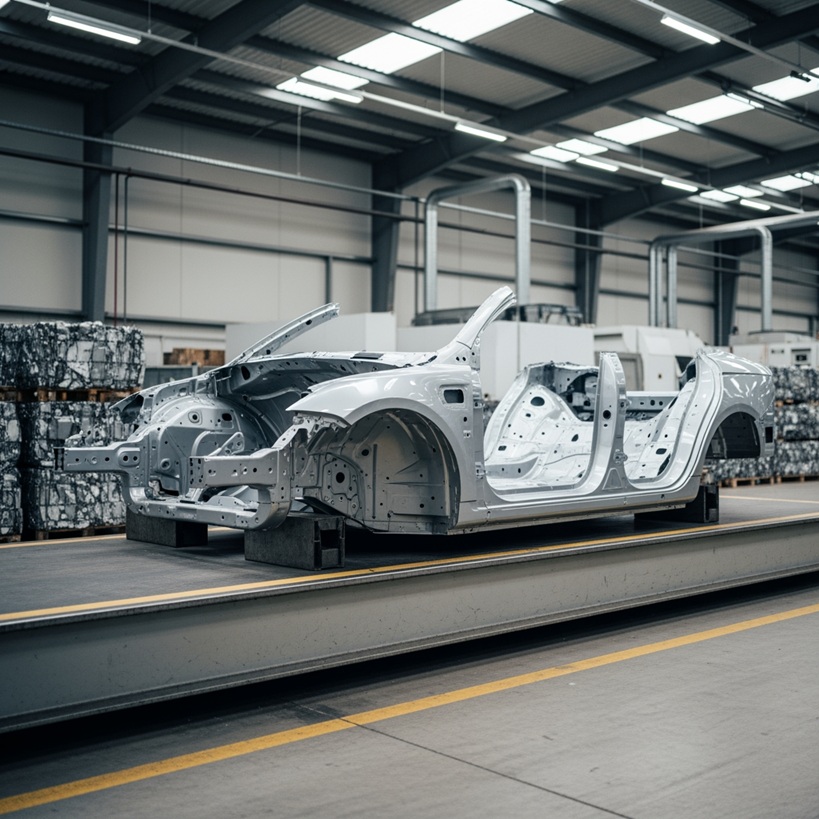
How Rising Scrap Metal Prices Affect What You Get for Your Car in the UK
8th Apr, 2026
The scrap car market doesn’t operate in isolation. Every offer a vehicle owner receives from an Authorised Treatment Facility is, at its core, a reflection of what the metals inside that car are worth on any given day. Understanding how scrap metal prices UK cars translate into the quote received makes it considerably easier to assess whether an offer is fair, and when the right time to act might be.
Prices move. Sometimes significantly. A grasp of the underlying drivers, from global steel demand UK recycling patterns to non-ferrous metal recovery UK values, puts owners in a stronger position when comparing quotes and deciding when to commit.
What Determines the Price You Get for a Scrap Car
The scrap car quote isn’t an arbitrary number. It’s a calculation with identifiable inputs, and understanding those inputs helps owners interpret offers accurately.
How Scrap Metal Prices UK Cars Are Calculated
Scrap metal prices UK cars are based on two primary factors: the vehicle’s kerb weight and the current market value of the metals it contains. Most of a standard car’s weight is ferrous metal, primarily steel, which is priced per tonne against current market rates. Heavier vehicles return higher base offers simply because there’s more metal to recover.
The quote is not based on the car’s original purchase price, its service history, or how recently it passed an MOT. Those factors affect resale value, not scrap value. Scrap metal prices UK cars are ultimately a commodity calculation, and the ATF is constrained by what the recycling market will pay for the recovered material.
The Components of a Scrap Car Payout
A scrap car payout calculation UK typically includes the base ferrous metal value, any uplift for intact non-ferrous components (aluminium, copper wiring), and the catalytic converter value where applicable. Some facilities include collection costs in their offer; others quote before deducting collection. Clarifying this before agreeing to a quote avoids surprises on the day.
Scrap Car Network connects owners with licensed ATFs that provide transparent, itemised quotes reflecting current market rates rather than fixed rates that may undervalue the vehicle during periods of elevated metal prices.
Ferrous and Non-Ferrous Metals: Why the Distinction Matters
Not all of the metals in a car are priced the same way. Understanding the difference between ferrous and non-ferrous content helps owners understand why some vehicles attract better offers than their weight alone might suggest. This distinction is just as relevant whether a vehicle is being scrapped in central London or anywhere else in the UK.
Ferrous Scrap Metal UK Value: The Base Calculation
Ferrous scrap metal UK value refers to the steel and iron content of the vehicle, which forms the bulk of what most cars are made of. This is the foundation of any scrap offer. Steel is traded globally, and ferrous scrap metal UK value per tonne fluctuates in line with global demand, primarily from steelmakers in Asia and Europe.
When ferrous scrap metal UK value is elevated, the base offer for a standard vehicle rises accordingly. When it falls, offers come down. This is entirely outside the control of local ATFs, which is why scrap offers from the same facility can vary meaningfully from one month to the next.
Why Vehicle Construction Affects the Offer
Older, steel-heavy vehicles often return stronger base offers than their lighter modern counterparts, despite being less valuable in every other sense. A heavy British-built saloon from the 1990s can outperform a modern aluminium-intensive crossover on pure weight-based scrap value, because the total ferrous scrap metal UK value it contains is simply higher.
Modern vehicles built with significant aluminium content are a different story. Aluminium is a non-ferrous metal with its own market dynamics and often a higher value per tonne than steel, which is worth understanding separately.
How Global Steel Demand Affects UK Scrap Payouts
The connection between a car sitting on a UK driveway and steel demand in Shanghai or Seoul might not be immediately obvious, but it’s real and it’s direct. Global steel demand UK recycling patterns are the single biggest external force on what ATFs can offer for scrap vehicles. Owners arranging vehicle scrapping in Scotland face the same global market influences as those anywhere else in the country.
Global Steel Demand UK Recycling: The Key Driver
Global steel demand UK recycling markets are tightly linked to international construction and manufacturing activity. When China’s construction sector is active, global steel demand rises and scrap metal prices follow. When major economies slow their infrastructure investment, steel demand weakens and scrap prices fall in response.
UK recycling facilities sell their recovered steel into these international markets. The price they receive determines the price they can offer for incoming vehicles. Global steel demand UK recycling prices can shift by 10-20% or more over a quarter, which is why owners with flexibility on timing can benefit from monitoring price trends before committing to a collection date.
What This Means in Practice for UK Owners
During periods of elevated global steel demand, ATF quotes for standard vehicles can increase meaningfully. During quieter periods, the same vehicle might return a noticeably lower offer. The difference isn’t a reflection of the vehicle’s condition or the ATF’s willingness to pay fairly; it’s simply the market operating as commodity markets do.
Monitoring price indices published by the British Metals Recycling Association, or simply getting fresh quotes every few weeks during a period of price uncertainty, is a practical approach for owners who have the flexibility to wait.
Non-Ferrous Metal Recovery and Catalytic Converters
Beyond the steel bodywork, modern vehicles contain non-ferrous metals that can represent a significant proportion of the total scrap value. This part of the calculation is frequently overlooked by owners who focus only on the vehicle’s weight. Owners in North London and across the country should always confirm that non-ferrous content is being correctly factored into any quote received.
Non-Ferrous Metal Recovery UK: What’s in the Car
Non-ferrous metal recovery UK from scrapped vehicles includes aluminium from engine blocks, cylinder heads, and structural components; copper from wiring looms and motor windings; and the platinum group metals found in catalytic converters. These metals are valued differently from steel and can substantially uplift the total offer for a vehicle that contains them in meaningful quantities.
Non-ferrous metal recovery UK values are more volatile than ferrous prices in many cases. Palladium and rhodium, both found in catalytic converters, have seen dramatic price swings in recent years driven by global emissions regulations and mining supply constraints. A vehicle with an intact catalytic converter can attract a meaningfully higher offer than one where the converter has been removed, which is why non-ferrous metal recovery UK disclosure matters when requesting quotes.
Getting the Most from Non-Ferrous Content
Never remove the catalytic converter before scrapping. Doing so is illegal in many circumstances and reduces the total offer. Instead, disclose the presence of an intact converter explicitly when requesting quotes, and verify that non-ferrous metal recovery UK value is factored into each offer received.
The same principle applies to other non-ferrous components. An aluminium-intensive vehicle should attract a premium over an equivalent steel-bodied vehicle, and it’s entirely reasonable to ask an ATF to itemise the non-ferrous component of its offer separately.
How to Calculate What Your Car Should Return
Having a baseline expectation before requesting quotes helps owners identify whether the offers received are reasonable for current market conditions. Getting the scrap car payout calculation UK broadly right doesn’t require specialist knowledge, just a few straightforward inputs. Owners in Preston and across the UK who run this calculation before requesting quotes consistently find it helps them identify outlier offers.
The Scrap Car Payout Calculation UK: A Practical Approach
A basic scrap car payout calculation UK starts with the vehicle’s kerb weight, which is listed in the owner’s handbook or available through the DVLA. Multiplying this by the current scrap metal price per tonne for light iron gives a rough base figure. Adding the catalytic converter value, where applicable, and any non-ferrous uplift gives a more complete estimate.
This won’t match any ATF’s exact offer, because facilities apply their own margins and operational costs. But it provides a reasonable baseline for assessing whether the offers received sit in the right territory. Checking the scrap car payout calculation UK against actual offers quickly reveals whether any facility is quoting below current market rates.
When to Get Multiple Quotes
Always get at least three quotes from different ATFs before committing to any scrap arrangement. Scrap car payout calculation UK variations between facilities reflect their individual cost structures, current stock requirements, and operational efficiency, not just the underlying metal prices. The difference between the highest and lowest offer for the same vehicle on the same day can be surprisingly large.
Getting the Best Payout When Metal Prices Are High
Elevated scrap metal prices create a genuine opportunity for owners who move at the right moment. Those comparing options in South West London and across the wider market can take practical steps to maximise what they receive.
Timing and Flexibility
Monitoring scrap metal price indices over a few weeks costs nothing and could make a meaningful difference to the final offer. Metal prices can move quickly, and an owner who acts during a price spike rather than a trough may receive a noticeably better return for an identical vehicle.
The comparison that makes most sense here is fruit and vegetable pricing at a wholesale market. The underlying goods are the same, but what they return varies daily with supply, demand, and seasonal factors. Scrap metal follows exactly the same logic, just on a global scale.
Practical Steps Before Booking Collection
- Confirm whether collection is included in the quoted price or charged separately
- Disclose all non-ferrous components, including the catalytic converter, when requesting quotes
- Be accurate about the vehicle’s condition, weight, and whether it’s a runner
- Get quotes from at least three ATFs on the same day for the most accurate comparison
- If prices seem low and timing allows, revisit quotes in two to three weeks
A vehicle owner in the Midlands who held off scrapping an older estate car for six weeks during a period of rising ferrous scrap metal UK value received an offer nearly £60 higher than the initial quote. The vehicle hadn’t changed. The metal price had. Patience, when timing is flexible, pays off in straightforward cash terms.
Conclusion
Understanding how scrap metal prices UK cars are determined puts owners in a meaningfully stronger position. Ferrous scrap metal UK value, global steel demand UK recycling patterns, and non-ferrous metal recovery UK content all feed into the scrap car payout calculation UK that determines what gets offered. Getting multiple quotes, timing where possible, and ensuring all value components are accounted for makes a real and measurable difference to the final return.
For current market-rate quotes from licensed ATFs, contact us and we’ll connect you with facilities that provide transparent, fair offers based on today’s prices.