How Car Parts Inspire Furniture and Home Décor Trends
23rd Feb, 2026
Here’s something that might surprise many people. After decades of automotive components being tossed aside like yesterday’s newspaper, those same bits and bobs that once powered morning commutes are now showing up in some of the most stylish homes across Britain.
The transformation is remarkable – a rusty exhaust pipe becomes a trendy coffee table, worn brake discs transform into striking wall art. It’s mechanical poetry come to life, and the growing popularity of car part furniture décor offers automotive components a genuine second chance at usefulness.
The beauty of repurposing automotive parts isn’t just about environmental consciousness – though that’s certainly part of it. It’s about recognising the inherent design brilliance that engineers put into these components. A cylinder head or a set of connecting rods represents decades of refined engineering wrapped up in surprisingly elegant forms.
From Scrapyard to Showroom
The transformation of automotive components into home furnishings isn’t some flash-in-the-pan trend. This movement has grown steadily over the past decade with serious staying power. Car parts are built to withstand incredible stress, temperature changes, and constant vibration. That makes them perfect raw materials for furniture that needs to last.
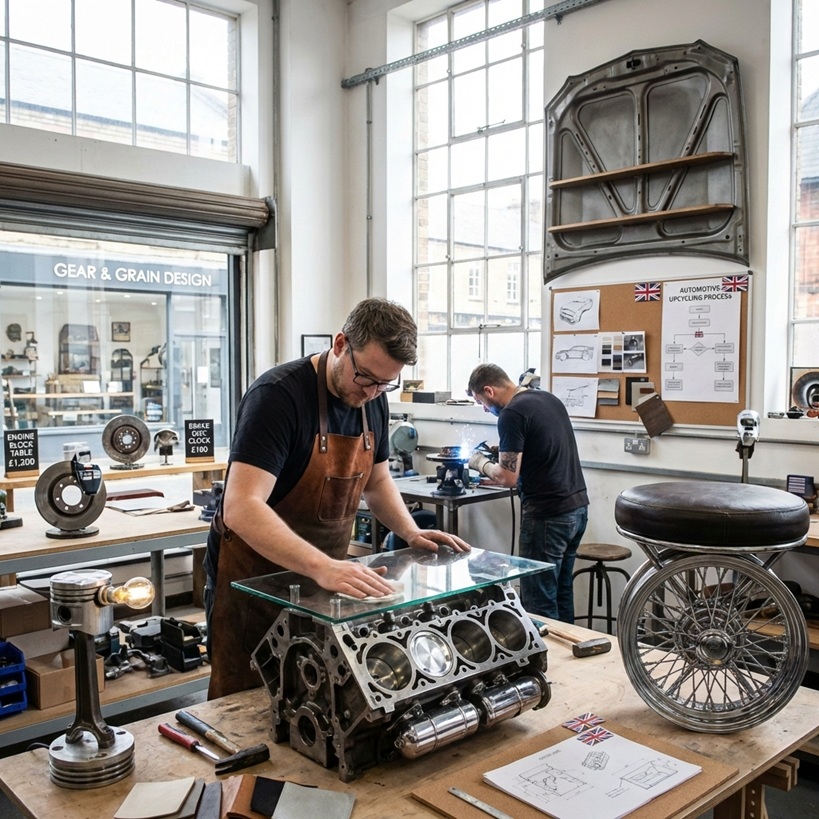
Engine blocks present fascinating possibilities. These hefty chunks of cast iron or aluminium were designed to contain controlled explosions thousands of times per minute. Strip away the mechanical bits, give them a proper clean and maybe a fresh coat of paint, and the result is a coffee table that’ll outlast anything from a high-street furniture shop.
The transformation process involves a weekend of cleaning out oil passages, smoothing rough edges, and applying a matte black finish. The result? A conversation starter that weighs about as much as a small elephant but looks absolutely magnificent with a sheet of tempered glass on top.
Brake discs have become particularly popular in furniture applications. Their circular design and ventilated patterns create natural visual interest, and they’re already built to dissipate heat – perfect for use as trivets or decorative elements. These components turn into everything from clock faces to garden sculptures with minimal modification required.
Industrial Chic Meets Automotive Heritage
The industrial design movement has embraced automotive aesthetics with open arms. There’s something deeply satisfying about the honest functionality of car parts that resonates with people who appreciate authentic materials and purposeful design. This aesthetic perfectly embodies what makes industrial chic furniture so appealing to modern homeowners.
Piston connecting rods make brilliant table legs. They’re engineered to handle enormous forces, so supporting a dining table is child’s play for them. Plus, their distinctive I-beam shape adds visual interest that simply can’t be replicated with traditional furniture legs.
Gearboxes present fascinating opportunities for creative minds. The complex internal geometry of a manual transmission, once cleaned and prepared properly, creates striking sculptural forms. These components work wonderfully as bases for desks, where the gear selector mechanism becomes a unique design feature rather than a functional component.
Here’s where things get interesting for those considering what to do with end-of-life vehicles. When ready to scrap a car with Scrap Car Network, certain components can often be salvaged before the vehicle goes for recycling. Many people don’t realise they can remove particular parts before the official scrapping process begins.
Popular Automotive Furniture Transformations
The most successful car-to-furniture conversions happening in workshops and garages across the country demonstrate real creativity and engineering appreciation. These aren’t theoretical possibilities – they’re actual transformations creating unique home furnishings.
Wheel and tyre combinations create fantastic ottomans or side tables. The rubber provides natural cushioning, while the wheel itself offers structural integrity. Racing wheels with low-profile tyres transform into stylish seating for man caves and automotive-themed spaces.
Car bonnets and boot lids make exceptional wall-mounted desks or shelving units. The curved surfaces add visual interest, and the built-in reinforcement ribs provide natural strength for supporting books, computers, or decorative items. A classic Mini bonnet converted into a floating desk creates an eye-catching feature in any bedroom or study.
Exhaust systems offer surprising versatility. The curved pipes become unique coat hangers, while larger silencers transform into planters for gardens. The heat-resistant properties that made them perfect for exhaust duty make them excellent for outdoor use where weather resistance matters.
What makes this trend genuinely exciting? People are appreciating the engineering excellence that goes into automotive components. Every part in a car serves a specific purpose, designed by clever engineers who’ve solved complex problems of strength, weight, and durability. That appreciation translates beautifully into car part furniture décor that tells a story.
The Environmental Story
The furniture trend intersects beautifully with responsible disposal practices. When vehicles reach the end of their roadworthy life, the traditional approach involves sending them through environmentally responsible car recycling processes. Selective salvaging for furniture projects adds another layer to the sustainability story.
Steel components like suspension arms, drive shafts, and structural elements contain high-quality materials that were expensive to produce initially. Giving them a second life as furniture components extends their useful existence far beyond their automotive service life.
The key is timing and planning. Consider which components might have furniture potential before arranging for collection. This doesn’t interfere with legal requirements for vehicle disposal – proper DVLA notification when scrapping a car and certificate of destruction remain essential – but it allows rescuing interesting pieces for creative projects.
That brake disc coffee table isn’t just functional furniture – it’s a conversation about engineering, recycling, and creative thinking. It represents the transformation of something purely functional into something both functional and beautiful.
Design Principles for Automotive Furniture
Creating successful furniture from car parts requires understanding both automotive engineering and basic design principles. It’s not simply cleaning up a component and calling it furniture – though sometimes that’s exactly what works best.
Proportion matters enormously. A massive truck differential might make an interesting sculptural element, but it could overwhelm a typical living room. Conversely, small components like carburettors or alternators might work better as decorative accents rather than primary furniture pieces.
Surface preparation is crucial for both aesthetics and safety. Automotive components often have sharp edges, rough casting marks, or chemical residues requiring attention. Thorough degreasing, careful edge finishing, and appropriate protective coatings are essential for the intended use environment.
Structural integrity considerations differ between automotive and furniture applications. A component designed to handle engine vibrations might not be optimal for supporting static loads in different orientations. Understanding these limitations prevents both disappointment and potential safety issues.
The most successful automotive furniture projects respect the original form while adapting function. A cylinder head that becomes a lamp base still looks recognisably automotive, but its new role as a lighting element gives it fresh purpose and meaning. This approach creates authentic industrial chic furniture that celebrates rather than disguises its automotive origins.
Regional Variations and Availability
Different regions of the country have varying access to suitable automotive components for furniture projects. Industrial areas with higher vehicle turnover rates often have better availability of interesting parts, while rural areas might have access to agricultural and commercial vehicle components that offer unique design opportunities.
Urban areas often have scrap car collection services that can sometimes accommodate requests for component removal before processing, though this varies by facility and component type.
Commercial vehicles present particularly interesting opportunities. Lorry components are often larger and more robust than passenger car parts, creating possibilities for substantial furniture pieces. However, they also require more extensive preparation and may need professional handling due to size and weight considerations.
The network of authorised treatment facilities across the UK means that suitable components are available nationwide, though building relationships with local operators can improve access to choice pieces before they enter the standard recycling stream.
Practical Considerations for DIY Projects
Creating furniture from automotive components requires careful consideration of safety and practical requirements before starting any project.
Tool requirements can be substantial. Automotive components often require specialised tools for disassembly, heavy-duty cleaning equipment for proper preparation, and metalworking tools for modification. Without access to these tools, project costs can escalate quickly.
Workspace needs shouldn’t be underestimated. Car parts are typically dirty, oily, and require significant cleaning before they’re suitable for indoor use. Adequate ventilation, proper disposal methods for cleaning solvents, and space to work on large, heavy components are necessary.
Safety equipment is non-negotiable. Automotive components can have sharp edges, chemical residues, and may require cutting or grinding during preparation. Proper eye protection, respiratory equipment, and cut-resistant gloves are essential requirements, not optional extras.
The learning curve can be steep without mechanical inclination. Understanding how to properly disassemble components without damaging them requires some automotive knowledge. However, the skills developed often prove useful for other projects and repairs around the home.
Professional vs DIY Approaches
There’s definitely a place for both professional craftspeople and enthusiastic DIYers in the automotive furniture world. The choice often comes down to complexity, available time, and desired finish quality.
Professional workshops can handle complex modifications, ensure proper safety standards, and deliver consistently high-quality results. They often have relationships with salvage yards and scrap dealers that provide access to choice components. Professional work obviously costs more than DIY approaches.
DIY projects offer the satisfaction of personal creation and typically cost less in monetary terms. They’re perfect for people who enjoy working with their hands and don’t mind investing time in learning new skills. The trade-off is usually time investment and potentially less polished results.
Some of the most impressive automotive furniture pieces come from collaboration between car enthusiasts and skilled craftspeople. The enthusiast provides automotive knowledge and component selection, while the craftsperson handles the furniture construction aspects.
Market Trends and Future Directions
The automotive furniture trend shows no signs of slowing down. If anything, it’s becoming more sophisticated as people develop better techniques and more adventurous design ideas.
Electric vehicle components are starting to appear in furniture applications as these vehicles begin reaching end-of-life status. Battery housings, electric motor cases, and cooling system components offer new aesthetic possibilities that differ from traditional internal combustion engine parts.
Customisation services are emerging where specialists work with customers to create bespoke furniture from specific vehicle components. This might involve using parts from a customer’s own cherished vehicle that’s reached the end of its roadworthy life.
Technology integration into furniture creates opportunities for automotive components with built-in electrical systems. Dashboard assemblies can become functional control panels for home automation systems, while instrument clusters find new life as unique clock displays.
The real excitement about this trend’s future? It’s the potential to change how people think about waste and value. When someone sees a beautiful coffee table made from an engine block, they start to appreciate the inherent value in components that might otherwise be overlooked. This shift in perspective makes car part furniture décor more than just a design trend – it becomes a statement about sustainability and creative reuse.
Getting Started With Your Own Project
For those interested in creating automotive furniture, practical advice helps avoid getting overwhelmed or breaking the bank.
Start small with the first project. A brake disc clock or a piston lamp base teaches basic processes without requiring major investments in tools or workspace. Success with smaller projects builds confidence for more ambitious undertakings.
Source components thoughtfully. When planning to scrap a vehicle, consider which components might work for furniture before arranging collection through our nationwide service. However, don’t let furniture projects delay necessary vehicle disposal – legal requirements for scrapping still take priority.
Research thoroughly before starting any project. Understanding how components were manufactured, what materials they contain, and what preparation they’ll need saves time and prevents disappointment. Online forums and social media groups dedicated to automotive furniture provide valuable insights from experienced creators.
Budget realistically for both materials and tools. While raw components might be inexpensive or free, the preparation, modification, and finishing processes often require supplies and equipment that add up quickly.
The most important consideration? Don’t be afraid to experiment, but always prioritise safety. Automotive components are robust and forgiving materials to work with, but they demand respect and proper handling techniques.
For those ready to explore this creative avenue while responsibly disposing of an end-of-life vehicle, get in touch to discuss options for component salvage before collection. The combination of proper vehicle recycling and creative component reuse represents the best of both worlds – environmental responsibility and design innovation working hand in hand.