How Virtual Reality Trains the Next Generation of Scrap Yard Workers
23rd Feb, 2026
Safety standards are rising fast across the recycling industry. At the same time, demand for skilled workers keeps growing. Virtual reality scrap yard training is becoming one of the most effective tools available. It’s preparing new technicians in ways we never imagined possible.
Recruits don’t learn from manuals and endless shadowing anymore. Instead, they step inside realistic virtual environments. They practise complex procedures safely. All of this happens before they ever set foot in a real yard.
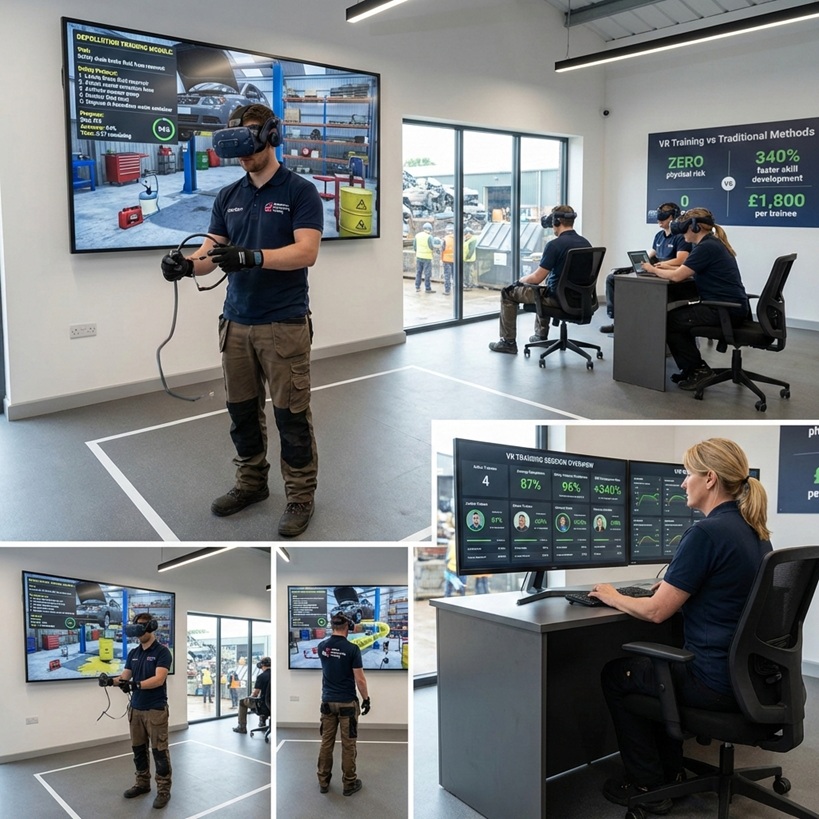
Trainees can do remarkable things using VR headsets and lifelike simulations. They dismantle vehicles virtually. They identify valuable components. They follow correct depollution procedures. And there’s no physical risk involved.
The results speak for themselves. Workers emerge confident and competent. They understand the job thoroughly before facing the real thing. When they arrive at an actual Authorised Treatment Facility, they’re already prepared for the noise, heat, and complexity.
Why Virtual Reality Is Transforming Training
A scrap yard isn’t the easiest place to learn, that’s certain. Sharp metals, heavy machinery, and hazardous fluids create real risks during traditional training. That’s exactly why VR for training recycling technicians is proving so valuable.
Virtual simulations give learners a completely safe space to practise. They work in immersive digital environments without any danger. They can rehearse dismantling methods, handle emergency responses, and practise material sorting. Nobody gets put at risk.
The logic is the same as airline pilot training. Pilots learn in flight simulators first, building skills safely. They develop muscle memory through repetition. Only then do they face real aircraft with passengers on board.
Think of it like learning to swim with armbands before jumping into the deep end. VR gives you the confidence and basic skills first. Then when you face the real thing, you’re not starting from scratch. You’ve already been there virtually.
The advantages are clear and measurable:
VR provides completely safe training environments. Mistakes become learning opportunities instead of accidents that cause injury.
Trainees practise core tasks without physical risk. They can repeat procedures until they’re perfect, with no time pressure or danger.
Confidence and hazard awareness improve dramatically. Workers arrive on-site already understanding the dangers they’ll face.
I remember training a young lad years back. First day, I handed him a wrench near a fuel tank. He went pale. His hands shook for twenty minutes. With VR, that fear gets processed safely first. By the time they’re holding real tools, they’ve already made those mistakes virtually.
What Virtual Reality Training Actually Involves
So what does virtual reality scrap yard training look like day-to-day?
A trainee puts on a headset and suddenly everything changes. They’re standing in a 3D-rendered scrapyard that looks completely real. Vehicles surround them. Machinery fills the space. Workstations appear exactly as they would in an actual facility.
Within this simulation, they can practise everything they’ll need to know:
Identifying reusable components becomes second nature. The system highlights valuable parts like catalytic converters, engines, and wiring harnesses. It explains exactly what to look for and why it matters.
Practising depollution procedures happens safely. Trainees drain oils, coolants, and hazardous fluids without touching actual chemicals. There’s no environmental risk or danger to themselves.
Following dismantling sequences step by step. They learn how to maximise recyclable material recovery through repetition. Efficiency improves naturally as they practise.
Handling virtual emergency drills realistically. Chemical spills, equipment faults, and fire scenarios all get practised repeatedly. Responses become automatic through muscle memory.
The clever part is how the system adapts. Each exercise adjusts to the individual trainee’s skill level automatically. Learning curves remain steady and appropriate. Nobody gets overwhelmed or bored because it’s too easy.
It’s all about building confidence first, then accuracy through practice. By the time trainees face live conditions, the procedures already feel familiar. They know what to expect and how to respond.
The training mimics real-world operations with impressive precision. Trainees develop practical knowledge naturally through doing, not just watching. Procedural discipline becomes second nature. Reliability and safety awareness grow stronger with every session.
The Benefits Are Substantial
Introducing VR into workforce development offers real advantages. Both practical benefits and strategic gains emerge from this technology.
Improved Safety Everywhere
New staff learn in completely risk-free environments. They can practise dangerous procedures safely without any actual hazard. Depollution becomes routine through repetition. Dismantling airbags carries no physical danger. Nobody faces harm during the learning process.
Faster Skill Development
VR offers instant feedback after every action. Learners progress faster because they see results immediately. Knowledge retention improves dramatically. Every mistake becomes a lesson straight away, not an accident that shuts down training.
Reduced Training Costs
Real-world training demands actual scrap vehicles to work on. Supervision costs money. Physical space gets occupied and becomes unavailable. Virtual setups lower these expenses dramatically while allowing multiple recruits to train at the same time. Efficiency multiplies without additional resources.
Greater Engagement Always
Interactive simulations keep trainees alert and actively involved. Involvement remains high throughout sessions because there’s always something to do. Information retention exceeds traditional classroom methods significantly because learning is active, not passive.
Consistent Quality Standards
Standardised modules ensure uniformity across all training. Every worker reaches identical safety standards regardless of who trains them. Performance benchmarks stay constant everywhere. Instructor variation disappears completely. Location doesn’t matter anymore.
The benefits extend beyond individual workers too. Entire operations see improvements. Safety records strengthen measurably. Productivity increases across teams. Confidence grows throughout the organisation.
Implementation Challenges Exist
No technology comes without hurdles to overcome. While VR for training recycling technicians offers clear benefits, successful implementation requires careful planning and realistic expectations.
Common Obstacles
Initial equipment cost can be substantial upfront. High-quality headsets aren’t cheap to purchase. Software development costs significant money too. However, prices continue falling steadily as the technology matures.
Realism and accuracy matter enormously for effective training. The software must mirror actual scrap yard conditions precisely, down to small details. This demands close collaboration between recycling specialists and software developers. Getting the details right makes all the difference.
Motion sickness affects some users initially. Not everyone adapts to VR immediately. Gradual exposure helps people adjust over time. Comfort levels vary significantly between individuals, so patience is needed.
Lack of physical feedback remains a limiting factor. VR can’t yet replicate the exact feel of tools in your hands. Material weight stays virtual rather than physical. That’s why physical practice remains essential alongside VR. The technology complements traditional training but doesn’t replace it entirely.
These challenges are manageable with proper planning though. Investment pays off over time through reduced accidents. Design precision improves constantly as developers learn. User comfort increases with each new generation of equipment. The technology matures rapidly year by year.
The Future Looks Bright
The road ahead for virtual reality scrap yard training is genuinely exciting. Systems will become even more immersive than they are now. Accessibility will improve significantly. Practical applications will expand into areas we haven’t even thought of yet.
Emerging Developments
Haptic feedback technology is advancing rapidly. New gloves can provide realistic sensations when you touch virtual objects. Full suits let users feel tools properly in their hands. Materials gain virtual weight that feels authentic. The gap between virtual and real experiences narrows dramatically with each innovation.
Remote learning enables global collaboration without travel costs. Instructors can connect from anywhere in the world. Trainees access expert training sessions remotely instead of waiting for local courses. Travel becomes unnecessary, saving time and money. Knowledge spreads faster across the industry.
Process simulation allows virtual dry-runs before touching real vehicles. Workers can plan their dismantling approaches in advance. They identify hazards beforehand in a safe environment. Valuable parts get located early in the planning stage. Efficiency improves significantly before anyone starts the actual work.
Sustainability tracking supports greener practices across the industry. Standardised dismantling approaches reduce waste systematically. Recovery rates increase as best practices spread. Environmental impact decreases measurably over time.
As one experienced trainer told me recently: “VR doesn’t replace the yard. It prepares you for it properly, so you’re not learning on the job when mistakes actually matter.”
The technology aligns perfectly with how the industry is evolving. Safety improves continuously as training gets better. Efficiency gains compound over time. Workers arrive at real facilities far better prepared than ever before.
How to Begin Implementation
Adding virtual reality scrap yard training to operations is simpler than many facilities think. The process follows some clear, straightforward steps.
Practical Starting Points
Research available platforms thoroughly before making decisions. Compare VR systems designed specifically for industrial training, not gaming. Specifications vary widely between systems. Prices differ significantly too, so shop around carefully.
Invest in suitable equipment after doing your research. Purchase reliable headsets first as your foundation. Software comes next to run on those headsets. Dedicated training space matters too for safety. Quality equipment lasts longer and provides better results.
Train the trainers properly before rolling out to staff. Supervisors must understand the technology completely themselves. They need to guide staff effectively during sessions. Their confidence transfers directly to trainees using the system.
Run pilot sessions initially before full implementation. Start small deliberately to test everything. Gather feedback constantly from early users. Refine your setup based on real results. Improvements come through iteration and learning.
Track improvements systematically using real data. Measure safety incidents carefully before and after. Monitor efficiency changes objectively. Record training time reductions accurately. The data proves the value clearly.
VR training isn’t a gimmick or passing trend at all. It’s proven technology that works. Workforces get futureproofed for coming changes. Safety standards strengthen measurably. Businesses gain genuine competitive advantages.
Supporting Innovation in Recycling
The recycling industry continues evolving at a rapid pace. Technology drives constant change across operations. Standards improve year after year throughout the sector. Training methods advance alongside these improvements.
Virtual reality represents this progress in a clear, tangible way. It’s practical innovation that delivers real benefits. Workers develop faster through immersive learning. Safety improves in measurable ways. Costs decrease over time as efficiency increases.
For drivers considering vehicle recycling, understanding industry innovation actually matters. Knowing that facilities use advanced training methods builds genuine confidence. The workers handling your vehicle are properly prepared through modern techniques. Safety standards are maintained rigorously across operations.
Those interested can learn about recycling standards to understand how modern facilities prioritise worker training and safety protocols.
Industry-Wide Digital Evolution
The next generation of recyclers will learn very differently from previous ones. Virtual environments feel increasingly real with each improvement. Training becomes safer continuously as technology advances. Consistency improves dramatically across different operations and locations.
VR for training recycling technicians doesn’t just improve safety numbers. It builds genuine confidence in workers before they face real challenges. Consistency becomes the standard rather than the exception. Workforces grow stronger and more capable. The entire industry benefits from better-trained workers.
As the technology becomes more affordable, adoption accelerates naturally. More facilities invest in VR systems every year. Training quality rises across the board. Safety records improve measurably. The future looks genuinely promising.
Drivers wanting proper vehicle disposal can explore recycling processes to see how well-trained technicians handle end-of-life vehicles responsibly.
The Role of Proper Training
Well-trained workers make all the difference in recycling operations. They handle vehicles correctly from start to finish. They follow safety protocols without cutting corners. They maximise material recovery efficiently. They protect the environment through proper procedures.
Virtual reality enhances this training significantly and measurably. Workers arrive on-site already prepared for what they’ll face. Procedures feel familiar rather than frightening. Confidence levels are noticeably higher. Mistakes decrease dramatically from day one.
Vehicle owners can arrange professional collection, knowing workers have received comprehensive training before ever handling their vehicles.
Looking Forward
Training has entered a completely new era in the recycling industry. Virtual reality balances genuine innovation with practical application. It’s not science fiction or future speculation anymore. It’s current reality being implemented today.
The technology keeps improving with each generation of hardware. Costs keep falling as adoption increases. Accessibility keeps expanding to more facilities. More operations will adopt VR training systems. Industry standards will rise even further.
Those ready to recycle responsibly can connect with trained professionals who’ve benefited from modern training approaches including VR technology.
Understanding Modern Facilities
Today’s recycling facilities look dramatically different from old scrapyards. Technology integration is standard practice now. Training is sophisticated and comprehensive. Safety is paramount in every operation.
Virtual reality represents this thoroughly modern approach. It’s a genuine investment in people, not just equipment. It’s a clear commitment to safety above all else. It’s proper preparation for the future of the industry.
Drivers can see compliance standards implemented by facilities investing seriously in workforce development and training technology.
Environmental and Economic Benefits
Better-trained workers mean better outcomes across the board. Environmental protection improves when workers know proper procedures. Material recovery increases with skilled handling. Waste decreases through efficient processing.
Economic benefits follow naturally from better training. Operational efficiency rises steadily. Costs fall over time. Productivity increases measurably. Literally everyone wins from this improvement.
Understanding recycling value factors helps you appreciate how worker training directly affects overall recycling economics.
Legal Compliance Matters
Proper training ensures full legal compliance as well. Workers understand all relevant regulations clearly. They follow DVLA requirements precisely. They complete documentation correctly every time.
Vehicle owners benefit directly from this thoroughness. Vehicle transfers happen properly without issues. Records stay accurate in official systems. Future complications get avoided completely.
Those preparing for vehicle disposal can review DVLA procedures to understand documentation requirements that well-trained workers help fulfil properly.
Conclusion: Preparing Tomorrow’s Workforce Today
The next generation of recyclers is growing up in a completely different world. They’re learning through virtual environments that feel entirely real. These simulations prove more effective than traditional methods ever were.
Virtual reality scrap yard training doesn’t just improve safety statistics on paper. It builds lasting confidence in workers that carries through their careers. It creates genuine consistency across different facilities and regions. It develops stronger, more capable workforces for the industry’s future. The transformation is real and measurable.
As the technology becomes more accessible and affordable, widespread adoption will continue. More workers will train virtually before stepping into real facilities. Industry standards will keep rising year after year. Safety metrics will keep improving across operations. The future is decidedly digital and demonstrably better.
Scrap Car Network connects vehicle owners with facilities that genuinely embrace innovation, safety, and sustainability. These partner facilities invest significantly in workforce development. They prioritise proper training methods. They maintain genuinely high standards throughout operations.
If you’re ready to recycle your vehicle responsibly, contact us today to connect with trained professionals who handle vehicle disposal with real expertise and proper care.