Recycling Plants as Community Anchors
4th Feb, 2026
Recycling plants are often viewed as industrial backdrops, busy, practical places where waste becomes raw material again. Yet their influence stretches far beyond processing metals or plastics. They are economic drivers, environmental guardians, and educational hubs, forming the heart of the relationship between recycling plants and communities across the United Kingdom.
A well-run recycling facility is a genuine community asset. Scrap Car Network partners with facilities that create jobs, attract investment, reduce waste, and foster pride in sustainability. In many towns, these modern plants have replaced disused industrial yards, breathing new life into local areas and helping to shape cleaner, greener futures.
What Makes a Recycling Plant a Community Anchor?
The term community anchor usually brings to mind a local school, library, or church, but recycling plants deserve a place on that list. These facilities provide a reliable service that benefits everyone, managing materials responsibly while supporting local employment.
A well-maintained plant operates like a good neighbour. It runs efficiently, causes minimal disruption, and contributes positively to the area. This steady presence strengthens the connection between local industry and public well-being, proving that environmental responsibility and economic progress can work hand in hand.
Economic Benefits: More Than Just Scrap Metal
Recycling plants don’t just handle materials; they generate livelihoods. The local impact of recycling plants begins with job creation and ripples outward through the economy.
Each facility employs a diverse workforce, from machine operators and quality inspectors to engineers and administrators. For many, these roles offer stable, long-term employment with opportunities for skill development.
Recycling plants also purchase goods and services from nearby suppliers, maintenance firms, hauliers, cafés, and small retailers. The wages paid to employees circulate through local shops and service providers, sustaining the wider economy.
Environmental Stewardship: Cleaning Up Our Act
Recycling plants lie at the centre of environmental protection efforts. By recovering and reusing materials, they reduce landfill use, conserve natural resources, and limit pollution.
These plants ensure that waste, from scrap vehicles to household metal, is treated safely. Facilities connected to our network demonstrate how responsible processing contributes to cleaner air, water, and soil.
Community Engagement: Getting Everyone Involved
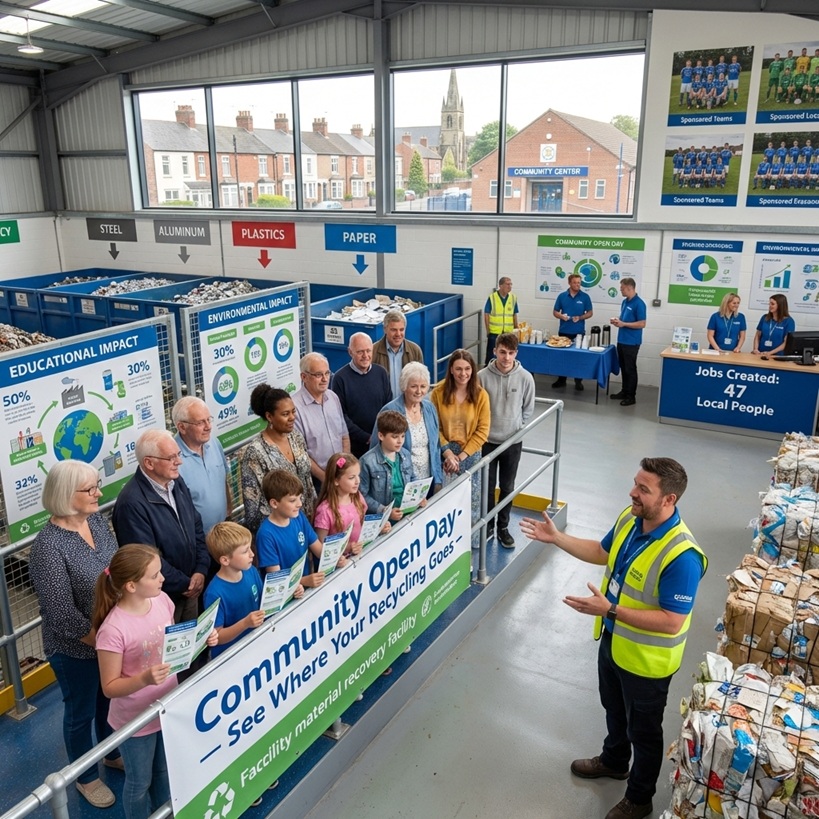
The strongest connection between recycling plants and communities comes from active engagement. Leading facilities don’t just recycle materials; they help educate residents, inspire local action, and encourage sustainable habits.
Many recycling plants host school visits or community workshops to teach residents how recycling works. Public clean-up events build unity and environmental pride. Recycling facilities often sponsor these initiatives, providing equipment or collection services.
I remember a recycling plant manager in Bristol who sponsored the local youth football team. He didn’t just buy the shirts; he invited the team and their parents for a tour to show them how the old stadium seats were being recycled into new products. It completely changed the neighbourhood’s perception of the facility from a “dump” to a vital part of the town’s infrastructure.
Reducing Landfill Waste
Landfills are filling rapidly and can contaminate ecosystems. Recycling plants divert tonnes of material from these sites, reducing environmental strain. This preserves land for more sustainable use and reduces the tax burden on local councils.
Conserving Natural Resources
Reusing metals, plastics, and rubber means less mining and refining, which conserves energy and protects natural habitats. Recycling supports circular production, where materials are reused indefinitely.
Manufacturing new materials is energy-intensive. Recycling reduces carbon emissions, contributing to the UK’s net-zero goals while improving local air quality. You can see our commitment to this in our environmental policies.
Challenges and Opportunities
Despite their many benefits, recycling plants face challenges. Contamination of materials remains a major obstacle; when non-recyclable items are mixed in, entire batches can be spoiled. Improving sorting systems and educating residents about correct recycling practices is essential.
Outdated views still associate recycling plants with noise or pollution. Modern facilities are clean, regulated, and community-focused. Public outreach helps highlight this progress and build trust.
The Future of Recycling Plants in Our Communities
The local impact of recycling plants is set to grow as sustainability becomes a core value. With new technologies and stronger environmental goals, these facilities will become smarter, cleaner, and more integrated.
Automation and digital tracking are transforming recycling. Machines now identify materials faster and more accurately. Next-generation plants are expanding beyond metals to include electronics and textiles, broadening the scope of what can be reclaimed.
Actionable Next Steps
Supporting recycling facilities doesn’t require industrial expertise, just simple, consistent action. Recycle properly by separating materials to avoid contamination. Support local recycling plants by purchasing products made from recycled materials.
If you are planning to recycle your vehicle, choose facilities that operate within a trusted network. You can arrange a collection with us to ensure your vehicle is handled by a facility committed to your community’s well-being.
Conclusion
Recycling plants are more than industrial facilities; they are modern-day community anchors. They create employment, protect natural resources, and promote sustainability through education and outreach. Their influence goes far beyond the yard gates.
As technology advances, the relationship between recycling plants and communities will deepen. These facilities will continue to symbolise progress, proving that sustainability can serve both people and the planet.
By choosing to recycle responsibly, residents play an active role in shaping a cleaner, more resilient society. If you want to contribute to this cycle, call 0300 100 0027 or get a quote to ensure your vehicle supports the local green economy.