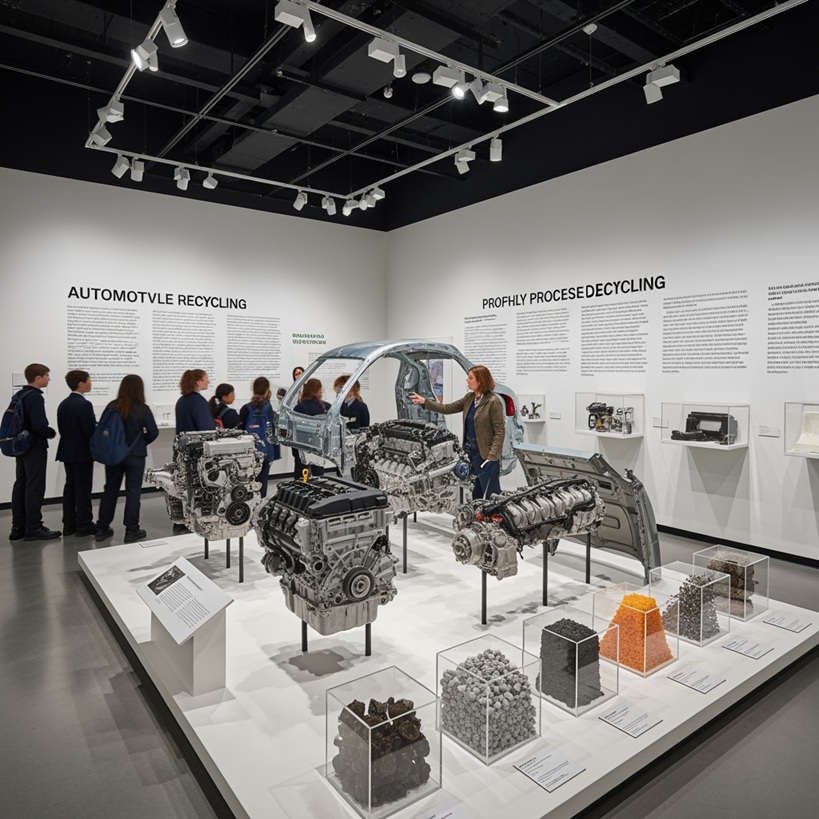
Museums That Showcase Recycled Cars
20th Jan, 2026
Ever wondered if your scrapped car could end up in a museum? Most scrapped vehicles become recycled steel for new manufacturing, but occasionally, properly processed automotive materials find their way into museums with recycled cars that educate the public about sustainability, circular economy, and responsible disposal. These educational exhibits demonstrate what’s possible when vehicles are scrapped through proper environmental channels.
These auto recycling museum exhibits aren’t traditional automotive museums showcasing pristine classics. They’re educational institutions using scrapped materials to teach visitors about recycling processes, environmental responsibility, and creative reuse. Think of them as classrooms using automotive materials to demonstrate circular economy principles.
Scrap Car Network ensures vehicles are properly processed through Authorised Treatment Facilities before any materials can enter educational or artistic use. Let’s explore how responsible scrapping supports both traditional recycling and educational museum exhibits.
Where Scrapped Cars Go: Beyond Traditional Recycling
When you scrap your vehicle through proper channels, the vast majority enters traditional recycling. But understanding the full range of destinations helps appreciate why proper disposal matters.
The Standard Recycling Path
Primary destination for scrapped vehicles is material recycling. Authorised Treatment Facilities process roughly 2 million vehicles annually in the UK, recovering 95%+ of materials for reuse in manufacturing.
The process involves:
- Complete depollution (fluid drainage, battery removal)
- Component separation (tyres, glass, plastics)
- Crushing and shredding
- Metal separation and processing
- Material sale to manufacturers
This traditional recycling is environmentally crucial and economically significant. It’s where most scrapped vehicles end up, and it should remain the primary focus.
Educational Reuse Opportunities
Occasionally, properly processed materials from scrapped vehicles find secondary uses in educational contexts. Museums with recycled cars source materials through proper channels – from ATFs after depollution or from certified salvage operations.
This educational reuse requires:
- Proper environmental processing first
- Complete hazardous material removal
- Documentation of legal sourcing
- Ongoing safety compliance
Museums can’t legally or safely use vehicle components containing fluids, batteries, or other hazardous materials. Professional ATF processing is mandatory before materials enter educational exhibits.
What Makes Recycled Car Museums Different
Auto recycling museum exhibits differ fundamentally from traditional automotive museums in purpose and messaging.
Educational Focus
Traditional automotive museums celebrate engineering achievement and automotive history. They showcase pristine vehicles representing design evolution and technological progress.
Recycled car museums educate about lifecycle completion, material recovery, and environmental responsibility. They answer questions like:
- Where do scrapped cars actually go?
- How are materials recovered and reused?
- What environmental benefits result from proper disposal?
- How does circular economy work practically?
This educational focus serves public understanding of why proper scrapping through ATFs matters enormously. Visitors learn that responsible disposal isn’t wasteful – it’s essential environmental stewardship.
Transformation Stories
Museums with recycled cars tell transformation narratives. They show vehicles moving from functional transportation through end-of-life to material recovery and new purposes. This complete lifecycle story educates visitors about circular economy principles practically.
For example, an exhibit might display:
- Complete vehicle reaching end of usable life
- Components after ATF depollution
- Separated materials ready for recycling
- New products created from recycled materials
- Artistic or educational reuse examples
This progression demonstrates that scrapping isn’t ending; it’s transformation enabling new beginnings whilst protecting environment.
Think of auto recycling museum exhibits like libraries of material lifecycle – they show complete journeys from manufacture through use to recovery and reuse, making abstract environmental concepts concrete and understandable.
Museums Featuring Recycled Automotive Materials
Several notable institutions incorporate scrapped vehicle materials into educational programming.
UK Museum Examples
National Motor Museum at Beaulieu increasingly addresses sustainability within automotive heritage. Whilst primarily historical, recent exhibits explore recycling, green technology, and automotive industry environmental responsibility.
Science Museum London occasionally features automotive recycling in broader environmental exhibits. Their focus on technology and sustainability naturally incorporates vehicle lifecycle education.
Regional museums across the UK sometimes partner with local ATFs to create educational displays about recycling processes. These collaborations demonstrate regional environmental efforts whilst educating communities.
Educational institutions like universities and technical colleges often maintain displays featuring automotive components to teach engineering, environmental science, and materials technology. These academic exhibits serve specialized educational purposes.
I visited a technical college once where they’d partnered with local scrapyard to create full cutaway display showing vehicle recycling process step-by-step. Students could see actual ATF processing stages from complete vehicle through depollution to separated materials. It was brilliant educational tool, and the partnership ensured everything was sourced and displayed safely.
International Examples
Petersen Automotive Museum in Los Angeles occasionally features sustainability-focused exhibits exploring recyclable components and green automotive technology. Their educational programming includes material lifecycle discussions.
European automotive museums increasingly incorporate sustainability themes. Germany’s automotive heritage sites particularly address recycling and environmental responsibility alongside traditional engineering celebration.
Virtual exhibitions expand access globally. Online platforms showcase recycled automotive materials from worldwide sources, making educational content accessible regardless of location.
Proper Scrapping Enabling Museum Exhibits
Educational reuse of automotive materials absolutely depends on proper initial processing through ATFs.
Authorised Treatment Facility Processing
Before any vehicle component can safely enter museum context, professional depollution must occur. This includes:
Complete fluid drainage: All oils, coolants, brake fluid, power steering fluid, fuel, and refrigerants must be professionally removed and properly disposed of according to environmental regulations.
Hazardous component removal: Batteries, airbags, catalytic converters, and other potentially dangerous components require specialist handling and disposal.
Material separation: Glass, plastics, rubber, and different metals get separated for appropriate processing.
Only after this professional processing can materials safely and legally enter educational use. Museums cannot accept improperly processed materials – it’s environmental liability and legal risk.
Safe Material Supply
Reputable museums source materials exclusively through certified channels. This means working with ATFs holding proper environmental permits, maintaining processing records, and ensuring complete compliance with waste regulations.
Our environmentally responsible car recycling network provides properly processed materials to educational institutions requesting them. This ensures legal compliance whilst supporting public education about recycling processes.
Documentation matters enormously. Museums need verification that materials were properly processed, hazardous substances removed, and environmental regulations followed. This protects institutions legally whilst ensuring visitor safety.
Educational Impact of Recycled Car Exhibits
Museums with recycled cars serve important public education functions beyond simple display.
Public Understanding
Most people have limited understanding of what actually happens when vehicles are scrapped. They know cars “get recycled” vaguely but don’t understand processes, environmental benefits, or material destinations.
Educational exhibits address this knowledge gap by showing:
- Actual recycling processes and stages
- Material recovery percentages and uses
- Environmental compliance requirements
- Circular economy principles in action
- Importance of proper disposal channels
Visitors leave with concrete understanding of why scrapping through ATFs rather than abandoning vehicles or using illegal operators matters environmentally and economically.
School and Community Programs
Many auto recycling museum exhibits include programming for schools and community groups. Students might:
- Tour exhibits showing complete recycling processes
- Participate in workshops about material properties
- Learn about environmental regulations and compliance
- Understand career opportunities in recycling industry
- Explore sustainable design principles
These educational programs create lasting awareness about environmental responsibility whilst potentially inspiring careers in sustainability and recycling sectors.
Environmental Responsibility in Museum Context
Educational institutions maintaining recycled car exhibits must themselves demonstrate environmental responsibility.
Hazardous Material Management
Museums displaying automotive components must verify complete depollution occurred before materials entered their collections. This protects staff, visitors, and environment whilst demonstrating proper environmental stewardship.
Any remaining fluids, batteries, or hazardous materials create serious safety and environmental risks. Professional ATF processing eliminates these risks before materials leave recycling facilities.
Sustainable Exhibition Practices
Responsible museums consider complete material lifecycles. When exhibits eventually need decommissioning, materials should return to recycling streams rather than becoming waste.
This continued recycling demonstrates circular economy principles practically. Materials move from vehicles through recycling to education to recycling again, maintaining usefulness whilst minimizing environmental impact.
Economic Benefits of Educational Reuse
Museums with recycled cars create economic value alongside educational benefits.
Educational Tourism
Institutions featuring innovative sustainability exhibits attract visitors interested in environmental topics, engineering, and automotive history. This tourism supports local economies through accommodation, dining, and retail spending.
Educational tourism differs from entertainment tourism in typically attracting engaged visitors who spend time learning rather than just viewing. This creates quality visitor experiences whilst supporting local businesses.
Recycling Industry Support
Museum exhibits that accurately represent recycling processes help public understand industry importance. This awareness supports legitimate recycling businesses and encourages responsible disposal choices.
When people understand ATF processes, environmental compliance requirements, and material recovery benefits, they’re more likely to choose proper scrapping channels rather than illegal operators or vehicle abandonment.
Virtual Access and Digital Education
Digital technology expands educational reach beyond physical museum visits.
Online Exhibitions
Virtual museum tours allow global audiences to explore recycled car exhibits from home. These digital experiences often include:
- 360-degree views of installations
- Detailed explanations of recycling processes
- Behind-the-scenes footage from ATFs
- Interviews with recycling professionals
- Interactive material lifecycle diagrams
This virtual access democratizes education, reaching people unable to visit physical locations whilst maintaining educational impact.
Educational Resources
Many museums provide downloadable curriculum materials for teachers. These resources help educators incorporate automotive recycling into environmental science, chemistry, engineering, and social studies lessons.
Digital resources extend museum impact far beyond visitor numbers, potentially reaching thousands of students through teacher networks and educational platforms.
Future of Educational Automotive Exhibits
Emerging trends suggest expanding opportunities for educational exhibits featuring scrapped vehicles.
Electric Vehicle Components
As electric vehicles become common, new material streams enter recycling processes. Battery packs, electric motors, power electronics, and unique body panels offer different educational opportunities than traditional vehicles.
Auto recycling museum exhibits will increasingly feature EV components, educating public about:
- Battery recycling and material recovery
- Rare earth metal processing
- Different environmental challenges and solutions
- Evolution of automotive technology
- Changing recycling requirements
Interactive Technology
Augmented reality and interactive displays enhance educational experiences. Visitors might use tablets to see virtual cutaways showing internal structures, overlay information about material compositions, or explore recycling processes through interactive simulations.
These technologies make complex environmental concepts accessible whilst engaging younger audiences accustomed to digital interaction.
Supporting Educational Reuse Through Proper Scrapping
Your decision to scrap responsibly supports both traditional recycling and educational opportunities.
Choosing Proper Disposal Channels
When you get an instant quote through Scrap Car Network, you’re ensuring your vehicle enters regulated processing where:
- Environmental compliance is guaranteed
- Materials are properly processed and documented
- Traditional recycling is maximized
- Educational reuse opportunities exist for suitable components
Illegal scrapping or vehicle abandonment prevents any positive outcomes. Materials contaminate environment, and educational potential is lost completely.
Your Role in Circular Economy
Every vehicle properly processed through our car recycling network supports environmental protection, legitimate employment, material recovery, and occasionally educational exhibits demonstrating sustainability principles.
Your choice matters. Multiply individual responsible scrapping decisions by millions of vehicle owners annually, and collective environmental and educational impact becomes massive.
Conclusion
Museums with recycled cars and auto recycling museum exhibits demonstrate that proper vehicle scrapping through Authorised Treatment Facilities enables multiple positive outcomes. Beyond traditional material recycling, properly processed components occasionally find educational purposes teaching public about circular economy, environmental responsibility, and sustainable practices.
These educational exhibits prove scrapping isn’t wasteful – it’s essential transformation allowing materials to serve new purposes whilst protecting environment. Whether your scrapped vehicle becomes recycled steel in manufacturing or educational display teaching sustainability, proper disposal through regulated channels maximizes positive environmental and social outcomes.
The next time you see museum exhibit featuring recycled automotive materials, remember it started with someone making responsible decision to scrap through proper environmental channels. Your scrapping choice matters – for environment, for legitimate businesses, for education, and for future generations learning about sustainability.
Ready to ensure your vehicle is properly processed? Contact us to discuss responsible scrapping that supports environmental protection and occasionally, educational reuse teaching others about circular economy principles. Your end-of-life vehicle deserves proper handling through certified ATFs.